
🔍 Read the full analysis: Revolutionize Your Workflow In 2026 With These 15 AI Tools on ThorstenMeyerAI.com

Get business pricing on office and shipping supplies
- Business-only prices and quantity discounts
- Tax-exempt purchasing
- Multiple users, one account, clear invoices
TL;DR
In 2026, a suite of 15 AI tools promises to transform workflows by automating repetitive tasks and improving efficiency. These tools range from user-friendly platforms to advanced solutions, offering options for diverse needs. This development is significant for businesses seeking competitive advantages through automation.
In 2026, a new wave of 15 AI tools is poised to significantly transform workplace workflows by automating routine tasks and enhancing productivity. For a detailed overview, see the original analysis. These tools, ranging from user-friendly platforms to advanced automation systems, are designed to meet the needs of businesses across sectors. The release of these solutions marks a pivotal moment in AI-driven workflow automation, promising to reshape how organizations operate and compete in the digital economy.
Leading the pack is AutoFlow Pro, recognized for its robust automation capabilities and intuitive interface, making it accessible for users without technical backgrounds. Zapier AI continues to stand out with its extensive integrations, connecting seamlessly with thousands of apps to streamline workflows across platforms. AI TaskMaster offers powerful no-code options, enabling non-technical users to create complex automation processes with ease.
Industry experts highlight that these tools combine AI-driven automation with user-friendly interfaces, making sophisticated workflows accessible to a broader audience. Learn more about how AI tools can boost productivity in this guide for students. The tools vary in scope, from simple task automation to complex, multi-step processes involving conditional logic and integrations. Cost and ease of use remain key tradeoffs, with premium solutions offering deeper customization at higher prices, while beginner-friendly options focus on simplicity and rapid deployment.
According to sources from ThorstenMeyerAI.com, the evaluation of these tools considered performance, usability, scalability, and value. The goal is to help businesses select solutions that align with their existing tech stacks, budget, and automation needs. The tools are expected to support a range of users, from small startups to large enterprises, with scalability features designed to grow with the organization. For insights on automating marketing campaigns, see this article.
The 15 picks
- 1
 Agentic Coding with OpenAI Codex CLIView on Amazon →
- 2
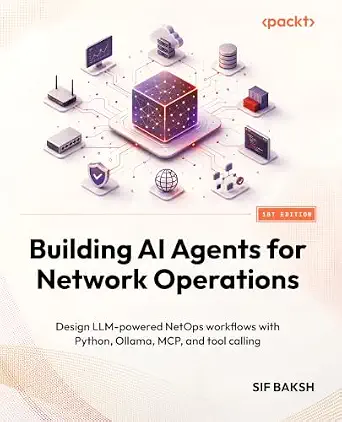 Building AI Agents for Network OperationsView on Amazon →
- 3
 50 AI Workflows for Engineers: From Debugging to System Design, Code Review &…View on Amazon →
- 4
 The AI-Powered Accountant: How to Use ChatGPT, AI Tools and Smart Automation…View on Amazon →
- 5
 OpenCode Custom Workflows: Building Intelligent Automation with AI AgentsView on Amazon →
- 6
 The No-BS Guide to AI Agents & Automation: Build AI Workflows, Automate Your…View on Amazon →
- 7
 Practical AI Workflow Automation: A Beginner-Friendly Guide to No-Code ToolsView on Amazon →
- 8
 Generative AI Workflows and Practical Automation: Mastering ChatGPT, Claude,…View on Amazon →
- 9
 AI Workflow Automation for BloggersView on Amazon →
- 10
 AI Workflow Mastery: 100 Practical AI Workflows to Save Hours Every Week, Aut…View on Amazon →
- 11
 Claude Cowork Automation: Build AI-Powered Workflows, Delegate Repetitive Tas…View on Amazon →
- 12
 Claude AI Automation & Monetization: Build AI-Powered Systems, Automate Workf…View on Amazon →
- 13
 Google AI Studio Guide 2026: Build Intelligent AI Workflows and Scalable Auto…View on Amazon →
- 14
 AI for Workflow Automation (Makola Practical AI Mastery, Book 9)View on Amazon →
- 15
 Claude Mastery: Claude AI for Beginners – Build Prompts, Skills, and AI Agent…View on Amazon →
Impact of 15 New AI Workflow Tools in 2026
The introduction of these 15 AI tools in 2026 is expected to significantly enhance productivity and reduce operational costs for businesses by automating repetitive tasks. They will enable organizations to optimize workflows, improve accuracy, and free up human resources for more strategic activities. This shift could lead to increased competitiveness, faster decision-making, and greater innovation across industries. For small and medium-sized enterprises, these tools democratize access to advanced automation, previously limited to large corporations with extensive IT resources.
Experts note that the widespread adoption of these tools may also accelerate digital transformation efforts, making automation a standard component of business operations. However, the impact will depend on how effectively organizations implement and integrate these solutions into their existing systems, as well as their ability to manage change and upskill staff accordingly.
2026 Automation Landscape and Prior Developments
Over the past few years, AI-driven workflow automation has gained momentum, with platforms like Zapier and IFTTT popular among small businesses and individual professionals. The launch of more sophisticated tools tailored for enterprise use has been slower but is now accelerating. Previous innovations focused on simple integrations and task automation, but 2026 marks a shift toward more intelligent, adaptive systems capable of handling complex, multi-layered workflows.
Key developments include the increasing use of natural language processing, machine learning, and no-code interfaces, making automation accessible to non-technical users. Industry analysts from ThorstenMeyerAI.com have noted that the upcoming release of these 15 tools reflects a maturation of the market, emphasizing scalability, security, and ease of use. The tools are also expected to support cross-platform integration, which is critical as organizations adopt diverse tech stacks.
Unresolved Questions About the 15 AI Tools in 2026
While the tools are scheduled for release throughout 2026, specific details about their final features, pricing, and compatibility are still emerging. It is not yet clear how well they will integrate with legacy systems or how organizations will handle potential security concerns, especially for sensitive data. Additionally, the actual adoption rate remains uncertain, as some businesses may face challenges in change management or technical implementation.
Next Steps for Adoption and Integration in 2026
As these AI tools become available, organizations will need to evaluate which solutions best fit their workflows and infrastructure. Early adopters are expected to pilot these tools in select departments, assessing their impact on productivity and ease of use. Vendors are also likely to release updates based on user feedback, improving features and compatibility. Monitoring industry conferences and vendor announcements will be crucial for staying informed about new developments and best practices for implementation.
Key Questions
Will these AI tools require technical expertise to implement?
Many of the upcoming tools are designed with non-technical users in mind, featuring drag-and-drop interfaces and pre-built templates. However, advanced customization or integration with complex systems may require some technical knowledge.
Are these AI tools secure for sensitive business data?
Security varies by platform. Reputable providers typically implement encryption, access controls, and compliance standards like GDPR or SOC 2. Businesses should review each tool’s security policies before adoption, especially for sensitive data.
Can small businesses benefit from these AI automation tools?
Yes, many of the tools are designed to be accessible and affordable for small and medium-sized enterprises, providing scalable automation solutions that do not require extensive technical resources.
Will these tools support integration with existing enterprise systems?
Most of the upcoming tools aim to support extensive integrations, including APIs and pre-built connectors. However, compatibility with legacy systems may vary, and some customization could be necessary.
What is the main advantage of adopting these AI tools in 2026?
The primary benefit is increased efficiency through automation, which can lead to cost savings, faster workflows, and the ability to focus on strategic tasks rather than routine processes.
Source: ThorstenMeyerAI.com
Halloween Picks
halloween
As an affiliate, we earn on qualifying purchases.