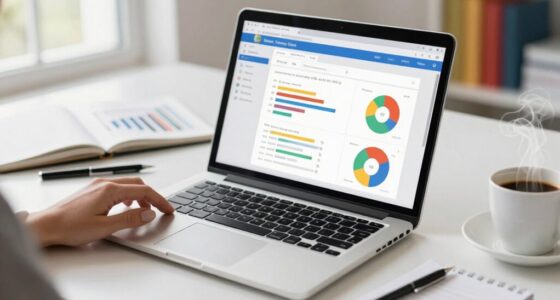
Using RFM analysis helps you identify your high-value customers by evaluating their recency, frequency, and monetary contributions. Focus on customers who purchase recently, often, and spend more, as they are your most loyal and profitable clients. Segmenting these groups allows you to craft targeted marketing strategies to increase engagement, loyalty, and lifetime value. Keep exploring how to optimize your segmentation to maximize your customer relationships and overall business growth.

Get business pricing on office and shipping supplies
- Business-only prices and quantity discounts
- Tax-exempt purchasing
- Multiple users, one account, clear invoices
Key Takeaways
- RFM analysis segments customers by evaluating recency, frequency, and monetary value to identify top-tier clients.
- Prioritize high-value customers who purchase recently, frequently, and spend more for targeted marketing efforts.
- Use RFM scores to differentiate loyal, high-value segments from infrequent or low-spending groups.
- Tailor personalized campaigns and retention strategies based on RFM segment insights to maximize loyalty.
- Continuously monitor RFM metrics to refine segments and improve targeted engagement over time.
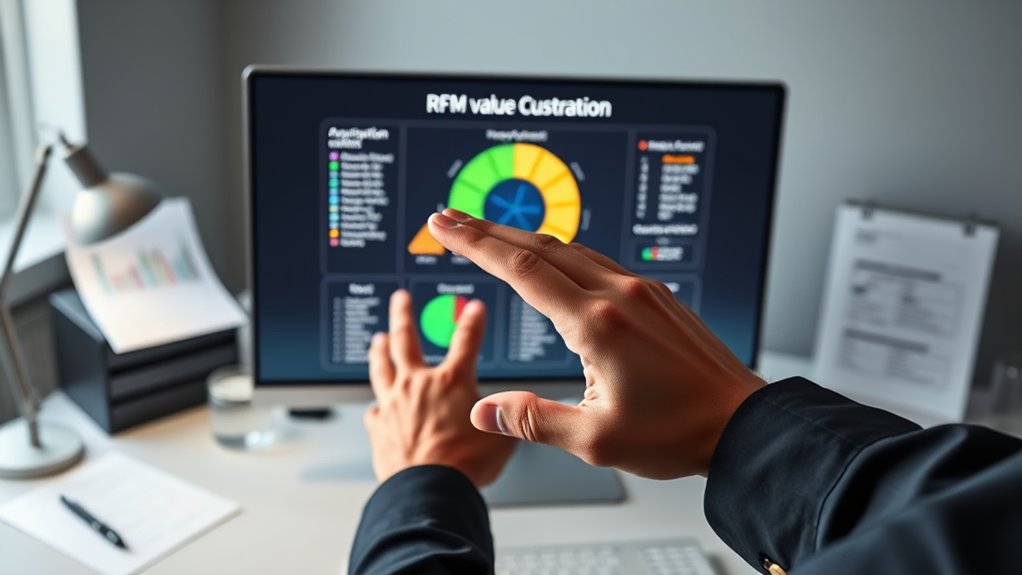
Understanding your high-value customers is essential for maximizing profitability and fostering loyalty. These customers are the ones who generate consistent revenue and can become brand advocates if you understand their behaviors well. RFM analysis helps you identify these top-tier clients by examining three key metrics: recency, frequency, and monetary value. Focusing on customer loyalty and purchase frequency allows you to tailor your marketing efforts effectively, ensuring you nurture relationships with your most valuable consumers.
Customer loyalty is the backbone of sustained business success, and RFM analysis provides a clear picture of who your loyal customers are. By analyzing purchase history, you can determine how often customers return to buy from you. A high purchase frequency indicates strong loyalty, meaning these customers prefer your brand over competitors. Recognizing these patterns enables you to reward loyalty through personalized offers, exclusive discounts, or early access to new products. These actions reinforce their connection to your brand, encouraging continued engagement and repeat purchases.
Customer loyalty drives sustained success; analyzing purchase history reveals top customers and opportunities to reward and deepen engagement.
Purchase frequency directly influences your revenue streams. Customers who shop frequently tend to spend more over time, and identifying these individuals allows you to prioritize your marketing efforts toward them. For example, if you notice some customers purchase weekly while others only buy once a year, you can develop targeted campaigns for each group. Regular buyers might respond well to loyalty programs or subscription services, while infrequent buyers could be enticed with special promotions or reminders. By segmenting your customers based on purchase frequency, you optimize your marketing spend and increase the chances of turning occasional buyers into regular, high-value customers.
Using RFM analysis, you can also pinpoint customers who might be at risk of churning. If you observe a decline in recency or a drop in purchase frequency, it signals that these customers may be losing interest. Acting proactively with personalized outreach, such as re-engagement offers or surveys, can rekindle their loyalty. This approach not only helps retain high-value customers but also maximizes their lifetime value, which is vital for long-term profitability. Additionally, understanding divorce process in different states emphasizes that tailoring your strategies based on customer behavior is crucial for success across diverse markets.
In essence, understanding your high-value customers through RFM analysis isn’t just about identifying who spends the most; it’s about understanding their behaviors deeply. Recognizing patterns in purchase frequency and loyalty allows you to craft meaningful experiences that keep customers engaged and enthusiastic to return. By leveraging these insights, you set your business up for sustained growth, increased customer satisfaction, and a competitive edge in your market.
customer loyalty program software
As an affiliate, we earn on qualifying purchases.
As an affiliate, we earn on qualifying purchases.
Frequently Asked Questions
How Often Should RFM Analysis Be Updated?
You should update RFM analysis at least quarterly to effectively monitor customer loyalty and purchase frequency. Regular updates help you identify shifts in high‑value customer behavior, enabling timely engagement strategies. If your business experiences rapid changes or seasonal trends, consider monthly updates. Consistent analysis guarantees you’re targeting the right customers with personalized offers, fostering stronger loyalty and maximizing lifetime value. Staying current keeps your segmentation relevant and impactful.
Can RFM Analysis Predict Future Customer Behavior?
Ever wonder if RFM analysis can forecast what customers will do next? It can, through predictive modeling, giving you insights into future customer behavior. By analyzing recency, frequency, and monetary value, you can estimate their customer lifetime and anticipate their needs. While RFM isn’t foolproof, it’s a powerful tool to identify trends and make proactive decisions, helping you tailor strategies to keep high-value customers engaged and loyal.
What Are Common Challenges When Implementing RFM Segmentation?
You might face challenges like maintaining customer data privacy while collecting detailed purchase data. Ensuring segmentation accuracy can be tricky if your data is incomplete or outdated. Additionally, balancing personalization with privacy concerns requires careful handling of customer information. You’ll also need to consistently update your data and refine your segments to keep them relevant, all while respecting privacy laws and building customer trust.
How Do You Handle New Customers With Limited Data?
Oh, the irony of new customers with limited data—yet, you still need to know them! You handle this through customer onboarding, collecting basic info upfront. Then, you use data enrichment to fill in gaps over time, turning limited data into rich insights. This approach helps you personalize offers and improve segmentation, proving that even with little initial info, you can build valuable relationships through smart data strategies.
What Software Tools Are Best for RFM Analysis?
You should consider tools like Tableau, Power BI, or Looker for RFM analysis, as they excel in customer segmentation and data visualization. These platforms allow you to easily analyze RFM metrics, identify high-value customers, and create clear visual reports. They’re user-friendly and integrate well with various data sources, helping you make informed decisions quickly. Using these tools, you can effectively visualize customer segments and optimize your marketing strategies.
Conclusion
By applying RFM analysis, you can effectively identify and segment your high-value customers, tailoring your marketing efforts to boost loyalty and revenue. Isn’t it worth investing a little time to understand what drives your best customers? With this approach, you’ll make smarter decisions, foster stronger relationships, and ultimately grow your business. So, why not start today and discover the full potential of your customer base? The key to success is just a segmentation away.
Fall Picks
fall essentials
As an affiliate, we earn on qualifying purchases.