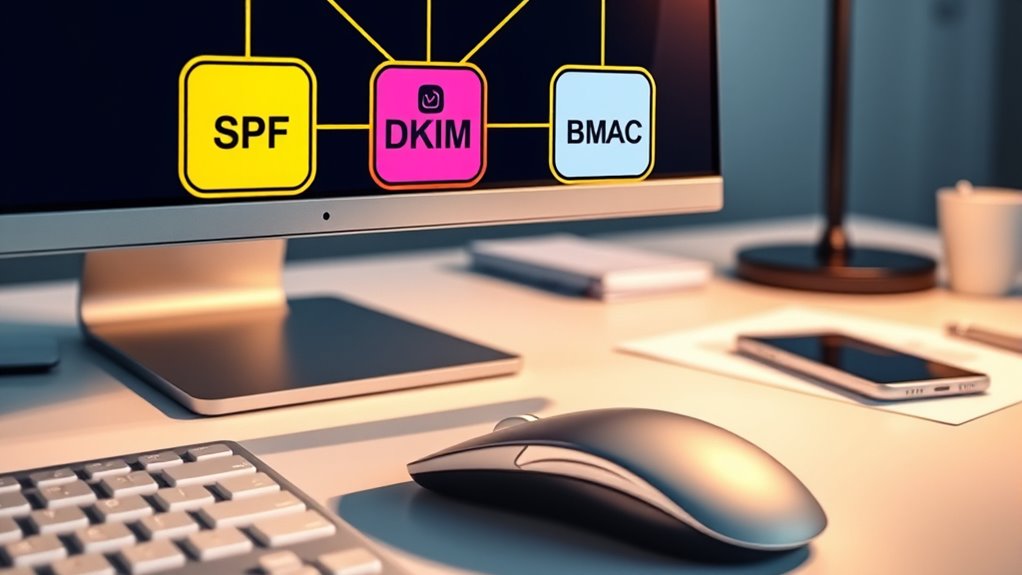

Building a strong technical foundation for email involves properly setting up SPF, DKIM, and DMARC protocols to authenticate your messages and prevent spoofing. Implementing BIMI adds visual branding with your logo, strengthening customer trust and recognition. Ensuring these elements are correctly configured keeps your emails secure, improves deliverability, and safeguards your reputation. master these tools to create a reliable communication system—continue to explore further to learn how each piece works together seamlessly.
Key Takeaways
- Implement SPF to specify authorized mail servers, preventing unauthorized senders from impersonating your domain.
- Configure DKIM with cryptographic signatures to ensure email integrity and verify message authenticity.
- Set up DMARC policies to instruct recipient servers on handling unauthenticated emails, reducing spoofing risks.
- Utilize BIMI to display your brand logo in inboxes, enhancing visual recognition and building trust with recipients.
- Regularly monitor and update all protocols to maintain a strong, secure email foundation that supports brand reputation and deliverability.

Have you ever wondered why some professionals excel in their fields while others struggle to keep up? The secret often lies in their technical foundation—specifically, how they handle crucial aspects like email authentication and brand reputation. In today’s digital landscape, establishing a solid technical base isn’t just about having the right tools; it’s about understanding how to use them effectively to protect your brand and communicate securely. One of the first steps is mastering email authentication protocols like SPF, DKIM, and DMARC. These tools work together to verify that your emails are genuinely from you, preventing malicious actors from impersonating your brand. When you implement SPF, you specify which mail servers are authorized to send emails on your behalf, reducing the risk of spoofing. DKIM adds a cryptographic signature to your messages, ensuring their integrity and confirming they haven’t been tampered with during transit. DMARC then ties everything together by instructing recipient servers on how to handle emails that fail authentication checks, whether to quarantine or reject them. By configuring these protocols correctly, you markedly improve your email security and ensure your messages reach your audience intact. This is essential because email remains a primary communication channel, and if your emails aren’t trusted, your outreach efforts can falter, negatively impacting your brand reputation. When your domain consistently passes authentication checks, it sends a clear message to your recipients that you’re trustworthy and professional. Conversely, failing to set up these protocols can lead to your emails being flagged as spam or, worse, being completely blocked. This not only disrupts your communication but also tarnishes your reputation, making it harder for your brand to build trust with customers and partners. Additionally, AI security advancements underscore the importance of safeguarding digital communication channels from emerging threats. But securing your email isn’t enough. You also want to enhance your brand’s visual identity in inboxes, which is where BIMI (Brand Indicators for Message Identification) comes into play. BIMI allows you to display your brand’s logo next to your emails, giving recipients a visual cue that your message is legitimate. This simple addition boosts recognition, reinforces your brand image, and fosters trust. The more consistent and trustworthy your email presence appears, the stronger your overall brand reputation becomes. Building a strong technical foundation through proper email authentication and branding tools isn’t just a technical task; it’s a strategic move that safeguards your reputation, enhances trust, and guarantees your messages stand out in a crowded inbox. When you prioritize these elements, you set your business up for long-term success by fostering secure, trustworthy communication channels that reinforce your brand’s credibility.
Secure by Design: Building Authentication and User Management in C#: A Practical Guide to Implementing Login, Registration, Roles, and Identity in ASP.NET Core
As an affiliate, we earn on qualifying purchases.
As an affiliate, we earn on qualifying purchases.
Frequently Asked Questions
How Do SPF, DKIM, DMARC, and BIMI Work Together?
SPF, DKIM, DMARC, and BIMI work together to strengthen your email authentication and verify domain verification. SPF verifies your sender’s IP address, DKIM adds a digital signature, and DMARC enforces policies based on these checks. BIMI displays your brand logo, boosting trust. When combined, they protect your domain from spoofing, improve deliverability, and help recipients recognize genuine emails, safeguarding your reputation and make sure your messages reach the right audience.
What Are Common Errors in Setting up These Protocols?
They say “measure twice, cut once,” and that’s true for email authentication. Common errors in setting up SPF, DKIM, DMARC, and BIMI often stem from incorrect DNS configuration, such as typos or missing records. You might also forget to align policies properly or neglect to publish DKIM keys. Double-check your DNS entries, verify all protocols are correctly configured, and avoid these pitfalls to strengthen your email security.
How Can I Test if My Domain’s Email Setup Is Correct?
You can test your domain’s email setup by using online tools like MXToolbox or Google Postmaster Tools to check your DNS configuration and verify email authentication. These tools analyze your SPF, DKIM, and DMARC records, ensuring they’re correctly set up. Running these tests regularly helps you identify and fix any issues, keeping your email authentication strong and preventing your messages from ending up in spam folders.
Are There Costs Associated With Implementing BIMI?
Think of BIMI as a premium badge on your email, like a shiny emblem on a suit. While basic BIMI setup is often free, advanced features or custom licensing may involve costs. Cost considerations include licensing requirements, which could mean paying for verified logo hosting or premium services. So, you might face some expenses, but many organizations find the investment worthwhile for brand trust and email security.
How Often Should DNS Records for These Protocols Be Updated?
You should review and update your DNS records for SPF, DKIM, DMARC, and BIMI at regular intervals, typically every 6 months to a year, to guarantee record validity. Keep an eye on your DNS refresh cycles, as changes may take time to propagate. Regular updates help maintain email deliverability and security, preventing issues caused by outdated or invalid records. Stay proactive to protect your domain and reputation effectively.
SPF DKIM DMARC setup kit
As an affiliate, we earn on qualifying purchases.
As an affiliate, we earn on qualifying purchases.
Conclusion
By mastering SPF, DKIM, DMARC, and BIMI, you lay the sturdy bricks of your email security fortress. Think of these protocols as your shield against unseen threats and your banner of trust flying high. As you build this foundation, envision a fortress standing tall amidst storms, unwavering and secure. With each step, you’re not just protecting messages—you’re forging an unbreakable bond of trust with your audience, ensuring your digital presence remains resilient and true.
BIMI logo display software
As an affiliate, we earn on qualifying purchases.
As an affiliate, we earn on qualifying purchases.

E-Mail Security
As an affiliate, we earn on qualifying purchases.
As an affiliate, we earn on qualifying purchases.