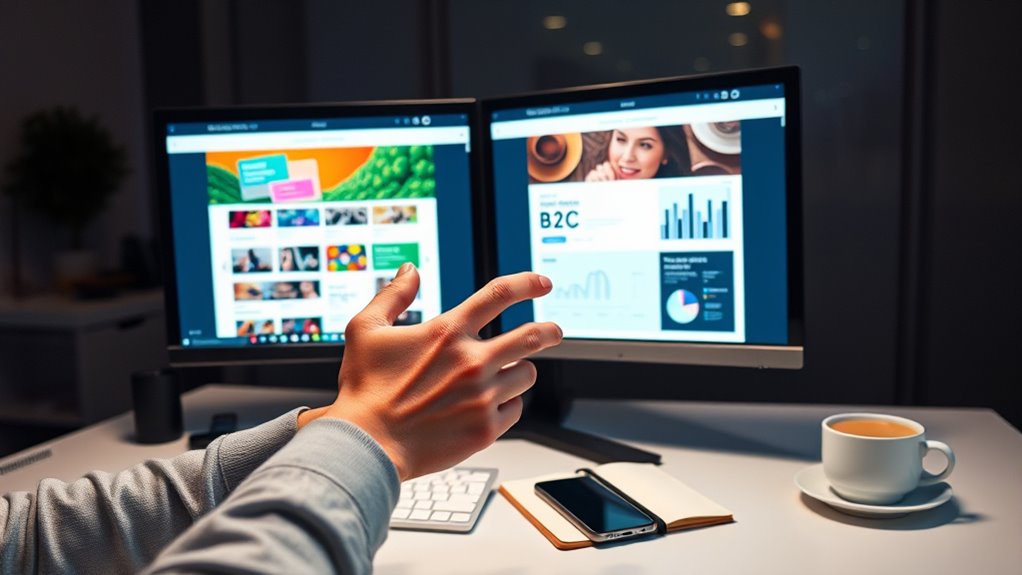

When choosing an email platform for B2C or B2B needs, consider your audience and goals. For B2C, you’ll want a platform that excels at broad personalization, engaging content, and automation like cart reminders or discounts. For B2B, focus on platforms that support deep segmentation, detailed targeting, and complex workflows to nurture relationships with decision-makers. Understanding these differences helps select the right tool—keep exploring to discover which platform aligns best with your strategies.
Key Takeaways
- Prioritize platforms with advanced personalization features for B2C and deep segmentation capabilities for B2B.
- Ensure the platform supports automation workflows suited for broad consumer engagement or complex B2B lead nurturing.
- Assess platform scalability to handle large contact volumes and evolving personalization or targeting needs.
- Choose a platform that aligns with your marketing objectives—wide reach for B2C or detailed relationship management for B2B.
- Consider integration options and analytics tools that enhance campaign effectiveness for either consumer or business audiences.
When selecting an email platform, understanding the differences between B2C and B2B needs is essential because each requires a tailored approach to maximize engagement and results. In the B2C world, your focus is on creating a connection that feels personal and relevant to a wide audience. To do this effectively, you need a platform that offers robust personalization strategies. These strategies allow you to customize emails based on customer behavior, preferences, and past purchases, making each message feel tailored to the individual. For example, recommending products based on browsing history or sending personalized discounts can considerably boost engagement. Personalization isn’t just about inserting a name; it’s about delivering content that resonates, which can increase open rates, click-throughs, and conversions. Additionally, integrating multi-channel marketing capabilities can further strengthen customer relationships and engagement.
On the other hand, B2B email marketing often involves nurturing longer-term relationships with complex decision-makers. Here, personalization strategies must go deeper, addressing specific pain points and business needs. The right platform should enable you to segment your audience precisely, ensuring your messages are relevant to each recipient’s role and industry. In addition, automation capabilities play a critical role in managing these tailored campaigns efficiently. Automated workflows can help you nurture leads over time, sending targeted content at key stages of the sales funnel. For example, after a webinar, you can trigger follow-up emails that provide additional resources or schedule demos automatically. This not only saves time but ensures your messaging remains consistent and strategic.
B2B email marketing requires deep segmentation, targeted automation, and personalized content for complex decision-makers.
Automation capabilities are also essential for B2C platforms, especially when managing large volumes of contacts. Automated campaigns like cart abandonment emails, welcome series, or birthday discounts can be set up once and run seamlessly, freeing you to focus on crafting compelling content. The ability to trigger personalized messages based on real-time actions ensures your audience feels seen and valued, which can lead to higher engagement rates. Both B2C and B2B platforms benefit from automation, but the scope and complexity differ depending on your audience and goals.
Ultimately, your choice hinges on whether your priorities lie more in broad-based personalization strategies for consumer engagement or in sophisticated automation capabilities that support detailed segmentation and nurturing for business clients. Recognizing these core needs will guide you toward a platform that not only fits your current objectives but can scale as your marketing strategies evolve. By understanding the unique demands of B2C and B2B email marketing, you can select a platform that enhances your outreach, deepens relationships, and drives measurable results.

E-mail marketing: Per far crescere il business (Italian Edition)
As an affiliate, we earn on qualifying purchases.
As an affiliate, we earn on qualifying purchases.
Frequently Asked Questions
How Do Pricing Structures Differ Between B2C and B2B Email Platforms?
You’ll notice that pricing models differ between B2C and B2B email platforms. B2C platforms often use a pay-as-you-go or tiered model based on subscriber count, making costs predictable for large audiences. B2B platforms tend to emphasize features like CRM integration and may offer customized pricing, leading to higher costs. For a clear cost comparison, consider your email volume, feature needs, and whether you prefer fixed or flexible pricing options.
What Security Features Are Essential for B2B Email Marketing?
They say, “Prevention is better than cure,” and that’s true for B2B email security. You need robust encryption protocols to protect sensitive data and strong user authentication to prevent unauthorized access. These features ensure your confidential information stays safe, maintaining trust and compliance. Prioritizing these security measures helps safeguard your business communications and prevents costly data breaches. Remember, security isn’t an option; it’s a necessity.
Can One Platform Effectively Serve Both B2C and B2B Email Needs Simultaneously?
Yes, one platform can effectively serve both B2C and B2B email needs, thanks to its versatility. You can leverage its email customization features to tailor messages for different audiences, ensuring relevance and engagement. By using a platform that offers flexible templates and segmentation, you simplify management while maintaining personalized communication. This approach helps you streamline your campaigns, saving time and resources while addressing the unique demands of both B2C and B2B markets.
Which Analytics Metrics Are Most Critical for B2B Versus B2C Campaigns?
You should focus on engagement rates and conversion metrics when analyzing your campaigns. For B2C, track open rates, click-through rates, and purchase actions to gauge customer interest and sales. In B2B, prioritize engagement rates like email replies and content downloads, along with conversion metrics such as demo sign-ups or consultations. These metrics help you understand how well your messaging resonates with each audience type and drives desired actions.
How Does Integration With CRM Systems Vary for B2C and B2B Platforms?
You’ll find that CRM integration varies between B2C and B2B platforms, with B2B often requiring more complex data synchronization due to larger, more detailed client profiles. B2C platforms focus on streamlined data sync for high-volume, quick interactions. To succeed, make certain your platform supports seamless CRM integration, enabling accurate data sync, real-time updates, and personalized messaging that resonates with your target audience, whether B2C or B2B.

B2B AI AUTOMATION: The 2-Hour Execution Manual to Automate Client Acquisition, Build Cold Email Bots, and Close High-Ticket Deals on Autopilot (No-Code)
As an affiliate, we earn on qualifying purchases.
As an affiliate, we earn on qualifying purchases.
Conclusion
Choosing the right platform is like finding the perfect key to open your audience’s door. B2C and B2B needs are unique, and your email tool should fit seamlessly like a puzzle piece. When you select the right platform, it’s as if you’re tuning an instrument—creating harmony between your message and your audience. So, take the time to choose wisely, and watch your email efforts strike the right chord every time.

Dremel 120-Volt Engraver Rotary Tool with Stencils – Crafting Machine Perfect for DIY Personalizing and Engraving Leather, Metal, Glass, and Wood , Black, 290-02
Dremel Engraver is ideal for personalizing your valuables as well as engraved decorative designs.
As an affiliate, we earn on qualifying purchases.
As an affiliate, we earn on qualifying purchases.

Programming Internet Email: Mastering Internet Messaging Systems
As an affiliate, we earn on qualifying purchases.
As an affiliate, we earn on qualifying purchases.