
To integrate warmup schedules into your long-term email strategy, start gradually increasing your sending volume while monitoring engagement metrics like opens and clicks. Use A/B testing to optimize content and build trust with email providers through consistent, relevant communication. Leverage data and advanced tools to refine your approach over time, ensuring better inbox placement and sender reputation. Keep a disciplined focus on ongoing testing and adjustments—the secrets to lasting email success are within your reach.
Key Takeaways
- Incorporate gradual volume increases during warmup to build sender reputation and ensure consistent growth aligned with audience response.
- Use A/B testing to refine email elements during warmup, optimizing engagement for long-term effectiveness.
- Continuously monitor engagement metrics to adjust email content and strategy, maintaining deliverability and trust over time.
- Leverage data-driven insights and AI tools to personalize and optimize email campaigns throughout the long-term strategy.
- Maintain disciplined testing and optimization to sustain sender credibility, improve inbox placement, and support ongoing campaign success.

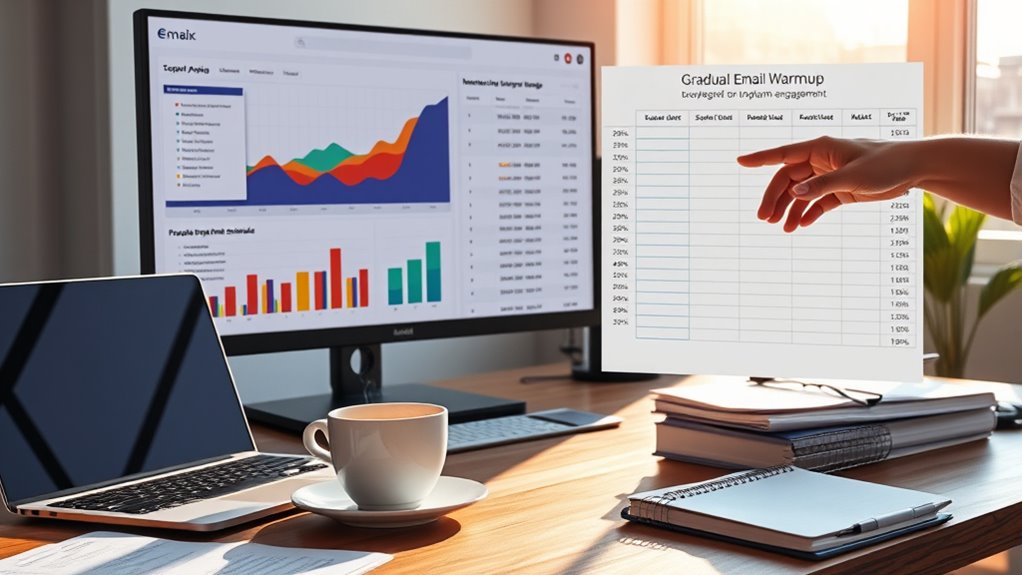
Implementing a warmup schedule is a crucial step in building a successful long-term email strategy. When you start warming up your email account, you’re not just gradually increasing your sending volume; you’re also laying the groundwork for better deliverability and engagement. A key part of this process involves A/B testing different elements of your emails—such as subject lines, sender names, and content—to see what resonates best with your audience. By systematically testing and analyzing these variables, you can optimize your campaigns to improve engagement metrics like open rates, click-through rates, and conversions. These metrics are essential indicators of your email’s performance, and tracking them during the warmup phase helps you identify what works and what doesn’t early on.
As you implement your warmup schedule, pay close attention to engagement metrics to guide your strategy. For instance, if you notice a spike in opens but low click-throughs, it might suggest your subject lines are compelling but your content isn’t engaging enough to motivate action. Conversely, a decline in engagement could mean your emails are landing in spam or your sender reputation is taking a hit. Adjust your tactics accordingly, perhaps by refining your content, segmenting your audience more effectively, or authenticating your emails to improve deliverability. Regularly monitoring these metrics provides actionable insights that allow you to make data-driven decisions, ensuring your email campaigns evolve in tandem with your audience’s preferences.
Incorporating A/B testing into your warmup schedule isn’t just about finding the best-performing email elements; it’s also about building trust with email providers. Consistently sending relevant, engaging content during the warmup phase signals to inbox algorithms that you’re a legitimate sender, which can positively influence your sender reputation. This reputation directly impacts your ability to reach your recipients’ inboxes rather than their spam folders. The more you fine-tune your approach based on engagement metrics, the better your reputation becomes, leading to higher deliverability rates over time.
Additionally, understanding the importance of AI in media and entertainment can help you leverage advanced tools for content optimization and personalization, making your emails more appealing and timely. Ultimately, integrating a warmup schedule into your long-term email strategy requires constant attention to data and a willingness to adapt. Use A/B testing to experiment with different tactics, and monitor engagement metrics to measure success. This disciplined approach ensures you’re not just sending emails blindly but building a sustainable, effective email program that fosters trust, enhances deliverability, and drives meaningful engagement with your audience.

Golf Swing Trainer, Grip Training Aid for Warm-Up & Timing Practice, Weighted Swing Training Tool, Golf Accessories, Golf GIF
REAL FEELING OF TRAINING: The swing trainer combines the essentials of a proper grip and the feel of…
As an affiliate, we earn on qualifying purchases.
As an affiliate, we earn on qualifying purchases.
Frequently Asked Questions
How Do Warmup Schedules Adapt to Different Industries?
You should tailor warmup schedules based on industry-specific adaptations, considering sectoral email tactics. For example, in e-commerce, gradually increase email volume during peak shopping seasons, while in B2B, focus on building trust with personalized, consistent outreach. Adjust your warmup pace depending on industry norms, spam risks, and engagement rates. This approach helps you maintain deliverability and engagement, ensuring your long-term email strategy aligns with sectoral expectations and best practices.
What Are Common Mistakes to Avoid When Implementing Warmup Schedules?
Don’t forget, skipping list hygiene or neglecting content consistency can turn your warmup into a spammy nightmare. Avoid sending sporadic emails or inconsistent messages that confuse your subscribers. Overloading your list too quickly or ignoring engagement metrics can also wreck your sender reputation. Keep your list clean and your content steady, or you’ll find your warmup schedule backfiring faster than you can say “unsubscribe.” Stay disciplined, and your email game will thrive.
How Can Warmup Schedules Influence Overall Email Deliverability?
Warmup schedules directly impact your sender reputation and engagement metrics. As you gradually increase email volume, your reputation stays strong, preventing spam filters. Consistent warmup helps build trust with inbox providers, leading to better deliverability rates. Plus, higher engagement from your audience signals to ISPs that your emails are valuable, boosting your reputation further. Overall, a well-planned warmup schedule guarantees your emails reach inboxes and maintain long-term success.
What’s the Ideal Duration for a Warmup Period in Long-Term Strategies?
A warmup period should last about 2 to 4 weeks, like nurturing a delicate plant. During this time, you build trust by gradually increasing your email volume, which boosts your email engagement and improves deliverability metrics. Rushing this process risks spam filters, so patience pays off. Keep monitoring your data, and adapt your pace to guarantee your reputation grows steadily, leading to better inbox placement long-term.
How to Measure the Success of Warmup Integration Over Time?
You measure the success of warmup integration by tracking email engagement and deliverability metrics over time. Look for improvements in open rates, click-through rates, and reduced bounce rates. Consistently monitor your sender reputation and inbox placement rates to guarantee your emails reach recipients. If these metrics improve steadily, it indicates your warmup efforts are effectively boosting your long-term email strategy, building trust with inbox providers and your audience.
![Express Schedule Free Employee Scheduling Software [PC/Mac Download]](https://m.media-amazon.com/images/I/41yvuCFIVfS._SL500_.jpg "Integrating Warmup Schedules Into Long‑Term Email Strategy 5")
Express Schedule Free Employee Scheduling Software [PC/Mac Download]
Simple shift planning via an easy drag & drop interface
As an affiliate, we earn on qualifying purchases.
As an affiliate, we earn on qualifying purchases.
Conclusion
By integrating warmup schedules into your long-term email strategy, you build trust and improve deliverability over time. For instance, imagine gradually increasing email volume after a rebranding, ensuring your messages reach inboxes consistently. This approach not only safeguards your sender reputation but also fosters stronger connections with your audience. Keep refining your warmup process and stay consistent, so your email campaigns remain effective and sustainable in the long run.

E-telligence: Email marketing isn't dead, the way you're using it is
As an affiliate, we earn on qualifying purchases.
As an affiliate, we earn on qualifying purchases.

Email Deliverability: A guide for engineers and marketers
As an affiliate, we earn on qualifying purchases.
As an affiliate, we earn on qualifying purchases.