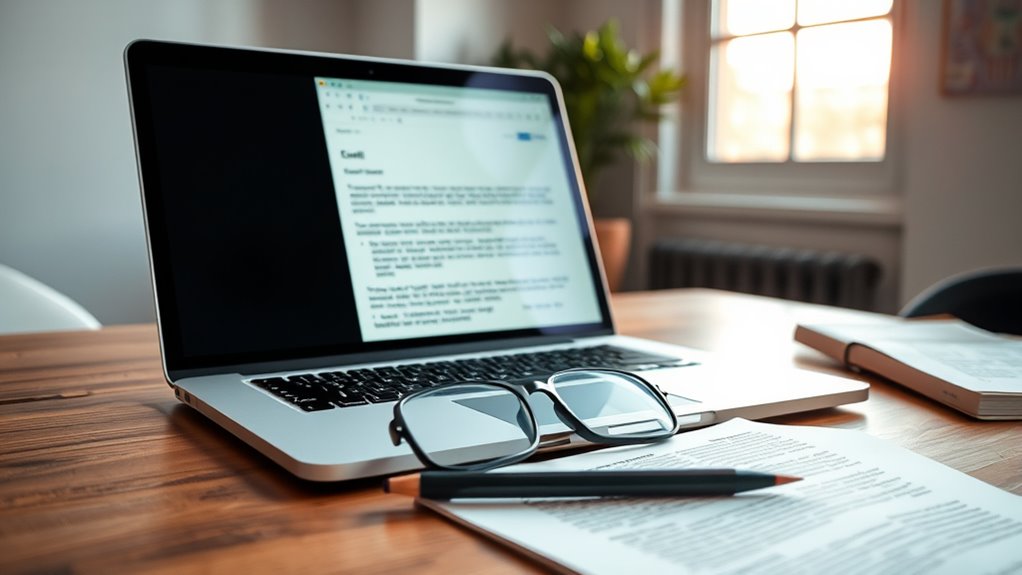

To craft polished emails, focus on thorough proofreading by reading aloud, double-checking names, and verifying details. Use spell check but don’t rely solely on it—review for tone, clarity, and conciseness. Watch for grammatical errors, awkward phrasing, and redundant language. Maintaining a respectful and professional tone is key. If you pay close attention to these tips, you’ll enhance your email quality and make a strong impression every time; there’s more to discover on this topic.
Open a free Amazon Business account
Business pricing, bulk buying and tax-exempt orders.
As an affiliate, we earn on qualifying purchases.
Key Takeaways
- Read the email aloud to catch awkward phrasing and run-on sentences.
- Use spell check and grammar tools, then verify manually for accuracy.
- Review recipient details carefully to prevent embarrassing mistakes.
- Maintain a polite, respectful tone aligned with the message’s purpose.
- Remove redundancies and unnecessary words to ensure clarity and professionalism.
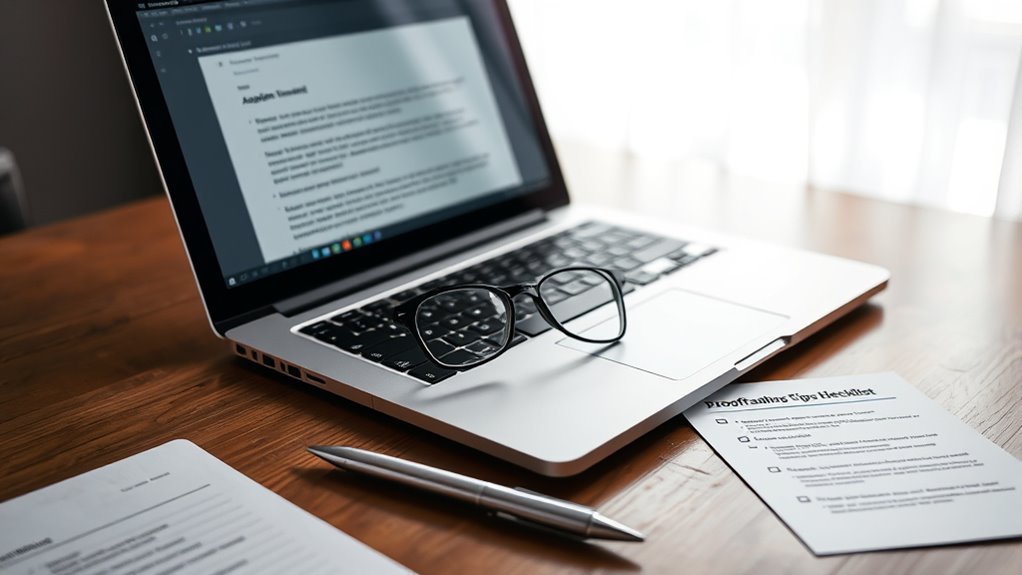
Proofreading is an essential step in ensuring your writing is clear, polished, and error-free. When it comes to emails, the importance of proofreading can’t be overstated, especially since your message reflects your professionalism and attention to detail. One of the key areas to focus on is email etiquette, which guides how you communicate respectfully and effectively. Even small mistakes in tone or wording can lead to misunderstandings or come across as careless. By carefully proofreading your emails before hitting send, you demonstrate respect for the recipient and reinforce your credibility.
Many people overlook common mistakes that slip into their emails, such as typos, grammatical errors, or awkward phrasing. These errors can undermine your message and make you appear inattentive. For instance, missing punctuation or misspelled words distract the reader and obscure your intent. In addition, improper use of greetings, closings, or tone can be perceived as unprofessional. Recognizing these common mistakes and actively correcting them during proofreading helps you maintain proper email etiquette and ensures your message comes across clearly. Remember, your email is often your first impression, so take the time to review it thoroughly.
Overlooking typos and tone can harm your email’s professionalism and clarity.
A practical way to avoid common mistakes is to read your email aloud. Hearing your words can help you catch awkward phrasing, run-on sentences, or missing words. Keep an eye out for repetitive language or overly complex sentences that might confuse the reader. Use tools like spell check and grammar check, but don’t rely solely on them—manual proofreading is vital because automated tools can miss nuanced errors or suggest incorrect corrections. Also, check the recipient’s name and details carefully to prevent embarrassing mistakes like misspelling their name or sending the email to the wrong person. Additionally, paying attention to the contrast ratio in your message can ensure your tone and clarity are appropriate for the context.
Pay close attention to your tone, especially in professional settings. Ensure that your language remains polite and respectful, avoiding overly casual phrases or emotional language that could be misinterpreted. Consider the context of your message; what seems clear and polite to you might not be perceived the same way by others. When proofreading, verify that your message is concise and to the point. Remove unnecessary words or redundant phrases to keep your email focused. This not only improves clarity but also respects the recipient’s time.
Frequently Asked Questions
How Can I Improve My Email Tone for Professionalism?
To improve your email tone for professionalism, focus on using formal language while maintaining a friendly tone. Address recipients politely, avoid slang, and choose clear, concise words. Use proper greetings and closings to set a respectful tone. Keep your sentences polite and positive, and avoid sounding overly casual. By balancing formal language with a friendly approach, you create emails that are professional, approachable, and effective.
What Are Common Grammar Mistakes to Watch Out for in Emails?
You should watch out for common misused words like “their” vs. “there” and “your” vs. “you’re,” which can confuse your message. Punctuation errors, such as missing commas or incorrect apostrophe use, also undermine professionalism. Always double-check your emails for these mistakes before sending. Clear, correct language not only improves your tone but also helps make sure your message is understood and well-received.
How Do I Ensure Clarity in Complex Email Messages?
You can guarantee clarity in complex email messages by focusing on a clear email structure. Break down your message into concise sections: an introduction, main points, and a conclusion. Use simple language and avoid jargon, and be specific with your details. Prioritize message clarity by reviewing your email for coherence and logical flow. This way, your recipients easily understand your intent, reducing confusion and encouraging effective communication.
Are There Tools to Help Automate Proofreading for Emails?
Think of proofreading apps as your digital lighthouse guiding your email ship safely to port. They’re perfect for automating proofreading, catching errors in your email templates before you send them out. These tools scan for grammar, spelling, and style issues, ensuring your message is clear and professional. Using proofreading apps saves you time and keeps your communication polished, so you can focus on what truly matters—your message.
How Should I Handle Urgent Email Corrections After Sending?
When you realize you need urgent email corrections after sending, act quickly with timing strategies. Send a follow-up email promptly, acknowledge the mistake, and include an apology phrase like “Sorry for the confusion.” Keep it concise, clarify the correction, and guarantee your tone remains professional. This shows responsibility and helps maintain your credibility while addressing the issue efficiently.
Conclusion
Remember, your emails are like reflections in a mirror—you want them clear and polished. Proofreading and grammar checks are your tools to guarantee your message shines without misunderstandings. Think of each email as a window into your professionalism; a small effort in editing can turn a good message into a great one. So, take that extra minute. After all, a well-crafted email isn’t just sent—it’s truly received.
Flea & tick season Picks
flea and tick prevention
As an affiliate, we earn on qualifying purchases.