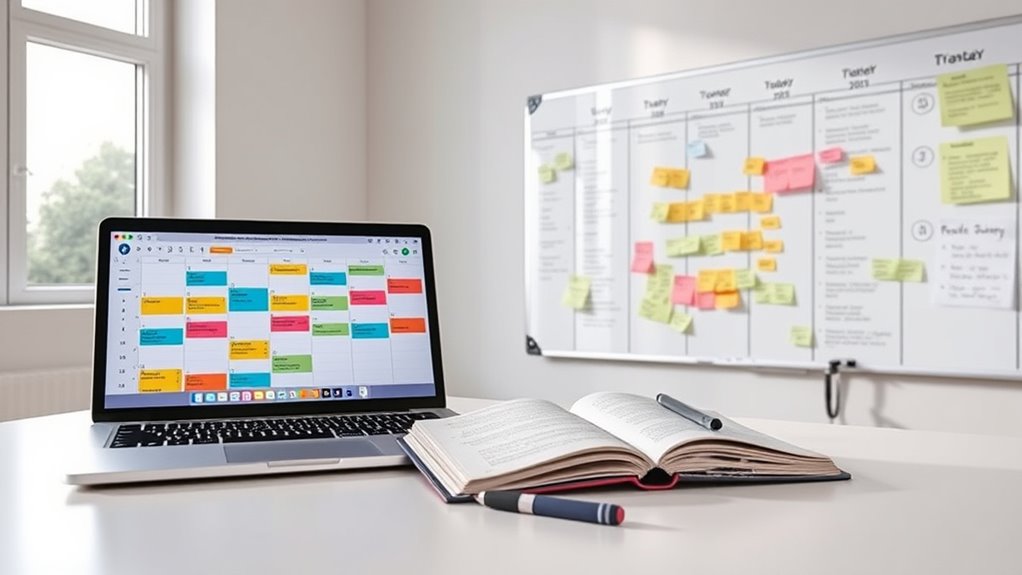

To design a year-long email roadmap, start by defining your core goals and mapping out key themes for each month, including seasonal events and product launches. Segment your audience early and tailor messages to each group for better relevance. Create a flexible content calendar that balances consistency with room for adjustments based on performance data. Want to uncover tips to keep your campaigns focused and impactful throughout the year? Keep exploring to learn more.

Get business pricing on office and shipping supplies
- Business-only prices and quantity discounts
- Tax-exempt purchasing
- Multiple users, one account, clear invoices
Key Takeaways
- Define clear marketing objectives and align themes, promotions, and seasonal events over the year.
- Develop a detailed content calendar with scheduled campaigns, including newsletters, offers, and product updates.
- Segment your email list early based on demographics, behavior, and purchase history for targeted messaging.
- Incorporate flexibility in your plan to adapt to new opportunities, trends, or performance insights.
- Regularly review analytics to adjust content, frequency, and strategy, maintaining relevance and engagement throughout the year.

Creating a year-long email roadmap is essential for building consistent engagement and achieving your marketing goals. When you plan your emails well in advance, you can better align your messaging with your audience’s needs and guarantee your campaigns stay relevant throughout the year. The foundation of this planning process centers on effective segmentation strategies and content calendar planning. Segmentation strategies allow you to tailor your messages to different audience segments, increasing relevance and engagement. By understanding your subscribers’ behaviors, preferences, and purchase history, you can craft targeted campaigns that resonate more deeply, leading to higher open rates and conversions.
Planning your year-long email strategy ensures relevant messaging and higher engagement through targeted segmentation and thoughtful content scheduling.
Start by defining your core goals for the year, such as nurturing leads, increasing sales, or boosting brand loyalty. With these objectives in mind, map out the key themes and promotions you want to highlight each month. Content calendar planning helps you visualize the flow of your campaigns, ensuring you have a steady stream of relevant content without last-minute scrambles. Incorporate seasonal events, product launches, or industry trends into your calendar to keep your emails timely and compelling. This foresight allows you to allocate resources effectively and develop content that aligns with your overall marketing strategy.
Segment your list early in the planning process, creating distinct groups based on demographics, engagement levels, or purchase behavior. This approach ensures you’re sending personalized content that appeals to each segment, increasing the chances of your emails being opened and acted upon. As you build your roadmap, assign specific campaigns or themes to each month, and determine the frequency of your emails within each segment. For example, you might schedule a monthly educational newsletter for new subscribers, a bi-weekly promotional offer for loyal customers, and special event reminders for particular segments.
Consistency is key in your email marketing efforts, so your roadmap should include a mix of different content types—newsletters, product updates, personalized offers, and surveys—to keep your audience engaged. Use your content calendar to plan these elements in advance, leaving room for flexibility in case of unexpected opportunities or changes. Regularly review your plan to adapt to performance data and evolving business priorities. Additionally, understanding the importance of organization and decluttering can help in maintaining a clear and effective content strategy, ensuring your campaigns remain focused and impactful. By establishing a comprehensive, strategic approach to your email campaigns over the course of 6 to 12 months, you’ll ensure your messaging remains relevant, timely, and impactful, ultimately driving sustained engagement and achieving your marketing goals.
email marketing campaign planner
As an affiliate, we earn on qualifying purchases.
As an affiliate, we earn on qualifying purchases.
Frequently Asked Questions
How Often Should I Review and Update My Email Roadmap?
You should review and update your email roadmap quarterly to stay aligned with your goals. During these reviews, analyze A/B testing results and customer segmentation data to refine your strategies. Regular updates help you adapt to changing customer behaviors and market trends, ensuring your campaigns remain effective. Keep an eye on engagement metrics and incorporate new insights, so your email marketing continues to drive results throughout the year.
What Tools Are Best for Tracking Long-Term Email Campaign Progress?
Did you know 72% of marketers use campaign analytics to track long-term email goals? You should leverage tools like HubSpot or Mailchimp, which integrate seamlessly with your content calendar. These platforms enable you to monitor key metrics, adjust strategies, and stay aligned with your roadmap. Using their analytics features, you can visualize progress over months, ensuring your campaigns stay on track and deliver consistent results.
How Do I Balance Evergreen Content With Timely Campaigns?
You should balance evergreen content with timely campaigns by focusing on content relevance for your audience segments. Send evergreen emails that provide lasting value, and complement them with timely campaigns tailored to specific segments based on recent behaviors or interests. This approach keeps your messaging fresh and engaging, ensuring your audience stays connected without sacrificing the consistency and relevance of your overall email strategy.
What Metrics Should I Monitor Throughout the Year?
Ever wonder what keeps your email strategy on track? You should observe subscriber engagement and open rate trends throughout the year. Focus on open rates, click-throughs, conversions, and unsubscribe rates to gauge campaign effectiveness. Tracking these metrics helps you identify what resonates and adjust accordingly. Are your emails driving the desired actions? Regularly reviewing these indicators ensures you stay aligned with your goals and keep your audience engaged.
How Can I Adapt My Plan for Unexpected Market Changes?
To adapt your plan for unexpected market changes, prioritize market flexibility and develop contingency planning. Stay alert to industry shifts and customer behavior, then adjust your email content and timing accordingly. Quickly reallocate resources or modify your campaigns to stay relevant. Regularly review your metrics and be prepared to pivot strategies, ensuring you maintain engagement and meet your goals despite market uncertainties.
Conclusion
By planning your email strategy 6 to 12 months in advance, you set yourself up for consistent engagement and growth. Remember, businesses that nurture segmented campaigns see a 760% increase in revenue—imagine the possibilities when your year-long roadmap keeps your audience captivated and invested. Stay proactive, adapt as needed, and watch your email efforts turn into a powerful, predictable revenue stream. Your organized approach will make every send count, building lasting customer relationships.
Fall Picks
fall essentials
As an affiliate, we earn on qualifying purchases.