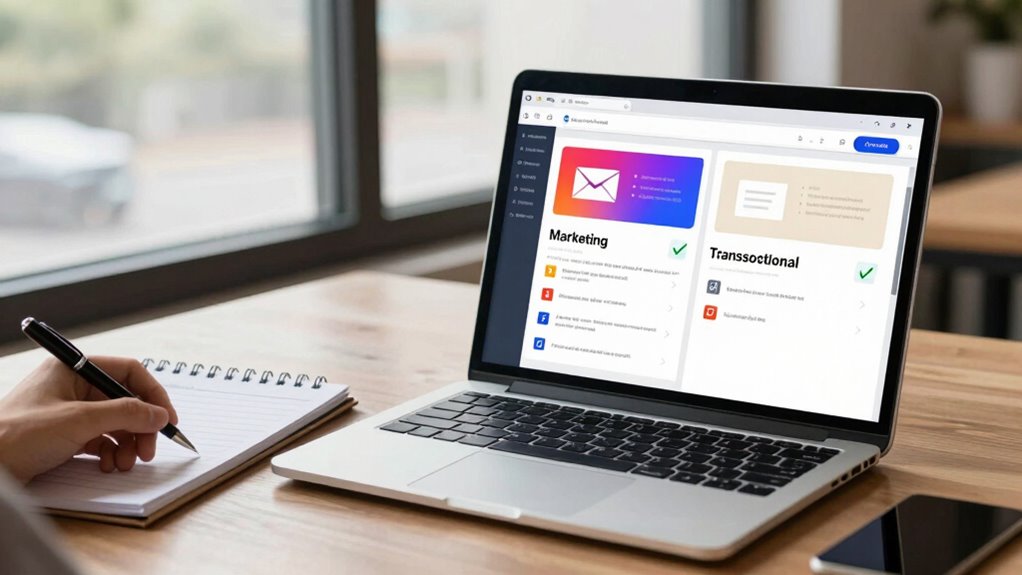

To separate marketing and transactional emails effectively, you should use different sending domains or IP addresses to distinguish between the two types. Clearly categorize your email content and guarantee transactional emails contain only critical information like order confirmations, while marketing emails focus on promotions. This separation improves deliverability, complies with regulations, and protects your sender reputation. Keep in mind that proper segmentation and content management are essential—continue to a deeper understanding to master this approach.
Key Takeaways
- Use distinct email sending domains or subdomains for marketing and transactional emails.
- Implement separate email lists and segments to ensure proper targeting and compliance.
- Clearly label and categorize emails to distinguish promotional content from transactional messages.
- Automate workflows to route different email types through designated channels.
- Regularly monitor deliverability and engagement metrics to maintain reputation and compliance standards.
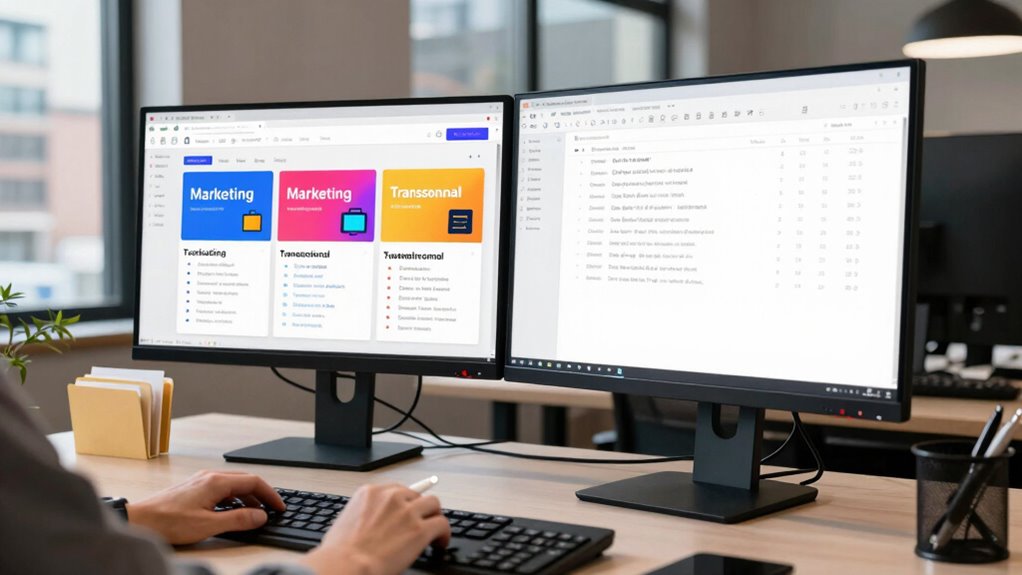
Have you ever wondered why separating your marketing and transactional email sending is vital for compliance and deliverability? The answer lies in understanding how these two types of emails serve different purposes and how their management impacts your overall email strategy. Marketing emails focus on engagement, promotions, and brand awareness, while transactional emails deliver critical, personalized information like order confirmations or password resets. Mixing them can lead to compliance issues, especially with regulations like GDPR and CAN-SPAM, which demand clear distinctions between promotional content and essential transactional messages. When you keep them separate, you reduce the risk of your marketing emails being flagged as spam and improve your chances of reaching your audience’s inboxes consistently. Additionally, email reputation management is crucial in maintaining high deliverability rates for both types of messages. Customer segmentation plays a key role in this process. By segmenting your contacts based on behaviors, preferences, or purchase history, you can tailor your transactional emails to specific groups. For example, a customer who just bought a product should receive a confirmation email that confirms their order details, while a different segment might get a follow-up survey or related product recommendations. Keeping transactional emails distinct from marketing campaigns ensures that each message aligns perfectly with the recipient’s expectations and needs. Proper content separation also helps prevent confusion and ensures compliance with email regulations. Implementing email list segmentation effectively can further optimize your email deliverability and engagement. Additionally, understanding the role of content in your emails can help you craft more targeted and effective messages. Leveraging insights from email engagement data allows you to refine your segmentation and improve overall communication strategies.
dedicated sending domain for transactional emails
As an affiliate, we earn on qualifying purchases.
As an affiliate, we earn on qualifying purchases.
Frequently Asked Questions
What Are the Legal Differences Between Marketing and Transactional Emails?
You need to know that legal differences hinge on email content and subscriber segmentation. Marketing emails promote products or services and require explicit consent, like opt-ins, and include unsubscribe options. Transactional emails, however, deliver essential information like receipts or password resets, and they’re usually exempt from strict marketing rules. Properly segment your subscribers and tailor your email content accordingly to stay compliant and respect their preferences.
How Can I Identify Which Emails Qualify as Transactional?
You can identify transactional emails by examining their email content and recipient segmentation. If the email provides essential information about a recent transaction, such as order confirmations or password resets, it qualifies as transactional. Focus on the recipient segmentation to make certain the email is sent only to relevant users. These emails are directly related to a user’s activity or account, making them distinct from marketing messages aimed at broad audience engagement.
What Are Common Mistakes to Avoid When Separating Email Types?
You should avoid mixing segmentation strategies and content personalization mistakes, like using broad categories that blur email types. Don’t assume all transactional emails need minimal personalization; they can still benefit from targeted content. Also, steer clear of sending marketing messages through transactional channels, which can confuse recipients and violate regulations. Always verify your email classification, keep segmentation clear, and tailor content appropriately to guarantee successful separation and compliance.
How Does Sender Reputation Impact Transactional Versus Marketing Emails?
Think of sender reputation as your email’s credit score—high reputation boosts deliverability, while a poor one leads to blacklisting. For transactional emails, maintaining a strong sender reputation is essential, as these messages are expected and trusted. Email segmentation helps separate marketing from transactional sends, protecting your reputation. If you neglect this, your reputation can suffer, causing both email types to land in spam folders, reducing engagement and trust.
Can a Single Email Service Provider Manage Both Email Types Effectively?
Yes, a single email service provider can manage both email types effectively by leveraging email segmentation and sender authentication. You should segment your email lists to distinguish between marketing and transactional messages, ensuring each gets appropriate treatment. Additionally, implementing strong sender authentication helps protect your reputation, ensuring both email types reach recipients’ inboxes without issues. Proper management and clear separation optimize deliverability and engagement for both marketing and transactional emails.
Conclusion
Imagine your email inbox as a well-organized garden, where marketing messages bloom brightly, catching attention without overshadowing the quiet, essential transactional emails. By separating these streams, you create a clear path for your recipients, guiding them smoothly through your communication landscape. When you master this balance, your emails become a harmonious flow—engaging, reliable, and easy to navigate—building trust and ensuring your messages always find their way home, just like a well-tended garden.