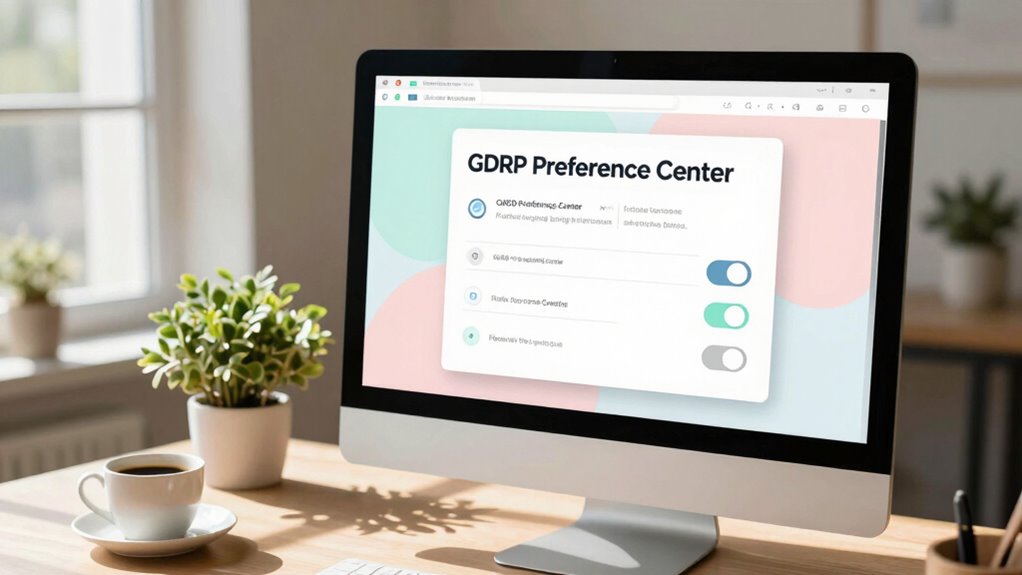

A GDPR Preference Center that truly builds trust focuses on transparency and giving you control over your data. It clearly explains how your information is used and offers simple options to opt-in or out, showing respect for your choices. This openness fosters genuine trust that goes beyond hype, demonstrating a real commitment to your privacy. If you want to learn more about creating a preference center that genuinely earns your confidence, keep exploring the key strategies ahead.
Key Takeaways
- Prioritizing clear, transparent user choices over marketing hype fosters genuine trust and demonstrates respect for user privacy rights.
- Offering an easy-to-use, accessible preference center encourages ongoing user engagement and confidence in data handling.
- Communicating openly about data collection and usage builds credibility beyond superficial promotional tactics.
- Consistently honoring user preferences reinforces a company’s commitment to privacy, strengthening long-term trust.
- Aligning practices with legal standards and emphasizing transparency reassures users more effectively than mere hype.
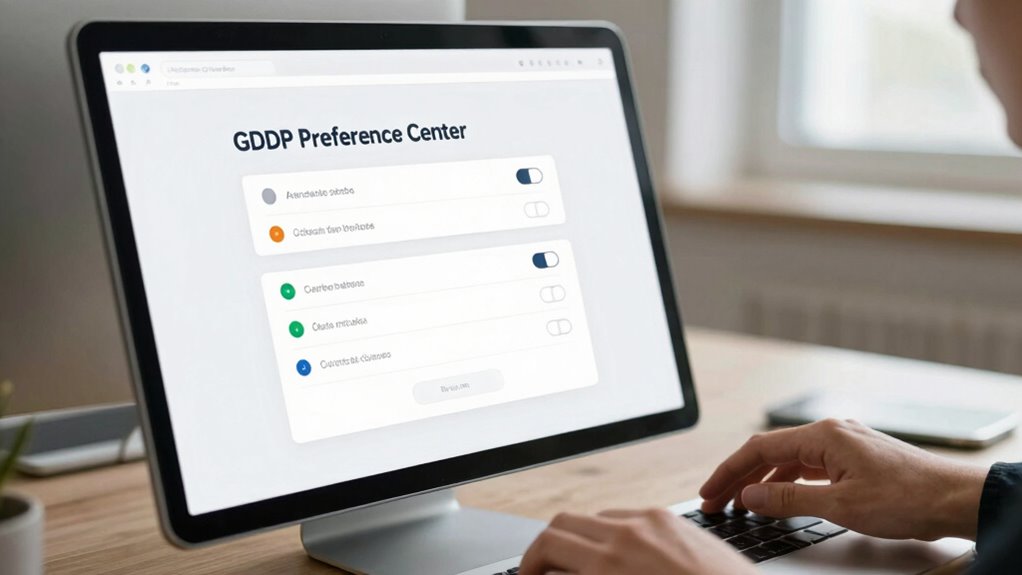
Implementing a GDPR Preference Center is a strategic move that empowers you to give users control over their data preferences and enhances your compliance efforts. By offering a centralized platform where users can manage their data privacy settings, you demonstrate transparency and respect for their rights. This approach isn’t just about ticking regulatory boxes; it’s about building genuine trust. When your users see they can easily specify what data they’re comfortable sharing and adjust their preferences at any time, they feel more in control and valued. That sense of agency fosters loyalty and confidence, which are far more powerful than any hype about data security.
Empowering users with control over their data builds trust and strengthens loyalty beyond simple compliance.
Focusing on user consent through a GDPR Preference Center ensures that your data collection is transparent and consensual. Instead of collecting data blindly or relying on vague agreements, you give users clear options to opt-in or opt-out of specific data uses. This transparency reassures your audience that you prioritize their data privacy. When users can make informed decisions about their personal information, they’re more likely to trust your brand and feel confident sharing data when necessary. This proactive stance on consent also reduces the risk of non-compliance penalties, since you’re actively respecting and documenting user choices. Additionally, incorporating data protection best practices into this process reinforces your commitment to safeguarding user information.
A well-designed preference center makes managing data privacy straightforward. It shows you’re committed to respecting individual rights, and it simplifies the process for users to adjust their preferences as their comfort levels change. This ongoing engagement boosts trust because it signals that you’re not just collecting data for the moment but are committed to maintaining privacy standards over time. Furthermore, user control over preferences emphasizes your dedication to transparency, which enhances overall trustworthiness. Additionally, when users see that your system respects their choices without hassle, it enhances their overall perception of your brand’s integrity. It’s not just about legal compliance; it’s about cultivating a reputation for honesty and respect. Incorporating trust-building strategies into your privacy management further solidifies this relationship. Recognizing the importance of privacy policies helps ensure your practices align with legal expectations and reinforce user confidence.
GDPR compliance preference center software
As an affiliate, we earn on qualifying purchases.
As an affiliate, we earn on qualifying purchases.
Frequently Asked Questions
How Does the GDPR Preference Center Differ From Traditional Opt-In Methods?
The GDPR preference center differs from traditional opt-in methods by giving you more user control and emphasizing privacy transparency. Instead of a simple yes or no, it lets you specify your preferences, choose what data you share, and easily update your choices. This approach builds trust, showing that your privacy matters and giving you clear visibility into how your information is used, unlike conventional, one-time opt-ins.
Can Small Businesses Effectively Implement This GDPR Tactic?
Over 70% of consumers value transparency in data practices, so small businesses can effectively implement the GDPR preference center by prioritizing privacy compliance and customer transparency. This tactic builds trust and loyalty, often more than traditional marketing hype. With simple tools and clear communication, small businesses can customize preferences, demonstrate respect for customer data, and create a positive reputation. It’s accessible and impactful, even on a tight budget.
What Are Common Challenges Faced When Deploying a GDPR Preference Center?
When deploying a GDPR preference center, you often face challenges with privacy compliance and ensuring data transparency. You might struggle to keep user preferences updated accurately or meet strict regulations while maintaining a user-friendly experience. Balancing transparency about data use and respecting user choices can be complex. To succeed, you need clear communication, robust systems, and ongoing monitoring to uphold privacy standards and build trust with your users.
How Does This Tactic Impact User Engagement Rates?
Sure, because who doesn’t love a good trust-building exercise? When you prioritize transparency with your GDPR preference center, you boost user trust, which naturally lifts engagement metrics. Instead of gimmicks, you foster genuine connections, making users more likely to interact. This honest approach encourages repeat visits, improves overall engagement, and turns passive visitors into loyal customers. Trust is the real secret sauce for higher engagement rates—no hype required.
Are There Specific Industries That Benefit Most From This Approach?
You’ll find that industry-specific sectors like finance, healthcare, and e-commerce benefit most from this approach, as they handle sensitive data. By prioritizing transparency and giving users control over their preferences, you boost consumer trust. This tactic helps you stand out in competitive markets, encouraging loyalty and engagement. In these industries, building trust is essential, making this GDPR preference center strategy especially effective for fostering long-term relationships.
Conclusion
By implementing a GDPR preference center, you build genuine trust with your audience. Instead of overwhelming them with hype, you respect their choices and provide clarity. Did you know that 78% of consumers say trust influences their purchasing decisions? When you prioritize transparency and let users control their data, you foster loyalty that lasts. Embrace this tactic, and you’ll see stronger relationships—and better results—thanks to a more honest, respectful approach.