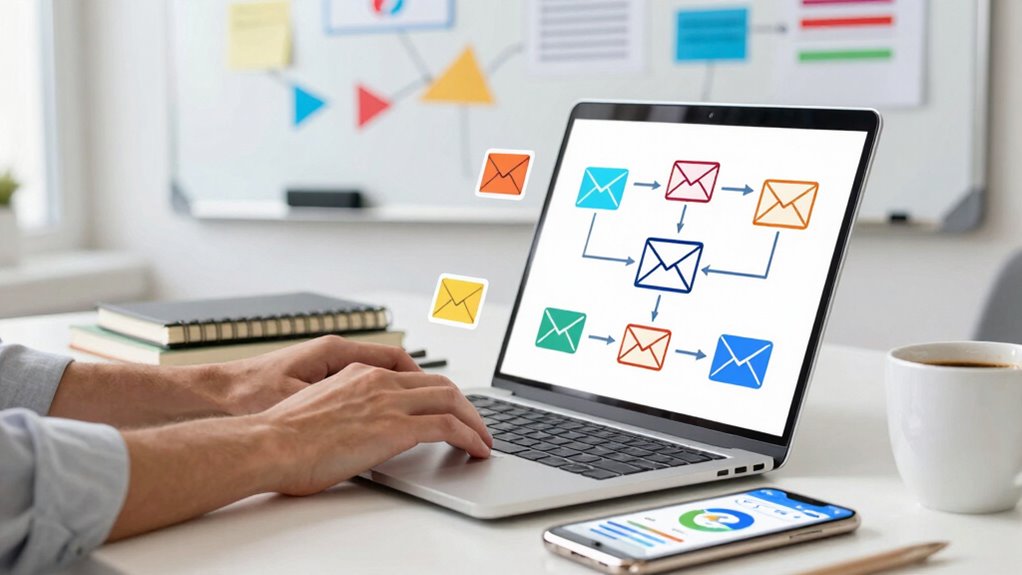

To build a scalable email operating system, start by segmenting your audience based on behaviors, preferences, and purchase history to make your messages more relevant. Use automation workflows triggered by specific actions or timeframes to save time and nurture relationships. Incorporate data insights to refine your content and improve engagement. Choose the right tools that support dynamic segmentation and complex workflows, then continually analyze performance metrics to optimize your system as your brand grows. Keep exploring to master this process.

Get business pricing on office and shipping supplies
- Business-only prices and quantity discounts
- Tax-exempt purchasing
- Multiple users, one account, clear invoices
Key Takeaways
- Implement customer segmentation to target specific groups with personalized messaging.
- Design automated workflows triggered by customer actions to ensure timely, relevant communication.
- Use data insights and content segmentation to continuously optimize campaign relevance and engagement.
- Integrate marketing tools seamlessly, supporting dynamic segmentation and complex automation workflows.
- Regularly analyze performance metrics to refine segments, workflows, and improve overall campaign effectiveness.
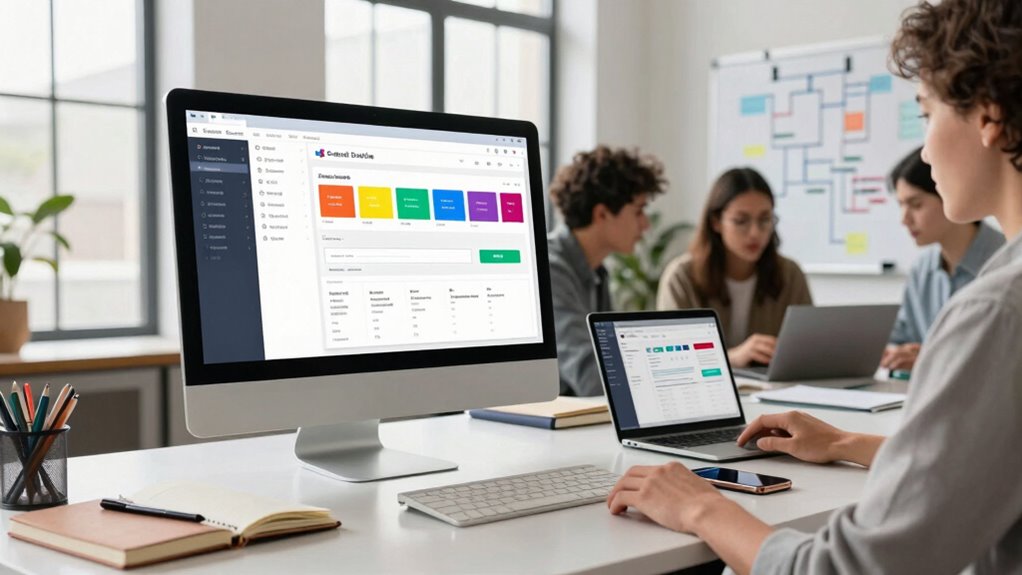
As your brand grows, managing your email communications can become overwhelming without a structured system in place. You want to stay connected with your audience, nurture relationships, and drive conversions, but doing so manually quickly becomes unsustainable. That’s where building an email operating system comes in. It’s about creating a streamlined, automated approach that allows you to send the right message to the right person at the right time. The foundation of this system starts with customer segmentation. Instead of treating your entire email list as one monolith, you break it into targeted groups based on behaviors, preferences, purchase history, or engagement levels. This segmentation ensures your messages are relevant, increasing open rates and fostering loyalty. When you understand your audience segments, you can craft tailored campaigns that resonate more deeply, making your communications feel more personal and less generic.
Once you’ve segmented your audience, the next step is designing automation workflows. These are the sequences of emails triggered by specific actions or timeframes, allowing your system to run on autopilot while you focus on strategic growth. For example, you might set up an onboarding workflow that automatically sends new subscribers a series of welcome emails, introducing your brand and offering valuable content. Or, you could create cart abandonment sequences that remind customers to complete their purchase, encouraging conversions without manual follow-up. Automation workflows help nurture leads, retain customers, and increase lifetime value by ensuring consistent, timely communication without constant manual effort. Additionally, leveraging content segmentation techniques can help you deliver even more targeted and personalized messages that resonate with each customer group. Incorporating data-driven insights can further optimize your campaigns by aligning your messaging with actual customer behaviors and preferences. Understanding the importance of technology integration is crucial, as it enables your system to seamlessly connect various tools for a cohesive workflow. Furthermore, selecting tools that support best practices in email marketing can significantly enhance the effectiveness of your campaigns.
Design automation workflows to nurture leads, boost retention, and save time with timely, targeted email sequences.
To make this system truly effective, you should leverage email marketing tools that support segmentation and automation. Choose platforms that allow you to easily create dynamic segments and build complex workflows with visual editors. As you implement these, continuously analyze performance metrics like open rates, click-through rates, and conversions. Use this data to refine your segments and tweak your workflows, making sure your messages stay relevant and compelling. Over time, you’ll develop a sophisticated operating system that adapts to your growing brand, automating routine tasks and personalizing your outreach at scale.
Ultimately, building an email operating system isn’t a one-and-done task; it’s an ongoing process of refinement. By focusing on customer segmentation and automation workflows, you ensure your email marketing remains efficient, targeted, and impactful. This systematic approach not only saves you time but also builds stronger relationships with your audience, fueling your brand’s growth and success.
email marketing automation platform
As an affiliate, we earn on qualifying purchases.
As an affiliate, we earn on qualifying purchases.
Frequently Asked Questions
How Long Does It Take to Implement an Email Operating System?
Implementing an email operating system typically takes a few weeks, depending on your brand’s complexity. You’ll need time to set up email segmentation and automation workflows tailored to your audience segments. Start with basic segmentation and automation, then expand over time. Expect to spend 2-4 weeks initially, but ongoing optimization and testing will improve your system’s effectiveness as you gather data and refine your strategies.
What Are the Common Mistakes to Avoid During Setup?
Avoid amateurish mistakes like neglecting segmentation strategies and skipping content personalization. Missteps happen when you overlook audience nuances, leading to irrelevant emails that alienate subscribers. Don’t disregard data-driven insights, as they’re essential for crafting compelling, customized messages. Keep your setup streamlined, double-check automation workflows, and test thoroughly. By steering clear of these errors, you’ll foster engagement, enhance loyalty, and guarantee your email system truly supports your brand’s growth.
How Do I Measure the Success of My Email System?
You measure your email system’s success through email engagement metrics like open rates, click-through rates, and conversions. Keep an eye on how well your subscriber segmentation targets the right audiences, boosting engagement. Regularly analyze these metrics to identify what resonates and refine your campaigns. If engagement improves and your segmentation leads to more meaningful interactions, your email system is effectively supporting your brand’s growth.
What Tools Integrate Best With an Email Operating System?
Tools that seamlessly sync with your email operating system include platforms like Mailchimp, HubSpot, and ActiveCampaign. These tools excel at enabling email segmentation and automating workflows, making your email marketing more manageable and meaningful. They integrate smoothly, supporting your efforts to personalize content and automate actions. By choosing these options, you simplify synchronization, streamline segmentation, and supercharge your system’s effectiveness, helping your brand grow gracefully and confidently.
How Can I Ensure Data Privacy and Compliance?
You can guarantee data privacy and compliance by implementing data encryption for all sensitive information, safeguarding customer data from breaches. Regularly review and update your privacy policies to align with current regulations like GDPR or CCPA. Educate your team on these policies, and enforce strict access controls. Consistently audit your systems and practices to identify vulnerabilities, keeping customer trust and legal compliance at the forefront of your email operations.
Conclusion
By now, you see that building an email operating system isn’t just a nice-to-have—it’s your secret weapon for growth. Stay proactive, adapt to new challenges, and keep refining your strategies. Remember, Rome wasn’t built in a day, and neither will your perfect system. Keep your eye on the prize, and soon, you’ll be reaping the rewards of a well-oiled email machine that propels your brand forward. The sky’s the limit—go for it!
Halloween Picks
halloween
As an affiliate, we earn on qualifying purchases.