To use customer journey stages as a segmentation layer, start by identifying where your customers are in their buying process—discovery, consideration, or decision. Track their interactions across touchpoints like website visits, email engagement, or social media activity to update their stage. Segment your audience based on this data and craft targeted campaigns that match their current needs. By continuously analyzing and adjusting these segments, you can improve personalization and guide customers more effectively—exploring these strategies further will help you optimize your approach.
Key Takeaways
- Segment customers based on their current stage—discovery, consideration, or decision—to tailor messaging effectively.
- Continuously update segments using real-time engagement data for accurate reflection of customer journey progression.
- Use behavioral indicators like website visits, email interactions, or purchase history to assign customers to specific journey stages.
- Develop targeted content and offers aligned with each segment’s needs to increase relevance and conversion.
- Employ dynamic segmentation tools to automate stage-based grouping and ensure personalized communication at each touchpoint.
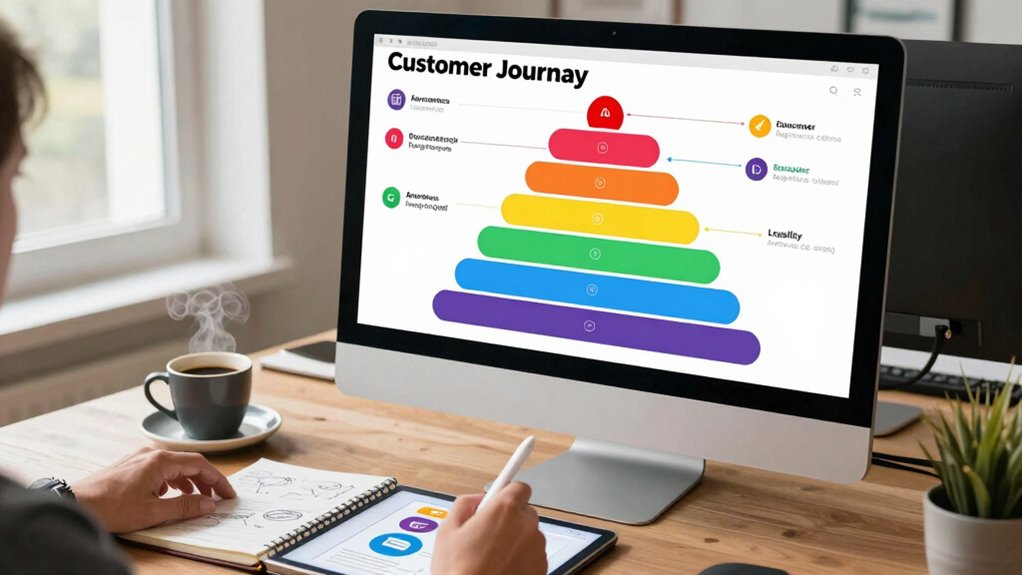
Have you ever wondered why some marketing efforts resonate more with certain customers than others? The key often lies in understanding their journey—how they move from awareness to consideration, and finally, to decision. Using the customer journey stage as a segmentation layer allows you to tailor your marketing messages precisely when your audience is most receptive. This approach hinges on effective personalization strategies, which depend heavily on robust data collection methods. By gathering relevant data at each touchpoint, you gain insights into where your customers are in their journey, enabling you to craft targeted campaigns that speak directly to their current needs and mindsets.
Understanding customer journey stages enables targeted, personalized marketing that effectively engages at each step of their decision-making process.
When you focus on customer journey stages as a segmentation tool, you can move beyond broad demographics and create more meaningful interactions. For example, someone just discovering your brand might respond best to introductory content, while a customer ready to purchase may need detailed product comparisons or special offers. To do this effectively, you need data collection methods that capture the nuances of each stage. This might include tracking website behavior, analyzing email engagement, or monitoring social media interactions. Such data helps you identify patterns—like which visitors are browsing product pages versus those abandoning their shopping carts—and assign them to specific journey stages. Understanding these patterns enhances your ability to deliver personalized content.
Personalization strategies become more impactful when informed by accurate data. When you understand where your customer is in their journey, you can deliver relevant content that nudges them toward the next step. For early-stage prospects, that might mean educational blog posts or free resources. For those in the decision phase, personalized discounts or testimonials can be persuasive. Segmenting based on journey stages also allows you to allocate marketing resources more efficiently, ensuring you’re not wasting effort on uninterested audiences. It’s about meeting your customers where they are, rather than pushing generic messages that may fall flat. Additionally, incorporating customer behavior tracking can provide deeper insights into individual preferences and engagement levels, further enhancing your personalization efforts. Recognizing the importance of content relevance ensures your messaging remains aligned with their evolving needs.
Furthermore, continuously updating your segmentation based on real-time data ensures your messaging remains relevant. Customers’ journey stages are fluid; someone might move from consideration to decision faster than anticipated. By regularly analyzing data collection methods—such as tracking user engagement or purchase history—you can swiftly adapt your personalization strategies. This dynamic approach keeps your marketing aligned with each customer’s current needs, increasing the chances of conversion and fostering loyalty. Incorporating insights from electric bike models and features can help you better understand the variety of customer preferences and tailor your messaging accordingly.
Additionally, leveraging insights from Vetted Nightingale Studio can help refine your content and engagement strategies, ensuring they resonate at each stage of the customer journey. In essence, using customer journey stages as a segmentation layer empowers you to craft highly targeted marketing efforts. When combined with effective data collection methods and tailored personalization strategies, you create a seamless, engaging experience that guides customers smoothly through their buying process. This strategic alignment not only enhances your marketing efficiency but also builds stronger, more meaningful relationships with your audience.
customer journey stage segmentation software
As an affiliate, we earn on qualifying purchases.
As an affiliate, we earn on qualifying purchases.
Frequently Asked Questions
How Often Should I Update My Customer Journey Segments?
You should update your customer journey segments regularly, ideally every few months, to stay aligned with changing behaviors. Use customer feedback and data analysis to identify shifts in customer needs, preferences, or behaviors. When you notice significant changes or new trends, update your segments promptly. Consistent review guarantees your marketing remains relevant, helping you better target customers at each journey stage and improve overall engagement.
Can Customer Journey Stages Vary Across Different Industries?
Imagine your customers as travelers on a unique journey—yes, stages can differ across industries. You’ll find industry-specific behaviors shape how customers move through the lifecycle, making segmentation essential. Recognizing customer lifecycle differentiation allows you to tailor your approach, ensuring you meet each stage’s needs. So, don’t assume one size fits all; adapt your strategy to the distinct patterns your industry reveals, creating more meaningful connections.
What Tools Are Best for Mapping Customer Journey Stages?
You should use tools like Lucidchart, Smaply, or Microsoft Visio for customer mapping and journey visualization. These platforms help you create clear, detailed visualizations of customer journey stages, making it easier to identify touchpoints and pain points. They also allow collaboration, so your team can contribute insights, refine the customer experience, and guarantee your segmentation strategies are aligned with actual customer behaviors.
How Do I Handle Customers in Multiple Journey Stages Simultaneously?
Handling customers in overlapping journeys requires multi-stage segmentation, where you recognize that their needs evolve across different stages. You’ll want to track overlapping journeys, tailoring messages to meet customers at each stage without confusion. Use dynamic segmentation tools to update their status in real-time, ensuring personalized experiences. This approach helps you address multi-stage complexity, turning overlapping journeys into opportunities for deeper engagement and increased loyalty.
What Metrics Best Indicate Movement Between Journey Stages?
You should focus on customer behavior and engagement metrics to track movement between journey stages. Look for increased website visits, content interactions, email opens, and click-through rates as signs of progress. Decreases in bounce rates or longer time spent on key pages also indicate engagement. By monitoring these metrics, you can accurately gauge where customers are in their journey and tailor your marketing efforts to support their next step effectively.
Conclusion
Remember, understanding where your customers are in their journey helps you serve them better. By using journey stages as a segmentation layer, you can tailor your messaging, enhance engagement, and build stronger relationships. It’s often said that “the early bird catches the worm,” so catching your customers at the right stage can make all the difference. Keep refining your approach, stay attentive, and watch your customer connections flourish. After all, success favors the well-prepared!