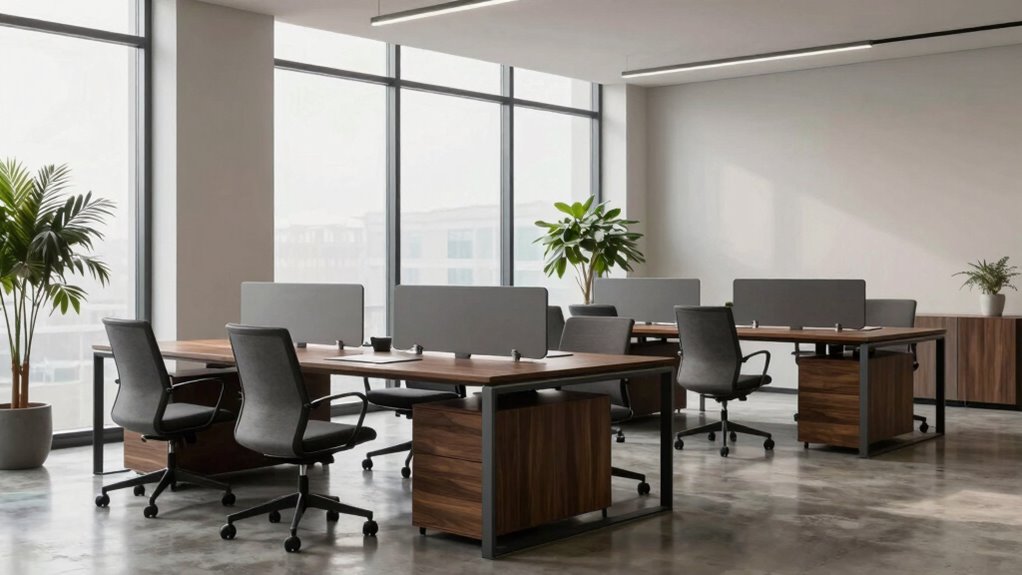

To create a quiet workspace, you need to control noise levels and design spaces that minimize distractions. Use soundproofing elements like acoustic panels, carpets, or ceiling tiles, and consider noise-canceling headphones for personal quiet zones. Strategic placement of workstations away from high-traffic areas also helps. By prioritizing noise reduction, you’ll boost focus, reduce stress, and increase productivity. If you stick with this approach, you’ll discover even more ways to optimize your work environment.

Get business pricing on office and shipping supplies
- Business-only prices and quantity discounts
- Tax-exempt purchasing
- Multiple users, one account, clear invoices
Key Takeaways
- Many offices are shifting from open-plan layouts to dedicated quiet zones to enhance focus.
- Incorporating soundproofing elements like acoustic panels and carpets effectively reduces noise.
- Strategic placement of workstations minimizes external distractions and promotes concentration.
- Noise-canceling tools and private rooms are increasingly used to create personalized quiet environments.
- Emphasizing noise management improves productivity, decision-making, and reduces employee stress.
Creating a productive workspace isn’t just about having a tidy desk; it’s about designing an environment that minimizes distractions and boosts your focus. One of the most effective ways to do this is by emphasizing noise reduction. When background noise is kept at bay, your mind doesn’t have to work overtime filtering out irrelevant sounds. This quiet environment allows you to concentrate deeply on your tasks, whether you’re analyzing data, writing reports, or having important virtual meetings. Noise reduction doesn’t necessarily mean complete silence; it’s about creating a balanced acoustic environment that keeps disruptive sounds at a minimum, so your attention remains on work, not on external chaos.
Many offices are rediscovering the power of quiet spaces for productivity enhancement. Open-plan layouts, once favored for fostering collaboration, often lead to increased noise levels that hinder focus. More companies are now investing in soundproofing elements—such as acoustic panels, carpets, and specialized ceiling tiles—to dampen noise. You might also find that using noise-canceling headphones becomes part of your daily routine, helping you carve out a personal zone of quiet amidst a bustling office. These adjustments are simple but impactful, transforming a noisy workspace into a sanctuary of concentration.
Many offices are investing in acoustic panels and noise-canceling tools to create focused, quiet work environments.
Designing for noise reduction also involves strategic placement of workstations. Separating high-traffic areas from quiet zones allows you to choose a spot where external sounds are minimal. If your office has private rooms or booths, utilizing these for focused work can considerably boost productivity. When you eliminate or reduce distracting sounds, you’re naturally able to work more efficiently. This, in turn, accelerates your progress on projects and reduces the mental fatigue caused by constant interruptions.
The benefits of a quieter workspace extend beyond mere comfort. When noise levels are controlled, your ability to process information improves, leading to better decision-making and higher-quality output. You’ll find that your overall productivity enhancement is directly linked to how well you manage noise. Implementing noise reduction strategies isn’t just about comfort; it’s a smart move to optimize your work environment. As more offices realize this, they’re making deliberate investments in acoustic solutions, recognizing that a quieter workspace isn’t a luxury, but a necessity for sustained focus and efficiency. Ultimately, creating a workspace that emphasizes noise reduction helps you work smarter, with less stress, and with a clearer mind.
As an affiliate, we earn on qualifying purchases.
Frequently Asked Questions
How Does Noise Reduction Impact Employee Productivity?
Reducing noise boosts your productivity by creating a more focused work environment. Soundproof solutions lower ambient noise levels, allowing you to concentrate better and avoid distractions. When noise is minimized, you can complete tasks faster and with greater accuracy. This calm atmosphere also reduces stress, helping you stay motivated throughout the day. Ultimately, effective noise reduction makes your workspace more conducive to efficiency and enhances your overall work experience.
What Are Cost-Effective Ways to Create Quiet Workspaces?
Think of creating a sanctuary like the Taj Mahal—beautiful yet functional. You can achieve this on a budget by installing affordable acoustic panels to absorb sound and using sound masking systems to drown out distractions. These solutions are cost-effective, easy to implement, and considerably improve workspace quietness. By focusing on strategic placement of acoustic panels and deploying sound masking, you create a serene environment that boosts productivity without breaking the bank.
How Can Companies Measure Success With Quiet Workspace Initiatives?
You can measure success with quiet workspace initiatives by tracking employee satisfaction through surveys and feedback, focusing on how well the space meets their needs. Monitor productivity levels and observe reduced distractions. Workspace customization allows employees to personalize their areas, boosting comfort and satisfaction. If these metrics improve over time, it indicates your quiet workspace efforts are effective, fostering a more focused, happier, and engaged workforce.
Are Quiet Workspaces Suitable for All Types of Work?
Quiet workspaces aren’t suitable for every task or person. You face personalization challenges in tailoring spaces to diverse needs, and cultural considerations can influence comfort levels and collaboration styles. While they excel for focused, individual work, they might hinder teamwork and spontaneous interactions. You need to evaluate the nature of work, team dynamics, and employee preferences to determine if a quiet workspace fits your organization’s goals and culture.
What Technology Can Enhance Quiet Workspace Environments?
You can enhance quiet workspace environments with technology like acoustic panels, which absorb sound and reduce noise distractions. Sound masking systems are also effective, adding a subtle background noise that masks conversations and other disruptive sounds. Together, these tools create a more focused atmosphere, helping you stay productive. By incorporating acoustic panels and sound masking, you transform your space into a peaceful, efficient environment perfect for concentration and collaboration.
Conclusion
Imagine stepping into a workspace where silence whispers productivity, and the hum of distractions fades into the background. In this quiet haven, your focus sharpens, ideas flow freely like a gentle stream, and your mind finds peace amidst the chaos. Embracing this calm isn’t just about reducing noise—it’s about creating a sanctuary for your best work. Rediscover the power of quiet, and watch your creativity and clarity flourish like a garden in full bloom.
Fall Picks
fall essentials
As an affiliate, we earn on qualifying purchases.