
TL;DR
Open a free Amazon Business account
Business pricing, bulk buying and tax-exempt orders.
Create a free accountAs an affiliate, we earn on qualifying purchases.
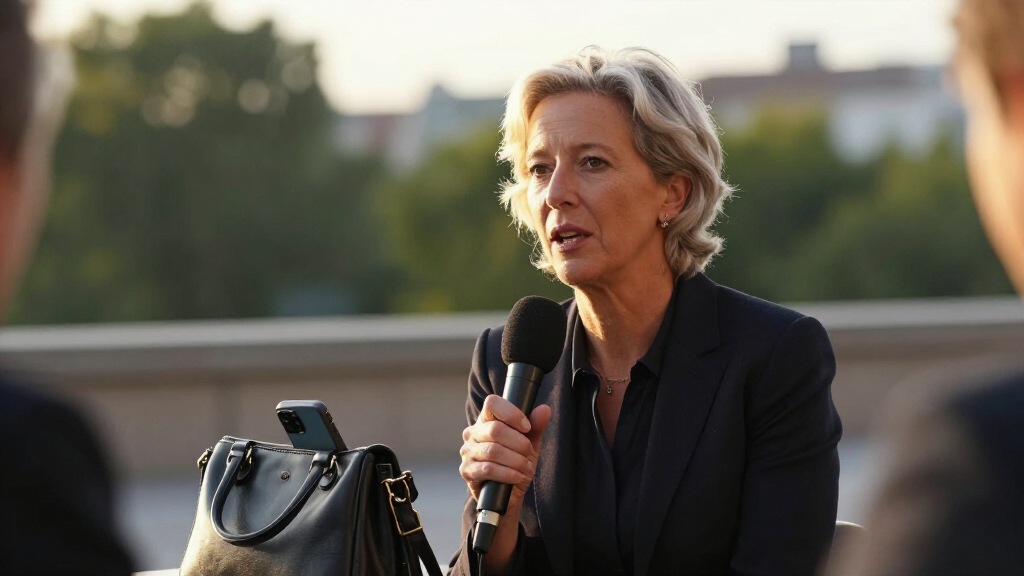
ECB President Christine Lagarde gave an interview to Ouest-France, discussing the eurozone’s economic outlook and policy focus. The interview offers insights into the ECB’s current stance amid ongoing economic uncertainties.
ECB President Christine Lagarde has publicly shared her views on the eurozone’s economic trajectory in an interview with Ouest-France, emphasizing ongoing challenges and the ECB’s policy approach. This marks her first detailed discussion on the economy since recent market volatility and inflation concerns intensified interest in her outlook. The interview is significant as it provides the clearest insight yet into the ECB’s current thinking amid a complex economic environment.
In the interview published on March 2024, Christine Lagarde discussed the eurozone’s economic outlook, acknowledging that growth remains modest and uneven across member states. She highlighted that inflation has slowed but remains above the ECB’s target, prompting continued vigilance in monetary policy. Lagarde emphasized that the ECB is committed to maintaining a data-dependent approach, balancing inflation risks against growth concerns. She also addressed recent market volatility, noting that the ECB monitors developments closely but remains focused on its inflation mandate.
Lagarde reaffirmed the ECB’s intention to keep interest rates at elevated levels until inflation shows clear signs of returning to target levels. She indicated that the bank is prepared to adjust policies if needed, depending on incoming economic data. The interview also touched on the ECB’s stance toward economic resilience, with Lagarde calling for structural reforms and fiscal support from governments to bolster growth and stability. She did not specify any upcoming policy moves but reiterated that the ECB remains ready to act if inflation persists above target or if financial stability is threatened.
Implications of Lagarde’s Economic Outlook for Markets
This interview is significant because it provides the most detailed public commentary from ECB leadership since recent market turbulence and inflation concerns. Lagarde’s emphasis on vigilance and readiness to adjust policy underscores ongoing uncertainty in the eurozone’s economic recovery. Investors, policymakers, and economists will interpret her remarks as signals of the ECB’s cautious stance, which could influence future interest rate decisions and financial stability measures. The focus on structural reforms also highlights the importance of fiscal policy alongside monetary policy in ensuring sustainable growth.
As an affiliate, we earn on qualifying purchases.
Recent Economic Challenges and ECB Policy Signals
The eurozone has faced a series of economic headwinds over the past year, including persistent inflation above the ECB’s 2% target, geopolitical tensions, and market volatility. The ECB has responded by raising interest rates multiple times since mid-2023, aiming to curb inflation without overly hampering growth. Market reactions to these rate hikes have been mixed, with some volatility in bond and equity markets. Prior to this interview, ECB officials had signaled caution, emphasizing data dependence and the need for patience as inflation gradually declines. Lagarde’s remarks come amid heightened attention to whether the ECB will pause or slow rate increases in the near term.
Unclear Next Steps and Policy Direction
It is not yet clear whether the ECB will pause rate hikes or continue tightening in the coming months. Lagarde’s remarks suggest a cautious stance, but specific policy decisions depend on upcoming economic data, inflation trends, and financial stability indicators. Market participants are closely watching for signals on whether the ECB might signal a pause or further hikes, but no definitive guidance has been provided.
Upcoming Data Releases and Policy Meetings to Watch
The next several months will be critical as the ECB evaluates incoming economic data, including inflation figures, growth reports, and financial market developments. The bank’s policy meetings scheduled for late March and June 2024 are expected to be focal points for potential rate adjustments or communications. Analysts will also monitor eurozone-wide fiscal reforms and structural reforms, which Lagarde emphasized as necessary for long-term resilience.
Key Questions
What did Christine Lagarde say about future ECB policies?
Lagarde indicated that the ECB remains data-dependent and is prepared to adjust its stance if inflation remains above target or if financial stability is threatened. No specific policy moves were announced, but she emphasized caution and readiness to act.
How does the eurozone economy currently stand?
Lagarde described the economy as experiencing modest and uneven growth with inflation still above the ECB’s 2% target, requiring ongoing vigilance and policy flexibility.
What are the main risks facing the eurozone according to Lagarde?
She cited persistent inflation, geopolitical tensions, and market volatility as key risks that could influence the ECB’s policy decisions.
Will the ECB pause rate hikes soon?
It remains uncertain. Lagarde’s remarks suggest caution, but specific decisions depend on forthcoming economic data and inflation trends.
Why is structural reform emphasized in the interview?
Lagarde stressed that structural reforms and fiscal measures are crucial for strengthening economic resilience and supporting sustainable growth in the eurozone.
Source: primary
NFL season / tailgating Picks
team gear
As an affiliate, we earn on qualifying purchases.