
🔍 Read the full analysis: The Luddites Weren’t Simply Afraid Of Machines on ThorstenMeyerAI.com

Get business pricing on office and shipping supplies
- Business-only prices and quantity discounts
- Tax-exempt purchasing
- Multiple users, one account, clear invoices
TL;DR
A November 5, 2026 article revisits the Luddite movement, arguing that the framework knitters who broke machines were themselves skilled machine workers protesting low pay and changes to their trade. It connects their demands for fair compensation and a say in workplace rules with current disputes over AI, while noting that the long-term effect of mechanization on wages remains contested.
A new historical account published November 5, 2026, argues that the Nottinghamshire Luddites were not simply afraid of machines: they were framework knitters who used mechanical knitting frames and attacked selected equipment amid disputes over low pay and the terms of production. The account says their actions, and the government’s response, offer a historical lens on current debates over who benefits from workplace technology, including artificial intelligence.
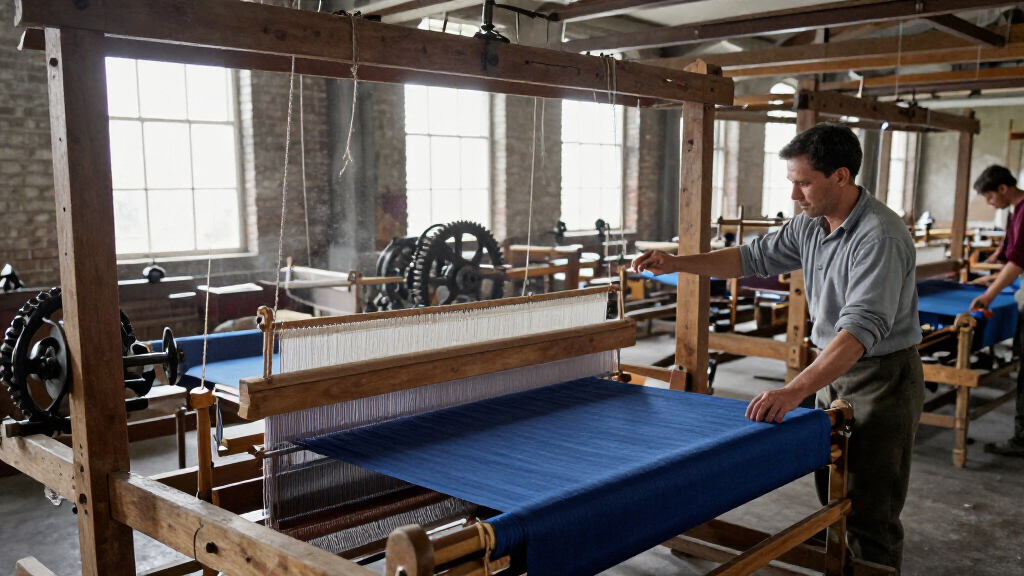
The movement began among framework knitters in Nottinghamshire in 1811 and spread to woollen districts in Yorkshire and Lancashire the following year. These workers made stockings and other goods on stocking frames, mechanical devices operated by hand and foot. Many knitters did not own the equipment: they rented frames and received piece-rate payments from hosiers, the merchants who supplied work and sold the finished goods.
The article draws on a February 6, 1812, report by Nottingham magistrate Robert Baker to the Home Office. Baker wrote that, in many places, one-fifth of frame workers were out of work before the unrest. He said breakers targeted frames belonging to hosiers who paid what he called “the under-price,” as well as wider frames associated with producing cheaper stockings. That is an account from a magistrate, not a complete record of every protester’s motive.
The response was forceful. By December 1811, the source says, 900 cavalry and 1,000 infantry had been sent to Nottingham. Parliament passed the Frame-Breaking Act on March 20, 1812, making frame breaking a capital felony; 17 men were executed in 1813. The source also reports that economic historian Robert Allen estimated British real wages rose 12% from 1780 to 1840 while output per worker increased 46%. Those figures describe that historical period and do not, by themselves, establish that machinery alone caused the difference.
The Fight Over Pay and Production
The account matters because it distinguishes opposition to particular uses of machinery from opposition to technology itself. The knitters depended on frames for their work, while their objections, as represented in Baker’s report, centered on who controlled production, the rates paid and the quality of goods. That distinction can change how readers interpret both the historical movement and present-day disputes about workplace automation.
The article links those concerns to modern negotiations over AI, including writers’ contracts in Hollywood, works-council rights in Germany and the EU’s AI Act. These examples do not make the situations identical. They point to a recurring set of questions: who gains from new tools, how work is valued, and whether workers have a say in how technology is introduced. The historical wage figures also caution against treating increased productivity as proof that workers immediately share in the gains.
Popular right now

Dyson V8 Cyclone Cordless Vacuum

LG 55-Inch OLED evo G2 Series 4K Smart TV (OLED55G2PUA, 2022)

Samsung 65-Inch The Frame Pro Neo QLED 4K TV (2026) Bundle with Modern Brown Bezel, HDMI Cables, and Home Theater Guide
As an affiliate, we earn on qualifying purchases.
How the Frame-Breaking Campaign Spread
The early campaign unfolded when collective bargaining was constrained by law. The source says the Combination Acts of 1799 and 1800 made trade unions illegal, while Parliament rejected a minimum wage for weavers in 1808. In that setting, workers had limited routes to press for changes in pay and conditions. The article presents these legal and political limits as part of the context for protest, rather than as proof that every frame breaker had the same motive.
Letters signed by “General Ned Ludd” or “King Ludd” gave the movement a shared name. The National Archives describes Ned Ludd as mythical; the source says there is no reliable evidence that a real figure led the movement. The account also reports that the unrest spread from Nottinghamshire to Yorkshire and Lancashire in 1812, where workers in the woollen trade attacked shearing frames. The different trades and local disputes mean the movement should not be reduced to a single event or grievance.
““For some time before these troubles broke out, in many places a fifth of the frame workers were out of employ.””
— Nottingham magistrate Robert Baker, in a February 6, 1812, report to the Home Office
Limits of the Historical Record
The evidence does not establish that every Luddite shared the same aims or that every frame attacked was selected for the same reason. Baker was a magistrate reporting to the Home Office, and the article notes an example in which breakers damaged frames described by their workers as operating at “the FULL PRICE.” That episode complicates any simple account of perfectly targeted protest. The source also says the 12% wage estimate comes from one economic historian; later research narrows the reported gap between wage and productivity growth but does not close it. The full methods and estimates of that later research are not provided here.
The article’s comparison with AI is an interpretation, not evidence that the historical and modern disputes are equivalent. It does not establish how AI will affect jobs, wages or bargaining power. Nor does the historical record presented here settle how much of Britain’s productivity and wage changes from 1780 to 1840 resulted from machinery rather than other economic forces.
Modern Rules Remain the Focus
The account points to ongoing arguments over workplace AI rather than a single forthcoming decision. It identifies Hollywood writers’ contracts, German works-council rights and the EU’s AI Act as examples of current settings where questions about pay, quality and worker input are being addressed. It does not specify a new vote, ruling or implementation date tied to this historical report.
For readers following the comparison, the next developments to watch are concrete changes to workplace agreements and rules: whether they set terms for AI use, give workers a role in decisions, or address how productivity gains are shared. The historical account offers a framework for those questions, but the outcomes of present-day negotiations remain open.
Key Questions
Were the Luddites against all machines?
The account says the first Luddites were framework knitters who worked with stocking frames. It argues that some attacks targeted equipment connected to low pay or cheaper production, rather than machinery as a whole.
What did the Nottingham Luddites object to?
Magistrate Robert Baker reported that frame breakers targeted some hosiers who paid what he called “the under-price”, as well as wider frames. His report is important evidence, but it does not prove that all protesters had the same motives.
Who was General Ned Ludd?
The source says “General Ned Ludd” was a mythical figure, not a documented leader. The National Archives describes him that way, and the account says there is no reliable evidence that a real Ned Ludd directed the movement.
How did the British government respond?
The source reports that troops were sent to Nottingham and that the Frame-Breaking Act of March 1812 made frame breaking a capital felony. It says 17 men were executed in 1813.
What does the Luddite story have to do with AI today?
The article draws a comparison around pay, work quality and worker input, naming current debates over AI in Hollywood, Germany and the European Union. It does not claim that the historical and modern circumstances are identical or predict AI’s effects on jobs and wages.
Source: ThorstenMeyerAI.com