TL;DR

Get business pricing on office and shipping supplies
- Business-only prices and quantity discounts
- Tax-exempt purchasing
- Multiple users, one account, clear invoices
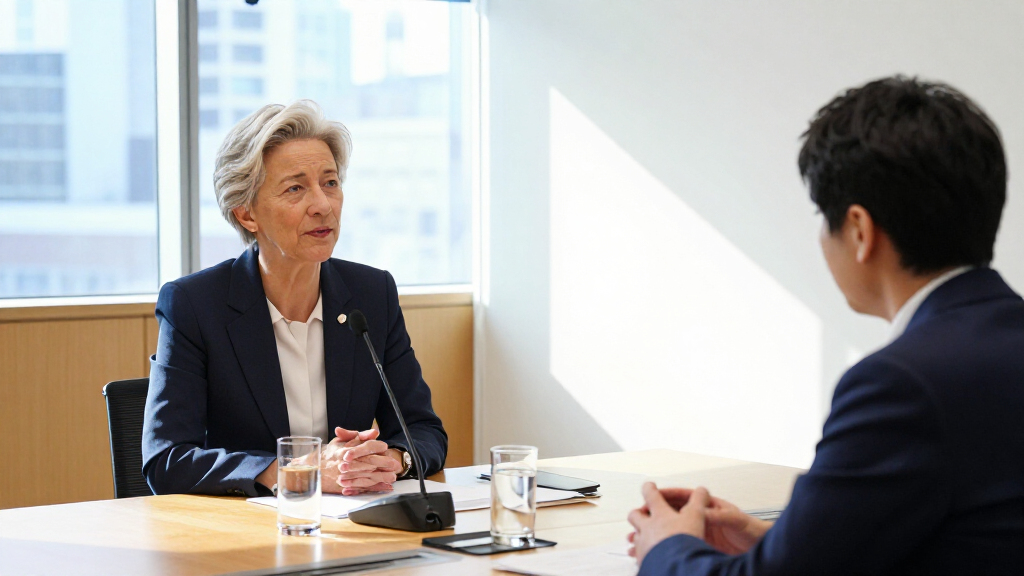
In a November 2026 interview with Japan’s Yomiuri Shimbun, ECB President Christine Lagarde said eurozone headline inflation reached 4% in October, largely because of higher energy inflation. She said core inflation was unchanged at 2.5%, and the ECB sees no signs of second-round effects beyond its projections; the bank will use incoming data to assess the outlook and set policy.
European Central Bank President Christine Lagarde said eurozone headline inflation reached 4% in October, above what the ECB had expected a few months earlier, with the increase largely reflecting energy costs. In an interview published by Japan’s Yomiuri Shimbun on November 7, she said underlying inflation measures remained broadly stable, while warning that elevated inflation lasting longer would increase risks to the ECB’s medium-term target.
Lagarde attributed much of October’s headline reading to energy inflation, which rose to 20.8% from 18.9% in September. She linked the rise to conflict in the Middle East and reduced global refinery capacity, and said food inflation had also increased. The interview did not provide a full breakdown of October inflation, which Lagarde said was still pending.
Measures excluding energy, food, alcohol and tobacco showed a more stable picture: core inflation was 2.5%, unchanged from September. Services inflation edged up to 3.3%, but Lagarde said it remained within the range recorded over the previous four months. She said the detailed breakdown would help the ECB determine whether higher services prices were concentrated in energy-intensive sectors, such as transport, or reflected broader indirect effects.
Asked about wage and price feedback, Lagarde said the ECB was not seeing second-round effects beyond those already included in its projections. She pointed to wage agreements and company wage expectations as forward-looking indicators the bank was monitoring. She also said energy futures prices and long-term interest rates had risen since the ECB’s September projections, while oil prices had fallen more recently. The ECB’s next forecast exercise, she said, would assess how those forces affect inflation and growth.
Energy Costs Complicate the Inflation Outlook
The interview highlights the challenge facing the ECB as it weighs an elevated headline inflation rate against steadier underlying measures. Energy inflation is driving much of the October increase, but the eventual policy implications depend in part on whether higher energy costs feed into services, wages and other prices. Lagarde said the ECB would watch for those indirect effects rather than treating the headline figure alone as a full account of price pressures.
Her remarks do not announce a change in interest rates or commit the ECB to a particular next step. They indicate that the bank is monitoring risks while waiting for additional data and its forecast exercise. For households and businesses, the distinction matters because energy-driven price increases can affect living and operating costs even when core inflation is stable. How long headline inflation stays high is also relevant: Lagarde said a higher and more prolonged rise increases the risk to the ECB’s medium-term inflation target.
Popular right now

Hisense 75U6SF Pro 75-Inch U6 Pro Mini-LED 4K UHD Smart Fire TV

LG 75-Inch QNED73B Mini LED 4K Smart TV (2026)

Bose QuietComfort Ultra Headphones (2nd Gen), Wireless Noise-Cancelling Over-Ear Headphones, Black
As an affiliate, we earn on qualifying purchases.
Lessons From the 2021 Energy Shock
Lagarde was asked whether the ECB had been slow to respond to the inflation surge that followed the 2021 energy shock and Russia’s invasion of Ukraine. She said central banks, including the ECB, Federal Reserve, Bank of England and Bank of Japan, had initially viewed the supply shock as temporary and expected inflation to recede as the shock passed. In retrospect, she said, that assumption was mistaken because a demand shock was occurring at the same time: economies were reopening and consumers were spending savings built up during the pandemic.
She described current conditions as marked by uncertainty, trade and supply-chain disruptions, and a stronger focus on security than efficiency. In the interview, she said the ECB would make monetary-policy decisions on the basis of data and at each meeting. That approach reflects the difficulty of forecasting how supply disruptions and energy prices will affect the medium-term outlook; it is not a promise to raise or lower rates in response to any single data point.
The interview also covered women’s representation in senior roles. Lagarde said that two of 27 people at ECB Governing Council meetings were women: herself and Executive Board member Isabel Schnabel, whom she said was due to step down at the beginning of January. She attributed appointment patterns partly to the developing pipeline of senior women and partly to decision-makers tending to choose people like themselves.
“Headline inflation in October was at 4%, which was higher than we had expected a few months ago but in line with market expectations.”
— Christine Lagarde, ECB president, in the Yomiuri Shimbun interview
Services and Wage Effects Still Unclear
The interview did not include the detailed October inflation breakdown, so the sources of services inflation are not yet fully established. Lagarde said the data would help show whether increases were concentrated in energy-intensive areas such as transport or had spread more broadly. She also said the ECB was not seeing evidence of a shift in wage indicators, but those measures remain under review.
It is also unclear how the higher energy futures curves and long-term interest rates will affect the ECB’s medium-term projections. Lagarde noted that oil prices had recently declined, adding another factor for the forecast exercise to weigh. She did not specify a future rate decision, and the interview offers no confirmation that the ECB will revise its projections upward or change policy.
ECB Forecasts and Incoming Data
The ECB’s forecast exercise is expected to assess the combined effects of energy prices, interest rates and other changes since the September projections on inflation and growth. The bank will also examine the detailed inflation breakdown and continue monitoring wage agreements and company wage expectations for signs of second-round effects.
Lagarde said policy decisions would be made meeting by meeting and based on incoming data. The interview did not identify a specific rate move or state when the ECB would act. The next meaningful developments will be the publication of the missing inflation detail and the ECB’s updated assessment of the medium-term outlook.
Key Questions
What did Lagarde say about eurozone inflation in October?
She said headline inflation was 4% in October, higher than the ECB had expected a few months earlier but in line with market expectations. She attributed much of the rise to energy.
Was underlying inflation also higher?
Core inflation, excluding energy, food, alcohol and tobacco, was 2.5%, unchanged from September. Services inflation edged up to 3.3%, which Lagarde said remained within the range seen over the previous four months.
Did Lagarde signal an interest-rate change?
No specific rate change was announced or promised in the interview. Lagarde said the ECB would decide policy based on data and at each meeting.
What does the ECB still need to learn about the inflation rise?
The detailed October breakdown had not yet been released. Lagarde said it would help show whether services price increases were concentrated in energy-intensive sectors or reflected wider indirect effects.
What did Lagarde say about women’s representation at the ECB?
She said two of the 27 people at Governing Council meetings were women: Lagarde and Executive Board member Isabel Schnabel, whom she said was due to leave at the beginning of January.
Source: ecb.europa.eu