TL;DR
Choose Thanksgiving hosting supplies based on your guest count, menu, and service style. Count seats and place settings, plan serving and drinks, prepare food-safe leftover containers, and check your cupboards before shopping so you can borrow or reuse occasional-use items.
The turkey may take up the oven, but missing serving spoons can bring dinner to a halt. Thanksgiving hosting supplies help make the meal easier to serve, the table comfortable, and cleanup less of a late-night scramble. You do not need a matching set of everything. You need the right things for the people, food, and space you have.

Get business pricing on office and shipping supplies
- Business-only prices and quantity discounts
- Tax-exempt purchasing
- Multiple users, one account, clear invoices
This guide helps you build a shopping list from your guest count and menu, plan the table and buffet, keep drinks within easy reach, and prepare for leftovers. You will also find ways to borrow or reuse items, trim costs, and make the day work when chairs or counter space are tight. Think of your checklist like a kitchen prep bowl: gather what you need before the rush begins, and the meal has room to breathe.
Count guests, courses, chairs, and serving dishes before you shop; keep a small buffer for dropped or extra utensils.
For a buffet, set plates first, add a separate serving utensil for each dish, and leave a clear path for guests.
Borrow occasional-use items such as extra chairs or a large drink dispenser, and buy durable basics you expect to reuse.
Set up a drink station away from the food line and prepare clean, shallow food-safe containers for leftovers.
Check your cupboards and local recycling or composting options before buying themed or disposable supplies.
Start with your guest count and menu to avoid buying extras
Thanksgiving hosting supplies should match the number of people you are feeding, the dishes on your menu, and how you plan to serve them. Start with a guest list, then count plates, glasses, utensils, chairs, serving pieces, and containers. A modest buffer helps when a fork drops or someone wants another slice of pie. The count is useful because each additional place setting takes table space, dishwashing time, and storage; buying more than the gathering can use may solve a small uncertainty by creating a year-round cupboard problem.
For example, if you expect eight adults and two children, plan for ten place settings and a few extra pieces rather than shopping as though you are hosting twenty. If dinner includes soup, salad, turkey, and dessert, guests may need more than one plate; if you use disposable dinnerware, check that it can handle hot food without bending. Count children and guests with dietary needs, too, since their seating and serving arrangements may differ. Think through the meal’s sequence: plates that can be cleared and reused between courses may reduce the total you need, while a buffet where guests return for seconds can make spare plates worthwhile.
Next, write down each menu item and the dish or tool it needs. Turkey calls for a carving knife, a stable carving board, and a platter; mashed potatoes need a bowl and serving spoon; gravy needs a pourable vessel. One serving utensil per dish helps avoid the awkward search for a clean spoon while the buffet line waits. This menu-to-tool match also exposes conflicts early: if two dishes need the same oven-safe serving bowl at the same time, you can borrow a second bowl or change the serving plan before guests arrive.
Use this quick inventory before you shop:
- Table: seats, plates, napkins, glasses, and utensils.
- Kitchen and serving: platters, bowls, spoons, trivets, carving tools, and labels.
- After dinner: food-safe containers, dish soap, towels, and trash or recycling bags.
This list should cover what your gathering actually needs, not every item in a holiday display. Your best first purchase may be nothing at all: check the cupboard, ask a co-host what they can bring, and mark each item you already have. That order matters: inventory can turn a shopping list into a short borrowing list, saving money and keeping seldom-used supplies out of your home.
Popular right now

Vitamix VX1 Professional-Grade Blender, 64 oz, Black

De'Longhi Magnifica Duo Fully Automatic Espresso Machine with Milk Frother, Silver

Dyson V8 Cyclone Cordless Vacuum
As an affiliate, we earn on qualifying purchases.
Set the table so guests can eat without elbow traffic
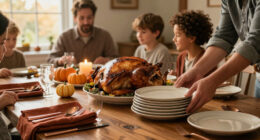
A comfortable Thanksgiving table needs enough seats, room for place settings, and a clear place for the food. Count your chairs, measure the table, and check how much space each plate, glass, and serving dish will take. A pretty runner cannot fix a table where every guest has to move a bowl to reach their water. Measuring before you arrange things helps you spot whether the bottleneck is seating, plate space, or serving space, because each calls for a different fix.
Imagine a family of twelve around a table designed for eight. Adding a folding table may solve the seating problem, but only if guests can pull chairs out without blocking a doorway. You could instead serve buffet-style, place the children at a nearby table, or borrow a few chairs from a neighbor. Each choice trades one kind of convenience for another: a second table adds seats but may split conversation, while buffet service frees the main table but asks guests to carry plates. If you use a tablecloth, let enough fabric hang down for a tidy finish without brushing guests’ laps or catching on chair legs.
Keep decorations low and simple so people can see each other. A short bowl of apples, small gourds, or a few leaves in a vase brings warm color without turning the middle of the table into an obstacle course. Place cards can also make a crowded setup easier: they help guests find seats and can mark a spot for someone who needs a little extra room. In a tight layout, leaving the center mostly clear often makes the table feel more welcoming than adding another decoration, since guests can pass dishes and see one another without leaning around objects.
Plan one place setting for each guest and keep spare napkins and a few extra utensils nearby. If your meal includes several courses, decide where used plates will go and which plates guests should use next. That small bit of planning saves a host from stopping mid-conversation to announce where the clean forks are. It also keeps dirty dishes from competing with serving bowls for the same limited surface.
Simple, washable linens are useful again for birthdays and Sunday dinners, while paper napkins can save laundry time after a large casual gathering. Pick the option that fits your day and budget; a tidy table should serve the people at it, not create another chore. Reusables require washing and storage, while paper trades that work for recurring expense and waste, so the best choice depends on what you can comfortably manage after dinner.
Choose buffet supplies that keep the line moving
For a Thanksgiving buffet, set out plates first, follow with the food in serving order, and leave space at the end for cutlery and napkins. Add a serving utensil for each dish, heat-safe surfaces for hot platters, and labels where guests may have questions. A clear path lets people serve themselves without crowding the kitchen doorway. The order matters: guests need a plate before choosing food, and utensils near the dishes they belong to reduce reaching across hot pans or other guests.
Picture a buffet squeezed onto a narrow counter: guests reach across one another for plates while someone hunts for the spoon buried under the green beans. A separate table or cleared sideboard can improve the flow. If there is room, put drinks somewhere else so guests who only need water do not have to wait behind the whole dinner line. Splitting stations uses more surface area, but it separates quick stops from the slower process of choosing food; when space is scarce, prioritize a safe serving path over decorative displays.
Here is a straightforward setup sequence:
- Make room: clear the serving surface and keep a route open to it.
- Place plates and napkins: put them at the start so guests have them before they reach the food.
- Arrange dishes: group sides together and set out one serving tool per dish.
- Protect the surface: use trivets or heat-safe stands for hot cookware.
- Mark dishes: add short labels for ingredients or dietary needs when helpful.
Labels do not need to be fancy. A small card that says “contains nuts” or “vegetarian” can prevent questions from slowing the line and help guests make informed choices. Ask about dietary needs beforehand, then use separate serving utensils where cross-contact may matter. The extra utensil takes up a little room and needs washing afterward, but it can make the difference between a clearly identified dish and one a guest cannot safely choose.
If table space is limited, a buffet can help guests serve themselves in shifts or from a separate room. It still needs a sensible layout: put heavy dishes where they are easy to reach, avoid placing hot cookware near children’s elbows, and make sure guests have somewhere to set down a plate as they serve. The right setup makes a crowded meal feel more like a friendly kitchen and less like a queue. If the route cannot stay clear, a seated pass-around may be more comfortable than a buffet, even though it asks guests to share dishes and pass them along.
Make drinks and food safety easy to manage
A drink station keeps water and other beverages available without sending guests through the kitchen while you handle hot dishes. Set out a pitcher or dispenser, glasses, ice, and any drinks you plan to serve. Add a towel for drips and keep the station away from the buffet so people can pour a drink without blocking the dinner line. This small separation reduces traffic where the host is working and gives guests a place to refill without interrupting food service.
For example, if your table seats ten but only the kitchen has water, you may spend half the meal refilling glasses. A pitcher on a side table lets guests help themselves. If you use a large dispenser, place it on a sturdy surface where children can reach a cup safely and where spills will not land on electrical cords or prepared food. A pitcher is easier to move and refill, while a dispenser can reduce repeated trips; choose based on how much counter space and help you have.
Food safety deserves a spot on the supply checklist, too. Have clean serving tools ready, keep hot and cold foods at safe temperatures, and avoid leaving perishable dishes out for extended periods. Use oven-safe or insulated equipment only as directed, and follow current food safety guidance for cooking, holding, and storing your dishes. The practical implication is that serving gear needs to suit the job: a decorative platter may look right but cannot keep food safely hot or cold, so plan where dishes will wait between kitchen and table.
A practical host might set out small serving batches and replenish them from the kitchen, rather than leaving all the food on the table. This can help keep the meal organized and leave more room for plates. Separate utensils for dishes with different ingredients also help reduce mix-ups for guests with dietary restrictions. Smaller batches take more trips to replenish, but they limit how long food sits out and allow the table to stay less crowded.
For leftovers, prepare clean food-safe containers before the meal ends. Shallow containers can help food cool more quickly than a deep, packed container; refrigerate perishable leftovers promptly according to current food safety guidance. A stack of containers and a marker makes it easier to label dishes and send guests home with a little of the meal. Keeping a few container sizes ready helps divide food into portions people can actually use, while avoiding oversized containers that take more fridge space and cool less efficiently.
Save money by borrowing the occasional-use pieces
Buy durable basics you expect to use again, and consider borrowing specialty pieces you may need for one day. Everyday plates, washable napkins, food storage containers, and a good serving spoon can earn their cupboard space. Extra folding chairs, a large beverage dispenser, or a turkey platter may be easier to borrow from family or friends. The tradeoff is simple: buying gives you immediate access and control over fit, while borrowing avoids cost and storage but depends on clear arrangements for pickup, return, and care.
Suppose you own a compact apartment set but are hosting fourteen people. Buying a full set of new chairs and themed dinnerware could cost more than the gathering warrants. Ask a relative to bring two chairs, reuse your plain white plates, and let a simple seasonal centerpiece add the festive color. The meal will feel personal without filling your storage closet with items used once a year. Reusing a neutral set also makes future gatherings easier because you can change the look with a small decoration instead of replacing the whole table setup.
Disposable plates and cutlery can simplify cleanup, especially for a casual potluck or a gathering with limited dishwashing space. Check their strength and heat tolerance before serving heavy or hot food. Reusable dinnerware creates less single-use waste when you can wash it; compostable or recyclable products only help when local facilities accept them. In practice, disposables shift work away from the sink but create more waste and can be less sturdy, so compare the cleanup constraint with the meal and the available disposal options.
Online shopping makes price comparisons easier, but seasonal stock and delivery times can change. Check availability directly with retailers before relying on a specialty color or a last-minute delivery. A sensible rule: inventory first, borrow second, buy last. It leaves room in your budget for food and keeps a useful guide from becoming a shopping spree. For items you will use repeatedly, a slightly higher upfront cost may make sense; for a one-day need, a loan or a simple substitute often has better value.
Decorations are another place to keep things modest. Reuse a table runner, gather leaves or small pumpkins, or ask guests to bring a dish if that suits your gathering. A potluck can spread both the cooking and supply needs across several households, as long as you agree in advance on serving dishes, labels, and who will bring drinks or dessert. That coordination takes a little planning, but it can reduce the host’s workload; without clear assignments, several guests may bring the same side while a needed serving dish is missing.
Prepare cleanup and leftovers before the first guest arrives
Thanksgiving cleanup goes more smoothly when you set out the basics before dinner: dish soap, a sponge, clean towels, trash and recycling bags, and a clear place for used serving pieces. Decide where guests can leave plates and whether you will wash cookware as you go or after the meal. That small plan can help make the meal easier to enjoy from the first toast to the last slice of pie. It also prevents dirty dishes from spreading across the kitchen and taking away the counter space needed to serve or store food.
For instance, place a dish tub or cleared counter near the sink, then ask one willing helper to collect glasses while you wrap up the main course. Keep a separate container for food scraps if you compost, and check local recycling rules rather than assuming every package belongs in the blue bin. When the kitchen is already crowded, stack plates in one spot instead of letting them travel to every available surface. A tub can keep the sink usable, though it may need rinsing later; a helper speeds collection, but agree on the task so guests know where items go.
Set aside clean, food-safe containers in a few sizes before guests arrive. Small containers work for cranberry sauce or pie; larger, shallow ones fit turkey and sides. If guests are likely to take food home, washable containers or sturdy take-home boxes can prevent a scramble for foil and random plastic bags at the door. Reusable containers save on disposable packaging when you can spare them, while take-home boxes are easier to give away; choose based on whether you want the containers back and how much washing you can manage.
Labeling leftovers with the dish name and date helps you tell the stuffing from the casserole once both are cold in the fridge. Follow current food safety guidance for cooling and refrigerating leftovers. A neat stack of containers is less dramatic than a glowing holiday centerpiece, but it may be the supply you appreciate most on Friday. Portioning food as it is packed can also make it easier to reheat only what you need and avoid repeatedly warming the full batch.
Make your final list easy to use: table, kitchen, drinks, food safety, and cleanup. Check each section against what is already at home, then note what to borrow or buy. That is a useful guide for a calm host because it turns a vague holiday task into a short sequence you can finish well before the doorbell rings. The checklist works best as a decision aid: it helps you spend effort on the real constraint, whether that is seating, serving flow, safe storage, or time at the sink.
Frequently Asked Questions
What supplies do I need to host Thanksgiving?
Start with seating, place settings, serving dishes and utensils, drinkware, food-safe storage containers, and cleanup supplies. Your menu and service style determine the extras, such as carving tools, trivets, dish labels, or additional plates.
How many plates and glasses should I have?
Plan for one place setting and glass per guest, plus a small buffer for replacements or an extra course. A buffet or multi-course meal may need additional plates; check your menu and service plan before choosing a quantity.
What should I buy versus borrow?
Buy durable items you expect to use regularly, such as storage containers or serving utensils. Consider borrowing specialty platters, extra chairs, or a beverage dispenser that you may use only occasionally.
Are disposable plates suitable for Thanksgiving?
They can be convenient for a large or casual gathering, but check that they can hold hot, heavy food without bending. Reusable dinnerware avoids single-use waste when washing is practical; compostable or recyclable products depend on what local facilities accept.
What supplies help a Thanksgiving buffet run smoothly?
Set out plates and napkins first, then arrange dishes with a separate serving utensil for each. Add trivets or heat-safe surfaces, short labels where helpful, and enough space for guests to move along the line comfortably.
How should I prepare for Thanksgiving leftovers?
Set out clean food-safe containers in several sizes before dinner, including shallow containers for larger portions. Label dishes and dates, and refrigerate perishable leftovers promptly according to current food safety guidance.
Conclusion
Build your Thanksgiving supply list from the people and dishes you actually expect, then check what you own before you shop. A few extra forks, a clear buffet path, a pitcher of water, and containers ready for leftovers can do more for the day than a cart full of decorations.
Set the table, clear a little room, and let the meal take center stage. When the kitchen quiets and the last container is labeled, you will be glad you planned for the whole gathering.