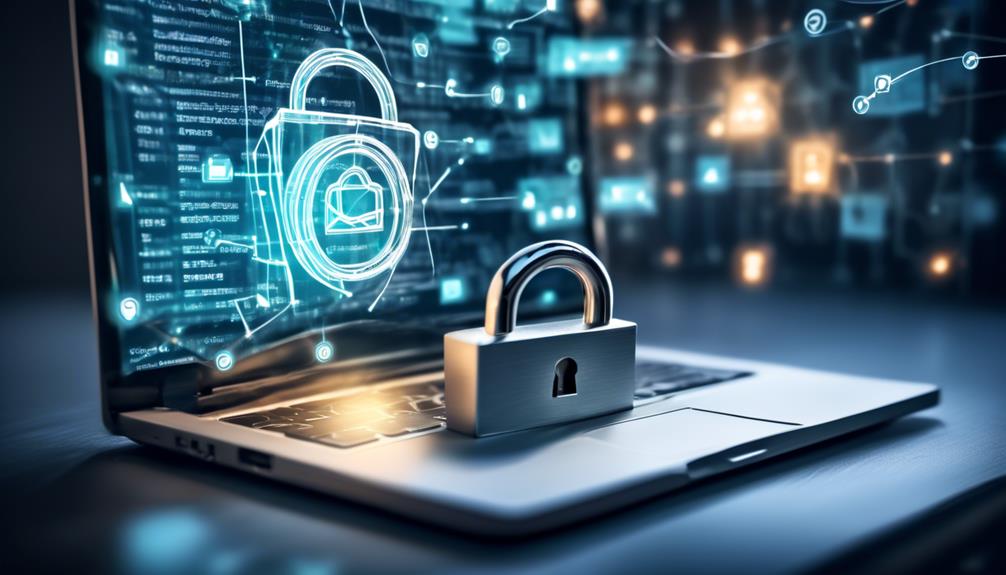

To audit your email automation system before it breaks, start by reviewing your sending practices, ensuring you’re not over-emailing and maintaining list hygiene. Check your authentication protocols like SPF, DKIM, and DMARC for accuracy. Test your emails across multiple clients to spot rendering issues. Analyze engagement metrics to spot declining trends and optimize content and targeting accordingly. Regularly monitor deliverability rates and spam filters to catch problems early—discover strategies to keep your system running smoothly.
Key Takeaways
- Review and test all automation workflows for logic errors, broken links, and personalization issues before launching or updating.
- Verify email authentication records (SPF, DKIM, DMARC) are correctly configured and up-to-date.
- Conduct thorough deliverability and spam filter checks using testing tools across multiple platforms.
- Analyze engagement metrics to identify declining open or click rates indicating potential issues.
- Perform a list hygiene audit to remove invalid, inactive, or unengaged contacts that could disrupt automation performance.
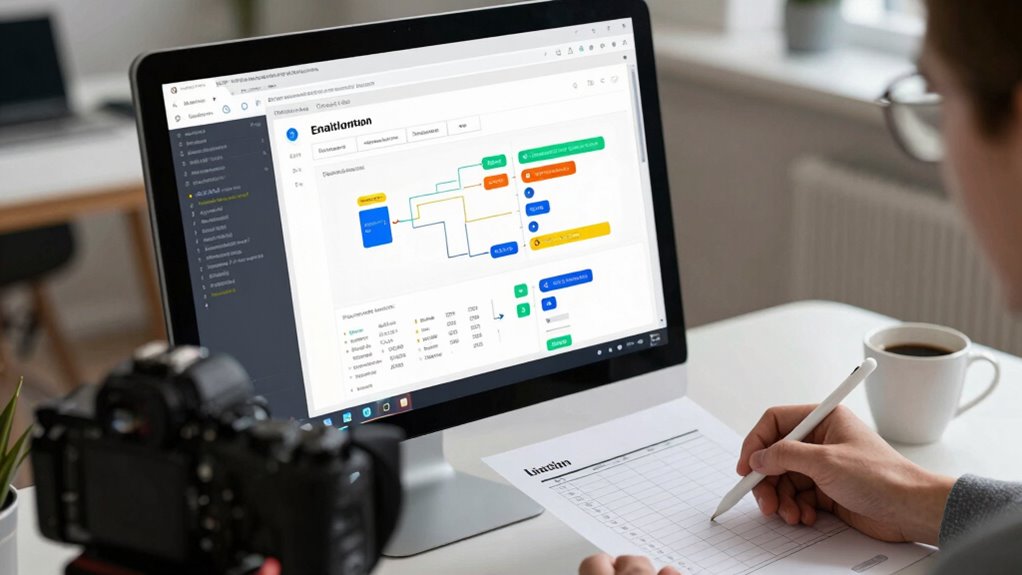
Regularly auditing your email automation system is indispensable to prevent costly failures and guarantee it runs smoothly. When you stay proactive, you can catch potential issues before they impact your campaigns or damage your sender reputation. One of the most critical aspects to monitor is your deliverability rates. If your emails aren’t reaching inboxes consistently, your campaign’s effectiveness drops, and your engagement metrics suffer. Low deliverability often stems from spam filters flagging your messages, so understanding and optimizing for spam filters is essential during audits. Spam filters are constantly evolving, and what worked last year may no longer be effective. You need to review your email content, subject lines, and sending practices to make certain they aren’t triggering spam filters. This involves avoiding spammy words, excessive punctuation, and misleading subject lines that could raise red flags. You should also verify that your email list is clean, removing inactive or invalid addresses that could harm your sender reputation and cause your emails to be marked as spam. Regularly checking your bounce rates and complaint rates can help identify problematic addresses and prevent your emails from being filtered out. Additionally, staying informed about changes in email filtering algorithms can help you adapt your strategies accordingly and maintain high deliverability rates. Being aware of how content quality influences spam detection is also vital, as poor-quality content can increase the likelihood of your emails being filtered. Incorporating email reputation management practices can further enhance your chances of reaching your audience’s inboxes. Another key step is to evaluate your email authentication protocols, such as SPF, DKIM, and DMARC. Proper configuration of these standards helps email providers verify your identity, boosting your deliverability rates and reducing the chances of your messages ending up in spam folders. During your audit, review your authentication records to make sure they’re up to date and correctly configured. Additionally, analyze your engagement metrics—opens, clicks, and conversions. If these numbers decline, it might indicate your content is not resonating with your audience or that your emails are not reaching their inboxes. When you notice a drop in engagement, look at your subject lines and content quality, but also check your sending frequency and segmentation strategies. Sending too many emails or not targeting the right segments can trigger spam filters or annoy recipients, leading to lower deliverability rates. Incorporating list hygiene practices, such as regularly removing invalid or inactive addresses, helps maintain your sender reputation and improve overall deliverability. Finally, test your emails across multiple platforms and email clients. What looks perfect in Gmail might appear broken or suspicious in Outlook or on mobile devices. Use email testing tools to preview your messages, ensuring they render correctly and pass spam filter checks. By systematically auditing your email automation system, you’re not only protecting your sender reputation but also improving your chances of building trust and engagement with your audience. Staying vigilant and continuously optimizing your practices will keep your campaigns ahead of problems and make certain your email marketing remains effective.
email authentication tools SPF DKIM DMARC
As an affiliate, we earn on qualifying purchases.
As an affiliate, we earn on qualifying purchases.
Frequently Asked Questions
How Often Should I Perform Email Automation Audits?
You should perform email automation audits quarterly or after major campaign changes. During these audits, review your segmentation strategies and content personalization to guarantee they still target the right audiences effectively. Regular checks help you identify gaps or outdated info, optimize engagement, and prevent delivery issues. Consistent auditing ensures your system runs smoothly, adapts to audience shifts, and maintains high open and click-through rates.
What Tools Are Best for Auditing Email Automation Systems?
Did you know 78% of consumers only engage with personalized emails? To audit your email automation system effectively, use tools like Mailchimp, HubSpot, or ActiveCampaign. They help you analyze segmentation strategies and personalization techniques, ensuring your messages reach the right audience. These tools provide insights into open rates, click-throughs, and user behavior, so you can optimize your campaigns and prevent issues before they happen.
How Do I Identify the Most Vulnerable Parts of My System?
You identify vulnerable parts of your system by examining how spam filters impact deliverability and ensuring your list segmentation is precise. Check if your emails are flagged or blocked by spam filters, indicating poor content or reputation issues. Review your segmentation to see if targeting is accurate; poorly segmented lists can lead to low engagement and higher bounce rates. Regularly test and monitor these areas to strengthen your system’s resilience.
What Common Mistakes Lead to Email Automation Failures?
Missing segmentation strategies or neglecting personalization techniques often cause email automation failures. You might send generic messages to the wrong audience or overlook tailoring content, leading to low engagement. Overlooking these factors creates disconnects, making your campaign less effective. To avoid this, regularly review your segmentation and personalization efforts, ensuring your emails resonate with recipients’ needs. This proactive approach keeps your automation running smoothly and increases your chances of success.
How Can I Improve Email Delivery Rates During Audits?
To improve email delivery rates during audits, focus on maintaining a strong sender reputation by regularly cleaning your email list and avoiding spam triggers. Implement email segmentation to target specific audiences more effectively, which boosts engagement and reduces bounce rates. Monitor your open and click-through rates closely, and promptly address any issues. These steps help guarantee your emails reach inboxes, increasing overall delivery success during audits.

E-telligence: Email marketing isn't dead, the way you're using it is
As an affiliate, we earn on qualifying purchases.
As an affiliate, we earn on qualifying purchases.
Conclusion
Think of auditing your email automation system like tuning a musical instrument before a big performance—you want everything to be in perfect harmony. Regularly checking your workflows, tracking performance metrics, and catching issues early keeps your system singing smoothly. Don’t wait for a breakdown to act; proactive audits guarantee your campaigns hit the right notes and resonate with your audience. Keep your automation in tune, and your engagement will stay on pitch.
email list hygiene software
As an affiliate, we earn on qualifying purchases.
As an affiliate, we earn on qualifying purchases.

Xin Tester 100 Pieces MCE Membrane Filter, Mixed Cellulose Esters Membrane Filter, Hydrophilic Filter Paper 50 mm Diameter, 0.65µm Pore Size
Simpure mixed cellulose ester (MCE) membrane filter is made of refined nitrocellulose with cellulose acetate, acetone, n-butanol and…
As an affiliate, we earn on qualifying purchases.
As an affiliate, we earn on qualifying purchases.