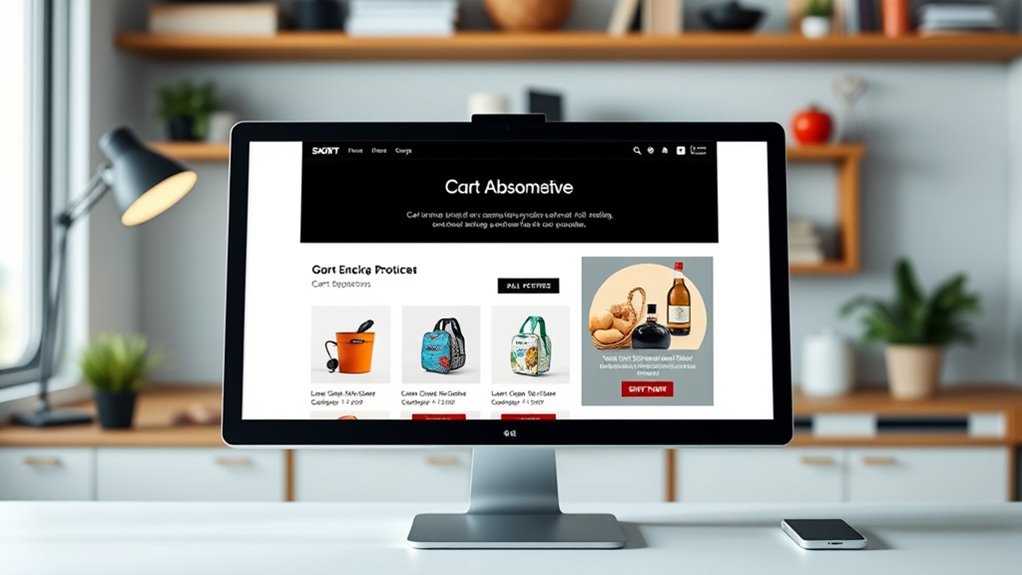

To recover lost sales, craft a friendly cart abandonment email that quickly reminds customers of their pending items. Use personalized content, include clear calls-to-action, and consider highlighting any limited-time offers. Keep the tone approachable and add product images to rekindle interest. Timing is key—send the first reminder within a few hours and follow up strategically. If you’re ready to see a proven template that transforms abandoned carts into conversions, continue below.
Key Takeaways
- Use friendly, approachable language with clear calls-to-action to guide customers back to their cart.
- Personalize emails by including product images, recipient’s name, and relevant recommendations.
- Send the initial reminder within 1-2 hours of abandonment, followed by spaced follow-ups over several days.
- Highlight limited-time offers or benefits to create urgency and reinforce value.
- Segment your audience to tailor messaging based on customer behavior and purchase history for higher recovery rates.

Have you ever wondered why customers leave items in their online shopping carts without completing the purchase? It’s a common challenge faced by many e-commerce businesses, but understanding the reasons behind cart abandonment can help you craft more effective recovery strategies. One of the most powerful tools at your disposal is a well-designed cart abandonment email. To make these emails work harder for you, start by focusing on customer segmentation. Segment your audience based on their shopping behavior, purchase history, or engagement level. For example, new visitors might need different messaging than loyal customers. By tailoring your emails to these segments, you increase the chances of reconnecting with each shopper in a meaningful way. Personalized content resonates more deeply, encouraging them to return and complete their purchase.
Segment your audience to personalize cart recovery emails and boost conversions.
Another essential factor to consider is email frequency. Sending too many reminders can feel intrusive or spammy, driving customers further away, while too few may cause your message to be overlooked. Find a balance that keeps you top of mind without overwhelming your audience. Typically, a well-timed sequence involves an initial reminder shortly after the cart is abandoned—usually within an hour or two—followed by one or two additional emails spaced out over the next few days. Adjust this timing based on your customer segmentation; for example, high-value customers might respond better to more personalized follow-ups, while casual shoppers may need only a single gentle reminder. The key is consistency and relevance, ensuring your emails are neither ignored nor perceived as intrusive.
Crafting your cart abandonment email template also means paying attention to the content and tone. Use a friendly, approachable voice and include a clear call-to-action that directs customers back to their cart. Reinforce the value of the items they left behind, perhaps by highlighting benefits or limited-time offers. Incorporate images of the products to rekindle their interest visually. Personalization can extend beyond the name; referencing their browsing history or showing related products can make your email feel more tailored and engaging.
Ultimately, the goal is to create a seamless experience that nudges customers toward completing their purchase without feeling pressured. By employing customer segmentation to target the right audience and managing email frequency to maintain engagement, you build a strategy that recovers lost sales effectively. When done right, your cart abandonment emails become an indispensable part of your sales funnel, turning missed opportunities into loyal customers.
Frequently Asked Questions
How Can Personalization Improve Cart Abandonment Recovery?
Personalization strategies considerably improve cart abandonment recovery by aligning your emails with customer behavior. When you tailor messages based on their browsing history, previous purchases, or abandoned items, you show that you understand their preferences. This targeted approach makes your emails more relevant, encouraging customers to return and complete their purchase. By leveraging personalization, you boost engagement, foster loyalty, and ultimately recover more lost sales effectively.
What Timing Is Optimal for Sending Recovery Emails?
You should focus on timing strategies that target your customers when they’re most likely to convert. The ideal send time for recovery emails is typically within the first hour after cart abandonment, as urgency is highest then. If you miss that window, consider sending a follow-up within 24 hours. Testing different times helps you find the best moment to boost your recovery rates and maximize sales.
How to Segment Customers for Targeted Cart Abandonment Emails?
You should segment customers based on their purchase history and behavior. Use customer segmentation to identify groups like frequent buyers, one-time purchasers, or high-value customers. Tailor your cart abandonment emails accordingly, offering personalized incentives or recommendations that match their shopping habits. This targeted approach increases engagement and recovery rates, making your emails more relevant and compelling, ultimately boosting your chances of recovering lost sales.
What Are Common Mistakes to Avoid in Recovery Email Design?
You should avoid cluttered designs that ignore visual hierarchy, making it hard for customers to focus on your message. Don’t neglect branding consistency, which helps build trust and recognition. Make sure your call-to-action stands out and is easy to find. Keep your visuals simple and aligned with your brand identity. Avoid using too many colors or fonts, as this can distract and reduce the email’s effectiveness, ultimately hurting recovery rates.
How Do Mobile-Friendly Templates Impact Recovery Rates?
Mobile-friendly templates markedly boost recovery rates by ensuring your emails are easy to read and navigate on any device. When you prioritize mobile optimization, your user interface becomes intuitive, encouraging recipients to re-engage and complete their purchase. You minimize frustration, increase click-throughs, and improve overall effectiveness. If your recovery emails aren’t mobile-optimized, you risk losing potential sales — so always design with mobile in mind to maximize results.
Conclusion
Don’t let missed opportunities slip away. With a well-crafted cart abandonment email, you can turn hesitation into conversions and recover lost sales. Remember, every abandoned cart is a chance to reconnect and showcase your value. Are you ready to implement these strategies and see your sales grow? Take action today—your next sale could be just an email away. Don’t wait—start recovering those lost carts now!