

To avoid mistakes and protect privacy when managing CC and BCC, use CC sparingly for relevant updates and double-check recipients before sending. BCC is best for large contacts or confidential messages, preventing address exposure. Never include sensitive info in BCC fields and stay aware of organizational norms. Proper use of these fields maintains professionalism and trust. Keep these tips in mind, and you’ll discover more ways to guarantee privacy and avoid common pitfalls.
Key Takeaways
- Use CC sparingly for relevant recipients and double-check their necessity before sending.
- Always employ BCC for large mailings to protect recipient privacy and prevent address exposure.
- Never include confidential or sensitive information in emails when using BCC.
- Regularly review recipient lists to ensure proper use of CC and BCC aligned with privacy norms.
- Be cautious of misusing CC and BCC to avoid privacy breaches and maintain professional credibility.
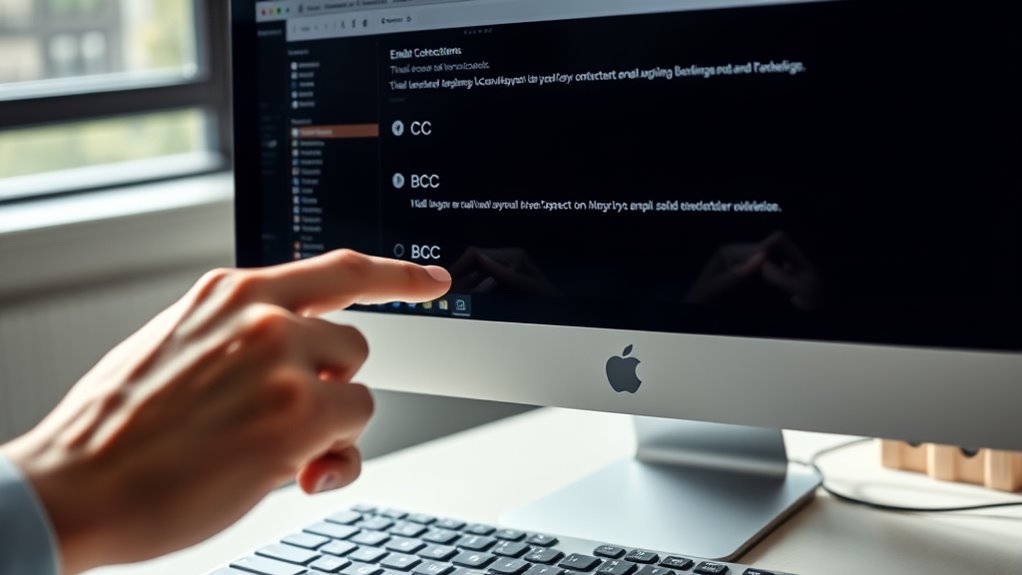
Have you ever wondered how to effectively manage CC and BCC fields in your emails? Mastering these features is essential for maintaining professional email etiquette and safeguarding sensitive information. When you include recipients in the CC (carbon copy) field, you’re letting them know about the conversation without expecting a direct reply. BCC (blind carbon copy), on the other hand, hides recipients from each other, which can be useful for privacy but also risky if misused. To avoid mistakes and privacy breaches, it’s imperative to understand when and how to use these fields appropriately.
Master CC and BCC to ensure professional, private, and effective email communication.
First, consider email etiquette when adding CC and BCC recipients. Use CC sparingly; only include those who truly need to stay informed. Overusing CC can clutter inboxes and dilute the importance of your message. Always double-check that the recipients listed are relevant and appropriate. If you’re sharing sensitive or confidential information, be cautious about who is CC’d. BCC can be helpful here, allowing you to send the same message to multiple people without exposing their email addresses. This not only protects privacy but also prevents recipients from accidentally hitting “Reply All,” which can cause unnecessary email chains or expose email addresses to unintended parties.
Confidentiality tips are essential when handling sensitive data or personal information. Never include confidential details in the email body while using BCC indiscriminately, as recipients can still forward or share the content. Be aware that some email clients notify recipients if they are BCC’d, but not always, so it’s best to use BCC thoughtfully. When managing large mailing lists or newsletters, BCC should be your default choice to prevent exposing everyone’s contact details. This simple step respects recipients’ privacy and complies with data protection norms.
It’s also wise to maintain clarity in your emails. Clearly state who should reply or take action, especially if multiple recipients are involved. If your message requires input from specific individuals, avoid cluttering their inboxes with unnecessary CCs. Instead, reach out directly or create segmented groups to streamline communication. Remember, the goal of good email etiquette is transparency and respect for others’ privacy. Misusing CC and BCC not only risks privacy breaches but also damages your credibility. Additionally, maintaining a clear understanding of your organization’s team structure and roles can help determine the appropriate recipients for each message.

McAfee Total Protection 3-Device 2025 Ready |Security Software Includes Antivirus, Secure VPN, Password Manager, Identity Monitoring | 1 Year Subscription with Auto Renewal
DEVICE SECURITY – Award-winning McAfee antivirus, real-time threat protection, protects your data, phones, laptops, and tablets
As an affiliate, we earn on qualifying purchases.
As an affiliate, we earn on qualifying purchases.
Frequently Asked Questions
How Can I Prevent Accidental BCC Disclosures?
To prevent accidental BCC disclosures, always double-check your email before sending. Use clear email etiquette by verifying the recipient list, especially BCC fields, to guarantee no sensitive contacts are exposed. Implement privacy safeguards like drafting emails carefully and reviewing the recipient list for accuracy. Additionally, consider using email client features that prompt you to confirm BCC recipients, helping you avoid unintentional disclosures and protect everyone’s privacy effectively.
What Are the Best Practices for Using CC and BCC?
To follow best practices for using CC and BCC, you should prioritize email etiquette and privacy considerations. Always use CC to keep relevant recipients informed and BCC to protect privacy when emailing large groups. Avoid sharing sensitive information through CC, and double-check recipient lists to prevent accidental disclosures. Keep your emails clear and concise, respecting recipients’ privacy, and use BCC for mass emails to avoid exposing everyone’s email addresses.
Can BCC Recipients See Each Other’s Email Addresses?
It’s a coincidence that BCC recipients can’t see each other’s email addresses, which is key to email confidentiality. When you use BCC, recipients aren’t aware of who else received the email, ensuring privacy. This setup prevents accidental exposure of recipient visibility, protecting everyone’s information. So, if you want to keep email addresses confidential and avoid revealing recipient lists, always use BCC properly, especially for large or sensitive distributions.
How Do I Correct a Mistaken CC or BCC?
If you send an email with a mistaken CC or BCC, immediately recall or delete it if possible, especially if your email provider allows it. To maintain email etiquette and protect digital privacy, avoid revealing sensitive information, and double-check recipients before sending. If a mistake happens, send a follow-up correction clarifying the oversight, and always be cautious with recipient lists to prevent privacy breaches.
Are There Legal Risks Associated With Improper Cc/Bcc Use?
Did you know that 72% of data breaches involve email? Improper CC or BCC use can lead to serious legal implications and privacy concerns, risking fines or lawsuits. When you accidentally disclose sensitive information or share emails improperly, you could face legal trouble. Always double-check recipients and respect privacy to avoid these risks, protecting both your organization and your reputation from costly consequences.

Total Workday Control Using Microsoft Outlook
As an affiliate, we earn on qualifying purchases.
As an affiliate, we earn on qualifying purchases.
Conclusion
Remember, using CC and BCC thoughtfully can prevent privacy breaches and keep your emails professional. Did you know that 85% of data breaches involve human error, often due to mishandling sensitive info? By double-checking your recipients and choosing BCC when necessary, you protect everyone’s privacy and avoid costly mistakes. Stay vigilant and mindful—your careful approach not only safeguards personal info but also builds trust with your contacts.

Business Email: Write to Win. Business English & Professional Email Writing Essentials: How to Write Emails for Work, Including 100+ Business Email … Professional Emails for Business and Law)
As an affiliate, we earn on qualifying purchases.
As an affiliate, we earn on qualifying purchases.
bulk email BCC sender
As an affiliate, we earn on qualifying purchases.
As an affiliate, we earn on qualifying purchases.