
To create personalized subject lines beyond just using first names, focus on dynamic content tailored to your audience’s recent behaviors, preferences, or location. Incorporate details like recent purchases, browsing history, or upcoming events to make your messages feel more relevant and timely. Using A/B testing helps you find which personalization tactics work best. Keep optimizing your approach to increase open rates and engagement—there’s plenty more strategies waiting to boost your email success.
Key Takeaways
- Incorporate recent browsing history or product views to suggest relevant items or content inside the email.
- Use location-based details to craft geographically personalized subject lines that resonate locally.
- Highlight exclusive offers or personalized recommendations based on past purchase behavior.
- Create curiosity by referencing specific interactions or milestones, like cart abandonment or loyalty status.
- A/B test different dynamic personalization elements to identify what resonates most beyond just using first names.
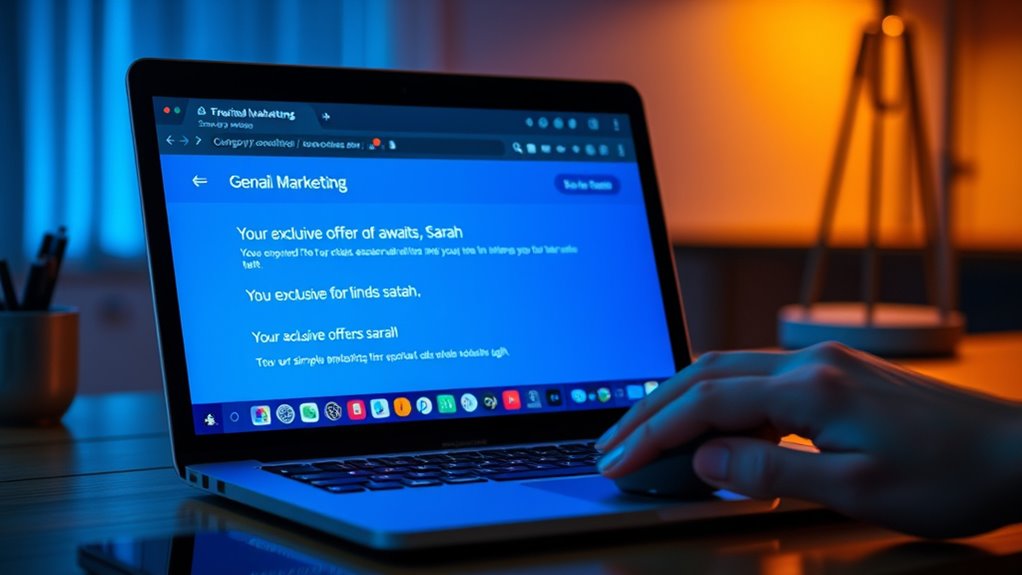
Personalized subject lines have become vital in capturing your audience’s attention amidst crowded inboxes. Gone are the days when simply including a recipient’s first name was enough to stand out. Today, personalization goes beyond basic details, tapping into dynamic content that resonates with each individual’s interests, preferences, and behaviors. When you craft subject lines that reflect specific aspects of your audience’s journey—like recent purchases, browsing habits, or location—you increase the likelihood of your emails being opened and engaged with. Dynamic content allows you to tailor your subject lines in real-time, making your message feel relevant and timely, which is essential for cutting through the noise. Incorporating vetted products into your subject lines can also enhance credibility and trust with your audience.
To truly optimize your personalized subject lines, you need to leverage A/B testing. This process involves creating multiple versions of your subject line to see which one performs best with your audience. For example, you could test different dynamic content elements or messaging styles to determine what resonates most. A/B testing helps you understand what kind of personalization strikes a chord, whether it’s emphasizing a product they viewed, offering a special discount, or referencing a recent interaction. By analyzing the results, you can systematically refine your approach, making each email more targeted and impactful.
When you focus on moving beyond just first names, you tap into a more nuanced level of personalization that speaks directly to your audience’s needs. Instead of generic or superficial touches, you craft subject lines that hint at personalized content inside. For instance, instead of “Hi John, check out these deals,” you could use “John, your recent browsing suggests you’ll love these new arrivals.” This not only shows you understand their preferences but also encourages curiosity and engagement. The key is to keep testing and iterating—what works for one segment might not work for another, so continuous A/B testing is essential to stay ahead.
Furthermore, integrating dynamic content into your subject lines requires a clear strategy. You need to gather relevant data, segment your audience effectively, and automate the personalization process. This way, your emails feel more like personal messages rather than mass blasts. When combined with rigorous A/B testing, you ensure that every message you send is optimized for maximum impact. It’s about creating a seamless experience where your audience feels understood and valued, which ultimately boosts your open rates, click-throughs, and conversions.
Frequently Asked Questions
How Can I Measure the Effectiveness of Personalized Subject Lines?
You can measure the effectiveness of personalized subject lines by conducting A/B testing, comparing open rates and click-through rates between different versions. Track engagement metrics like open rate, click-through rate, and conversion rate to see how recipients respond. Analyzing these data points helps you understand which subject lines resonate best, allowing you to optimize future campaigns and improve overall email performance.
What Are Some Common Mistakes to Avoid in Personalization?
Think of personalization as seasoning—too much ruins the dish. You often overuse personalization by relying solely on first names, making your emails feel generic or insincere. Avoid this mistake by diversifying your approach, using relevant data like past purchases or interests. Overpersonalizing can backfire, so strike a balance. Focus on meaningful, targeted touches instead of just names, and your message will resonate more authentically.
Can Personalization Hurt My Email Deliverability Rates?
Personalization can hurt your email deliverability rates if you overdo it. Spam filters may flag your emails if they seem suspicious or include keyword stuffing, which looks like spam. To avoid this, keep your personalization natural and relevant. Focus on genuine details, and don’t load your subject lines with too many keywords. This way, you enhance engagement without risking your emails ending up in spam folders.
How Do I Personalize Subject Lines for Segment-Specific Content?
You can absolutely personalize subject lines for segment-specific content by leveraging dynamic content and segmentation strategies. Imagine capturing your audience’s attention with subject lines so perfectly tailored, they feel like you’re speaking directly to them! Use segmentation strategies to categorize your audience based on behavior, preferences, or demographics, then craft dynamic content that resonates. This approach boosts engagement, increases open rates, and makes your emails feel irresistibly relevant to each segment.
Are There Tools That Can Automatically Generate Personalized Subject Lines?
Yes, AI tools and personalization software can automatically generate personalized subject lines for you. These tools analyze your audience’s data, preferences, and behaviors to craft compelling, targeted subject lines that boost open rates. You simply input your campaign details, and the software does the work, saving you time and effort. Many platforms like Mailchimp, HubSpot, and Outreach offer these features, making automation seamless and effective for segment-specific messaging.
Conclusion
By personalizing your subject lines beyond just first names, you grab attention and boost open rates. Imagine, emails with tailored content are 50% more likely to be opened—think of your message standing out in a crowded inbox like a bright neon sign. When you craft subject lines that speak directly to your audience’s interests, you turn casual browsers into engaged customers. Don’t settle for generic—make every subject line count and see your open rates soar.