Using emojis and symbols in subject lines works well when your audience is receptive to a casual, fun tone and your brand tone aligns with a modern, approachable vibe. Keep your use sparing—one or two relevant icons—so you don’t appear unprofessional or cluttered. Make sure they reinforce your message and look good across devices. If you stay strategic and thoughtful, you’ll find the right moments to add a friendly touch that resonates. Want to discover those moments?
Key Takeaways
- Use emojis when they enhance message clarity, relevance, or emotional appeal without overwhelming the subject line.
- Match emoji use to your brand tone and audience preferences, opting for playful or professional symbols accordingly.
- Incorporate one or two relevant emojis or symbols to avoid clutter and maintain professionalism.
- Test how emojis display across different email clients and devices to ensure consistent visual presentation.
- Rely on emojis to reinforce key messages or calls-to-action, ensuring they complement rather than overshadow the core content.
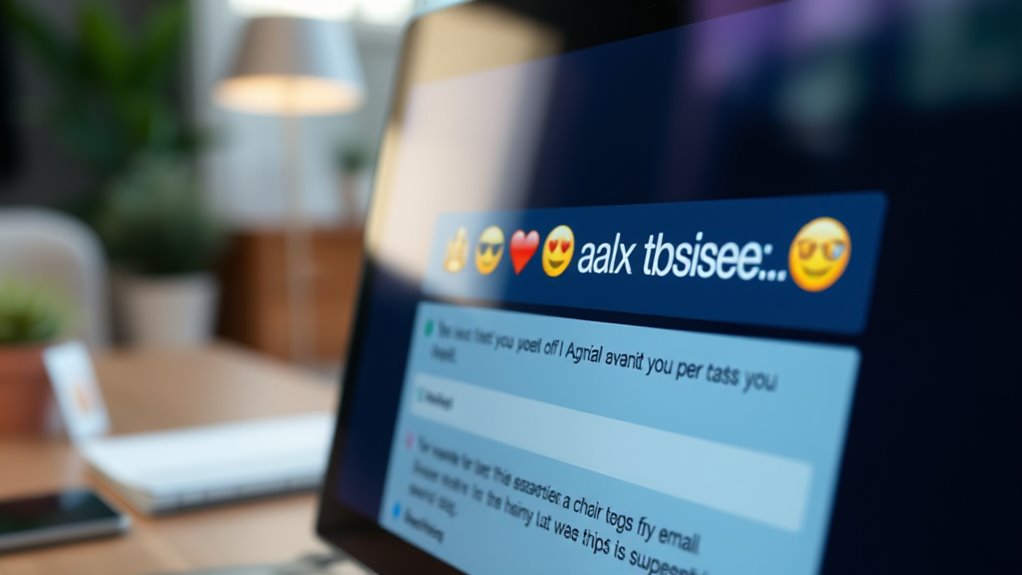
Have you ever wondered how to make your email subject lines stand out in a crowded inbox? The key often lies in catching attention quickly, and emojis and symbols can help you do just that. When used thoughtfully, they can boost your brand reputation by showing a modern, approachable personality that resonates with your audience. But it’s vital to understand when their use is appropriate to avoid coming across as unprofessional or spammy.
Emojis and symbols can create visual interest, making your emails more noticeable among dozens of plain-text lines. They can also communicate emotions instantly, giving your message a friendly, human touch that encourages recipients to open your email. This can considerably improve audience engagement by making your subject line more relatable and memorable. For example, a cheerful smiley or a relevant icon can evoke positive feelings and increase the chances of your email being opened. However, the effectiveness depends on the context and your target audience. Younger audiences, for instance, might respond better to playful emojis, while more formal industries may require a more conservative approach.
Emojis add visual interest and human touch, boosting engagement while aligning with your audience and brand tone.
Timing and relevance are vital. Using emojis or symbols in a way that aligns with your message and brand tone can enhance your communication, but overdoing it risks diluting your message or appearing unprofessional. If your subject line is too cluttered with emojis, it could look spammy or confuse recipients, harming your reputation. Instead, focus on placing one or two well-chosen symbols or emojis to complement your message. For instance, a sale announcement might include a percentage sign or a shopping cart emoji, reinforcing the message without overwhelming the recipient.
It’s also wise to consider the platform and device where your emails will be viewed. Emojis render differently across email clients and devices, so what looks great on a smartphone might not display correctly on a desktop. Testing your subject lines beforehand ensures they look polished and consistent. Always keep your brand reputation in mind—if your brand is known for professionalism, use emojis sparingly. Conversely, if your brand is more casual and fun, you can be more liberal with their use to foster audience engagement. Additionally, understanding how content in your message will be perceived can help you decide when to incorporate emojis for maximum impact.
As an affiliate, we earn on qualifying purchases.
Frequently Asked Questions
Can Emojis Improve Email Open Rates Across All Industries?
Emojis can improve your email open rates, but their effectiveness varies across industries. In some sectors, emojis grab attention and boost engagement by adding personality and visual appeal. However, in more formal or professional fields, symbol integration might seem out of place and reduce credibility. You should consider your audience and message, testing emoji effectiveness in your campaigns to see if they resonate well without overshadowing your content.
Are There Cultural Differences in Emoji Interpretation?
You’ll find that cultural perceptions greatly influence how emoji meanings are interpreted. For example, a thumbs-up might be positive in one country but offensive elsewhere. When you use emojis, consider these cultural differences to avoid misunderstandings. Recognizing that emoji meanings vary across cultures helps you communicate more effectively. It’s a coincidence that understanding these nuances can considerably improve your email engagement, especially if you’re reaching diverse audiences worldwide.
How Do Emojis Affect Email Deliverability and Spam Filters?
Emojis can impact your email deliverability by triggering spam detection algorithms, especially if overused or used inappropriately. Spam filters might flag emails with emojis in subject lines, reducing your open rates. To avoid this, use emojis thoughtfully and sparingly. Understanding the emoji impact helps you craft engaging, yet compliant, emails that bypass spam filters and reach your audience effectively.
Should Emojis Be Used in Professional or Formal Communications?
You shouldn’t use emojis in professional or formal communications, as they can undermine a polished, serious tone and harm your audience perception. Relying on emojis in such settings is like trying to wear sneakers to a black-tie event—you risk appearing unprofessional. Maintaining a professional tone guarantees your message is taken seriously and respected, helping you build credibility and trust with your audience. Stick to clear, concise language for formal exchanges.
What Are the Best Practices for Combining Emojis and Symbols?
You should place emojis at the start or end of your subject line for emphasis, ensuring they complement your message. Balance symbols and emojis carefully; avoid clutter by not overusing them. Focus on clear emoji placement and symbol balancing to enhance readability and impact. Keep your use subtle and relevant, so your message remains professional without overwhelming recipients. This approach helps your subject line stand out while maintaining appropriate tone.
Conclusion
In the world of inboxes, emojis and symbols are your secret sparks—bright flashes that catch the eye but can also flicker out if overused. Think of them as the seasoning in your email recipe: a pinch adds flavor, too much risks ruining the dish. Use them wisely, like a skilled artist choosing just the right brushstroke. When done right, your subject line becomes a vibrant beacon guiding your audience straight to your message’s door.