

📊 Full opportunity report: Cloud’s Hidden Memory Bill on ThorstenMeyerAI.com — validation score, market gap, and execution plan.
TL;DR
A global memory shortage has caused cloud providers to raise prices subtly, especially on memory-intensive services. This shift is prompting companies to reconsider their cloud strategies, with many planning partial on-premises deployment.
Cloud service providers are quietly increasing prices due to a global memory shortage, marking the first price hike in over two decades. This development affects costs for cloud users and is prompting a reassessment of cloud versus on-premises infrastructure, with many companies considering hybrid models.
On January 4, 2026, AWS announced a roughly 15% increase in GPU instance prices, the first such hike in its history. Other providers, including Azure and Google Cloud, are expected to follow in Q2–Q3 2026, as OEM server costs rise due to a 60–70% increase in DRAM prices from major manufacturers like Samsung, SK Hynix, and Micron.
The cost cascade from memory chip fabrication to cloud billing results in an effective 5–10% increase on user invoices, primarily impacting memory-optimized instances and memory-heavy services such as Redis and in-memory databases. This increase is often hidden within multiple bill line items, making it less visible to customers.
Many cloud providers have traditionally promised that prices only decline, but this assumption is now broken, leading to a shift in cloud economics. As a result, about 83% of CIOs are planning to move some workloads back on-premises, favoring hybrid models that balance cost predictability with cloud elasticity.
Cloud’s hidden memory bill
Thought the cloud lets you dodge the squeeze — you rent the RAM, you don’t buy it? You’re still paying for every gigabyte. You’ve just stopped being able to see the bill.
No escape from the shortage anywhere — on-prem servers also cost +15–25%. But providers hedge scarce hardware better than you can, and you can’t buy half a cluster for two weeks.
8×H200 ≈ $15–20/hr owned (3-yr amortized) vs $39.80 rented — roughly half. 83% of CIOs plan to repatriate some workloads. Hybrid is the new default.
The cloud doesn’t make the memory tax disappear — it launders it, turning a violent fab shortage into a few innocuous percentage points scattered across a bill you can’t easily audit. “I’m in the cloud, I’m safe” is the most expensive misconception in this series. Refuse to pay for idle RAM, sort each workload to its cheapest venue, and lock pricing before the Q2–Q3 adjustment. The escape hatch was never cloud-vs-on-prem — it’s discipline-vs-drift. Next: the local-inference rig.
This development signals a fundamental change in cloud pricing dynamics, breaking the long-standing promise of decreasing costs. Companies relying heavily on memory-intensive cloud services are facing higher bills, which could lead to increased adoption of hybrid or on-premises solutions. The shift may also accelerate efforts to optimize memory usage and evaluate total cost of ownership more carefully.
memory-optimized cloud server instances
As an affiliate, we earn on qualifying purchases.
As an affiliate, we earn on qualifying purchases.
Memory Shortages and Cost Cascades in Cloud Infrastructure
The current memory crunch stems from a surge in DRAM prices following a 60–70% increase in late 2025, affecting chip manufacturers like Samsung, SK Hynix, and Micron. These higher costs propagate through the supply chain, raising server prices for OEMs such as Dell, Lenovo, and HP, which then pass costs onto cloud providers. As cloud providers buy servers at these elevated prices, the increased costs are gradually reflected in user bills, often disguised as minor percentage hikes.
Historically, cloud providers have maintained a promise of declining prices, but the recent supply chain disruptions and cost increases have broken this trend. The price hikes are expected to become more evident over the coming months, especially in memory-heavy instances.

Building Hybrid Clouds with Azure Stack: Implementing on-premises Azure infrastructure
As an affiliate, we earn on qualifying purchases.
As an affiliate, we earn on qualifying purchases.
Extent and Timing of Future Cloud Price Increases
While the first announced hike occurred in January 2026, the full extent and timing of subsequent increases across all providers remain uncertain. It is also unclear how customers will respond and whether further cost mitigation strategies will emerge.

32GB SNP8WKDYC/32G AA579531 288-Pin DDR4-2933 MHz (PC4-2933Y) PC4-23400 ECC RDIMM Replacement Origin OEM Memory for Dell
32GB DDR4-2933 PC4-23400 288-pin ecc registered dual rank 2Rx4 1.2v
As an affiliate, we earn on qualifying purchases.
As an affiliate, we earn on qualifying purchases.
Expected Developments in Cloud Pricing and Customer Strategies
Cloud providers are likely to implement gradual price adjustments over the next few quarters, primarily affecting memory-intensive services. Companies are expected to accelerate efforts to optimize memory usage, adopt hybrid models, and reassess their cloud commitments, with many planning to bring workloads back on-premises or to hybrid environments.
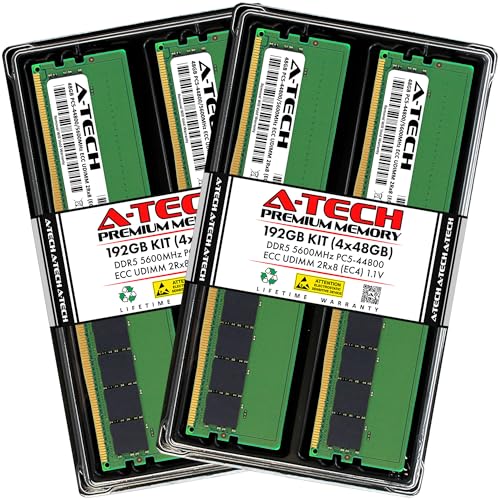
A-Tech 192GB Kit (4x48GB) DDR5 5600MHz PC5-44800 ECC UDIMM 2Rx8 (EC4 9×4) Dual Rank 1.1V ECC Unbuffered DIMM 288-Pin Server, Workstation RAM Memory Upgrade Modules
A-Tech RAM Memory compatible for select DDR5 Servers & Workstations ONLY; (*NOT COMPATIBLE WITH Desktop/Laptop Computers or PCs…
As an affiliate, we earn on qualifying purchases.
As an affiliate, we earn on qualifying purchases.
Key Questions
Why are cloud prices rising now after years of decline?
Global shortages and increased costs for DRAM chips have driven up server prices, which cloud providers are passing on gradually through hidden price increases.
Which cloud services are most affected by these price hikes?
Memory-optimized instances and services like Redis, ElastiCache, and in-memory databases are most impacted due to their reliance on DRAM.
Can companies avoid these cost increases?
While some can reduce expenses by optimizing memory usage or moving workloads on-premises, the overall cost pressure from supply chain issues remains a challenge.
Will cloud providers compensate for these costs with better efficiencies?
It is uncertain; providers may seek to offset costs through incremental pricing rather than significant efficiency improvements in the short term.
Source: ThorstenMeyerAI.com