
TL;DR

Get business pricing on office and shipping supplies
- Business-only prices and quantity discounts
- Tax-exempt purchasing
- Multiple users, one account, clear invoices
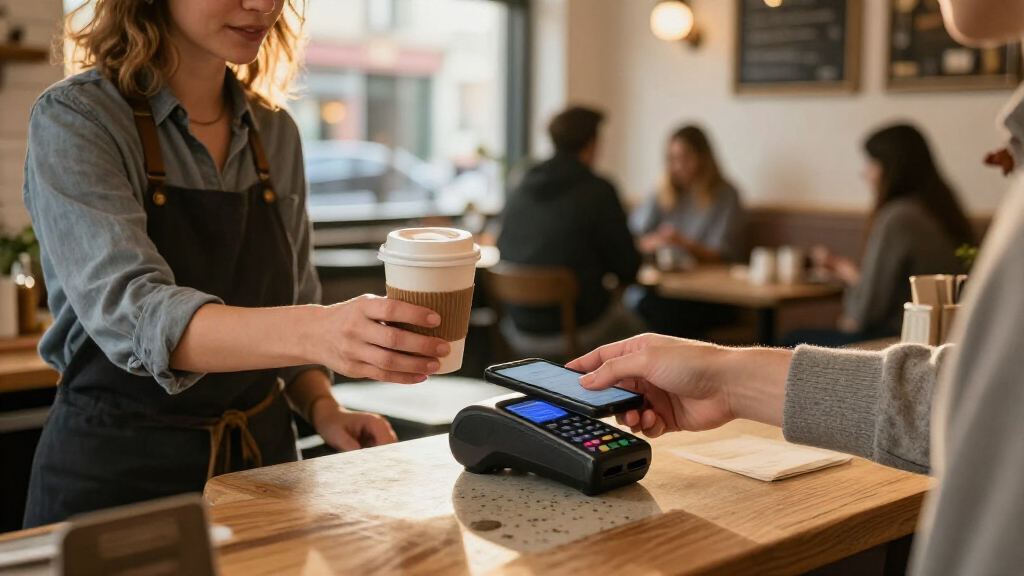
HSBC UK has launched Tap to Pay for eligible small businesses, with Stripe handling onboarding and payment processing. The service lets businesses accept supported contactless cards and digital wallets on compatible smartphones without a separate terminal or card reader.
HSBC UK has launched Tap to Pay, a service that lets eligible business banking customers accept supported contactless card and digital-wallet payments on a compatible smartphone, with Stripe providing the payment infrastructure. The service removes the need for a separate card reader or terminal, giving small businesses another way to take in-person payments.
Businesses begin setup in the HSBC UK Business Banking app and are directed to Stripe to complete onboarding and create a Stripe account. After setup, they can accept supported contactless payments using a compatible smartphone. HSBC and Stripe say payment confirmations are built into the process, with payments and payouts visible in one place.
The launch is aimed at businesses that take payments in person but may not have a dedicated payment terminal. The source does not specify which smartphone models or operating systems are supported, which contactless cards and wallets are included, or whether eligibility is limited by business type or account status. The service is described as available to eligible customers, rather than all HSBC UK business customers.
HSBC cited research conducted by Censuswide among 594 small-business owners with annual turnover below £2 million who were involved in processing customer or client payments. In that survey, 33% said they had lost a sale because they could not accept a customer’s preferred payment method. The finding is survey evidence, not an independently measured count of lost sales across UK businesses.
Fewer Barriers at the Point of Sale
The service may give small businesses more flexibility at markets, events, pop-ups and other locations where carrying a separate reader is inconvenient. It also offers an alternative for businesses that need to take contactless payments but do not want to rely on a fixed checkout setup. That matters because a customer’s preferred payment method can affect whether a transaction is completed, although the survey does not establish how often this happens across the entire UK small-business sector.
HSBC’s survey also found that 52% of respondents considered contactless payments essential or very important to meeting customer expectations. Separately, 78% said they spent at least one hour a week on payment-related administration. These results point to two practical concerns for owners: being able to take a payment when a customer is ready, and managing the work that follows. The source does not quantify whether Tap to Pay will reduce administration time or increase sales.
For customers, using a phone as the payment-acceptance device could help businesses take contactless payments where a terminal is unavailable. The system still depends on a compatible smartphone, successful onboarding, supported payment methods and a functioning connection and service. The announcement provides no transaction fees or detailed service terms, so businesses will need those details before judging the cost of adopting it.
Popular right now

Samsung 43-Inch M70H Series 4K Mini LED Smart TV (2026)

LG 77-Inch OLED evo C6 4K Smart TV

Ninja DualZone Air Fryer 10 Qt Smart 6-in-1 Grey
As an affiliate, we earn on qualifying purchases.
How HSBC and Stripe Split Setup
The arrangement combines HSBC’s business-banking channel with Stripe’s payment services. HSBC customers start in the bank’s app, but the source says they are then directed to Stripe to complete onboarding and establish a Stripe account. It does not describe this as a payment feature that works solely within HSBC’s app.
The product is part of a wider shift toward accepting in-person payments through phones rather than dedicated hardware. Here, the confirmed offer is specifically for supported contactless cards and digital wallets on compatible smartphones. The source does not say that the service accepts cash, every card type, or payments made through every wallet.
HSBC’s survey found that 69% of respondents expected customers to wait no more than five minutes when a payment problem occurs; 34% set that limit at two minutes or less. These are respondents’ views about customer patience, not measured waiting times. HSBC and Stripe present the service as a way to add a payment option, but neither the survey nor the launch announcement establishes how much the feature will change checkout delays or sales outcomes.
“Nobody wants to lose a sale because a customer cannot make a payment. For a small business, every purchase matters — and an awkward few minutes at the till can be the difference between making a sale and watching somebody walk away.”
— Gavin Maclean, HSBC’s head of global payment solutions UK
Eligibility, Fees and Device Support
The announcement does not give a full list of eligible HSBC customers, supported smartphone models, operating systems, card schemes or digital wallets. It also does not state transaction fees, settlement times, any service limits, or whether businesses need to meet additional account or onboarding requirements with Stripe. Those details affect whether the service is suitable for an individual business.
There is also no reported take-up figure, independent performance data or evidence yet that the service reduces payment-related administration or prevents lost sales. HSBC’s figures come from a survey of 594 business owners with a defined turnover and payments-processing profile; they should not be read as a census of all UK small businesses. The source does not provide the survey fieldwork dates or further methodological details.
Businesses Can Check Setup Terms
Eligible HSBC UK business customers can begin by checking Tap to Pay in the HSBC UK Business Banking app and following the Stripe onboarding process. Before using the service, businesses will need to confirm that their phone and payment methods are supported and review the applicable fees and account terms. The source does not give a timetable for wider availability or announce further rollout milestones.
Any assessment of the launch’s effect will depend on information not included in the announcement, such as how many businesses activate the feature, the costs they face, and whether it changes payment completion or administrative workload. HSBC and Stripe have not supplied those results in the source material.
Key Questions
What is HSBC and Stripe’s Tap to Pay service?
It is a service that lets eligible HSBC UK business customers accept supported contactless cards and digital wallets on a compatible smartphone, without a separate reader or terminal.
How does a business sign up?
Setup begins in the HSBC UK Business Banking app. Customers are then directed to Stripe to complete onboarding and set up a Stripe account.
Which phones and payment methods are supported?
The source says the service works on compatible smartphones and accepts supported contactless cards and digital wallets. It does not list specific devices, operating systems, card schemes or wallets.
How much does Tap to Pay cost?
The source material does not state transaction fees or other service charges. Businesses should check the terms presented during onboarding or ask HSBC and Stripe for current pricing.
Does the service already show that businesses lose fewer sales?
No outcome data is provided. HSBC cited a survey in which 33% of 594 respondents said they had lost a sale because they could not accept a customer’s preferred payment method, but the announcement does not measure Tap to Pay’s effect on sales.
Source: finextra.com