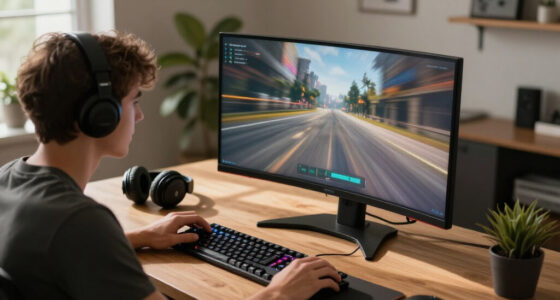

🔍 Read the full analysis: AI As A Creative Force In 'Overwatch School — Read The Air' on ThorstenMeyerAI.com

Get business pricing on office and shipping supplies
- Business-only prices and quantity discounts
- Tax-exempt purchasing
- Multiple users, one account, clear invoices
TL;DR
An innovative Overwatch training environment uses AI to integrate atmospheric visuals and strategic cues, enhancing player focus and decision-making. This development highlights AI’s role in creative game design and user engagement.
AI technology is now being used to craft immersive atmospheric environments in ‘Overwatch School — Read the Air,’ a new training module that aims to influence player focus and decision-making through visual cues and strategic design. This development demonstrates how AI can be a creative force in game environments, blending technical innovation with user experience to guide gameplay intuitively.
In ‘Overwatch School — Read the Air,’ developers leverage AI-driven techniques to create environments that incorporate subtle visual cues, such as a dawn-inspired range, amber reticles, and a carefully orchestrated three-shot sequence. These elements are designed not merely for aesthetic appeal but to influence player behavior and tactical choices, fostering a more immersive and intuitive training experience.
According to Thorsten Meyer, the project explores how atmosphere and function can seamlessly blend through innovative code-driven methods, creating environments that guide players without overt instructions. The design aims to elevate gameplay by making strategic cues feel natural and engaging, encouraging players to focus more on decision-making than on mechanical aim.
Technical considerations included balancing visual cues to avoid distraction while maintaining clarity, and ensuring the environment adapts dynamically to different skill levels. The project also faced creative challenges in integrating atmospheric elements that support gameplay objectives without overwhelming the user.
AI as a Creative Force in ‘Overwatch School — Read the Air’
An innovative Overwatch training environment uses AI to integrate atmospheric visuals and strategic cues, enhancing player focus and decision-making — and proving that AI’s role in creative game design goes far beyond automation.
Atmosphere as Strategy, Not Decoration
In ‘Overwatch School — Read the Air,’ developers leverage AI-driven techniques to build environments whose subtle visual cues are designed not merely for aesthetic appeal, but to influence player behaviour and tactical choices.
Dawn-Inspired Range
A carefully lit dawn palette sets an atmospheric tone that calms and focuses the player, framing the training space as a place of deliberate practice rather than pressure.
Amber Reticles
The warm amber reticle colour is orchestrated to draw the eye naturally toward targets, guiding aim without explicit instruction or on-screen prompts.
Three-Shot Sequence
A carefully orchestrated three-shot sequence trains rhythm and decision timing, encouraging players to prioritise choices over mechanical repetition.
From Code to Intuition
The project explores how atmosphere and function can blend seamlessly through innovative code-driven methods, creating environments that guide players without overt instructions.
Atmosphere and function can seamlessly blend through innovative code-driven methods — creating environments that guide players without overt instructions.
— Thorsten Meyer, Project LeadAI-Driven Design
Code-generated atmospheric elements map visual language to gameplay intent.
Subtle Visual Cues
Lighting, colour, and sequence cues embed strategy directly into the environment.
Guided Focus
Players internalise cues subconsciously, shifting attention from mechanics to decisions.
Intuitive Play
Strategic cues feel natural and engaging, elevating immersion and skill development.
Balancing Clarity Against Distraction
Technical considerations included balancing visual cues to avoid distraction while maintaining clarity, and ensuring the environment adapts dynamically to different skill levels. The chart below illustrates the relative design emphasis reported for the module’s core elements.
Traditional AI vs. Atmospheric AI in Games
‘Read the Air’ builds on industry trends in AI-assisted game development while pushing into relatively novel territory: using AI to craft atmospheres that shape player psychology and behaviour.
| Dimension | Established AI Uses | ‘Read the Air’ Approach |
|---|---|---|
| Primary goal | Efficiency & content volume | Player psychology & immersion |
| Player awareness of AI | ~ Often visible (difficulty spikes, generated content) | ✓ Subconscious, invisible guidance |
| Guides decision-making | ✗ Not directly | ✓ Core design objective |
| Skill-level adaptation | ✓ Common (adaptive difficulty) | ✓ Dynamic atmospheric adaptation |
| Industry adoption | ✓ Widespread | ~ Novel, not yet widespread |
| Long-term impact studied | ✓ Extensively | ✗ Ongoing research |
Open Questions & Future Developments
It is not yet clear how widely this atmospheric AI approach will be adopted elsewhere. Long-term impact on player performance remains to be studied, and scalability across genres is still uncertain.
What Remains Uncertain
Adoption across other training modules or mainstream gameplay is unproven. Whether these techniques can be scaled or customised for different game genres — and their measurable effect on engagement metrics — remain open questions.
Next Steps
Developers will gather user feedback and run performance analytics to assess cue effectiveness. Future iterations may add adaptive AI that personalises visual cues per player, with broader industry adoption possible if results show clear benefits.
FAQ
Common questions about AI’s creative role in the module.
How does AI influence the atmosphere in ‘Read the Air’?
AI is used to craft visual cues like dawn-inspired lighting, amber reticles, and strategic shot sequences that guide player focus and decision-making, creating an immersive environment that subtly influences gameplay.
Can atmospheric design improve player performance in training modules?
Initial results suggest atmospheric cues can enhance focus and tactical awareness, but comprehensive studies are ongoing to measure long-term performance improvements.
Is this AI approach applicable to other games or training environments?
Potentially, yes. The techniques could be adapted for different genres and training scenarios, but scalability and customization remain areas for further research.
What challenges were faced in integrating AI with atmospheric design?
Balancing visual cues to avoid distraction while maintaining immersion was a key challenge, along with ensuring the environment adapts dynamically to different skill levels.
Will this atmospheric AI be available in future updates or other modules?
Not yet confirmed, but developers are exploring ways to incorporate similar techniques into upcoming projects if initial testing proves successful.
Impact of Atmospheric AI in Game Design
This development underscores AI’s expanding role beyond automation into creative domains, particularly in enhancing user engagement and gameplay depth. By integrating atmospheric cues that subtly influence player focus and decisions, AI-driven environments like ‘Read the Air’ could set new standards for immersive training modules and tactical simulations. For players, this means a more intuitive experience where atmosphere guides skill development and strategic thinking, potentially transforming how competitive training is approached in esports and gaming communities.
As an affiliate, we earn on qualifying purchases.
Background of AI in Game Environment Design
Recent years have seen increasing experimentation with AI in game development, primarily for procedural generation, adaptive difficulty, and personalized content. However, the use of AI to craft atmospheric environments that influence player psychology and behavior remains relatively novel. ‘Overwatch School — Read the Air’ builds on these trends by focusing on atmospheric design as a strategic tool, aiming to enhance immersion and tactical decision-making.
This approach aligns with broader industry shifts toward more immersive and intuitive gaming experiences, where visual and environmental cues serve as integral components of gameplay rather than mere background elements. The project represents a step forward in understanding how AI can be harnessed creatively to shape user experience at a subconscious level.
Unconfirmed Aspects of AI’s Role in User Influence
It is not yet clear how widely this atmospheric AI approach will be adopted in other training modules or mainstream gameplay. The long-term impact on player performance and engagement metrics remains to be studied, and whether these techniques can be scaled or customized for different game genres is still uncertain.
Future Developments in AI-Driven Game Atmospheres
Developers plan to gather user feedback and conduct performance analytics to assess the effectiveness of atmospheric cues in ‘Read the Air.’ Further iterations may incorporate adaptive AI that personalizes visual cues based on individual player behavior, potentially expanding this approach to other training environments and competitive games. Broader industry adoption could follow if results demonstrate clear benefits for player engagement and skill development.
Key Questions
How does AI influence the atmosphere in ‘Overwatch School — Read the Air’?
AI is used to craft visual cues like dawn-inspired lighting, amber reticles, and strategic shot sequences that guide player focus and decision-making, creating an immersive environment that subtly influences gameplay.
Can atmospheric design improve player performance in training modules?
Initial results suggest that atmospheric cues can enhance focus and tactical awareness, but comprehensive studies are ongoing to measure long-term performance improvements.
Is this AI approach applicable to other games or training environments?
Potentially, yes. The techniques demonstrated could be adapted for different genres and training scenarios, but scalability and customization remain areas for further research.
What challenges were faced in integrating AI with atmospheric design?
Balancing visual cues to avoid distraction while maintaining immersion was a key challenge, along with ensuring the environment adapts dynamically to different skill levels.
Will this atmospheric AI be available in future updates or other modules?
It is not yet confirmed, but developers are exploring ways to incorporate similar techniques into upcoming projects if initial testing proves successful.
Source: ThorstenMeyerAI.com
Fall Picks
fall essentials
As an affiliate, we earn on qualifying purchases.