
To effectively drive both in-store and online sales through retail email marketing, you should focus on personalizing your messages based on customer data. Segment your audience by behavior, preferences, and purchase history to send targeted, relevant offers and recommendations. Use timely, personalized emails for key moments like birthdays or restock alerts to boost engagement. By continuously refining your strategies, you’ll create meaningful experiences that convert browsers into loyal buyers—learn how to optimize your approach further.
Key Takeaways
- Segment customers based on behavior and preferences to deliver personalized, relevant email content that drives both online and in-store sales.
- Use targeted campaigns with exclusive offers and recommendations to increase engagement and motivate purchases across channels.
- Send timely, personalized emails for key moments like birthdays or restock alerts to enhance customer loyalty and store visits.
- Analyze customer data to optimize email strategies, testing different messaging, discounts, and product suggestions for better conversions.
- Foster ongoing relationships through tailored communications, creating a seamless omnichannel experience that encourages repeat business.
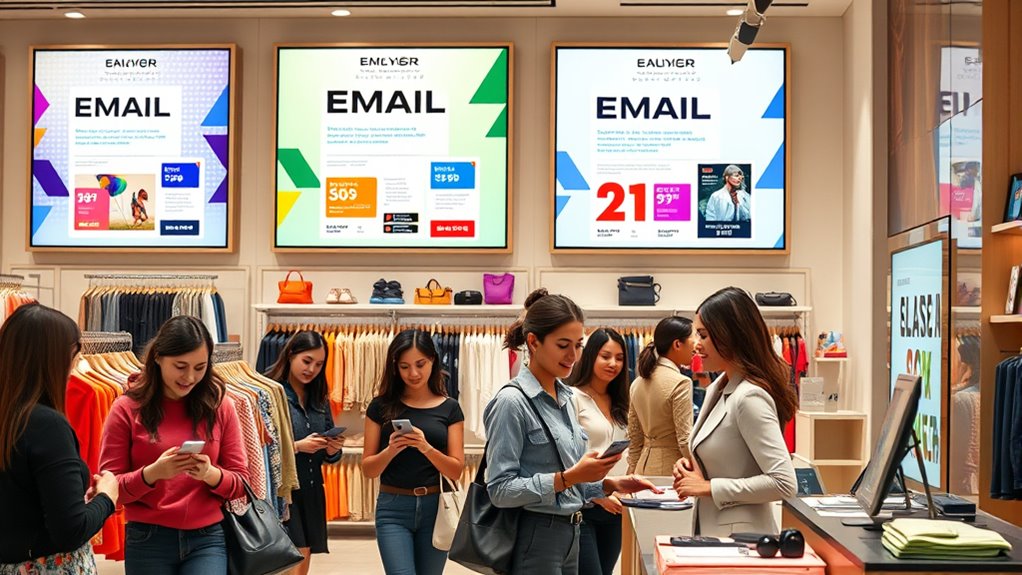
Have you ever wondered how retailers turn email campaigns into powerful sales tools? The secret lies in understanding your audience and tailoring messages that resonate. Customer segmentation plays a vital role here, allowing you to divide your audience into specific groups based on their behavior, preferences, and purchase history. Instead of sending generic emails to everyone, you craft targeted messages that speak directly to each segment’s needs and interests. This approach considerably boosts engagement because recipients feel seen and understood, which increases the likelihood of opening your emails and taking action.
Segment your audience to craft targeted, engaging emails that boost open rates and drive sales.
Once you’ve segmented your audience, you can create personalized offers that feel custom-made for each group. For instance, you might send a loyal customer exclusive discounts on products they frequently purchase or recommend items related to their browsing history. Personalized offers make your emails stand out in crowded inboxes, fostering a sense of exclusivity and appreciation. When recipients see content tailored specifically for them, they’re more likely to click through, whether that means visiting your website or heading into your store.
The beauty of combining customer segmentation with personalized offers is that it enhances the entire customer journey. You can send timely, relevant emails that align with key moments—like a birthday discount, a restock alert for favorite products, or a reminder about items left in a shopping cart. This level of personalization helps you stay top of mind and encourages repeat business. When you make your communications feel relevant and valuable, customers develop stronger loyalty to your brand.
Implementing customer segmentation isn’t complicated. It starts with collecting data—purchase history, website interactions, email engagement, and even demographic information. From there, you analyze patterns to identify distinct groups within your audience. Once segmented, you can craft email campaigns specifically designed for each group, focusing on their preferences and behavior. These targeted campaigns tend to have higher open rates, click-through rates, and ultimately, more conversions. Plus, they help you allocate your marketing resources more efficiently, ensuring that your efforts are focused where they’ll generate the best results.
Additionally, understanding the importance of Gold IRA Rollovers can help diversify your investment portfolio and provide a hedge against market volatility. Personalized offers also allow you to test and optimize your campaigns continuously. You can experiment with different discounts, product recommendations, and messaging styles to see what resonates most with each segment. Over time, this data-driven approach helps you refine your email marketing, making each campaign more effective than the last. By combining customer segmentation with personalized offers, you’re not just sending emails—you’re creating meaningful, tailored experiences that drive both in-store and online sales, turning casual browsers into loyal customers.
Frequently Asked Questions
How Can I Personalize Retail Emails Effectively?
You can personalize retail emails effectively by leveraging customer segmentation to target specific groups with relevant offers. Use dynamic content to tailor images, product recommendations, and messaging based on their browsing or purchase history. This approach makes your emails more engaging and relevant, encouraging recipients to take action. Regularly update your segmentation criteria and dynamic content to keep personalization fresh and aligned with customers’ evolving preferences.
What Are the Best Times to Send Retail Emails?
You should send retail emails during times aligned with seasonal timing and customer behavior. Generally, mid-week mornings or early evenings work well, but adapt based on your audience’s habits. During holiday seasons, ramp up your emails just before major shopping days. Pay attention to customer behavior patterns—if they shop more on weekends or lunch breaks, send emails accordingly. This strategy guarantees your messages reach them when they’re most receptive.
How Do I Measure Email Campaign Success?
You measure your email campaign success by tracking key metrics like open rates, click-through rates, and conversions, which often surprise you with insights. Use customer segmentation to analyze how different groups respond, and leverage email automation to streamline follow-ups. This way, you identify what resonates most, refine your strategy, and ultimately boost sales both in-store and online. Consistent monitoring keeps you ahead in the competitive retail landscape.
What Legal Considerations Apply to Retail Email Marketing?
You need to follow spam regulations and privacy compliance laws to avoid legal issues. Make sure you obtain explicit consent before sending marketing emails, include an easy way to unsubscribe, and clearly identify yourself as the sender. Respect customer privacy by safeguarding their data and being transparent about how you use it. Staying compliant helps build trust and prevents costly penalties, making your email marketing both effective and legally sound.
How Can I Increase Email Open Rates?
Boost your email open rates by crafting compelling, concise subject lines that engage and compel. Use segmentation strategies to personalize your messages, ensuring they resonate with specific audiences. Test and tweak your subject lines regularly, focusing on clarity and curiosity. By combining clever segmentation with optimized subject lines, you’ll create a fascinating cadence that catches eyes, sparks interest, and encourages recipients to open, read, and engage with your emails.
Conclusion
As you craft your retail email campaigns, imagine your messages as inviting storefront windows—bright, colorful, and full of life. Every email is a doorway, beckoning customers to step inside and explore your world. When you blend compelling offers with vivid imagery, you create an experience that feels as warm and welcoming as a friendly smile. Keep your tone lively and your visuals enticing, and watch your in-store and online sales blossom like a garden in full bloom.