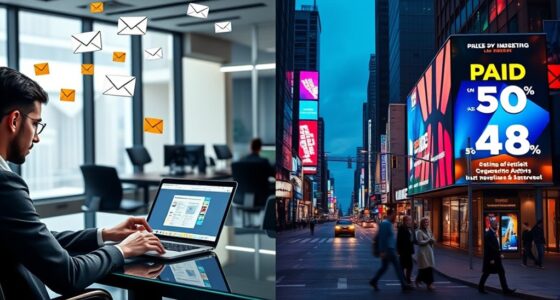
To drive offline actions with email, you should focus on crafting personalized messages that resonate with your audience’s preferences and behaviors. Timing is key, so ensuring your emails arrive just when recipients are most receptive increases responses. Combining relevant content with strategic send times boosts store visits, event sign-ups, and in-person engagement. Mastering these tactics will help you maximize your offline impact—continue further to discover more effective strategies.
Key Takeaways
- Personalize email content based on customer preferences and behaviors to increase relevance and offline engagement.
- Send targeted reminders and invitations at optimal times to create urgency and boost store visits or event sign-ups.
- Use dynamic content to tailor messages dynamically, enhancing relevance and encouraging immediate offline actions.
- Combine personalization with strategic timing to maximize response rates and drive foot traffic or event participation.
- Continuously monitor campaign metrics and refine strategies to improve offline conversions and overall effectiveness.

In today’s digital landscape, email remains a powerful tool for driving offline actions that boost your business. Whether you want to increase store visits, promote event sign-ups, or encourage in-person consultations, tailored email campaigns can make a notable difference. To maximize their impact, focus on personalization strategies that make your messages relevant and engaging. When you understand your audience’s preferences, behaviors, and past interactions, you can craft emails that resonate on a personal level. For example, if a customer frequently shops during weekends, sending them a special offer or invitation on a Friday or Saturday can nudge them to visit your store. Personalization also involves dynamic content that adapts based on user data, making each recipient feel like the message was crafted just for them. Incorporating timing optimization ensures your messages arrive when your audience is most receptive, increasing the likelihood of offline actions. timing optimization plays an essential role in transforming email engagement into offline actions. By sending your emails at the right moment, you increase the likelihood that recipients will act immediately. For instance, if you’re running a limited-time in-store promotion, sending reminder emails a day or two before the offer expires can create a sense of urgency. Analyzing your audience’s behavioral patterns helps you identify when they’re most receptive to your messages. If your customers tend to open emails in the mornings, schedule your campaigns accordingly. Additionally, consider time zones to ensure your emails arrive when your recipients are most likely to check their inboxes. Proper timing can turn a passive email into a call to action that prompts store visits, event registrations, or other offline engagements.
Combining personalization strategies with timing optimization creates a powerful synergy. When your email content is relevant and delivered at the right time, your audience is more inclined to respond positively. For example, sending a personalized invitation to a local event just before it occurs, tailored to the recipient’s interests, can notably boost sign-up rates. This approach not only increases foot traffic but also enhances your brand’s relationship with your customers. Always monitor your campaign analytics to refine your strategies continuously. Track open rates, click-throughs, and offline conversions to understand what works best for your audience. Adjust your personalization tactics, experiment with different send times, and stay attentive to your customers’ preferences. By doing so, you’ll turn email into a direct channel for driving meaningful offline actions that grow your business.
Frequently Asked Questions
How Can I Track Offline Conversions From Email Campaigns Effectively?
To track offline conversions from your email campaigns effectively, you should use geolocation targeting to identify when recipients visit your store or attend events. Incorporate QR code campaigns in your emails to encourage quick, trackable responses. When customers scan the QR code or visit your location, you can link these actions back to your email efforts, providing clear insights into offline conversion success and helping optimize future campaigns.
What Are the Best Practices for Segmenting Email Audiences for Offline Actions?
You should start by using customer profiling to understand your audience’s demographics and preferences. Then, leverage behavioral targeting to segment based on past interactions, purchase history, and engagement levels. This approach allows you to craft personalized messages for each segment, increasing the likelihood of offline actions like store visits or event sign-ups. Regularly analyze segment performance to refine your targeting, ensuring your campaigns drive the desired offline conversions.
How Do I Personalize Emails to Encourage Store Visits and Event Sign-Ups?
To personalize emails and boost store visits or event sign-ups, implement tailored personalization strategies by using customer data like past purchases or location. Customize your email content to highlight relevant offers, upcoming events, or store-specific details that resonate with each recipient. Use dynamic content blocks to adapt messages based on their preferences, making your emails more engaging and encouraging recipients to take offline actions.
What Legal Considerations Should I Be Aware of When Collecting Offline Data?
You need to prioritize privacy compliance and data security when collecting offline data. Make sure you obtain clear consent from individuals, explaining how you’ll use their information. Follow relevant laws like GDPR or CCPA, and implement secure storage practices. Regularly review your data collection processes to prevent breaches and guarantee transparency. Staying compliant not only protects your customers but also builds trust and safeguards your business from legal risks.
How Can I Integrate Offline Action Data With Existing Marketing Analytics?
Think of integrating offline action data with your marketing analytics as assembling a jukebox for your customer journey. You can use data integration tools to connect offline actions—like store visits or event sign-ups—with your existing digital analytics. This helps you gain a complete view of customer behavior, optimize campaigns, and track ROI more accurately. Start by syncing your offline data sources with your CRM or analytics platform for seamless insights.
Conclusion
By harnessing the power of email, you turn digital sparks into offline flames—driving store visits and event sign-ups like a conductor leading a symphony. When you craft targeted messages that resonate, you create a seamless bridge between online engagement and real-world action. Remember, your email campaigns are the compass guiding customers straight to your doorstep or event, transforming interest into tangible results. Keep the rhythm steady, and watch your offline actions flourish like a well-tuned melody.