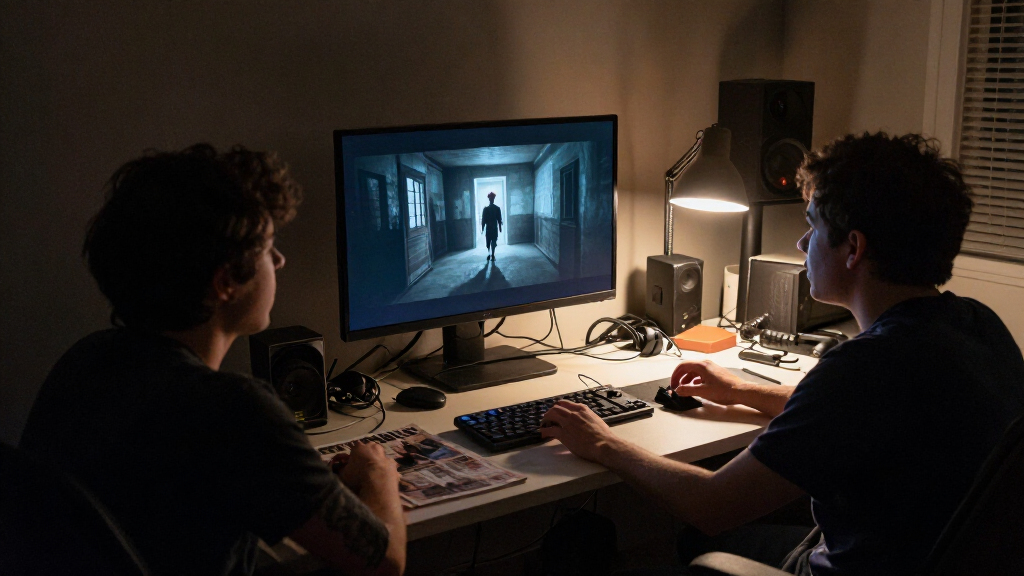

🔍 Read the full analysis: Hollow House And The Challenge Of Making AI Comedy Scary on ThorstenMeyerAI.com

Get business pricing on office and shipping supplies
- Business-only prices and quantity discounts
- Tax-exempt purchasing
- Multiple users, one account, clear invoices
TL;DR
Hollow House, a 97-second AI-generated horror-comedy, was made in three versions over one night, according to its creator, Thorsten Meyer. Meyer says the first two cuts failed because of pacing and performance problems, while the final version used three longer generated segments and human editing decisions.
Hollow House, a 97-second horror-comedy made with AI-generated characters, voices and sets, took three versions in one night to reach a cut its creator considered successful. In a behind-the-scenes account published October 28, Thorsten Meyer said the key obstacle was not making convincing images but getting the rhythm of the comedy to work.
Meyer said production ran from the evening of October 27 to about 1:30 a.m. the next day. The first version used 20 shots and ran 2 minutes 15 seconds; the second consisted of 66 fast cuts and ran 2 minutes 21 seconds. The final 1:37 cut was generated as three roughly 30-second segments using one model supplied with references for the full cast. Meyer said only the third version worked.
The story puts a ghost to work at an extreme haunted attraction, where the staff treat the supernatural new arrival as a workplace-management problem. A guest says the safe word, “cotton candy,” but the scare does not stop. The shift lead asks whether the ghost has signed a waiver, and a staff member in a priest costume is pulled into an attempted exorcism. These plot details and character descriptions come from Meyer’s account of the film.
Meyer reported using 2,220 Higgsfield credits across the three versions, which he valued at about $95 at his plan’s price, plus roughly 2,100 ElevenLabs characters for music and sound effects. Those are the creator’s stated production figures, not an independently verified cost estimate. He said the final approach relied on human choices including rejecting the first cut as boring, supplying a single model with references for the cast, and applying the final color grade.
AI FILMMAKING / BEHIND THE CUT
Hollow House and the Challenge of Making AI Comedy Scary
A 97-second horror-comedy took three versions in one night. Its creator says the hardest part was not generating the images—it was finding the comic rhythm.
Comedy lives between the frames
Meyer’s account describes a gap between producing convincing material and making a scene land. A line, a reaction and the next image all need room to work.
Characters & settings
AI tools produced character references, environments, voices and video clips for an extreme haunted attraction staffed by a ghost.
Performance & continuity
Reference images helped keep hair and costumes consistent. Meyer also reported difficulty getting some physical actions to follow directions.
Timing & reaction
The first cut looked good to its creator but felt boring. Human review and revision became central to the final comic rhythm.
From long beats to a leaner short
According to Meyer, the versions were made from the evening of October 27 to about 1:30 a.m. the next day. The third was the one he considered successful.
20 planned shots
The first cut ran 2:15. Meyer said the shots averaged about 5.6 seconds and the result felt amateurish and boring.
66 fast cuts
The second cut ran 2:21. More cuts changed the pace, but this version still did not solve the problem.
Three segments
The final 1:37 was generated as three roughly 30-second segments, with cast references supplied to one model.
The cut changed the feel
Meyer compared shot lengths in his first version with a short that inspired the project’s structure. His comparison is a measurement of those films, not a universal comedy formula.
| Measure | First Hollow House cut | Inspiring short |
|---|---|---|
| Shot count | 20 shots | About 74 cuts |
| Average shot length | About 5.6 seconds | Roughly 1.8 seconds |
| Creator’s assessment | “Boring” and amateurish | Reference for the structure |
The joke is in the job description
The supernatural becomes a staff-management problem at an extreme haunted attraction. The film’s details below are described in Meyer’s account.
“cotton candy”
Guest safe word
AI generated material; people shaped the film
The production account describes a workflow of references, generation, review and revision—not a finished short produced without human decisions.
For the first version, the team planned 20 shots, made a starting image for each, then animated them with Google’s Veo 3.1 fast mode. Meyer said the shots generally carried one line of dialogue, with little camera movement and a synthesized drone rather than a score.
He also described using Whisper speech recognition to catch generated dialogue errors, including “HEY!” rendered as the letters “H-E-Y,” and extra garbled syllables on the ghost’s final line.
A making-of record, not an independent audit
The film and its production notes give viewers material to assess the result. Several production and reception details remain unverified in the supplied account.
Logs & model behavior
No independent check of generation logs, credit usage, runtime comparisons or reported tool behavior is provided.
Final-cut breakdown
The account does not include a shot-by-shot analysis or specify all editing and sound work outside the named AI tools.
Audience response
No audience testing or viewership figures are given. No sequel or further production milestone is announced.
Source: Thorsten Meyer’s behind-the-scenes account, published October 28, 2026. Production figures and descriptions are attributed to the creator.
Hollow House, at a glance
The short is available online at 1:37. Watching it alongside Meyer’s notes lets viewers judge how the timing and generated performances land.
What is Hollow House?
A 97-second horror-comedy about a ghost joining the staff of an extreme haunted attraction, according to its creator, Thorsten Meyer.
How many versions were made?
Meyer says the team made three versions over one night: a 20-shot cut, a 66-cut version, and a final edit assembled from three roughly 30-second generated segments.
What was the main challenge?
Meyer identified pacing and comic timing. He said the first cut looked good but felt boring, with shots averaging about 5.6 seconds.
Was every part made by AI?
Meyer says characters, voices and sets were AI-generated. He also describes human scripting, selection, dialogue checks, editing and color grading.
Why Comedy Depends on the Cut
The account highlights a practical limit of AI filmmaking: generating attractive shots does not automatically produce a working scene. Meyer said the first version looked good but felt amateurish and boring. Its 20 shots averaged 5.6 seconds each, while he counted about 74 cuts in the short that inspired the project, averaging roughly 1.8 seconds. That comparison is Meyer’s measurement of the two films, not a general rule for comedy.
For creators and viewers, the distinction matters because comic effect often depends on the spacing between a line, a reaction and the next image. In Meyer’s description, the tools could produce character sheets, environments and dialogue, but they did not settle the edit’s timing or reliably follow every direction. His account presents human review and revision as central parts of the process, rather than evidence that the production was fully automated.
Popular right now

Vitamix 5200 Professional-Grade Blender, 64 oz. Container, Black

KitchenAid Classic Series 4.5 Quart Tilt-Head Stand Mixer K45SS, Onyx Black

Roborock Q7 M5+ Robot Vacuum and Mop
As an affiliate, we earn on qualifying purchases.
Three Cuts, One Production Night
Meyer said the team first made reference images for eight characters with Nano Banana 2 through Higgsfield. Those images were then used to guide later stills and video clips, a way to keep details such as hair and costumes more consistent as shots changed. He described the reference sheets as a casting and costume aid for the generated production.
For the first version, the team planned 20 shots, generated a starting image for each, then animated them with Google’s Veo 3.1 fast mode. Meyer said that version’s shots generally carried one line of dialogue, with little camera movement and a synthesized drone rather than a score. He compared its pacing with the AI horror-comedy short that inspired the project’s structure, while saying Hollow House’s script, characters and jokes were original.
The process also included checking generated speech against the script. Meyer said the team used Whisper speech recognition to catch errors, including a shouted “HEY!” rendered as the letters “H-E-Y” and a final ghost line with extra, garbled syllables. He reported that some physical actions were difficult to generate as directed, including a full head turn and a backward bridge movement.
““terribly boring and amateurish””
— Thorsten Meyer, creator of Hollow House
What the Production Account Leaves Open
The account is a first-person production report by Meyer; it does not include independent verification of the generation logs, credit use, runtime comparisons or claimed model behavior. The precise tools and workflow behind each portion of the final cut are described by the creator, but the article does not provide a separate production audit or detailed shot-by-shot breakdown of the 97-second version.
Meyer said the third version worked, but the supplied account does not give audience testing, viewership figures or other evidence showing how viewers responded. It also does not specify how much editing or sound work was done outside the named AI tools. The stated cost covers reported credits and sound-generation text, and should not be read as a complete accounting of labor or every production expense.
The Film and Its Making-of Record
The film is available as a 1:37 online short, and Meyer’s October 28 account presents the character sheets, starting images, failed attempts and final-cut materials as a record of how it was made. The next concrete point for readers is the release itself: watching the finished cut alongside the creator’s production notes allows them to judge how the pacing and generated performances land.
No further release, sequel or additional production milestone is announced in the supplied material. Any claims about audience reception or future projects remain open unless Meyer or the production team provides further information.
Key Questions
What is Hollow House?
Hollow House is a 97-second horror-comedy short about a ghost joining the staff of an extreme haunted attraction, according to its creator, Thorsten Meyer.
How many versions did the creator make?
Meyer says the team made three versions over one night. The first used 20 shots, the second had 66 fast cuts, and the final version was assembled from three roughly 30-second generated segments.
What did Meyer say was the main challenge?
Meyer identified pacing and comic timing as the main problems. He said the first cut looked good but felt boring, while its shots averaged 5.6 seconds.
How much did the production cost?
Meyer reported spending 2,220 Higgsfield credits, valued at about $95 at his plan’s price, plus about 2,100 ElevenLabs characters for music and sound effects. Those figures are his reported usage and do not establish a complete production cost.
Was every part of the film made by AI?
Meyer says the film’s characters, voices and sets were AI-generated. He also describes human decisions in scripting, selecting and revising versions, checking dialogue, editing and color grading.
Source: ThorstenMeyerAI.com