

Mapping the customer journey helps you identify key moments where you can tailor email touchpoints to match each stage of your audience’s experience. By understanding their needs, preferences, and behaviors, you can create targeted, personalized messages that resonate and build trust. This process highlights gaps and opportunities for improvement, ensuring your communications stay relevant. Keep going to discover more ways to optimize your touchpoints and boost customer engagement throughout their journey.
Key Takeaways
- Map customer touchpoints across the journey to identify optimal moments for personalized email interactions.
- Segment audiences based on behaviors and preferences to tailor email content effectively.
- Use journey insights to craft targeted messaging that aligns with customer needs at each stage.
- Detect gaps or delays in communication and implement re-engagement emails to guide customers forward.
- Continuously analyze and refine email strategies based on customer feedback and journey data.
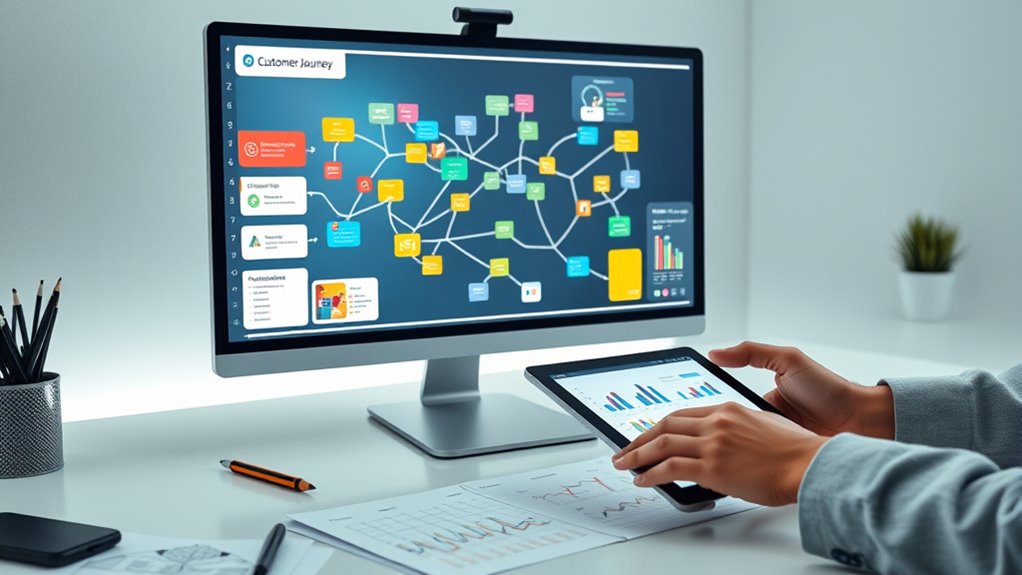
Customer journey mapping is a powerful tool that helps you understand your customers’ experiences from first contact to final purchase and beyond. When you map out the journey, you gain insights into how your audience interacts with your brand at every stage. This understanding allows you to develop targeted segmentation strategies, ensuring that each customer receives relevant and personalized communication. Segmentation strategies are essential because they help you categorize your audience based on behaviors, preferences, and needs, making your email touchpoints more effective. By identifying distinct customer groups, you can craft tailored messages that resonate, increasing engagement and conversion rates.
Customer journey mapping enables personalized, targeted communication to enhance engagement and conversions.
Once you’ve segmented your audience, focus on touchpoint optimization. Every interaction—whether it’s an email, a website visit, or a social media comment—serves as a touchpoint. Optimizing these touchpoints means ensuring they’re aligned with your customers’ expectations and their stage in the journey. For example, a new visitor might need a welcome email with introductory offers, while a loyal customer might prefer exclusive deals or personalized recommendations. When you optimize touchpoints, you create a seamless experience that feels customized and attentive, fostering trust and loyalty.
Mapping the customer journey also reveals gaps or pain points in your current touchpoints. You might discover that certain segments aren’t receiving timely follow-ups or that your messaging isn’t aligned with their specific needs. This insight enables you to refine your email campaigns, making them more relevant and timely. For instance, if you notice a segment tends to drop off after a specific interaction, you can design targeted emails to re-engage them, guiding them toward completing their purchase. This proactive approach enhances the overall customer experience and increases the likelihood of repeat business.
Furthermore, understanding the customer journey allows you to prioritize touchpoints that have the greatest impact. Not all interactions are equally influential, so focusing on those that drive conversions or deepen relationships yields better results. By continuously analyzing and adjusting your touchpoint strategies, you can ensure your messaging remains relevant and compelling at each stage. This ongoing process of refinement, based on journey insights, helps you deliver consistent value, making your email marketing more strategic and effective. Additionally, integrating predictive analytics can further enhance your ability to anticipate customer needs and personalize touchpoints proactively.
Frequently Asked Questions
How Do I Identify Key Customer Touchpoints Effectively?
You identify key customer touchpoints by analyzing customer feedback and observing their interactions with your brand. Pay close attention to moments when customers engage most or face challenges, which indicates touchpoint timing. Use surveys, reviews, and analytics to gather insights into their experience. This approach helps you pinpoint the most impactful touchpoints, allowing you to tailor email communications effectively and enhance overall customer engagement.
What Tools Are Best for Tracking Customer Interactions?
You should use analytics software like Google Analytics or Mixpanel to track customer interactions effectively. These tools provide detailed insights into user behavior, helping you identify patterns and key touchpoints. Additionally, gather customer feedback through surveys or direct communication to understand their needs better. Combining analytics data with feedback helps you refine your email touchpoints, ensuring your messaging resonates and enhances the overall customer journey.
How Can I Personalize Emails Based on Customer Behavior?
You can personalize emails by leveraging behavioral triggers and dynamic content. When a customer interacts with your site or emails, use behavioral triggers to send targeted messages that match their actions. Incorporate dynamic content to customize visuals, offers, and messaging in real-time, making each email relevant and engaging. This approach not only boosts engagement but also fosters loyalty by showing your customers you understand their preferences and needs.
What Metrics Indicate Successful Email Touchpoint Engagement?
You can tell your email touchpoint is successful by monitoring key email metrics like open rates, click-through rates, and conversion rates. Engagement indicators such as time spent reading, replies, and unsubscribe rates also reveal how well your audience interacts with your content. When these metrics improve, it shows your emails resonate with your customers and effectively drive them further along their journey. Keep tracking these indicators to optimize your email strategy.
How Often Should I Update My Customer Journey Map?
You should update your customer journey map regularly, ideally every 3 to 6 months. Keep an eye on customer feedback and market trends to identify shifts in preferences or behaviors. Frequent updates guarantee your email touchpoints stay relevant and effective, allowing you to adapt to evolving customer needs. Staying proactive helps you refine your strategy, improve engagement, and ultimately drive better results from your email campaigns.
Conclusion
By understanding and mapping the customer journey, you can craft targeted email touchpoints that truly resonate. When you stay one step ahead, you turn prospects into loyal customers. Remember, it’s all about hitting the right notes at the right time—don’t put all your eggs in one basket. Keep refining your approach, stay attentive, and you’ll see your efforts bear fruit. In the end, it’s about working smarter, not harder, to build lasting connections.