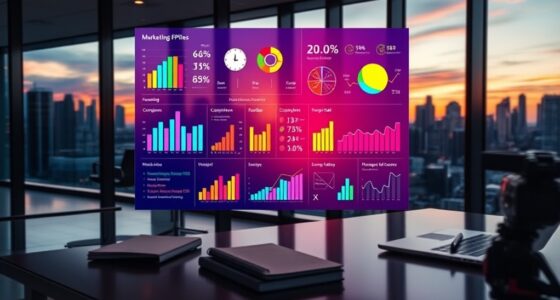
To develop an effective multi-channel marketing plan, start by segmenting your audience to tailor messaging that resonates with each group. Leverage personalized content across channels like email, social media, and your website, ensuring consistent branding and timing. Use automation and data analytics to monitor performance and optimize tactics continually. By aligning your channels and refining your strategy based on customer insights, you’ll boost engagement and conversions. Keep exploring, and you’ll uncover key strategies to make your plan even more successful.
Key Takeaways
- Segment your target audience based on demographics, behaviors, and preferences to tailor your marketing efforts effectively.
- Personalize content and messaging across channels to enhance relevance and foster stronger customer connections.
- Integrate multiple channels such as email, social media, website, and offline touchpoints for consistent brand messaging.
- Leverage technology like AI and content clusters to track interactions, streamline personalization, and optimize content delivery.
- Continuously monitor engagement metrics and adjust strategies to improve campaign cohesion, effectiveness, and customer relationships.

Are you looking to maximize your marketing efforts and reach your audience more effectively? Developing an integrated multi-channel marketing plan is vital to achieving that goal. The first step is understanding your audience through customer segmentation. By dividing your target market into distinct groups based on demographics, behaviors, and preferences, you can craft more tailored messages that resonate deeply with each segment. Customer segmentation allows you to identify what motivates different groups and where they spend their time, enabling you to allocate resources wisely across channels. This targeted approach not only improves engagement but also boosts conversion rates, making every marketing dollar work harder for you.
Understanding your audience through segmentation is key to tailored, effective marketing strategies.
Once you’ve segmented your audience, focus on content personalization. This step is essential because consumers expect tailored experiences that feel relevant and timely. Content personalization involves customizing your messaging, offers, and visuals to match the specific interests and needs of each customer segment. When you personalize content, you foster a sense of connection and trust, encouraging customers to engage more actively with your brand. It’s about delivering the right message, through the right channel, at the right time. Whether it’s a personalized email campaign, targeted social media ads, or customized website experiences, the key is consistency and relevance across all touchpoints. This guarantees your audience perceives your brand as attentive and responsive, which can greatly improve customer loyalty.
Integrating multiple channels—such as email, social media, website, mobile, and offline touchpoints—requires a cohesive strategy. You need to guarantee that your messaging aligns across platforms while leveraging each channel’s unique strengths. For example, use social media for brand awareness and engagement, email for nurturing leads, and your website for conversions. Automation tools can help streamline this process, allowing you to deliver personalized content seamlessly across channels. Consistent branding and messaging reinforce your value proposition and make your campaigns more memorable. An integrated approach also enables you to track customer interactions across channels, giving you a clearer picture of their journey and preferences. Incorporating AI content clusters can further enhance your strategy by creating interconnected, relevant content groups that boost your online visibility and engagement.
Finally, constantly analyze and optimize your efforts. Use data insights to refine your customer segmentation and content personalization strategies. Monitor engagement metrics, conversion rates, and customer feedback to identify what’s working and what needs improvement. By continually refining your tactics, you’ll create a more cohesive, efficient multi-channel marketing plan that adapts to your audience’s evolving needs and behaviors. With a clear focus on segmentation and personalization, combined with an integrated, channel-spanning approach, you’ll be better positioned to build stronger relationships and achieve your marketing goals.

JEBUTU Green Screen Backdrop Kit with Stand, 5X6.5ft Portable Green Screen Backdrop with Stand kit, GreenScreen Background with Stand Carrying Bag Clamp for Streaming Video Zoom
Wide Used & Note & Package Content: 1)JEBUTU green screen backdrop with stand kit is a good alternative...
As an affiliate, we earn on qualifying purchases.
Frequently Asked Questions
How Do I Measure Success Across Different Marketing Channels?
You measure success across channels by analyzing success metrics like conversions, engagement, and ROI. Use attribution models such as last-click, first-click, or multi-touch to understand each channel’s impact. Track these metrics consistently, compare results, and adjust your strategies accordingly. This approach helps you identify which channels drive results and optimize your marketing efforts for better overall performance.
Which Channels Should I Prioritize for My Target Audience?
Imagine you’re launching a new eco-friendly product. You should prioritize channels aligned with your audience segmentation—perhaps social media platforms like Instagram or TikTok if your target demographic is younger. Focus on channel selection that reaches your ideal customers effectively. By analyzing where your audience spends most of their time, you make certain your marketing efforts resonate, increasing engagement and conversions. This targeted approach maximizes your campaign’s success.
How Do I Coordinate Messaging Across Multiple Platforms?
You guarantee brand consistency and content synchronization by creating clear guidelines for tone, style, and messaging across all platforms. Use a centralized content calendar to coordinate publishing schedules and maintain uniformity. Regularly review your messaging to ensure it aligns across channels, adapting as needed to fit each platform’s unique format. This approach keeps your audience engaged and reinforces your brand identity, building trust and recognition.
What Budget Allocation Strategies Work Best for Multi-Channel Campaigns?
You should focus on budget balancing by prioritizing channels that deliver the best ROI, ensuring resource allocation aligns with your campaign goals. Start by analyzing past performance data to identify high-performing platforms, then allocate more budget there. Keep some funds flexible for testing new channels or adjusting strategies. Regularly review your spend versus results to optimize resource allocation, ensuring your multi-channel campaign remains effective and cost-efficient.
How Can I Adapt My Plan for Emerging Marketing Channels?
Don’t put all your eggs in one basket—be ready to adapt your plan for emerging marketing channels. Start with channel experimentation to test new platforms and see what resonates. Focus on platform integration to guarantee a seamless customer experience across channels. Keep an eye on trends, analyze data, and be flexible to pivot quickly. This approach helps you stay ahead, harness new opportunities, and maximize your marketing ROI.

Portable Green Screen Chair, 57 in Greenscreen Backdrop with Stand Double Sided Foldable Green Background, Chroma Key, for Photography Streaming Gaming Photo Zoom Video Chats and Meeting
🟢【Repairable Pure Cotton Material】Aiuca foldable green screen backdrop is made of pure cotton, the durable material has excellent...
As an affiliate, we earn on qualifying purchases.
Conclusion
By weaving together your channels like a symphony, you create a seamless melody that resonates with your audience. Each touchpoint becomes a note, harmonizing to build trust and brand loyalty. When you synchronize your efforts, your marketing plan transforms into a powerful rhythm that guides prospects effortlessly from awareness to action. Stay committed, fine-tune your approach, and watch your integrated strategy bloom into a vibrant, unstoppable force—turning every campaign into a mesmerizing experience.

7.87ft x 13.12ft Green Screen Backdrop with Stand, Large Collapsible Backdrop System for Photo Studio, Video Shooting, Live Streaming, Gaming
【Easy to install】easy to install the frames without extra tools in minutes,and the background cloth has many clasps,...
As an affiliate, we earn on qualifying purchases.

Green Screen Backdrop Kit 10x6.6ft with Tripod Stand, Chroma Key Background System for Video Shooting, Live Streaming, Photo Studio, Content Creation and Virtual Backgrounds
🎬【Complete Chroma Key Solution】Everything needed for professional green screen effects in one kit. Includes 10x6.6ft wrinkle-resistant polyester backdrop,...
As an affiliate, we earn on qualifying purchases.