🔍 Read the full analysis: My AI Idea Made It To Production. The First Video Was Boring. on ThorstenMeyerAI.com

Get business pricing on office and shipping supplies
- Business-only prices and quantity discounts
- Tax-exempt purchasing
- Multiple users, one account, clear invoices
TL;DR
Thorsten Meyer says he built a hand-drawn video engine in an evening, but its first full video was slow and boring. He measured the problems, changed the engine and added checks that block scenes that are too empty or poorly matched to the narration. The account is a personal report, not an independently verified assessment.
Thorsten Meyer says he took a hand-drawn video idea from an evening prototype to a revised production version within hours, after rejecting the first full video as slow and boring. In an account published November 6 on ThorstenMeyerAI.com, Meyer describes measuring the visual problems, changing the engine and adding automated checks—an example of how a working AI demo can still need human judgment and testing before it is ready to publish.
Meyer says the idea came from a video whose hand-drawn style he liked. To avoid copying it, he says he wrote down a limited set of general traits, including a hand-drawn line and a continuous visual world, and created the engine without using the original video’s drawings, assets or layouts. The engine’s colors came from his own design system, and he says its handwriting font is openly licensed.
According to Meyer, Claude built the engine, while OpenAI’s Codex reviewed the code without contributing to the build. He says Codex found five issues in its first review, and that each was fixed with a test that failed against the earlier code. Meyer also says he watched a roughly one-minute test video and personally approved it before it went live that evening in an article about local votes against data centers.
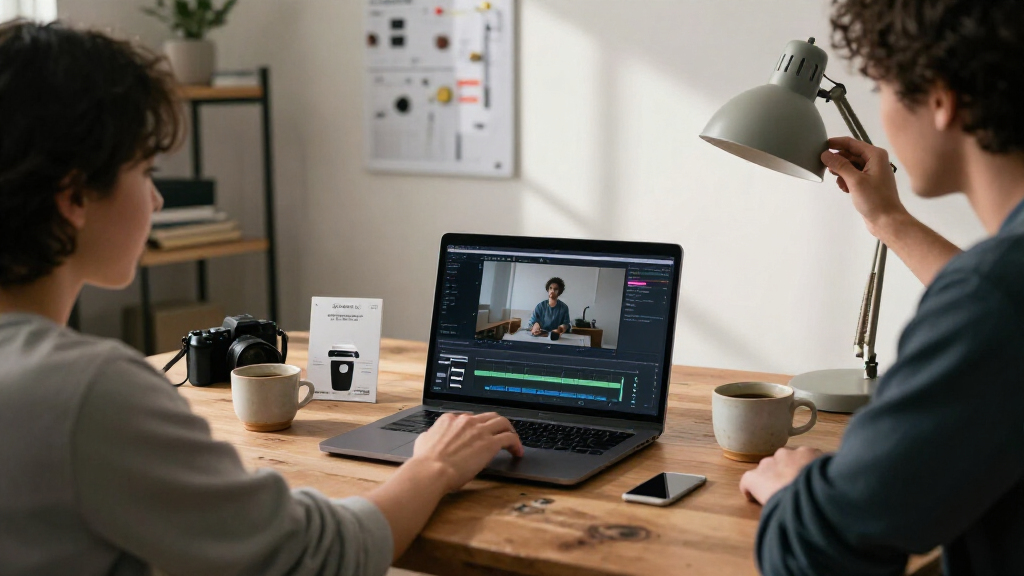
The first full video, made the next morning, did not work for him. Meyer identified excess white space, icons that did not support the narration, and finished drawings that remained static. He says the team measured the first three scenes and rebuilt the video engine. In those scenes, frame coverage rose from 15% to 66%, still time fell from 29 seconds to zero, and camera moves increased from three to 27. Meyer says the resulting checks now stop scenes that are too empty and flag objects that do not illustrate what is being said.
Infographic 01 · The new video look
One evening, one boring first video, one measured fix
Speed was not the point. The steps in between were: a second AI that reviews, a human who says yes, and numbers that became gates.
Share of the frame filled with content on the first three scenes after the fix. Before: 15%.
From an evening idea to a measured fix
Relative times, this week
- EveningA video I likedClean room: only a list of style traits, no drawings, assets or layouts
- Same eveningOwn engine, first reviewClaude builds; OpenAI’s Codex reviews; 5 findings fixed, each with a test that fails on the old code
- Same eveningA human says yesOne-minute test video approved and published
- Next morningFirst full video: slow and boringToo much white space, icons that did not fit, a picture that stood still
- Hours laterMeasured fix, then gatesThe first video in the improved look goes live
Source: my own build notes for the new video look, this week (engine history, review round, approval, critique, before/after measurement of the first three scenes).
Powered by Thorsten Meyer AI
From Demo to Publishable Video
The account highlights a practical distinction for teams using generative AI: producing an output is not the same as producing one that is suitable to publish. Meyer’s first full video was technically made, but he judged its pacing and visuals inadequate. The changes described show how subjective feedback can be translated into measurable production checks, while leaving a human responsible for deciding whether a result should go live.
The process also shows both the promise and limits of automated review. Meyer says a separate AI system identified code issues and that fixes were paired with tests. But code tests cannot by themselves establish that a video is engaging, accurate or faithful to its narration. In this workflow, review by another model and approval by a person serve different purposes; neither is presented as a substitute for the other.
For readers following AI-assisted media production, the important development is not simply that a video could be made quickly. It is that Meyer describes keeping the unsuccessful first full version online as a comparison and using specific shortcomings to set repeatable gates. Those measures may help catch the same visual problems in later builds, though they do not establish how the system performs across other subjects or projects.
Popular right now

Dyson V15 Detect Cordless Vacuum

KitchenAid 5.5-Qt Bowl-Lift Stand Mixer, Porcelain White (KSM55SXXX)

Breville Bambino Espresso Machine, Brushed Stainless Steel
As an affiliate, we earn on qualifying purchases.
How the Video Engine Was Built
Meyer frames the project as a personal account of moving an AI idea into production, including errors and checks. He says the initial inspiration was another creator’s video, but that his team recorded only broad style characteristics and made new assets and layouts. The article does not identify the original video or provide an independent comparison of the two works.
The workflow described assigns separate roles to the tools and the publisher. Meyer says Claude built the engine and OpenAI’s Codex reviewed it. A human then viewed a test version and approved publication. The first short test video went live the same evening; the fuller version followed the next morning and prompted a more substantial redesign.
Meyer includes a separate experiment as a related lesson: a model completed 12 of 15 legal benchmark answers after a weight-editing test, compared with four beforehand, while its legal score remained zero. He uses it to argue that task completion alone is not evidence of quality. The article gives no additional benchmark methodology in the supplied account, so the result should be understood as his reported experiment rather than a general finding about AI models.
“The next morning, the first full video in the new look came out. And honestly, it was slow and boring.”
— Thorsten Meyer, in his November 6 article
What the Report Does Not Establish
The development details and measurements come from Meyer’s own build notes, incident notes and experiments, according to his article. No independent reviewer, production logs or full test methodology are included in the supplied material. The reported measurements cover the first three scenes, not a broader set of videos, and the account does not give the precise calculation method for frame coverage or still time.
It is also unclear how reliably the new gates identify poor visual choices beyond the specific problems Meyer describes, or whether they can judge the accuracy and quality of narration-to-image matches. The report does not specify the audience response to either published video, nor provide viewing figures or other performance measures. The legal benchmark figures are also not accompanied here by details about the benchmark, scoring criteria or model setup.
More Videos Will Test the Checks
Meyer says the improved video look is live on his site and that the video accompanying his account was made using the same process. The practical next test is whether the frame-filling and movement gates catch similar problems in future scenes and whether human review continues to identify issues automated checks miss.
The article does not announce a release schedule, external evaluation or a new version date. Readers can compare the older, unchanged video with the later work, but further evidence about repeatability, viewer response and the system’s performance across different topics has not been provided.
Key Questions
What happened to the first full video?
Meyer says it was made the morning after the engine’s initial test, but he found it slow and boring because of empty space, unhelpful icons and static finished drawings. He says that version remains online unchanged as an example of what not to do.
What changed in the revised video?
Meyer says the team redesigned the engine to fill more of the frame, move the camera with each sentence, keep finished drawings in slight motion and connect each object to the narration. In the first three scenes, he reports frame coverage rising from 15% to 66%, still time falling from 29 seconds to zero, and camera moves increasing from three to 27.
Which AI tools did Meyer say he used?
Meyer says Claude built the video engine and OpenAI’s Codex reviewed the code. He says Codex did not build the system and that he personally approved the initial test video before publication.
Are the reported results independently verified?
Not in the supplied account. The measurements and development history are reported by Meyer from his own notes and experiments. The article does not provide independent verification or full measurement and benchmark methods.
Source: ThorstenMeyerAI.com