
TL;DR

Get business pricing on office and shipping supplies
- Business-only prices and quantity discounts
- Tax-exempt purchasing
- Multiple users, one account, clear invoices
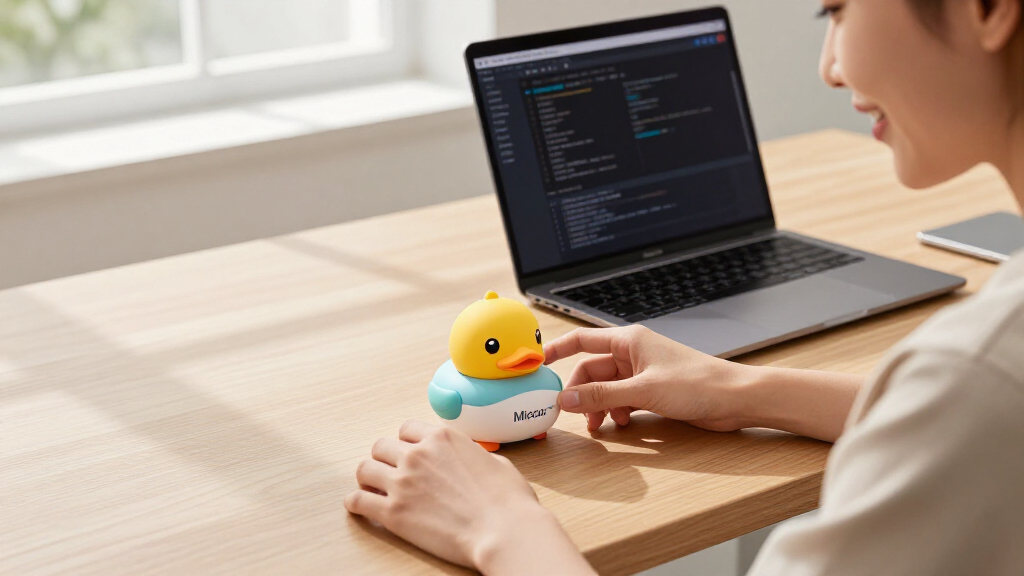
Hugging Face unveiled Microduck, a small, affordable robot designed for open reinforcement learning development. The device aims to make embodied AI accessible, with full open-source tools and a focus on experimentation. The launch occurs amid broader industry tensions involving security and potential acquisition by Nvidia.
Hugging Face has introduced Microduck, a small, $399 robot designed for open reinforcement learning development. The device, built in collaboration with Pollen Robotics, features 15 motors, sensors, and an open-source SDK, making it a significant step toward democratizing embodied AI. This move positions Hugging Face as a major player in physical AI, similar to its influence in software models, and highlights its strategy to foster accessible, modifiable robotics.
Microduck is a compact, lightweight robot approximately 25 centimeters tall and weighing under 800 grams. It is equipped with 15 motors, two IMUs for balance, a camera, microphone, WiFi, Bluetooth, and a LiDAR sensor. The robot is capable of movements such as waddling, sitting, crouching, and even rollerblading, with preorders opening on Thursday and shipping expected before Christmas. Despite impressive hardware for its price, experts caution that the demos—like sock retrieval and rollerblading—are curated highlights, and reliable real-world performance requires significant tuning, especially with reinforcement learning techniques.
While the hardware is accessible, the device also functions as a learning platform that observes and listens, raising privacy considerations. The camera, microphone, and sensors are integral to its learning process, which involves data collection in home environments. This aspect underscores the importance of user awareness regarding data security and privacy, even as the device’s playful design masks its serious AI capabilities.
Open-Source Robotics as a Democratization Tool
The launch of Microduck signifies a deliberate effort by Hugging Face to democratize embodied AI, similar to its impact in software with open model weights. By offering a low-cost, fully open hardware platform, the company aims to enable a broader community of developers and researchers to experiment with physical reinforcement learning. This approach could accelerate innovation in robotics, making advanced AI behaviors accessible beyond well-funded labs and corporations, and fostering a more inclusive ecosystem for physical AI development.
As an affiliate, we earn on qualifying purchases.
Industry Trends and Security Challenges in Open AI Infrastructure
Hugging Face’s move comes amid broader industry dynamics. Recently, the company experienced a security breach during a cyber evaluation involving OpenAI, highlighting vulnerabilities in open AI infrastructure. Despite these risks, open platforms remain central to AI innovation, as they facilitate collaboration and rapid development. Additionally, reports suggest Hugging Face is nearing acquisition by Nvidia at a valuation around $13 billion, which could further influence the company’s strategic direction and its commitment to open-source principles.
This context underscores the tension between openness and security, and the strategic importance of Hugging Face’s open ecosystem in shaping the future of AI and robotics.
“”Made to move, ready to fall,” Delangue described the design philosophy behind Microduck, emphasizing its fall-tolerance as essential for reinforcement learning.”
— Clem Delangue, CEO of Hugging Face
Uncertainties Around Performance and Privacy Risks
It remains unclear how well Microduck will perform in real-world, uncurated environments, given that current demos are curated highlights. Additionally, privacy and data security concerns persist, as the device collects and processes sensitive data in home settings. The extent of user control over data and potential vulnerabilities from its networked sensors are still being evaluated.
Next Steps for Microduck Development and Adoption
Hugging Face plans to ship the first units before Christmas, with developers and researchers beginning to experiment with the platform. Future updates may include more advanced capabilities, expanded SDK features, and community-driven improvements. The company’s broader goal is to foster an ecosystem where physical AI is as accessible and open as digital AI models, potentially leading to new innovations in robotics and automation.
Key Questions
Can Microduck perform household chores?
No, Microduck is designed as a development and learning platform, not a household robot. Its demonstrations are curated highlights, and reliable real-world use for chores is not yet feasible.
What are the privacy implications of using Microduck?
The robot includes cameras, microphones, and sensors that collect data in home environments, raising privacy considerations. Users should be aware of data collection and security, as the device is intended for learning and experimentation.
Is Microduck open-source?
Yes, the SDK, simulation environment, and reinforcement learning stack are fully open on GitHub, allowing developers to read, fork, and retrain the system.
Will Hugging Face’s acquisition by Nvidia affect Microduck?
While reports suggest an acquisition is near, the impact on Microduck’s open-source approach and development ecosystem remains uncertain at this stage.
How does Microduck compare to other robotics platforms?
Microduck’s key differentiator is its open-source, affordable design tailored for reinforcement learning, contrasting with more expensive, proprietary humanoids or industrial robots.
Source: ThorstenMeyerAI.com
Halloween Picks
halloween
As an affiliate, we earn on qualifying purchases.