

Digital marketing analytics tools can mean software, but this roundup compares books and learning resources that teach readers how to interpret data, build measurement systems, and improve campaigns. My best overall pick is A Practical Guide to Digital Marketing Analytics because it connects KPIs, dashboards, and AI-era decision-making without demanding advanced statistical knowledge. Marketing Analytics: Essential Tools for Data-Driven Decisions is the best value-oriented choice, while Marketing Analytics: Statistical Tools for Marketing and Consumer Behavior Using SPSS offers the deepest quantitative path. The main tradeoffs are strategic breadth versus platform-specific instruction, statistical rigor versus accessibility, and current AI coverage versus durable measurement principles. Continue reading for the full breakdown and buyer-specific recommendations.

Get business pricing on office and shipping supplies
- Business-only prices and quantity discounts
- Tax-exempt purchasing
- Multiple users, one account, clear invoices
Key Takeaways
- A Practical Guide to Digital Marketing Analytics earns the top position by covering the shortest path from KPI selection to dashboard-driven action.
- The AI-focused choices split into two roles: The AI Marketing Canvas favors strategic planning, while Mastering Marketing with AI covers a wider collection of channels and workflows.
- Marketing Analytics with SPSS provides the strongest statistical depth, but its software focus and steeper learning curve make it less suitable for casual marketers.
- Adobe Analytics For Dummies is the only clearly platform-specific resource, making it useful for Adobe users but too narrow for readers seeking vendor-neutral measurement skills.
- Web Analytics 2.0 and Digital Marketing Analytics offer durable measurement thinking, though newer titles provide more direct guidance on AI, dashboards, and modern cross-channel work.
| Adobe Analytics For Dummies |  | Best for Adobe Analytics Beginners | Content type: Instructional book | Primary platform: Adobe Analytics | Primary focus: Feature fundamentals and analysis practices | VIEW LATEST PRICE | See Our Full Breakdown |
| The AI Marketing Canvas, Second Edition: A Five-Step AI Plan for Marketers |  | Best AI Strategy Framework | Content type: Strategic marketing book | Edition: Second edition | Planning framework: Five-step AI plan | VIEW LATEST PRICE | See Our Full Breakdown |
| The Art of Digital Marketing: The Definitive Guide to Creating Strategic, Targeted, and Measurable Online Campaigns |  | Best for Campaign Planning | Content type: Digital marketing strategy book | Primary focus: Strategic, targeted, measurable online campaigns | Measurement orientation: Campaign performance | VIEW LATEST PRICE | See Our Full Breakdown |
| Mastering Marketing with AI: Digital Marketing, Social Media, Content, SEO, Advertising, Analytics, Automation, Customer Retention |  | Best for Broad AI Marketing Coverage | Content type: AI marketing guide | Channel coverage: Social media, content, SEO, and advertising | Analytics coverage: Included | VIEW LATEST PRICE | See Our Full Breakdown |
| A Practical Guide to Digital Marketing Analytics: Track KPIs, Build Dashboards, and Make Data-Driven Decisions in the Age of AI |  | Best Overall Analytics Playbook | Content type: Practical analytics guide | Primary focus: Digital marketing analytics | KPI tracking: Covered | VIEW LATEST PRICE | See Our Full Breakdown |
| Marketing Analytics: Statistical Tools for Marketing and Consumer Behavior Using SPSS | 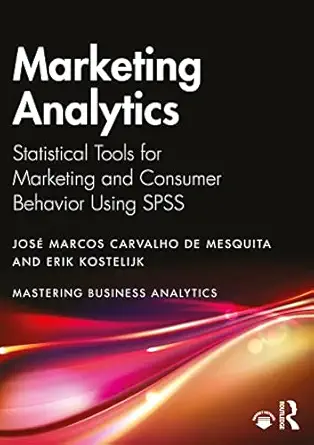 | Best for SPSS-Based Analysis | Product type: Marketing analytics book | Primary software: SPSS | Core subject: Marketing and consumer behavior analysis | VIEW LATEST PRICE | See Our Full Breakdown |
| Digital Marketing Analytics: Making Sense of Consumer Data in a Digital World |  | Best for Strategic Foundations | Product type: Digital marketing analytics book | Primary focus: Consumer data interpretation | Business objective: Improving marketing strategies | VIEW LATEST PRICE | See Our Full Breakdown |
| Marketing Analytics: Essential Tools for Data-Driven Decisions |  | Best for Decision-Making Frameworks | Product type: Marketing analytics book | Primary focus: Data-driven decision making | Core content: Analytics tools and strategies | VIEW LATEST PRICE | See Our Full Breakdown |
| Web Analytics 2.0: The Art of Online Accountability and Science of Customer Centricity |  | Best for Web Performance Accountability | Product type: Web analytics book | Primary focus: Advanced web analytics | Measurement objective: Online accountability | VIEW LATEST PRICE | See Our Full Breakdown |
| Digital Analytics for Marketing (Mastering Business Analytics) |  | Best for Business Analytics Learners | Product type: Digital analytics book | Series: Mastering Business Analytics | Primary focus: Digital analytics for marketing | VIEW LATEST PRICE | See Our Full Breakdown |
| digital marketing analytics tool | Primary focus | Intended audience | Content type | ASIN |
|---|---|---|---|---|
| Adobe Analytics For Dummies | Feature fundamentals and analysis practices | — | Instructional book | 1119446082 |
| The AI Marketing Canvas | AI integration in marketing strategy | Marketers and marketing leaders | Strategic marketing book | 1503644332 |
| The Art of Digital Marketing: | Strategic, targeted, measurable online campaigns | Marketing professionals and beginners | Digital marketing strategy book | 1119265703 |
| Mastering Marketing with AI: D | — | Marketing professionals | AI marketing guide | B0HJ91VD7M |
| A Practical Guide to Digital M | Digital marketing analytics | — | Practical analytics guide | B0H9MJ88PD |
| Marketing Analytics: Statistic | — | Marketing professionals and students | — | — |
| Digital Marketing Analytics: M | Consumer data interpretation | — | — | — |
| Marketing Analytics: Essential | Data-driven decision making | Marketers and business professionals | — | — |
| Web Analytics 2.0: The Art of | Advanced web analytics | — | — | — |
| Digital Analytics for Marketin | Digital analytics for marketing | Marketing professionals and students | — | — |
More Details on Our Top Picks
Adobe Analytics For Dummies
I rank Adobe Analytics For Dummies as the most approachable entry point for marketers who must understand Adobe’s reporting environment without starting with advanced analysis. Its plain-language feature guidance connects platform functions with practical business decisions, making it more accessible than A Practical Guide to Digital Marketing Analytics. The tradeoff is scope: this is platform-specific instruction, while Digital Analytics for Marketing offers concepts that transfer more readily between systems. Software changes may also leave interface directions or workflows behind current releases. It belongs on this list because Adobe users need help interpreting reports before they can act on them, but it is a learning resource rather than a live analytics tool. I would choose it for orientation, then add a newer dashboard or KPI reference.
Pros:- Explains Adobe Analytics concepts in accessible language
- Connects reporting features with business decision-making
- Provides practical introductory analysis guidance
- Offers a focused learning path for Adobe-based teams
Cons:- Does not cover advanced analytical techniques in much depth
- Interface instructions may age as Adobe updates the platform
- Provides less transferable guidance than vendor-neutral analytics books
Best for: New Adobe Analytics users who need plain-language help understanding reports, features, and basic analysis practices
Not ideal for: Experienced analysts or tool-agnostic teams, because the material lacks advanced methods and centers on one changing software platform
- Content type:Instructional book
- Primary platform:Adobe Analytics
- Primary focus:Feature fundamentals and analysis practices
- Skill level:Beginner
- Learning style:Plain-language explanations with practical tips
- Advanced-method coverage:Limited
- ASIN:1119446082
Our verdict“I recommend this to new Adobe Analytics users who need a friendly starting point, but not to analysts seeking advanced or platform-neutral instruction.”
The AI Marketing Canvas, Second Edition: A Five-Step AI Plan for Marketers
I place The AI Marketing Canvas, Second Edition above broader AI primers for readers who need a repeatable planning method rather than a tour of applications. Its five-step AI framework helps marketers connect technology choices with campaign goals, which can prevent disconnected experiments. Compared with Mastering Marketing with AI, it sacrifices channel-by-channel breadth for a clearer strategic sequence. Compared with A Practical Guide to Digital Marketing Analytics, it spends less time on KPI tracking and dashboard construction, so analytics specialists may find it light on implementation detail. The second-edition positioning also makes it the more current AI-focused choice in this group. I see it as a planning book for managers and strategists, not a manual for building models, configuring measurement platforms, or performing statistical analysis.
Pros:- Organizes AI marketing planning into a clear five-step framework
- Connects AI adoption with practical marketing objectives
- Second-edition positioning reflects newer AI strategy concerns
- Keeps the material accessible to nontechnical marketing leaders
Cons:- Offers limited technical depth for advanced practitioners
- Provides less KPI and dashboard guidance than analytics-centered alternatives
- Its marketing focus limits relevance for wider enterprise AI planning
Best for: Marketing leaders and strategists who need a structured process for planning AI initiatives across campaigns
Not ideal for: Data scientists and analytics engineers who need model-building, platform configuration, or advanced measurement instruction
- Content type:Strategic marketing book
- Edition:Second edition
- Planning framework:Five-step AI plan
- Primary focus:AI integration in marketing strategy
- Intended audience:Marketers and marketing leaders
- Technical depth:Introductory to intermediate
- ASIN:1503644332
Our verdict“I recommend this for marketing leaders who need an AI planning framework, while hands-on analysts should choose a more technical measurement guide.”
The Art of Digital Marketing: The Definitive Guide to Creating Strategic, Targeted, and Measurable Online Campaigns
I rank The Art of Digital Marketing as the strongest campaign-planning choice because it links strategy, targeting, execution, and measurement in one workflow. That range helps marketers understand how analytics supports campaign design, rather than treating reporting as an isolated final task. A Practical Guide to Digital Marketing Analytics goes deeper on KPIs and dashboards, while Web Analytics 2.0 is more tightly associated with online accountability and customer analysis. This book earns its place by connecting those measurement ideas to wider digital planning. The drawback is that its breadth can feel technical to casual readers, yet specialists may still want richer case studies and statistical instruction. I would use it as a bridge between marketing strategy and measurement, not as the sole reference for platform configuration, experimentation, or quantitative modeling.
Pros:- Connects campaign strategy directly with measurable outcomes
- Covers targeting, planning, and execution within one framework
- Serves both developing professionals and experienced marketers
- Explains the role of measurement beyond isolated reporting
Cons:- Provides limited case-study depth
- May feel technical to readers seeking a light introduction
- Does not replace a dedicated analytics or statistical methods reference
Best for: Campaign managers and developing marketing professionals who need to connect audience targeting, digital strategy, and measurable outcomes
Not ideal for: Casual readers or quantitative analysts, because the material may feel dense to the former and lacks advanced statistical depth for the latter
- Content type:Digital marketing strategy book
- Primary focus:Strategic, targeted, measurable online campaigns
- Measurement orientation:Campaign performance
- Planning coverage:Strategy through execution
- Intended audience:Marketing professionals and beginners
- Case-study depth:Limited
- ASIN:1119265703
Our verdict“I recommend this to campaign planners who want measurement built into strategy, while dedicated analysts will need a more specialized companion.”
Mastering Marketing with AI: Digital Marketing, Social Media, Content, SEO, Advertising, Analytics, Automation, Customer Retention
I choose Mastering Marketing with AI for readers who want one AI-centered overview spanning social media, content, SEO, advertising, analytics, automation, and retention. Its cross-channel scope makes it broader than The AI Marketing Canvas, which builds around a five-step planning framework, and broader operationally than Adobe Analytics For Dummies, which stays inside one platform. That variety helps generalist marketers identify where AI may improve day-to-day work. It also creates the main weakness: analytics shares space with many other subjects, so KPI design, dashboard architecture, and quantitative methods receive less dedicated attention than in A Practical Guide to Digital Marketing Analytics. The supplied product information also leaves the edition and reader level unclear. I rank it as a modernization overview, not the best standalone choice for analytics specialization.
Pros:- Covers AI applications across a wide range of marketing channels
- Connects analytics with content, advertising, automation, and retention
- Supports marketers updating broad digital skill sets
- Provides a single overview for cross-functional marketing roles
Cons:- Analytics receives less depth because the subject range is so broad
- The supplied listing does not identify an edition or publication details
- The intended skill level is not clearly defined
Best for: Generalist marketers who oversee several digital channels and want a broad map of AI applications across their work
Not ideal for: Analytics specialists who need deep instruction on measurement design, dashboards, attribution, or statistical techniques
- Content type:AI marketing guide
- Channel coverage:Social media, content, SEO, and advertising
- Analytics coverage:Included
- Automation coverage:Included
- Retention coverage:Included
- Intended audience:Marketing professionals
- Edition details:Not specified in supplied data
- ASIN:B0HJ91VD7M
Our verdict“I recommend this to generalist marketers seeking broad AI coverage, but analytics specialists should choose a measurement-focused book.”
A Practical Guide to Digital Marketing Analytics: Track KPIs, Build Dashboards, and Make Data-Driven Decisions in the Age of AI
I rank A Practical Guide to Digital Marketing Analytics first because its focus matches the central jobs buyers expect from an analytics resource: choosing KPIs, building dashboards, and turning findings into decisions. Those topics create a clearer route from raw performance data to action than the broad channel survey in Mastering Marketing with AI. It is also more platform-neutral than Adobe Analytics For Dummies and more implementation-oriented than The AI Marketing Canvas. The AI-aware decision framework gives it a current angle without moving analytics out of the spotlight. Its weakness is accessibility: readers without measurement foundations may find dashboard and KPI work technically demanding, and the supplied listing gives no edition details. I would select this as the core guide, then add Marketing Analytics: Statistical Tools for deeper quantitative methods.
Pros:- Centers directly on practical digital marketing analytics work
- Links KPI selection and dashboard building with business decisions
- Integrates AI into the decision-making process
- Uses a platform-neutral approach that transfers across tool stacks
Cons:- May be too technical for readers without measurement fundamentals
- Does not promise the statistical depth of a dedicated quantitative text
- The supplied listing does not specify an edition
Best for: Working digital marketers and marketing analysts who need to define KPIs, construct dashboards, and convert reporting into decisions
Not ideal for: Absolute beginners seeking a light marketing introduction, because KPI design and dashboard work may require more analytical grounding
- Content type:Practical analytics guide
- Primary focus:Digital marketing analytics
- KPI tracking:Covered
- Dashboard building:Covered
- AI integration:Marketing decision support
- Decision objective:Data-driven marketing choices
- Edition details:Not specified in supplied data
- ASIN:B0H9MJ88PD
Our verdict“I recommend this as the best core guide for marketers who need actionable KPI and dashboard skills across different analytics platforms.”
Marketing Analytics: Statistical Tools for Marketing and Consumer Behavior Using SPSS
I rank Marketing Analytics: Statistical Tools for Marketing and Consumer Behavior Using SPSS as the strongest choice for readers who want to connect marketing questions with statistical analysis in SPSS. Its practical orientation gives students and working marketers a clearer route from consumer data to usable findings. Compared with Digital Marketing Analytics, this book places more weight on analytical methods and software-supported work, while offering less discussion of broad digital strategy. That makes it better for building quantitative skills but weaker for readers focused on campaign planning, channel attribution, or dashboard design. The limited content detail also makes the expected technical level harder to judge. I would choose it for structured study or SPSS-led research, but not as an all-purpose guide to modern marketing platforms.
Pros:- Connects statistical techniques with marketing and consumer-behavior questions
- Uses SPSS examples that can support guided analytical practice
- Serves both academic learners and professionals building quantitative skills
Cons:- Provides limited detail about the exact methods and difficulty level covered
- Centers on SPSS rather than a broader digital analytics tool stack
- No customer feedback is supplied to clarify usability or teaching quality
Best for: Marketing students, researchers, and analysts who need practical statistical methods tied directly to SPSS
Not ideal for: Channel marketers seeking platform tutorials, attribution workflows, or guidance on current dashboard tools
- Product type:Marketing analytics book
- Primary software:SPSS
- Core subject:Marketing and consumer behavior analysis
- Method focus:Statistical tools and techniques
- Learning approach:Practical applications and examples
- Intended audience:Marketing professionals and students
- Customer-review data:Not provided
Our verdict“This is my pick for readers who want an SPSS-centered route into quantitative marketing analysis rather than a broad digital strategy handbook.”
Digital Marketing Analytics: Making Sense of Consumer Data in a Digital World
Digital Marketing Analytics: Making Sense of Consumer Data in a Digital World earns its place as my strategy-first recommendation because it connects consumer data with marketing decisions rather than centering on one software package. Compared with Marketing Analytics: Statistical Tools for Marketing and Consumer Behavior Using SPSS, it is more approachable for readers who need to understand how analysis shapes campaigns, yet it offers less help with executing statistical work. Its practical examples and strategy guidance can help managers ask better questions, interpret customer behavior, and link findings to marketing actions. The tradeoff is a lighter technical layer: analysts seeking code, implementation details, or platform configuration may find it too conceptual. I would place it ahead of narrower web analytics books for broad orientation, but behind hands-on guides for readers who need to build reports immediately.
Pros:- Links consumer behavior analysis to practical marketing strategy
- Covers digital marketing analytics without tying readers to one platform
- Offers examples that make data-driven planning easier to understand
Cons:- Does not provide detailed technical implementation guidance
- May feel too conceptual for experienced analysts
- Offers less software practice than the SPSS-focused alternative
Best for: Marketing managers and early-career strategists who need a broad framework for turning consumer data into campaign decisions
Not ideal for: Technical analysts who need code, platform configuration, or detailed implementation exercises
- Product type:Digital marketing analytics book
- Primary focus:Consumer data interpretation
- Business objective:Improving marketing strategies
- Coverage:Digital marketing analytics
- Learning approach:Concepts, practical examples, and strategies
- Technical depth:Limited implementation detail
- Named software:None specified
Our verdict“I recommend this to strategy-minded marketers who need a broad analytical framework and can source technical instruction elsewhere.”
Marketing Analytics: Essential Tools for Data-Driven Decisions
I see Marketing Analytics: Essential Tools for Data-Driven Decisions as the most direct option for business readers who care more about making defensible decisions than mastering a named analytics platform. Its mix of key concepts, practical tools, and applied strategy should help marketers connect evidence with choices about campaigns and customers. Against Digital Marketing Analytics: Making Sense of Consumer Data in a Digital World, this title appears more tightly centered on decision processes, while the latter provides a broader view of consumer data across digital marketing. It is also less specialized than the SPSS book, which makes entry easier but limits technical depth. Sparse product detail creates uncertainty around the exact tools, examples, and learning progression. I would select it for managerial skill building, not for step-by-step dashboard construction or advanced statistical training.
Pros:- Keeps analytical work tied to real marketing decisions
- Balances key concepts with practical business applications
- Does not require commitment to a specific analytics platform
Cons:- Available product data does not identify the specific tools covered
- Likely offers less technical depth than the SPSS-focused book
- No ratings or reader feedback are provided
Best for: Marketing managers and business students who need a practical framework for making evidence-backed marketing choices
Not ideal for: Analysts seeking named software instruction, advanced statistics, or detailed dashboard-building workflows
- Product type:Marketing analytics book
- Primary focus:Data-driven decision making
- Core content:Analytics tools and strategies
- Application area:Marketing decisions
- Learning approach:Key concepts with practical applications
- Intended audience:Marketers and business professionals
- Named software:None specified
- Customer-review data:Not provided
Our verdict“This makes the most sense for decision-makers who want applied analytical thinking without committing to a software-specific textbook.”
Web Analytics 2.0: The Art of Online Accountability and Science of Customer Centricity
Web Analytics 2.0 is my specialist choice for readers who want to connect website measurement, accountability, and customer centricity. Unlike Marketing Analytics: Essential Tools for Data-Driven Decisions, which frames analytics around broader business choices, this book narrows the lens to online performance and the customer signals behind it. That focus can help digital teams move beyond traffic counts and ask whether web activity supports customer needs and marketing goals. Its depth is also the drawback: readers managing social, email, paid media, and cross-channel attribution may find the web emphasis restrictive. The supplied product data does not identify platform tutorials or supporting resources, so buyers should not assume a tool-by-tool manual. I rank it highly for web measurement strategy, but below broader titles for teams building an integrated digital analytics program.
Pros:- Provides an in-depth treatment of web analytics concepts
- Links online accountability with customer-centered measurement
- Helps teams interpret website performance beyond basic traffic totals
Cons:- Its web-centered scope is narrower than a full digital marketing analytics guide
- No named platform tutorials or implementation resources are listed
- Supplied product information includes no reader feedback
Best for: Web analysts, optimization specialists, and digital managers responsible for website performance and customer-centered measurement
Not ideal for: Cross-channel teams that need equal coverage of social, email, advertising, and unified attribution
- Product type:Web analytics book
- Primary focus:Advanced web analytics
- Measurement objective:Online accountability
- Strategy orientation:Customer centricity
- Application area:Measuring and improving digital marketing efforts
- Coverage depth:In-depth conceptual analysis
- Named software:None specified
- Customer-review data:Not provided
Our verdict“I would choose this for disciplined website measurement, while cross-channel teams should start with a broader digital analytics title.”
Digital Analytics for Marketing (Mastering Business Analytics)
I position Digital Analytics for Marketing as the best bridge between digital marketing analysis and wider business analytics. It suits professionals and students who want practical techniques without narrowing their study to website metrics or SPSS. Compared with Web Analytics 2.0, it promises a broader marketing scope; compared with Marketing Analytics: Statistical Tools for Marketing and Consumer Behavior Using SPSS, it appears less dependent on a single software environment. That flexibility can help readers transfer analytical thinking across business questions, but the absence of included tools means practice may require separate datasets or software. Limited information about real-world cases also makes its applied depth hard to gauge. I would choose it for structured business-oriented learning, while practitioners needing detailed campaign examples or platform walkthroughs should favor a more explicitly hands-on guide.
Pros:- Connects digital marketing analytics with broader business analysis
- Offers practical techniques for professional and academic learners
- Avoids dependence on one named software platform
Cons:- Includes no additional analytics tools or supporting software
- Available information gives limited evidence of real-world case depth
- May provide less implementation detail than a dedicated platform guide
Best for: Marketing professionals and business students seeking portable digital analytics techniques across multiple business questions
Not ideal for: Practitioners who need bundled tools, extensive case studies, or detailed instructions for a specific analytics platform
- Product type:Digital analytics book
- Series:Mastering Business Analytics
- Primary focus:Digital analytics for marketing
- Secondary focus:Business analytics
- Learning approach:Techniques and strategic guidance
- Intended audience:Marketing professionals and students
- Included tools:No additional tools listed
- Case-study detail:Limited information provided
Our verdict“This is my choice for readers building transferable business analytics skills rather than expertise in one platform or channel.”

How We Picked
I ranked these resources around decision usefulness, analytics depth, accessibility, and relevance to current marketing work. Higher positions went to books that connect data collection with KPI selection, dashboard design, interpretation, and campaign action. I also weighed whether each title could support more than one channel, how much prior statistical knowledge it appeared to require, and whether its methods would remain useful after individual platforms changed. This approach placed practical, vendor-neutral instruction ahead of narrower or more academic material.
I assigned each pick a distinct role rather than treating broad topic coverage as an automatic advantage. A Practical Guide to Digital Marketing Analytics leads because its applied focus serves the widest buyer group, while Marketing Analytics: Essential Tools for Data-Driven Decisions ranks as the more economical starting point. Specialized titles earned their places by doing one job especially well: SPSS for quantitative analysis, Adobe Analytics For Dummies for platform onboarding, and The AI Marketing Canvas for AI planning. I lowered the relative position of resources with steeper prerequisites, narrower software dependence, or aging implementation details, even when their underlying ideas remained strong.
| digital marketing analytics tool | Content type | Intended audience | Product type |
|---|---|---|---|
| Adobe Analytics For Dummies | Instructional book | — | — |
| The AI Marketing Canvas | Strategic marketing book | Marketers and marketing leaders | — |
| The Art of Digital Marketing: | Digital marketing strategy book | Marketing professionals and beginners | — |
| Mastering Marketing with AI: D | AI marketing guide | Marketing professionals | — |
| A Practical Guide to Digital M | Practical analytics guide | — | — |
| Marketing Analytics: Statistic | — | Marketing professionals and students | Marketing analytics book |
| Digital Marketing Analytics: M | — | — | Digital marketing analytics book |
| Marketing Analytics: Essential | — | Marketers and business professionals | Marketing analytics book |
| Web Analytics 2.0: The Art of | — | — | Web analytics book |
| Digital Analytics for Marketin | — | Marketing professionals and students | Digital analytics book |
Factors to Consider When Choosing Digital Marketing Analytics Tools
I would choose among these resources by identifying the decision gap that needs fixing, not by counting how many topics appear in the contents. A marketer who cannot select useful KPIs needs a different book from an analyst who needs regression techniques or an Adobe-specific workflow. The six factors below help separate practical fit from impressive but unnecessary breadth.
Decide Whether You Need a Learning Resource or Live Platform
This lineup contains books and learning frameworks, not live reporting platforms that connect directly to advertising accounts. That distinction matters because a book can improve measurement design, but it cannot collect events, refresh dashboards, or repair tracking tags. I would start here if the real problem is unclear KPIs, weak interpretation, or inconsistent reporting logic. If the immediate need is automated data ingestion, attribution reporting, or campaign monitoring, budget for software alongside the chosen book. A common buying mistake is expecting educational material to replace implementation work. The strongest setup pairs sound analytics thinking with a platform that matches the organization’s data sources.
Match Statistical Depth to the Decisions You Make
Advanced statistical instruction pays off when decisions involve segmentation, forecasting, experiments, or relationships between multiple variables. It adds needless friction when the daily job is checking acquisition costs, conversion rates, and channel trends. I would choose an SPSS-centered resource only when the reader has access to the software and a reason to learn formal analysis. Managers who mainly review dashboards will gain more from a book centered on KPI design and interpretation. A formulas-heavy title can create the illusion of rigor while delaying basic measurement improvements. Match the mathematical level to the highest-value recurring decision, not to the most sophisticated technique available.
Choose Platform Depth or Cross-Channel Range
A platform-specific guide can shorten onboarding because its language and workflows mirror the system used at work. Its value falls quickly when the company changes vendors or the reader needs to compare paid media, email, search, and social data. Vendor-neutral resources travel better across roles, though they may leave more setup details unanswered. I would favor Adobe Analytics For Dummies for an Adobe-centered team and a broader analytics title for agency or multichannel work. Buyers should also check whether colleagues share the same platform, since analytics methods create more value when teams use a common vocabulary. The choice is between immediate operational help and longer-lasting portability.
Separate Durable Measurement Skills From Fast-Moving AI Tactics
AI-focused books can help marketers plan automation, content analysis, and data-assisted campaigns, but their tactical examples may age faster than their strategic frameworks. Durable skills include defining a business question, judging data quality, selecting a meaningful comparison, and communicating uncertainty. I would favor The AI Marketing Canvas when the need is organizational planning rather than a list of tools. Mastering Marketing with AI makes more sense for readers seeking broader channel coverage across content, SEO, advertising, automation, and retention. Buyers should be wary of treating AI breadth as proof of analytics depth. A useful AI resource still needs a clear link between data, decisions, and measurable outcomes.
Check the Practice Path, Not Just Topic Coverage
A book becomes more useful when it turns concepts into repeatable work, such as KPI definitions, dashboard sketches, measurement plans, or analysis exercises. Broad surveys can explain many channels without helping the reader produce anything usable on Monday. I would look for a sequence that moves from business questions to metrics, data checks, analysis, and action. Exercises should resemble the buyer’s actual responsibilities rather than rely on an unfamiliar enterprise setup. Software access also matters: an SPSS exercise has limited value when the reader cannot open or reproduce it. The better purchase is the resource with the clearest practice loop, even if another title covers more subjects.
Price the Time Cost Alongside the Cover Price
The cheapest book is poor value if its level, software, or examples cause it to remain unread. I measure value through the number of useful decisions improved relative to the time required to learn the material. A concise foundation can beat a dense technical text for a busy campaign manager, while an analyst may recover the extra study time through stronger models and experiments. Buyers should include setup costs such as software licenses, sample data preparation, and team training. Paying more makes sense when a specialized resource supports a recurring, high-impact task. For generalists, transferable methods usually produce a better return than narrow platform detail.
Frequently Asked Questions
Are These Digital Marketing Analytics Tools Software Platforms or Books?
These ten products are books and educational resources rather than hosted analytics platforms. They teach frameworks, methods, and workflows that can guide work in web analytics, advertising dashboards, spreadsheets, Adobe Analytics, or statistical software. None should be expected to collect live campaign data or provide automatic reporting by itself. I would pair the chosen resource with the systems already used by the marketing team. Buyers seeking direct integrations and real-time dashboards need analytics software in addition to one of these titles.
Which Book Is Best for Someone New to Marketing Analytics?
For most beginners, I would start with A Practical Guide to Digital Marketing Analytics because its KPI and dashboard orientation links learning to recognizable work tasks. The Art of Digital Marketing is a better entry point when the reader also needs campaign strategy, targeting, and channel context. Adobe Analytics For Dummies fits newcomers whose role is tied specifically to Adobe’s platform. I would not begin with the SPSS title unless statistics and quantitative research are already central to the job. The best beginner choice depends on whether the first goal is measurement practice, campaign context, or platform onboarding.
Should I Choose an AI-Focused Marketing Book in 2026?
An AI-focused title makes sense when the reader already understands basic metrics and wants help incorporating AI into planning or execution. The AI Marketing Canvas is the sharper choice for building a staged organizational plan, while Mastering Marketing with AI offers wider exposure to channels and automation. Neither focus removes the need to understand data quality, attribution limits, and KPI selection. I would choose a foundational analytics book first when those basics remain unclear. AI coverage is most valuable as a layer on top of measurement discipline, not as a substitute for it.
Do I Need the SPSS Book to Learn Marketing Analytics Properly?
No; SPSS is a specialized path, not a requirement for every marketing analyst. It becomes useful when the work includes hypothesis testing, consumer research, regression, or other formal statistical analysis. Dashboard owners, campaign managers, and content marketers can make strong decisions with descriptive metrics, sound comparisons, and careful experiment design. Digital Analytics for Marketing offers a more structured analytical route without making SPSS the defining choice. I would pay for the steeper learning curve only when quantitative modeling supports real job tasks.
Are Older Web Analytics Books Still Useful in 2026?
Older books can still teach durable principles such as customer-centric measurement, accountability, segmentation, and converting data into action. Their interface screenshots, platform references, and implementation advice may no longer match current systems. Web Analytics 2.0 works best as a conceptual foundation paired with newer documentation or a current practical guide. I would avoid relying on any older title as the sole source for consent rules, tracking architecture, or AI-assisted workflows. Its value lies in measurement thinking rather than current platform instruction.
Conclusion
If I were choosing one resource for the broadest mix of KPI selection, dashboards, and applied decision-making, A Practical Guide to Digital Marketing Analytics is my best overall pick. For value, Marketing Analytics: Essential Tools for Data-Driven Decisions offers a more approachable route, while beginners can choose The Art of Digital Marketing for campaign context or Adobe Analytics For Dummies for platform-specific onboarding. My best premium, quantitatively demanding choice is Marketing Analytics: Statistical Tools for Marketing and Consumer Behavior Using SPSS; Digital Analytics for Marketing better suits readers seeking a structured business-analytics course. AI planners should choose The AI Marketing Canvas, while marketers seeking wider AI coverage across channels should favor Mastering Marketing with AI. For durable consumer-data thinking, Digital Marketing Analytics is the stronger modern foundation, whereas Web Analytics 2.0 suits readers who want a classic accountability framework. The right choice comes down to the next capability the buyer needs: practical reporting, statistical analysis, platform fluency, AI planning, or broader campaign strategy.
Halloween Picks
halloween
As an affiliate, we earn on qualifying purchases.