
The right digital marketing analytics tools depend on whether you want to master the underlying methods or simply get campaigns measured fast. My top pick overall is Marketing Analytics: Essential Tools for Data-Driven Decisions, because it balances strategy, tooling, and real decision frameworks better than anything else on this list. For hands-on dashboard builders, A Practical Guide to Digital Marketing Analytics stands out for its step-by-step KPI and dashboard workflow, while Adobe Analytics For Dummies is the fastest route to competence inside a specific enterprise platform. The main tradeoff in this category is breadth versus depth: broad titles cover more channels but stay surface-level, while platform-specific and statistical guides go far deeper but lock you into one ecosystem or one methodology. Price rarely separates winners here — practical usability and how current the material is matter far more. Keep reading for the full ranked breakdown.

Get business pricing on office and shipping supplies
- Business-only prices and quantity discounts
- Tax-exempt purchasing
- Multiple users, one account, clear invoices
Key Takeaways
- Breadth-versus-depth is the real dividing line in this roundup: general strategy titles like the top pick cover the full analytics stack, while specialized picks like the SPSS guide or Adobe Analytics book serve one workflow extremely well.
- Books that tie metrics to budget decisions consistently rank higher than books that stop at measurement — A Practical Guide to Digital Marketing Analytics and The Art of Digital Marketing both earn their spots by connecting data to action.
- AI coverage became a ranking factor for 2026: titles like Mastering Marketing with AI and The AI Marketing Canvas cover attribution and analytics shifts older classics miss, though neither replaces a measurement-first foundation.
- Web Analytics 2.0 remains the deepest treatment of customer-centric measurement despite its age, but readers should verify its examples against current platform versions before applying them.
- The SPSS-based statistical guide is the only pick requiring real quantitative background — beginners should start elsewhere or it becomes shelf decoration rather than a working reference.
| Marketing Analytics: Essential Tools for Data-Driven Decisions |  | Best Overall | Format: Print book | Topic Focus: Marketing analytics tools and data-driven decision making | Audience Level: Intermediate to advanced marketing professionals | VIEW LATEST PRICE | See Our Full Breakdown |
| Mastering Marketing with AI: Digital Marketing, Social Media, Content, SEO, Advertising, Analytics, Automation, Customer Retention |  | Best for AI-Driven Marketing | Format: Digital/print book | Topic Focus: AI across digital marketing, social, SEO, advertising, analytics, automation, retention | Audience Level: Marketing professionals and enthusiasts | VIEW LATEST PRICE | See Our Full Breakdown |
| Digital Analytics for Marketing (Mastering Business Analytics) |  | Best for Business Analytics Depth | Format: Print/digital book | Series: Mastering Business Analytics | Topic Focus: Digital analytics for marketing decisions | VIEW LATEST PRICE | See Our Full Breakdown |
| Digital Marketing Analytics: Making Sense of Consumer Data in a Digital World |  | Best for Consumer Data Interpretation | Format: Print book | Topic Focus: Consumer data analysis for digital marketing | Audience Level: Intermediate marketing professionals | VIEW LATEST PRICE | See Our Full Breakdown |
| Marketing Analytics: Statistical Tools for Marketing and Consumer Behavior Using SPSS | 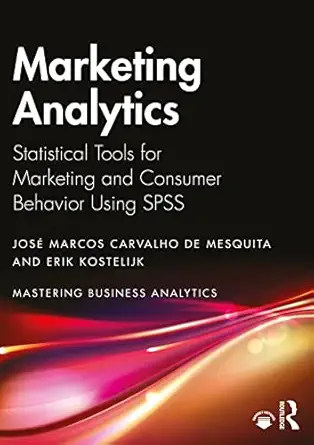 | Best for Hands-On Statistical Learning | Format: Print/digital textbook | Software Requirement: SPSS | Topic Focus: Statistical tools for marketing and consumer behavior | VIEW LATEST PRICE | See Our Full Breakdown |
| The AI Marketing Canvas, Second Edition: A Five-Step AI Plan for Marketers |  | Best for AI-First Marketing Strategy | Format: Book (Second Edition) | Core Framework: Five-step AI marketing plan | Primary Focus: AI strategy and implementation for marketers | VIEW LATEST PRICE | See Our Full Breakdown |
| The Art of Digital Marketing: The Definitive Guide to Creating Strategic, Targeted, and Measurable Online Campaigns |  | Best for Full-Funnel Campaign Design | Format: Book (definitive guide format) | Core Focus: Strategic, targeted, measurable online campaigns | Audience Level: Professionals and students | VIEW LATEST PRICE | See Our Full Breakdown |
| A Practical Guide to Digital Marketing Analytics: Track KPIs, Build Dashboards, and Make Data-Driven Decisions in the Age of AI |  | Best for Hands-On Practitioners | Format: Book | Core Focus: KPI tracking, dashboards, data-driven decisions | AI Integration: Analytics decision-making framed for the AI era | VIEW LATEST PRICE | See Our Full Breakdown |
| Adobe Analytics For Dummies |  | Best for Adobe Analytics Beginners | Format: Book (For Dummies series) | Core Focus: Adobe Analytics fundamentals | Platform: Adobe Analytics (enterprise) | VIEW LATEST PRICE | See Our Full Breakdown |
| Web Analytics 2.0: The Art of Online Accountability and Science of Customer Centricity |  | Best for Analytics Fundamentals and Mindset | Format: Book | Core Focus: Web analytics methodology and customer centricity | Key Themes: Online accountability, customer-centric measurement | VIEW LATEST PRICE | See Our Full Breakdown |
| Social Media Analytics: Effective Tools for Building, Interpreting, and Using Metrics |  | Best for Social Media Specialists | Format: Print/digital book | Primary Focus: Social media analytics | Coverage Areas: Building, interpreting, and applying social media metrics | VIEW LATEST PRICE | See Our Full Breakdown |
| digital marketing analytics tool | Format | Audience Level |
|---|---|---|
| Marketing Analytics: Essential | Print book | Intermediate to advanced marketing professionals |
| Mastering Marketing with AI: D | Digital/print book | Marketing professionals and enthusiasts |
| Digital Analytics for Marketin | Print/digital book | Intermediate to advanced; students and professionals |
| Digital Marketing Analytics: M | Print book | Intermediate marketing professionals |
| Marketing Analytics: Statistic | Print/digital textbook | Business students and professionals building statistical skills |
| The AI Marketing Canvas | Book (Second Edition) | Intermediate marketing professionals |
| The Art of Digital Marketing: | Book (definitive guide format) | Professionals and students |
| A Practical Guide to Digital M | Book | Intermediate practitioners |
| Adobe Analytics For Dummies | Book (For Dummies series) | Beginners |
| Web Analytics 2.0: The Art of | Book | Intermediate to advanced professionals |
| Social Media Analytics: Effect | Print/digital book | — |
More Details on Our Top Picks
Marketing Analytics: Essential Tools for Data-Driven Decisions
This title earns the top slot because it balances breadth of coverage with genuine decision-making framing — the connective tissue most analytics books skip. Compared with Digital Analytics for Marketing, which leans more technical, this one keeps its eye on the business question behind every metric, which is what most working marketers actually struggle with. The tradeoff is depth: readers who want worked case studies or step-by-step tool walkthroughs will find the practical layer thinner than in a hands-on guide like Adobe Analytics For Dummies. Still, as a single volume that explains the full analytics toolkit and how the pieces fit together, this pick makes the most sense for the broadest range of buyers.
Pros:- Broad coverage of the marketing analytics toolkit in one volume
- Frames analytics around real business decisions rather than raw metrics
- Strong conceptual foundation that transfers across tools and platforms
- Written for practitioners, not just academics
Cons:- Lacks detailed case studies to ground the concepts in real scenarios
- Can be technical for readers new to analytics
Best for: Marketing managers and analysts who want a broad, framework-driven foundation before investing in any specific tool or platform
Not ideal for: Beginners with no statistics background — the conceptual density can be technical and assumes some familiarity with marketing data
- Format:Print book
- Topic Focus:Marketing analytics tools and data-driven decision making
- Audience Level:Intermediate to advanced marketing professionals
- Coverage:Key concepts and practical applications in marketing analytics
- Case Studies:Limited
- ISBN-10:0813945151
Our verdict“Buy this if you want one well-rounded reference that explains the whole analytics landscape; skip it if you need tool-specific tutorials.”
Mastering Marketing with AI: Digital Marketing, Social Media, Content, SEO, Advertising, Analytics, Automation, Customer Retention
What sets this option apart is its AI-first perspective — analytics is treated as one gear in a larger machine that includes automation, SEO, and retention, rather than the whole show. That scope is both its strength and its weakness when placed next to Marketing Analytics: Essential Tools for Data-Driven Decisions: you get a wider view of where analytics fits in modern AI-assisted marketing, but far less depth on measurement methodology itself. Marketers trying to modernize their stack will appreciate the automation and retention strategies; pure analysts will find the analytics chapters too thin. Compared with The AI Marketing Canvas, this takes a broader multi-channel sweep rather than a structured five-step plan, so choose based on whether you want breadth or a process framework.
Pros:- Covers AI applications across the full marketing mix, not just analytics
- Includes practical automation and customer retention strategies
- Accessible to both professionals and ambitious enthusiasts
- Timely AI-focused angle that most analytics books lack
Cons:- Analytics coverage is broad but shallow compared with dedicated titles
- Limited edition and publication details make it harder to gauge currency of content
Best for: Marketing generalists and small-team leads who want to fold AI-driven analytics into a wider automation and retention strategy
Not ideal for: Dedicated analysts who need rigorous measurement methodology — the analytics coverage is one chapter among many, not the core focus
- Format:Digital/print book
- Topic Focus:AI across digital marketing, social, SEO, advertising, analytics, automation, retention
- Audience Level:Marketing professionals and enthusiasts
- Special Emphasis:AI automation and customer retention
- Analytics Depth:Survey-level, integrated with broader strategy
- ASIN:B0HJ91VD7M
Our verdict“This is the pick for marketers weaving AI and analytics into one strategy — not for specialists who live inside the data.”
Digital Analytics for Marketing (Mastering Business Analytics)
Positioned as the most analytics-centric title in this batch, this book sits closer to a business analytics curriculum than a marketing playbook. Where Mastering Marketing with AI spreads across channels, this one goes deep on measurement technique, making it better suited to readers who want to master the analytical craft behind marketing decisions. The tradeoff mirrors the discipline: it can be technical for beginners, and like Marketing Analytics: Essential Tools for Data-Driven Decisions, it skimps on detailed case studies that would make abstract methods concrete. Compared with a practitioner guide like A Practical Guide to Digital Marketing Analytics, this is the more rigorous, less dashboard-driven choice — a distinction buyers should weigh carefully.
Pros:- Deep, methodology-driven coverage of digital analytics
- Part of a structured business analytics learning series
- Connects analytical technique directly to marketing decisions
- Suitable as a course companion or self-study text
Cons:- Few detailed case studies to anchor the methods
- Technical enough to intimidate beginners
Best for: Aspiring marketing analysts and business students who want rigorous, methodology-focused training in digital analytics
Not ideal for: Hands-on marketers who want quick KPI setups and dashboard recipes — the theory-first approach will feel slow
- Format:Print/digital book
- Series:Mastering Business Analytics
- Topic Focus:Digital analytics for marketing decisions
- Audience Level:Intermediate to advanced; students and professionals
- Style:Methodology and concept driven
- Case Studies:Limited
Our verdict“Choose this for analytical depth over marketing breadth; skip it if you want tool tutorials and quick wins.”
Digital Marketing Analytics: Making Sense of Consumer Data in a Digital World
This option stands out for its consumer-centric lens — the focus isn’t just on measuring campaigns but on interpreting what customer data actually reveals about behavior. That framing differentiates it from Digital Analytics for Marketing, which is stronger on statistical technique but weaker on the ‘so what’ for consumers. For teams trying to move from reporting numbers to understanding audiences, this translation layer is the real value. The downside is practical scaffolding: there are no hands-on exercises or detailed specifications, and the content can feel complex for newcomers — a gap that Adobe Analytics For Dummies fills for tool-specific beginners. Think of it as the conceptual bridge between raw analytics and customer insight.
Pros:- Strong focus on interpreting consumer behavior, not just metrics
- Connects analytics output to real business decisions
- Grounded in the realities of the modern digital ecosystem
- Useful bridge between data teams and marketing teams
Cons:- No hands-on exercises or detailed specifications
- Content can be complex for readers new to analytics
Best for: Brand and CX marketers who need to turn consumer data into audience insight rather than just campaign reports
Not ideal for: Complete beginners expecting guided, step-by-step instruction — the interpretive material assumes comfort with marketing data
- Format:Print book
- Topic Focus:Consumer data analysis for digital marketing
- Audience Level:Intermediate marketing professionals
- Approach:Interpretation and insight driven
- Exercises:Not included
- ISBN-10:0789759608
Our verdict“Buy this to understand what consumer data means; look elsewhere if you need step-by-step tool training.”
Marketing Analytics: Statistical Tools for Marketing and Consumer Behavior Using SPSS
Unlike every other title here, this book ties analytics to a specific software package — SPSS — which makes it the most hands-on pick of the batch despite being the most academic in tone. Students get practical statistical tools they can run immediately, something the broader titles like Digital Marketing Analytics: Making Sense of Consumer Data never attempt. The obvious tradeoff is lock-in: if your team works in R, Python, or Google Analytics, the SPSS-specific instruction transfers only conceptually. It’s also built for coursework rather than practitioner workflows, so a working marketer comparing it with Web Analytics 2.0 will find it narrower in business application but far stronger on statistical mechanics. Metadata is sparse too, so verify edition and publisher details before ordering.
Pros:- Hands-on learning tied directly to SPSS software
- Rigorous statistical toolkit for marketing and consumer behavior analysis
- Well suited to classroom and self-study use
- Builds transferable statistical fundamentals
Cons:- SPSS-specific instruction may not transfer to other tools
- Textbook framing limits direct workplace applicability
- Limited edition and publisher information available
Best for: Business students and instructors who need a software-based, exercise-driven statistics text for marketing and consumer behavior courses
Not ideal for: Practitioners on modern stacks (Python, R, GA4) — the SPSS focus and textbook style won’t map to daily marketing workflows
- Format:Print/digital textbook
- Software Requirement:SPSS
- Topic Focus:Statistical tools for marketing and consumer behavior
- Audience Level:Business students and professionals building statistical skills
- Style:Textbook with hands-on software exercises
- ISBN-10:1032052198
Our verdict“This is the classroom pick for learning marketing statistics by doing — skip it if you need platform-agnostic practitioner guidance.”
The AI Marketing Canvas, Second Edition: A Five-Step AI Plan for Marketers
Where most analytics books stop at measurement, this one pushes forward into execution with AI. Its five-step framework gives marketers a structured path from data collection to AI-assisted campaign decisions, which is something The Art of Digital Marketing only gestures at. Compared with A Practical Guide to Digital Marketing Analytics, this pick is less about dashboard mechanics and more about strategic planning — how AI reshapes the entire marketing workflow. The second edition updates its material for the current AI landscape, making earlier editions obsolete. The tradeoff: readers wanting hands-on tool tutorials, KPI formulas, or technical implementation details will finish this book informed but not equipped. It is a strategy canvas, not an operations manual.
Pros:- Clear, repeatable five-step framework that turns AI strategy into an actionable plan
- Practical, action-oriented guidance rather than abstract theory
- Updated second edition reflecting the current generation of AI marketing tools
- Bridges analytics insight and AI execution in one framework
Cons:- No technical specifications, tool walkthroughs, or quantitative depth
- Little information on supplementary materials or templates to support implementation
Best for: Marketing leaders and strategists who need a repeatable framework for weaving AI into campaign planning rather than step-by-step tool training
Not ideal for: Hands-on analysts who need literal dashboard builds and KPI tracking instructions — this stays at the planning layer
- Format:Book (Second Edition)
- Core Framework:Five-step AI marketing plan
- Primary Focus:AI strategy and implementation for marketers
- Audience Level:Intermediate marketing professionals
- Content Type:Practical insights and actionable steps
- Edition Status:Updated with latest AI marketing strategies
Our verdict“This is the pick for marketers who already know their data and now need a disciplined plan for putting AI to work on it.”
The Art of Digital Marketing: The Definitive Guide to Creating Strategic, Targeted, and Measurable Online Campaigns
This option stands out for campaign-level thinking — it treats analytics as one ingredient inside a larger system of strategy, targeting, and measurement, rather than as the whole subject. Compared with Adobe Analytics For Dummies, which teaches a single platform, this book teaches the discipline of building measurable campaigns across channels, which makes it a better fit for marketing generalists and students. Its emphasis on targeting and measurability aligns well with what Web Analytics 2.0 covers in more philosophical depth, but here the framing is practical and structured. The tradeoff is density: there are no software walkthroughs, and beginners may find the strategic material heavy going without a gentler entry point first.
Pros:- Covers strategy, targeting, and measurement as one integrated discipline
- Strong emphasis on campaigns that can be measured and optimized
- Appropriate depth for both working professionals and marketing students
- Channel-agnostic approach that outlives any single platform
Cons:- No specific technical or practical tooling included
- Dense presentation can overwhelm readers new to digital marketing
Best for: Marketing professionals and students who want an end-to-end grounding in planning campaigns that are strategic, targeted, and measurable from day one
Not ideal for: Complete beginners wanting a friendly on-ramp, or practitioners seeking tool-specific tutorials
- Format:Book (definitive guide format)
- Core Focus:Strategic, targeted, measurable online campaigns
- Audience Level:Professionals and students
- Coverage:Campaign strategy, audience targeting, success measurement
- Tools Included:None — conceptual strategies only
- Depth:Comprehensive but dense
Our verdict“Choose this if you want the whole campaign playbook with analytics baked in, not just the analytics chapter.”
A Practical Guide to Digital Marketing Analytics: Track KPIs, Build Dashboards, and Make Data-Driven Decisions in the Age of AI
This is the most operationally focused entry in this batch. Where The AI Marketing Canvas sketches strategy, this guide gets down to the actual work: defining KPIs, building dashboards, and converting data into decisions. Compared with Adobe Analytics For Dummies, it is platform-agnostic, so the skills transfer across whatever tools a team runs. Its positioning in the AI era also means the data-driven decision framework reflects how modern analytics workflows actually operate. The tradeoff is steepness — readers without a baseline comfort with data concepts may struggle, and the self-published-style presentation means less polish and lighter editorial scaffolding than the Wiley titles in this roundup. For practitioners, that trade reads as acceptable; for newcomers, it may not.
Pros:- Directly practical: KPI tracking, dashboard construction, and decision frameworks
- Platform-agnostic methods that work across any analytics stack
- Framed for the AI era rather than pre-AI analytics workflows
- Strong bridge between raw data and marketing action
Cons:- Technical presentation may exclude beginners
- Limited publisher and edition transparency compared with established imprints
Best for: Working marketers and analysts who need to stand up KPI tracking and dashboards immediately and want AI-aware decision frameworks
Not ideal for: Marketers with no data background — the hands-on material assumes baseline technical comfort
- Format:Book
- Core Focus:KPI tracking, dashboards, data-driven decisions
- AI Integration:Analytics decision-making framed for the AI era
- Audience Level:Intermediate practitioners
- Platform Specificity:Tool-agnostic
- Content Type:Practical strategies and implementation guidance
Our verdict“If your job is to build the dashboards and report the numbers, this is the most directly useful book in the lineup.”
Adobe Analytics For Dummies
This pick makes the most sense for a very specific buyer: someone whose organization runs Adobe Analytics and needs to get productive fast. The For Dummies format earns its place here by doing what none of the strategy titles manage — explaining a complex enterprise platform in plain language. Compared with A Practical Guide to Digital Marketing Analytics, it trades conceptual breadth for platform depth, which is exactly right if Adobe is your daily reality. Against Web Analytics 2.0, it is the shallow end of the pool by design: friendly, approachable, and free of theory. The tradeoffs are real, though. Software moves faster than print, so sections can lag behind Adobe’s current interface, and experienced analysts will outgrow it quickly.
Pros:- Genuinely accessible entry point to a notoriously complex enterprise tool
- Clear explanations of core concepts without jargon walls
- Practical orientation toward real business use of reports
- Well-structured for self-paced learning
Cons:- Content can fall behind as Adobe rolls out interface and feature updates
- Lacks the technical depth advanced users eventually need
Best for: Marketers and analysts newly assigned to an Adobe Analytics environment who need a gentle, structured on-ramp
Not ideal for: Teams on Google Analytics or other platforms, and advanced analysts who need deeper technical material
- Format:Book (For Dummies series)
- Core Focus:Adobe Analytics fundamentals
- Platform:Adobe Analytics (enterprise)
- Audience Level:Beginners
- Coverage:Essential concepts and practical applications
- Currency Risk:May lag behind Adobe software updates
Our verdict“Buy this only if Adobe Analytics is your platform — it is the friendliest possible way in, and nothing more.”
Web Analytics 2.0: The Art of Online Accountability and Science of Customer Centricity
This option stands out for how it teaches you to think, not which buttons to press. Its framework of online accountability and customer centricity has aged better than most analytics writing, because principles outlast interfaces. Compared with Adobe Analytics For Dummies, this is the opposite bargain: no platform hand-holding, but a mental model that applies to any tool you will ever use. Against The Art of Digital Marketing, it digs into the why behind measurement — what data actually means for customers — rather than campaign mechanics. The tradeoff is that it is concept-first: readers craving worked examples, dashboards, or tool exercises should reach for A Practical Guide to Digital Marketing Analytics instead, and newcomers may find the ideas abstract without a gentler companion.
Pros:- Deep, durable treatment of web analytics principles that survives platform changes
- Strong customer-centric framing that ties data to business accountability
- Challenges shallow metrics culture with a more rigorous measurement philosophy
- Written for working professionals who want to think like analysts
Cons:- Light on practical, worked examples
- Conceptual density can be tough for beginners
Best for: Digital marketing professionals who want a durable conceptual foundation in analytics and customer-centric measurement
Not ideal for: Beginners and practitioners who want concrete examples and tool exercises — this rewards experience more than it builds it
- Format:Book
- Core Focus:Web analytics methodology and customer centricity
- Key Themes:Online accountability, customer-centric measurement
- Audience Level:Intermediate to advanced professionals
- Platform Specificity:None — principle-driven
- Practical Examples:Limited; conceptual emphasis
Our verdict“This is the book that teaches you to think about analytics correctly — read it after you already know your way around a dashboard.”
Social Media Analytics: Effective Tools for Building, Interpreting, and Using Metrics
Most titles in this roundup, like Digital Marketing Analytics: Making Sense of Consumer Data in a Digital World, treat social as one channel among many. This book flips that structure and puts social media metrics at the center, walking through how to build them, interpret them, and actually act on them. That narrow focus is exactly why it earns a slot: a social media manager drowning in follower counts and engagement rates gets a decision framework tailored to their daily work rather than generic analytics theory. The tradeoff is scope — compared with The Art of Digital Marketing, it won’t help with email, SEO, or paid search measurement. It’s also a dated print reference in a field where platform dashboards change constantly, so readers should expect principles over current-tool screenshots.
Pros:- Focused entirely on social media metrics rather than spreading coverage across all channels
- Structured around a practical build-interpret-act workflow, not just theory
- Accessible for marketers without a statistics background
- Useful as a reference for building internal social reporting processes
Cons:- Platform-specific tools and interfaces evolve fast, so portions of the material age quickly
- No coverage of email, SEO, or paid media analytics, limiting its usefulness for generalists
Best for: Social media managers and community leads who need a metrics framework specific to social channels rather than general marketing analytics coverage
Not ideal for: Marketers who need broad multi-channel analytics training — broader titles like Digital Analytics for Marketing cover more ground for the same reading time
- Format:Print/digital book
- Primary Focus:Social media analytics
- Coverage Areas:Building, interpreting, and applying social media metrics
- Intended Audience:Marketers and social media managers
- Skill Level:Beginner to intermediate
- Channel Scope:Social media only
Our verdict“Pick this if your job lives inside social media dashboards and you want channel-specific metric guidance; skip it if you need one book covering all digital channels.”

How We Picked
I evaluated each of these titles against four buyer-relevant criteria. Practical applicability came first: does the reader finish with dashboards, KPIs, or reporting workflows they can actually implement, or just theory? Depth of analytics coverage came second — books that explain why a metric matters and how to act on it ranked above those that simply catalog tools. Third, I weighed currency of material, since attribution models, privacy rules, and AI-assisted analytics have shifted dramatically, which penalized older titles unless their fundamentals were timeless. Finally, I considered audience fit: a brilliant statistical treatment is useless to a solo marketer, and a beginner guide bores a data analyst.
The ranking order reflects a simple logic: versatile, decision-oriented titles sit at the top because they serve the widest range of marketers; specialized picks fill clearly defined niches lower down; and titles that are strong but narrower, dated, or prerequisite-heavy round out the list. Every inclusion earned its place — none of the eleven is filler — but the ordering is deliberately opinionated so readers can match a pick to their situation in minutes.
Factors to Consider When Choosing Digital Marketing Analytics Tools
Before choosing any one of these titles, it helps to understand the broader landscape of digital marketing analytics learning — what actually separates a useful resource from an expensive paperweight, and how to avoid the most common purchasing mistakes in this category.Know Your Analytics Maturity Level
The single biggest mistake buyers make is purchasing above or below their current skill level. A marketer who cannot yet read a funnel report will abandon a statistics-driven text within a chapter, while an analyst will find beginner material padded and slow. Honestly audit yourself: can you build a basic dashboard, define a conversion metric, and explain the difference between correlation and causation? If any of those feel shaky, start with a practical or beginner-oriented pick and work up. If you already live in spreadsheets and query tools, skip straight to the statistical and platform-deep-dive options. Buying the advanced title because it feels like better value is a false economy — an unread book has zero ROI regardless of its depth.
Match the Tool to Your Actual Tech Stack
Analytics knowledge only pays off when it maps to the platforms you use daily. A guide centered on Adobe Analytics delivers enormous value if your employer runs the Adobe stack, and almost none if you work in GA4 and Looker Studio. Before buying, check which platforms each book uses for its examples, dashboards, and screenshots. Vendor-neutral titles are safer if you job-hop or consult across multiple clients, while platform-specific books teach faster because every example transfers directly. The tradeoff is shelf life: platform books age with each interface redesign, whereas methodology-first books stay relevant for years. A reasonable strategy for most marketers is one methodology anchor plus one platform-specific reference.
Prefer Decision Frameworks Over Metric Catalogs
Many analytics resources fail quietly because they teach measurement without teaching judgment. A book that lists forty KPIs but never explains which one should trigger a budget shift is a dictionary, not a decision tool. Look for material that walks through complete scenarios: a campaign underperforms, the data is examined, a specific action follows. This is also where you should weigh AI coverage. Older titles treat analytics as purely retrospective, while newer ones address predictive modeling, automated insights, and how AI reshapes attribution. You do not need every book to cover AI, but at least one resource in your stack should, because the industry is moving that direction whether or not your current role has caught up.
Check Publication Date and Example Currency
Digital analytics moves faster than almost any other marketing discipline. Cookie deprecation, privacy regulation, and the retirement of last-click attribution have invalidated large portions of pre-2020 material. That does not make older classics worthless — foundational concepts like segmentation, testing methodology, and customer-centric measurement are durable — but you should know what you are getting. Check the edition number and skim reviews mentioning outdated screenshots or deprecated tools. A common smart move is pairing one older, concept-rich title with one newer, tool-current title, so your fundamentals and your tactics both stay sharp. Never buy a platform-specific book more than two major versions behind the current software.
Budget by Learning Style, Not Page Count
Prices in this category cluster tightly, so spending more rarely buys dramatically better content — it usually buys a different format or brand. What actually predicts whether a book gets used is format fit. Visual learners retain more from screenshot-heavy, step-by-step guides; readers who want conceptual understanding retain more from narrative-driven business books. Case-study-heavy titles suit managers who need to persuade stakeholders with stories, while workbook-style titles suit practitioners who learn by doing. Read the table of contents before buying and ask whether the structure matches how you actually absorb information. The cheapest book you finish beats the most prestigious one you do not.
Decide Whether You Need Skills or Credentials
Some buyers want practical capability; others are preparing for certifications, coursework, or a career pivot. If a formal credential is the goal, choose titles aligned with academic or certification syllabi — the business-analytics and SPSS-oriented picks map cleanly onto structured programs and quant-heavy roles. If the goal is immediate on-the-job impact, practical guides with dashboard templates and KPI frameworks will move the needle faster. Mixing the two rarely works well in a single purchase, because credential-oriented books spend pages on theory that practitioners skim and vice versa. Know which outcome you are buying for before you click, and the right pick usually becomes obvious.
Frequently Asked Questions
Should I buy one comprehensive book or several specialized ones?
For most marketers, one strong general title plus one specialized reference beats a stack of broad books. A comprehensive pick teaches you the full measurement landscape — acquisition, engagement, conversion, retention — but by necessity stays shallow on each. A specialized title, whether it targets social media metrics or a specific analytics platform, gives you depth where your job demands it. If budget is tight, start with the general book and identify where you feel weakest after reading; that gap tells you which specialized purchase actually earns its price. Buying three broad overviews is the most common waste in this category, because they overlap heavily in content.
Do I need a statistics or coding background to use these resources?
For about half of these picks, no background is needed at all — the practical and beginner-oriented titles assume only basic spreadsheet comfort. The line gets sharper with the statistical and SPSS-driven titles, which expect familiarity with regression, hypothesis testing, and statistical software. Attempting those without the prerequisites usually ends in frustration rather than learning. There is a middle path: general marketing analytics titles introduce statistical thinking gently, making them a bridge before committing to a quantitative program. If your role involves forecasting, experimentation design, or marketing mix modeling, though, the statistical foundation is worth building properly rather than skipping.
How much does AI coverage matter when choosing an analytics resource in 2026?
It matters more every quarter, but it should not be your only filter. AI is reshaping attribution, anomaly detection, and automated insight generation, and books that ignore these shifts will leave you unprepared for where the industry is heading. That said, AI-literate marketing books sometimes cover analytics thinly — they treat measurement as one chapter among many. The strongest position is a measurement-first foundation supplemented by an AI-focused title, which is why both types appear in this roundup. If you can only buy one book today and your job is analytics-specific, choose the measurement depth first; AI fluency layered on weak fundamentals does not hold up in real decision-making.
Are platform-specific books worth it if my company might change tools?
They are, if you use the platform daily now — the speed of learning from matching examples outweighs the risk of a future migration. Platform skills compound quickly: someone who masters Adobe Analytics deepens their overall measurement intuition, which transfers even after a tool switch. The risk case is real, though, for job seekers or consultants who need portable knowledge across many stacks. In those situations, vendor-neutral methodology books are the safer core purchase, with a platform book added only when a specific role demands it. Also remember that platform books expire faster than methodology books, so buy the current edition and expect to replace it after major software overhauls.
Can a book keep up when analytics platforms change so quickly?
Partially, and knowing the limits saves disappointment. Books are excellent for durable material — metric logic, segmentation strategy, testing methodology, dashboard design principles — because those concepts outlast any single interface. They are weaker for point-in-time details like menu locations, report names, and default settings, which shift with every platform update. The best titles acknowledge this by teaching concepts through screenshots rather than relying on them. A practical habit is to pair each book with current platform documentation and release notes, using the book for the reasoning and the docs for the current mechanics. That combination stays accurate far longer than either alone.
Conclusion
The right pick comes down to who you are and where you sit today. Best overall goes to Marketing Analytics: Essential Tools for Data-Driven Decisions — it offers the broadest, most decision-oriented foundation and suits the widest range of marketers. Best value is Web Analytics 2.0, which delivers unmatched depth on customer-centric measurement for a modest price, provided you verify older platform examples. Best for beginners is Adobe Analytics For Dummies if you live in the Adobe stack, or A Practical Guide to Digital Marketing Analytics if you want platform-neutral, hands-on dashboard skills from day one. Best premium pick is Digital Analytics for Marketing, whose rigorous academic treatment justifies its price for career-focused analysts and certification candidates. For specific needs: choose the SPSS guide for quantitative roles, Social Media Analytics for channel specialists, and the AI-focused titles if your priority is future-proofing rather than measurement fundamentals. Buy for the job you have this quarter, not the one you imagine — and finish the book you start.
Fall Picks
fall essentials
As an affiliate, we earn on qualifying purchases.