

The best marketing automation tools depend on whether the goal is better email, a connected CRM, AI-assisted campaigns, or a leaner solo workflow. Among these educational resources, The AI-Powered Email Marketing Specialist is my best overall pick because it focuses on a common revenue channel and connects AI assistance with practical automation. Marketing Automation For Dummies offers a more approachable route for newcomers, while Automating Salesforce Marketing Cloud targets experienced teams working inside a demanding enterprise platform. The main tradeoffs are platform depth versus broad applicability, strategic guidance versus step-by-step instruction, and quick adoption versus advanced control. Continue reading for the full breakdown of which resource fits each buyer, platform, and automation goal.
Get ready for Prime Big Deal Days — try Prime free
Exclusive member deals on October 6–7, plus fast free delivery. Cancel anytime.
Start your free trialAs an affiliate, we earn on qualifying purchases.
Key Takeaways
- Email specialization beat general AI coverage: The AI-Powered Email Marketing Specialist ranks first because its focused subject connects automation directly to messaging and conversion outcomes.
- The two HubSpot books serve different stages: HubSpot User Guide 2026 is the more accessible starting point, while Mastering HubSpot is better aligned with readers seeking broader CRM, automation, and sales coordination.
- Broad AI guides offer versatility but less marketing depth: AI & Automation for Beginners and AI for Entrepreneurs cover wider workflows, yet their attention is divided across productivity, business building, and income generation.
- Salesforce provides the highest specialist ceiling: Automating Salesforce Marketing Cloud has the strongest enterprise orientation, but its platform dependence makes it a poor match for small teams outside that ecosystem.
- Solo-business picks split into two clear paths: AI Content and Campaign Automation for Solo Entrepreneurs favors campaign execution, while The Solopreneur’s AI Marketing Advantage places more weight on working within budget and staffing limits.
| The AI-Powered Email Marketing Specialist: How to Use ChatGPT, AI Tools, and Smart Automation to Write Emails That Convert |  | Best for AI-Powered Email Campaigns | Resource type: Instructional marketing guide | Primary focus: AI-powered email marketing | Named AI tool: ChatGPT | VIEW LATEST PRICE | See Our Full Breakdown |
| HubSpot User Guide 2026: Simple Steps for CRM, Sales, Marketing, Automation, and Reports |  | Best HubSpot Setup Guide | Resource type: Platform user guide | Platform: HubSpot | Edition framing: 2026 | VIEW LATEST PRICE | See Our Full Breakdown |
| Marketing Automation For Dummies |  | Best Marketing Automation Primer | Resource type: Introductory marketing guide | Primary focus: Marketing automation fundamentals | Coverage: Concepts, strategies, and tools | VIEW LATEST PRICE | See Our Full Breakdown |
| AI & Automation for Beginners: The Complete Step-by-Step Guide to Using Artificial Intelligence Tools, Automating Your Work, and Making Money Online in 2026 |  | Best for Broad AI Beginners | Resource type: Beginner instructional guide | Primary focus: Artificial intelligence and work automation | Edition framing: 2026 | VIEW LATEST PRICE | See Our Full Breakdown |
| AI Content and Campaign Automation for Solo Entrepreneurs |  | Best for Solopreneur Workflows | Resource type: Marketing strategy guide | Primary audience: Solo entrepreneurs | Primary focus: AI content and campaign automation | VIEW LATEST PRICE | See Our Full Breakdown |
| The AI Marketing Canvas, Second Edition: A Five-Step AI Plan for Marketers |  | Best Strategic Framework | Format: Marketing strategy book | Edition: Second edition | Planning structure: Five-step AI plan | VIEW LATEST PRICE | See Our Full Breakdown |
| AI for Entrepreneurs: Automation, Marketing, and Productivity Tools to Start and Scale Smarter | 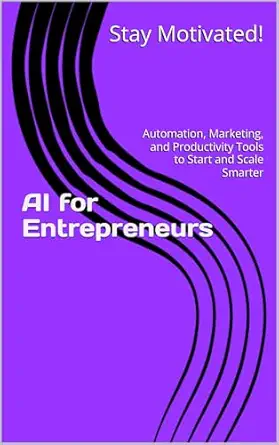 | Best for Startup Operators | Format: Entrepreneurship and AI guide | Primary audience: Entrepreneurs, startups, and small businesses | Core topics: Automation, marketing, and productivity | VIEW LATEST PRICE | See Our Full Breakdown |
| The Solopreneur’s AI Marketing Advantage: Leverage AI Tools Without a Big Budget or Dedicated Team |  | Best for Budget-Conscious Solopreneurs | Format: AI marketing guide | Primary audience: Solopreneurs | Budget orientation: Designed for limited budgets | VIEW LATEST PRICE | See Our Full Breakdown |
| Automating Salesforce Marketing Cloud: Reap All the Benefits of the SFMC Platform and Increase Your Productivity with Real-World Examples |  | Best for Salesforce Marketing Cloud Teams | Format: Platform automation guide | Platform: Salesforce Marketing Cloud | Primary subject: SFMC automation | VIEW LATEST PRICE | See Our Full Breakdown |
| Digital Marketing Made Simple: Step-by-Step Strategies to Drive Targeted Website Traffic, Build Your Online Presence, and Deploy AI Tools to Accelerate Customer Acquisition |  | Best Beginner Marketing Playbook | Format: Step-by-step digital marketing guide | Primary audience: Beginner and experienced marketers | Traffic focus: Targeted website traffic | VIEW LATEST PRICE | See Our Full Breakdown |
| Mastering HubSpot: The Complete Guide to CRM, Marketing Automation, and Sales Growth |  | Best HubSpot Strategy Guide | Product Type: HubSpot instructional guide | Primary Platform: HubSpot | CRM Coverage: Included | VIEW LATEST PRICE | See Our Full Breakdown |
More Details on Our Top Picks
The AI-Powered Email Marketing Specialist: How to Use ChatGPT, AI Tools, and Smart Automation to Write Emails That Convert
I rank The AI-Powered Email Marketing Specialist highest for marketers whose automation goals center on email rather than an entire CRM. Its blend of ChatGPT guidance, conversion writing, deliverability, and workflow management connects automation choices to measurable campaign outcomes. Compared with Marketing Automation For Dummies, it offers a narrower focus but more relevant direction for producing and managing AI-assisted emails. It also has broader campaign value than AI Content and Campaign Automation for Solo Entrepreneurs when email is the main revenue channel. The tradeoff is limited implementation depth: readers seeking exact platform configurations, integrations, or detailed procedures may need another resource. Its professional focus can also leave first-time marketers without enough grounding. I favor it for email specialists ready to refine an existing process, not buyers seeking automation software itself.
Pros:- Connects AI-assisted writing with conversion-focused email strategy
- Addresses deliverability alongside message creation
- Includes workflow guidance suited to professional campaign operations
- Maintains a focused scope that is easier to apply than a broad AI guide
Cons:- Does not provide detailed technical configurations or platform-specific procedures
- Assumes more marketing knowledge than some beginners may have
- Its email focus offers limited help with CRM, social, or cross-channel automation
Best for: Email marketers and small agency teams that already understand campaign basics and want to apply ChatGPT and automation to writing, workflow, conversion, and deliverability
Not ideal for: First-time marketers who need detailed platform setup instructions or buyers seeking an actual marketing automation application
- Resource type:Instructional marketing guide
- Primary focus:AI-powered email marketing
- Named AI tool:ChatGPT
- Campaign coverage:Email writing, conversion, and deliverability
- Automation coverage:Email workflow management
- Intended audience:Marketing professionals
- Implementation depth:Strategy-led rather than technical
Our verdict“I recommend this guide to experienced email marketers who want sharper AI-assisted campaigns but do not need software setup instructions.”
HubSpot User Guide 2026: Simple Steps for CRM, Sales, Marketing, Automation, and Reports
I place HubSpot User Guide 2026 near the top for teams already committed to HubSpot because it links marketing automation with CRM records, sales activity, and reporting. That connected scope helps readers understand how campaigns feed a wider customer-management process. Compared with Marketing Automation For Dummies, this guide is more actionable and platform-focused; compared with Mastering HubSpot, its promise centers on simpler instructions that may feel more approachable to newer users. That accessibility comes with two costs. The material has little value for teams using another automation platform, and interface changes can shorten the useful life of software-specific directions. It also covers many HubSpot functions, so marketers seeking advanced automation architecture may find the treatment too broad. I see it as a practical operating manual, not an independent evaluation of competing tools.
Pros:- Connects marketing automation with CRM, sales, and reporting workflows
- Uses accessible instructions suited to new HubSpot users
- Covers the main functions needed by cross-functional revenue teams
- Offers more platform-specific direction than general marketing books
Cons:- Provides little transferable value for organizations using non-HubSpot platforms
- Software updates may make interface-specific guidance obsolete
- Broad feature coverage may limit depth on advanced automation design
Best for: Small marketing and sales teams adopting HubSpot that need guided help connecting CRM data, campaigns, automation, and reports
Not ideal for: Teams comparing multiple automation platforms or advanced HubSpot administrators who need deep workflow architecture and custom integration guidance
- Resource type:Platform user guide
- Platform:HubSpot
- Edition framing:2026
- Core modules:CRM, sales, and marketing
- Automation coverage:HubSpot workflow and process automation
- Analytics coverage:Reports
- Instruction style:Step-by-step
- Intended audience:Beginners and experienced HubSpot users
Our verdict“I recommend this guide to new HubSpot teams that value guided setup across marketing and sales more than advanced automation engineering.”
Marketing Automation For Dummies
I choose Marketing Automation For Dummies as the strongest starting point for readers who need the concepts before choosing or configuring a platform. It covers automation strategy, core tools, and campaign improvement in accessible language, making it more useful for orientation than the narrower The AI-Powered Email Marketing Specialist. Compared with HubSpot User Guide 2026, it provides more transferable knowledge across vendors but far less help with actual setup. That distinction shapes its place in the ranking: it can help a buyer form sensible requirements, yet it will not carry a team through implementation. The lack of detailed technical guidance and specific case studies also reduces its value for experienced operators who need proof, configuration patterns, or troubleshooting advice. I recommend it for building a shared foundation before a tool purchase, not for mastering a selected system.
Pros:- Explains marketing automation concepts in approachable language
- Provides vendor-neutral guidance that transfers across platforms
- Combines campaign strategy with an introduction to relevant tools
- Can help teams define requirements before selecting software
Cons:- Offers little detailed technical implementation guidance
- Lacks specific case studies that demonstrate results in real settings
- May feel too basic for experienced marketing operations teams
Best for: New marketers, business owners, and cross-functional teams that need vendor-neutral automation concepts before evaluating software
Not ideal for: Experienced automation specialists who need platform configurations, integration patterns, or detailed campaign case studies
- Resource type:Introductory marketing guide
- Primary focus:Marketing automation fundamentals
- Coverage:Concepts, strategies, and tools
- Platform orientation:Vendor-neutral
- Campaign goal:Marketing campaign improvement
- Intended audience:Beginners and marketing professionals
- Technical depth:Introductory rather than implementation-focused
Our verdict“I recommend this primer to buyers who need to understand marketing automation before they compare platforms or design workflows.”
AI & Automation for Beginners: The Complete Step-by-Step Guide to Using Artificial Intelligence Tools, Automating Your Work, and Making Money Online in 2026
I include AI & Automation for Beginners for readers whose interest extends beyond marketing into general work automation and online income. Its beginner-led structure can reduce the learning curve around AI tools before readers build automated campaigns. Compared with Marketing Automation For Dummies, however, it is less tightly aligned with campaign strategy, lead management, and tool selection. AI Content and Campaign Automation for Solo Entrepreneurs also offers a clearer route for owners focused specifically on repeatable marketing systems. This book earns its place through breadth and accessibility, but that breadth is also its main weakness: online earning and general productivity compete with marketing automation for attention. Limited technical detail may leave readers able to identify opportunities without knowing how to connect tools. Its 2026 framing creates another risk because AI guidance can age quickly as products and workflows change.
Pros:- Introduces AI and automation in language aimed at beginners
- Connects automation with practical work and online business goals
- Provides a broader foundation than marketing-only guides
- Uses a guided structure for readers without an AI background
Cons:- Spends part of its scope on online income rather than marketing automation
- Lacks technical detail for connecting and configuring tools
- Time-specific AI guidance may become outdated quickly
Best for: AI newcomers and aspiring online business owners who want a broad introduction to automating work before specializing in marketing
Not ideal for: Marketing operations teams that need campaign architecture, CRM workflows, integrations, or platform-specific technical direction
- Resource type:Beginner instructional guide
- Primary focus:Artificial intelligence and work automation
- Edition framing:2026
- Instruction style:Step-by-step
- Business coverage:Online income generation
- Intended audience:Beginners
- Marketing specificity:Broad rather than campaign-centered
- Technical depth:Limited
Our verdict“I recommend this book to newcomers exploring AI-led work automation, while campaign-focused marketers should choose a more specialized guide.”
AI Content and Campaign Automation for Solo Entrepreneurs
I rank AI Content and Campaign Automation for Solo Entrepreneurs as the most relevant choice for one-person businesses that need recurring marketing output without hiring a team. Its emphasis on content repurposing and smarter campaign systems translates automation into saved production time and a steadier publishing rhythm. Compared with The AI-Powered Email Marketing Specialist, it spans more of the content lifecycle but offers less concentration on email conversion and deliverability. It is also more directly tied to marketing execution than AI & Automation for Beginners, which divides attention among general work automation and online income. The tradeoff is that readers may need prior familiarity with AI tools, while the lack of detailed implementation leaves integrations and workflow construction underexplained. I favor it for lean operators with an existing content process; complete newcomers may struggle to turn its strategic advice into a working system.
Pros:- Addresses the staffing and time constraints faced by solo businesses
- Turns content repurposing into a repeatable marketing workflow
- Covers campaign automation beyond email alone
- Keeps its advice focused on operating without a dedicated team
Cons:- Provides limited technical implementation detail
- May assume prior familiarity with common AI tools
- Does not address the governance and collaboration needs of larger teams
Best for: Solo consultants, creators, and microbusiness owners with basic AI knowledge who need to repurpose content and run campaigns without added staff
Not ideal for: Complete AI beginners or larger marketing teams that need detailed integrations, permissions, governance, and multi-user workflows
- Resource type:Marketing strategy guide
- Primary audience:Solo entrepreneurs
- Primary focus:AI content and campaign automation
- Content coverage:Creation and repurposing
- Operating model:Marketing without a team
- Primary outcome:Time savings and higher workflow efficiency
- Experience level:Best suited to readers with prior AI familiarity
- Implementation depth:Strategy-led with limited technical detail
Our verdict“I recommend this guide to AI-aware solo entrepreneurs who want a repeatable content engine without building a marketing department.”
The AI Marketing Canvas, Second Edition: A Five-Step AI Plan for Marketers
I rank The AI Marketing Canvas, Second Edition as the strongest choice for marketers who need a five-step planning framework before selecting or deploying automation software. Unlike Automating Salesforce Marketing Cloud, which concentrates on one established platform, this book starts with broader decisions about where AI belongs in a marketing operation. It is also more focused than Digital Marketing Made Simple, since AI planning is the central subject rather than one piece of a wider digital strategy. That makes the guidance useful for aligning campaigns, workflows, and business goals. The tradeoff is limited implementation depth: readers seeking platform configuration, detailed prompts, or ready-made automations may need a second resource. I see it as a decision framework, not a substitute for an operational manual or marketing automation tool.
Pros:- Five-step structure turns AI planning into a manageable process
- Keeps marketing goals central rather than treating AI as an isolated technology
- Broad framework can be applied across multiple tools and channels
- Second edition suggests an updated treatment of the subject
Cons:- Does not provide the platform-level detail offered by a dedicated automation manual
- Available product information gives little clarity about examples or reader skill level
- Readers still need separate software documentation to build working automations
Best for: Marketing managers and agency strategists who need a structured plan for choosing and applying AI across campaigns
Not ideal for: Platform administrators who need exact setup instructions, workflow recipes, or software-specific troubleshooting
- Format:Marketing strategy book
- Edition:Second edition
- Planning structure:Five-step AI plan
- Primary subject:AI planning for marketing
- Intended audience:Marketers
- Approach:Structured strategies and practical insights
- Product identifier:ASIN 1503644332
Our verdict“I recommend this to marketing decision-makers who need an AI roadmap before they commit to particular automation platforms.”
AI for Entrepreneurs: Automation, Marketing, and Productivity Tools to Start and Scale Smarter
AI for Entrepreneurs earns its place by connecting marketing automation with the other work a founder must manage, including productivity and business scaling. I would choose it over The AI Marketing Canvas when the buyer wants a cross-functional startup perspective rather than a marketer-led planning method. It also covers a wider operating scope than The Solopreneur’s AI Marketing Advantage, making it better suited to founders building a small team or formalizing repeatable processes. The broader remit creates its main weakness: marketing automation shares space with several other topics, so campaign design and tool configuration may receive less depth. Some basic AI familiarity may also help readers turn the strategies into working systems. This is practical founder guidance, but it is not a technical handbook for connecting platforms, cleaning data, or managing complex customer journeys.
Pros:- Connects marketing automation with wider founder responsibilities
- Addresses both startup launch and business scaling
- Practical orientation suits owners making tool and workflow decisions
- Broader operating scope than marketing-only guides
Cons:- Marketing automation is only one part of a broad subject mix
- Provides limited detail about technical implementation
- Readers without basic AI knowledge may need introductory material
Best for: Startup founders and small-business operators who want AI guidance spanning marketing, automation, productivity, and growth
Not ideal for: Marketing operations specialists who need detailed integrations, data architecture, or advanced campaign orchestration
- Format:Entrepreneurship and AI guide
- Primary audience:Entrepreneurs, startups, and small businesses
- Core topics:Automation, marketing, and productivity
- Business stage:Starting and scaling
- Technology focus:AI tools
- Approach:Practical strategies for business efficiency
- Product identifier:ASIN B0FSWWJHCP
Our verdict“I recommend this for founders who want one business-focused introduction to AI workflows rather than a specialist marketing automation manual.”
The Solopreneur’s AI Marketing Advantage: Leverage AI Tools Without a Big Budget or Dedicated Team
I place The Solopreneur’s AI Marketing Advantage highest for one-person businesses because its recommendations are framed around limited money and limited staffing. Compared with AI for Entrepreneurs, it gives marketing a tighter focus and does not assume the reader is building a broader startup operation. It also offers a more approachable entry point than Automating Salesforce Marketing Cloud, whose platform-specific material is aimed at readers working inside a far more complex system. The payoff is relevance: solopreneurs can focus on attainable ways to reduce repetitive marketing work without designing an enterprise stack. The compromise is a lower technical ceiling. Buyers seeking advanced segmentation, integration architecture, or detailed workflow construction may outgrow it. This book can guide priorities and tool choices, but readers will still need product tutorials when they begin configuring individual services.
Pros:- Built around the budget and staffing limits of a one-person business
- Keeps its attention on practical marketing uses of AI
- Accessible guidance lowers the barrier for nontechnical readers
- Helps readers prioritize tools without assuming enterprise resources
Cons:- Does not cover advanced automation techniques in depth
- Lacks detailed instructions for configuring individual tools
- Limited relevance for teams with complex approval and data requirements
Best for: Freelancers, consultants, creators, and single-person businesses that need affordable AI-assisted marketing workflows
Not ideal for: Larger marketing teams that require advanced governance, multi-user workflows, or enterprise platform integrations
- Format:AI marketing guide
- Primary audience:Solopreneurs
- Budget orientation:Designed for limited budgets
- Team assumption:No dedicated marketing team required
- Primary subject:Using AI tools for marketing
- Approach:Practical, accessible business guidance
- Product identifier:ASIN B0H76SZ52J
Our verdict“I recommend this to solo operators who need realistic, low-cost marketing automation ideas without an enterprise playbook.”
Automating Salesforce Marketing Cloud: Reap All the Benefits of the SFMC Platform and Increase Your Productivity with Real-World Examples
Automating Salesforce Marketing Cloud is the most specialized pick here and the one I would rank first for teams already committed to SFMC. Its real-world examples promise a shorter path from platform concepts to repeatable work, while its productivity focus ties automation directly to reduced manual effort. Compared with The AI Marketing Canvas, this book trades broad strategic flexibility for deeper attention to a single marketing platform. Compared with Digital Marketing Made Simple, it assumes a narrower goal and more platform familiarity. That specialization is both the reason to buy it and the main limitation: organizations using HubSpot or lightweight AI services will gain little from Salesforce-specific guidance. New users may also struggle if they lack prior SFMC knowledge. I view it as an implementation-oriented companion for platform users, not a general introduction to marketing automation.
Pros:- Concentrates directly on automation inside Salesforce Marketing Cloud
- Uses real-world examples to connect concepts with operational work
- Targets productivity gains from reducing repetitive platform tasks
- Offers greater platform relevance than broad AI marketing guides
Cons:- Salesforce-specific coverage has little value for users of other platforms
- Prior SFMC knowledge may be needed to follow the material
- Does not serve buyers who are still comparing automation ecosystems
Best for: Salesforce Marketing Cloud administrators, campaign developers, and marketing operations teams seeking repeatable automation practices
Not ideal for: Small businesses outside the Salesforce ecosystem or beginners who lack basic SFMC platform knowledge
- Format:Platform automation guide
- Platform:Salesforce Marketing Cloud
- Primary subject:SFMC automation
- Teaching method:Real-world examples
- Primary outcome:Increased platform productivity
- Expected background:Prior Salesforce knowledge may be required
- Product identifier:ASIN 1803237198
Our verdict“I recommend this only when Salesforce Marketing Cloud is already part of the stack and the next goal is better automation.”
Digital Marketing Made Simple: Step-by-Step Strategies to Drive Targeted Website Traffic, Build Your Online Presence, and Deploy AI Tools to Accelerate Customer Acquisition
I rank Digital Marketing Made Simple as the best entry point for readers who need marketing fundamentals before automation can produce useful results. Its step-by-step scope links website traffic, online presence, AI tools, and customer acquisition, helping beginners see where automation fits within a campaign rather than treating it as a standalone shortcut. Compared with The Solopreneur’s AI Marketing Advantage, it covers a broader digital marketing path and is less tightly shaped around one-person operations. It is also far more accessible than Automating Salesforce Marketing Cloud, which expects commitment to a specific enterprise platform. Breadth comes at the cost of depth: experienced marketers may find familiar concepts, while technical readers will need other sources for integrations, workflow logic, and measurement design. I see this as a foundation-building guide for choosing sensible automation opportunities, not an advanced systems manual.
Pros:- Step-by-step structure suits readers building foundational skills
- Connects AI tools with traffic, visibility, and customer acquisition
- Covers the wider marketing process surrounding automation
- Accessible to both new marketers and business owners
Cons:- May be too basic for experienced digital marketers
- Offers limited technical detail about integrations and workflow setup
- Broad channel coverage leaves less room for advanced automation methods
Best for: New marketers and small-business owners who need a guided path from traffic generation to AI-assisted customer acquisition
Not ideal for: Experienced marketing operations teams seeking advanced workflow engineering, integrations, or platform administration
- Format:Step-by-step digital marketing guide
- Primary audience:Beginner and experienced marketers
- Traffic focus:Targeted website traffic
- Brand focus:Online presence development
- Technology coverage:AI marketing tools
- Business outcome:Accelerated customer acquisition
- Product identifier:ASIN B0FM46YS1G
Our verdict“I recommend this to beginners who need a broad digital marketing foundation before investing time in specialized automation systems.”
Mastering HubSpot: The Complete Guide to CRM, Marketing Automation, and Sales Growth
I rank Mastering HubSpot as the best HubSpot strategy guide because it connects CRM management, campaign automation, and sales growth rather than treating them as separate jobs. That wider scope makes it better suited to readers building a joined-up customer journey than The AI-Powered Email Marketing Specialist, which concentrates more narrowly on email creation and conversion.
Compared with HubSpot User Guide 2026, this pick appears more focused on practical strategy across skill levels than on simple, version-specific instructions. That breadth can help beginners understand how HubSpot functions support business goals while giving experienced users ideas for refining workflows. The tradeoff is limited product-detail transparency: no technical update schedule, format, edition, or feature-level coverage is supplied. I would choose it for strategic HubSpot learning, but not when current screen-by-screen directions are the main priority.
Pros:- Connects CRM, marketing automation, and sales growth in one HubSpot-focused resource
- Addresses both new and experienced HubSpot users
- Emphasizes practical strategies rather than feature descriptions alone
- Offers broader customer-journey coverage than an email-only automation guide
Cons:- No update schedule or version-specific technical coverage is provided
- Format and edition details are not supplied
- May be less useful than HubSpot User Guide 2026 for readers seeking simple, current interface walkthroughs
Best for: Marketing managers and small-business operators who want one HubSpot-focused guide connecting CRM, automated campaigns, and sales growth
Not ideal for: Readers who need verified 2026 interface instructions, feature-by-feature technical detail, or confirmed digital-format availability
- Product Type:HubSpot instructional guide
- Primary Platform:HubSpot
- CRM Coverage:Included
- Marketing Automation Coverage:Included
- Sales Growth Coverage:Included
- Intended Skill Levels:Beginners and experienced users
- Instructional Focus:Practical HubSpot strategies
- Technical Update Details:Not provided
- Format or Edition:Not specified
Our verdict“I recommend this to HubSpot users who want strategic breadth across CRM, automation, and sales, provided they do not require confirmed version-specific instructions.”

How We Picked
I ranked these resources by relevance to marketing automation, clarity of audience, actionability, and the likely connection between the material and measurable campaign work. Titles centered on email sequences, CRM workflows, campaign production, or a named automation platform received more weight than books spreading their attention across general AI, productivity, and online income. I also looked for a clear path from learning to execution: a useful guide should help a reader choose triggers, organize data, build repeatable workflows, or improve campaign decisions. Broad scope still earned credit when it supported multiple business functions without losing practical direction.
The order reflects fit for the widest group of buyers, followed by increasingly specialized use cases. I placed focused, executable marketing guidance above titles that appear broader or more conceptual, while recognizing that platform-specific depth can be more valuable for the right team. Beginner accessibility, strategic durability, and realistic staffing demands also shaped the ranking. This approach puts versatile campaign guidance near the top, approachable learning resources in the middle, and technically demanding or narrower choices in roles where their specialization becomes an advantage.
Factors to Consider When Choosing Marketing Automation Tools
Choosing among marketing automation tools starts with the workflow that needs improvement, not the longest feature list. I recommend defining the customer journey, current data sources, team capacity, and desired level of control before selecting software or a learning resource. The factors below help separate a useful system from one that adds cost and maintenance without solving the original problem.
Start With the Marketing Bottleneck
Before comparing platforms, I identify the single workflow consuming the most time or losing the most opportunities. An email-heavy business may need segmentation, behavioral triggers, testing, and deliverability support, while a sales-led company may benefit more from lead routing and CRM follow-up. Ecommerce teams often place higher value on cart recovery and purchase-based messaging than on broad content generation. I treat the desired outcome—more qualified leads, faster follow-up, better retention, or lower campaign workload—as the buying brief. A common mistake is paying for an expansive suite when the actual need is one repeatable, high-impact sequence. The right match solves the immediate bottleneck while leaving enough room for the next stage of growth.
Check How the System Fits Your Data Stack
Marketing automation rarely operates alone, so I give CRM, ecommerce, analytics, and form connections as much weight as campaign features. Native integrations usually reduce setup work and preserve cleaner customer records, while shallow connectors can create duplicates or miss behavioral events. A polished workflow builder has limited value if contacts arrive late, consent fields do not transfer, or sales activity remains invisible. Teams with several data sources may need identity matching and field-mapping controls that a small newsletter operation can skip. I also look at whether the organization has someone who can maintain these connections after launch. Mapping each source, destination, owner, and update frequency exposes integration gaps before they become reporting problems.
Match Automation Depth to Team Maturity
Basic tools handle scheduled messages and simple triggers, while advanced systems add branching journeys, scoring, attribution, and reusable logic. I would not pay for that complexity unless the team already has clear lifecycle stages and enough campaign volume to benefit from them. Sophisticated automation built on vague rules tends to produce harder-to-find errors rather than better marketing. Growing teams should also plan human review points for sensitive offers, unusual customer behavior, and AI-generated copy. Naming conventions, ownership, failure alerts, and change records become more valuable as workflow count rises. The best level is the one the team can operate, audit, and improve consistently.
Choose Between Recipes and Strategic Frameworks
Some buyers need screen-by-screen instructions, while others need a framework for deciding what should be automated. I favor recipe-style guidance when a beginner is learning one platform or trying to launch a campaign quickly. Strategic books make more sense for managers who must choose use cases, allocate budgets, or coordinate work across several tools. A frequent mismatch occurs when a new user buys an abstract AI strategy title but still cannot configure a basic trigger. The opposite problem appears when an experienced marketer collects tactical instructions without building a coherent customer journey. Matching the resource to the reader’s current decision level saves more time than choosing the title with the broadest advertised scope.
Calculate Cost Beyond the Purchase Price
I compare total operating cost, including contact tiers, send limits, seats, integrations, implementation, data cleanup, and staff training. A low starting price can climb quickly when the database grows or advanced reporting sits behind a higher plan. Enterprise platforms may justify their expense when several teams share customer data and run complex journeys, but they can burden a small business with administration. For solo operators, setup hours may cost more than the software itself, which makes templates and simpler workflows especially valuable. Educational resources deserve the same scrutiny: a cheaper book is poor value if it is too broad to help complete the intended project. Paying more makes sense when specialist guidance prevents expensive configuration mistakes or supports a platform already central to the business.
Frequently Asked Questions
Should I choose a marketing automation platform before buying a guide?
I would choose the business objective first, then narrow the platform and guide together. A platform-neutral resource can help define workflows, customer stages, and data needs before software features shape the decision. Once a platform is selected, a dedicated guide becomes more useful for configuration and troubleshooting. Buying software too early can lock a team into limits it did not recognize during a trial. The safer sequence is goal, workflow, data requirements, platform, then specialist instruction.
Which HubSpot book is better for a new user?
HubSpot User Guide 2026 is my more approachable choice for someone learning the relationship between CRM records, sales activity, marketing automation, and reports. Its positioning suggests a guided route through several core functions rather than an advanced treatment of one area. Mastering HubSpot makes more sense for readers who already understand basic CRM concepts and want to connect automation with wider sales growth. A new user focused only on campaign setup may still find either choice broader than needed. I would select based on whether the immediate goal is basic platform fluency or cross-team system design.
Is a broad AI automation book enough for a solo marketer?
A broad AI book can work when the buyer wants help across research, content, productivity, and business operations. It is less suitable when the immediate goal is building a lead-nurture sequence, campaign calendar, or conversion-focused email system. Solo marketers often gain more from a narrower resource because they have limited time to translate general concepts into repeatable marketing steps. The broader option becomes more attractive when marketing is only one of several workloads being automated. I would choose campaign depth for a pressing revenue task and broad AI coverage for an all-purpose operating toolkit.
When is a Salesforce Marketing Cloud guide worth the extra complexity?
Automating Salesforce Marketing Cloud makes sense when the organization already uses SFMC or has committed to implementing it. Its value comes from platform-specific workflow knowledge, especially where campaign scale, customer data, and team processes demand tighter control. It is excessive for a small business that only needs basic email sequences or a simple CRM connection. Buyers should also account for administrator time and the need to maintain automation after the initial build. I would reserve this pick for enterprise teams and technical marketers, not buyers still choosing their first system.
Will a guide labeled 2026 remain useful when automation tools change?
A current edition can reduce friction around recent interfaces and AI features, but publication year alone does not guarantee lasting value. Button locations and plan limits can change quickly, while principles such as segmentation, consent, lifecycle design, testing, and measurement age more slowly. I prefer resources that teach both the setup process and the reasoning behind each workflow. Platform documentation can fill interface gaps later if the underlying method remains sound. Buyers who need step-by-step screenshots should favor newer editions, while strategic readers should prioritize durable campaign logic over interface detail.
Conclusion
For the widest practical appeal, my best overall choice is The AI-Powered Email Marketing Specialist, since it links AI and automation to a focused channel with direct conversion value. My best value pick is Marketing Automation For Dummies, which offers an accessible foundation without committing the reader to a single advanced platform. For beginners interested in AI beyond marketing alone, AI & Automation for Beginners provides the gentler entry point. Buyers seeking a premium specialist path should choose Automating Salesforce Marketing Cloud, provided SFMC is already part of the plan.
Solo entrepreneurs who want campaign execution should pick AI Content and Campaign Automation for Solo Entrepreneurs, while budget-conscious operators are better matched with The Solopreneur’s AI Marketing Advantage. HubSpot newcomers should start with HubSpot User Guide 2026; readers planning tighter CRM, marketing, and sales alignment should move toward Mastering HubSpot. For strategy leaders building an AI adoption plan, The AI Marketing Canvas, Second Edition is the most distinct framework-oriented choice.
NFL season / tailgating Picks
team gear
As an affiliate, we earn on qualifying purchases.