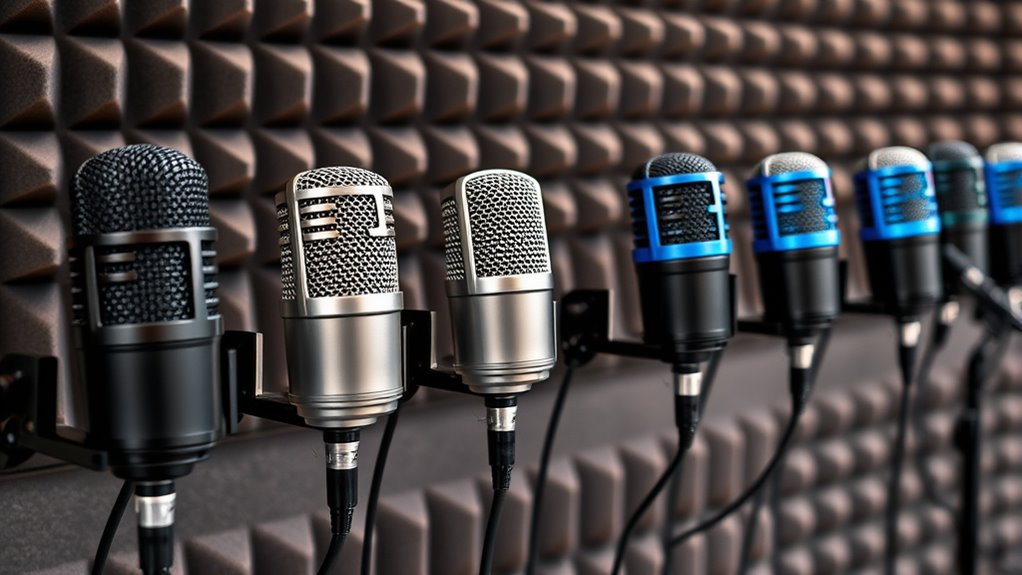
When searching for dynamic microphones for podcasting, the key considerations often revolve around sound quality, ease of use, and durability. The RØDE PodMic stands out as the overall best pick, thanks to its broadcast-quality sound and robust build. For those on a budget, the FIFINE K688 offers solid performance at a more accessible price, while the Maono PD200W provides versatile wireless options for streamers and content creators. The main tradeoffs include balancing audio clarity against added features like RGB lighting or wireless connectivity. Keep reading for a detailed breakdown to help you find the perfect match for your podcasting setup.
Complete the kit

Key Takeaways
- Top-tier models balance professional sound quality with user-friendly features like mute buttons and gain control.
- Wireless and RGB lighting options are common but often come at a higher price and may add complexity.
- USB/XLR hybrid models offer the best flexibility, though they can be bulkier or more expensive.
- Budget-friendly microphones like the FIFINE K688 deliver surprisingly good sound but may lack some premium features.
- Build quality and durability are critical for long-term use, especially for mobile or frequent podcasters.


| dynamic microphones for podcasting | Connectivity |
|---|---|
| Maono PD200W Hybrid Wireless P | Wireless, USB, XLR |
| Tonor TD510 AIR H+ Dynamic Pod | — |
| FIFINE K688 Podcast Microphone | USB and XLR |
| RØDE PodMic Cardioid Dynamic B | — |
| PUPGSIS XLR/USB Podcast Microp | USB and XLR |
| Gaming Microphone Set | USB & XLR |
| FIFINE XLR/USB Gaming Micropho | USB and XLR |
| MAONO HD300T USB/XLR Dynamic M | — |
| FIFINE K688 Dynamic Microphone | USB and XLR |
| FIFINE Gaming Microphone Kit | — |
| Tonor TD510 AIR S H Dynamic Ga | — |
| MAONO PD200XS Dynamic Micropho | — |
| FIFINE USB/XLR Dynamic Microph | — |
| MAONO PD100W Wireless USB Dyna | Wireless 2.4G and USB wired |
More Details on Our Top Picks
Maono PD200W Hybrid Wireless Podcast Microphone for PC, Dynamic XLR USB Mic with Desktop Stand, Software, Noise Cancellation, for Vocal Recording, Streaming, Content Creation, Home Studio, Voiceover
The Maono PD200W stands out as the most adaptable choice due to its hybrid connectivity—wireless, USB, and XLR—making it suitable for a wide range of podcasting scenarios. Unlike the FIFINE K688, which relies solely on wired connections, this model offers unparalleled flexibility, especially for mobile or multi-location setups. Its noise cancellation and studio-quality dynamic capsule ensure clear sound, but the need for a separate app for full customization can be a hurdle for less tech-savvy users. While the wireless range and battery life are impressive, the accessory options for camera or lighting are sold separately, adding to the overall cost. This pick makes the most sense for content creators who value flexibility and long-term reliability over simplicity.
Pros:- Flexible hybrid connectivity including wireless, USB, and XLR
- High-quality sound with noise cancellation
- Supports dual microphones for interviews or duos
- Long battery life up to 60 hours
Cons:- Camera/lighting accessories sold separately, increasing total cost
- Requires app for full customization, which may be complex for some users
Best for: Podcasters who need a versatile setup with wireless mobility and long battery life, such as live streamers or mobile content creators
Not ideal for: Beginners who prefer a straightforward plug-and-play experience without managing additional apps or accessories
- Connectivity:Wireless, USB, XLR
- Microphone Type:Dynamic
- Pickup Pattern:Cardioid
- Signal-to-Noise Ratio:82dB
- Maximum SPL:128dB
- Battery Life:Up to 60 hours
Our verdict“Ideal for experienced podcasters seeking maximum flexibility and long-lasting wireless operation.”
Tonor TD510 AIR H+ Dynamic Podcast Microphone with AI Noise Cancellation and Dual USB/XLR
The Tonor TD510 AIR H+ offers a compelling mix of AI noise cancellation and multiple audio modes, making it a strong contender for creators seeking tailored sound. Compared with the FIFINE K688, which has limited modes, this microphone provides three distinct enhancement options—bass, vocal clarity, and mid-range emphasis—allowing for more personalized recordings. Its dual outputs, USB and XLR, enable easy upgrade pathways, but the absence of included XLR cables means additional purchases are necessary. The controls for volume and mute are straightforward, supporting both PC and console users, but the device’s complexity might be overkill for novice podcasters. This model is best suited for those who want professional-quality audio with flexible connectivity and sound customization.
Pros:- Supports multiple audio enhancement modes for tailored sound
- AI noise cancellation reduces background noise effectively
- Dual USB and XLR outputs for flexible connectivity
- Easy volume, mute, and monitoring controls
Cons:- XLR cables are not included, requiring extra purchase
- Not compatible with Xbox consoles
Best for: Content creators who want versatile, customizable audio quality and are comfortable managing more advanced controls
Not ideal for: Beginners or casual podcasters who prefer simple plug-and-play options without extra setup
- Audio Enhancement Modes:Bass Roll-off, Vocal Clarity, Mid-Range Emphasis
- Noise Reduction:AI noise cancellation
- Outputs:USB and XLR
- Controls:Microphone and headphone volume adjustment, Tap Mute
Our verdict“Best suited for pros or semi-pros who want customizable sound and flexible connectivity in a single package.”
FIFINE K688 Podcast Microphone Kit with Boom Arm, USB/XLR Dynamic Microphone for Streaming and Recording
The FIFINE K688 provides a robust combination of USB and XLR connections in a single kit, making it ideal for versatile recording environments. Its included boom arm and shock mount help stabilize and isolate the mic, which is especially useful during streaming or vocal sessions. Compared to the RØDE PodMic, which is XLR-only and more broadcast-focused, the K688 offers a plug-and-play USB option that’s more accessible for beginners. However, the functionality in XLR mode is limited without external gear, and manual input adjustments can be a bit fiddly. This model is best for streamers or home studio owners who want a complete, ready-to-go setup with room to grow into professional XLR use.
Pros:- Versatile USB and XLR connectivity for flexible use
- Sturdy boom arm with vibration isolation
- Intuitive mute and gain controls
- Includes essential accessories for immediate setup
Cons:- Function keys only active in USB mode, limiting XLR use
- Requires external interface or mixer for optimal XLR functionality
Best for: Streamers or home recording enthusiasts needing an all-in-one kit with both USB and XLR options
Not ideal for: Podcasters seeking a simple, no-fuss setup who don’t want to manage external gear or manual controls
- Connectivity:USB and XLR
- Microphone Type:Dynamic
- Polar Pattern:Cardioid
- Maximum SPL:130dB
- Included Accessories:Boom arm, windscreen, shock mount
Our verdict“Great for users wanting a comprehensive kit that adapts from beginner to semi-professional use.”
RØDE PodMic Cardioid Dynamic Broadcast Microphone
The RØDE PodMic is designed for professional-grade podcasting and streaming, featuring a rugged, broadcast-quality build with built-in pop filter and shock mount. Unlike the Maono PD200W, which offers wireless options, the PodMic is an XLR-only solution, demanding an external audio interface, which can limit ease of use for beginners. Its internal features reduce room noise and background sounds effectively, making it ideal for studio environments. The tradeoff is that setup is more involved, especially for newcomers unfamiliar with XLR gear. If your goal is broadcast-level audio quality and you already own or plan to acquire an audio interface, this mic delivers exceptional sound with minimal fuss over background noise.
Pros:- High-quality broadcast-grade construction
- Built-in pop filter and shock mount for professional sound
- Excellent at rejecting background noise
- Durable, studio-grade design
Cons:- Requires external audio interface, increasing setup complexity
- Not a simple plug-and-play solution for beginners
Best for: Podcasters with existing XLR audio interfaces seeking broadcast-level sound quality
Not ideal for: Casual or beginner podcasters who prefer USB plug-and-play without extra gear
- Connection:XLR
- Type:Dynamic cardioid
- Built-in features:Pop filter, shock mount, swing mount
- Intended use:Podcasting, broadcast, streaming
Our verdict“Perfect for seasoned podcasters aiming for broadcast-quality audio and already equipped with XLR gear.”
PUPGSIS XLR/USB Podcast Microphone with Boom Arm, Mute Button, Reverb Effects, Noise Cancellation, Headphones Jack, Dynamic for Streaming, Recording, Gaming, Vocal – Black
The PUPGSIS microphone combines versatility with built-in features like reverb effects and noise cancellation, making it highly suitable for streamers and gamers who want more creative control. Its dual XLR and USB outputs mirror the flexibility of the Tonor TD510 AIR H+, but with added effects and a mute button for live adjustments. While this makes it appealing for dynamic content creation, some features such as noise reduction are optimized only when using USB, and setup can be complex for beginners. The included boom arm adds stability but demands desk space, which might be a concern for limited setups. This mic is best for users who want a feature-rich device capable of both recording and live effects in a single package.
Pros:- Dual USB and XLR connectivity for versatile use
- Built-in reverb effects and noise cancellation
- Includes a sturdy boom arm and monitoring capabilities
- Mute button for instant control
Cons:- Some features only function optimally with USB connection
- Setup and configuration can be complex for beginners
Best for: Streamers, gamers, and content creators seeking a multifunctional mic with effects and easy monitoring
Not ideal for: Podcasters or voice-over artists who prefer straightforward, high-fidelity recordings without onboard effects
- Frequency Response:40Hz-16KHz
- Connectivity:USB and XLR
- Pattern:Supercardioid
- Includes:Boom arm, headphones jack
Our verdict“Great for creative streamers and gamers wanting a feature-packed mic with onboard effects and flexible connection options.”
Gaming Microphone Set, USB & XLR Dynamic PC Mic for Streaming & Podcast with Boom Arm, Mute Button & Headphone Jack
This microphone stands out for its dual USB and XLR connectivity, making it suitable for both beginner streamers and more advanced podcasters who want flexibility. Its plug-and-play USB option is ideal for quick setups, while the XLR allows for professional upgrades. The included all-metal boom arm and accessories add to its value, but the RGB lighting can be distracting when using XLR, as it disables during professional audio setups. Compared with dedicated XLR mics like the RØDE PodMic, it offers more convenience but less ultimate audio quality. This model is best for gamers and casual podcasters needing an all-in-one setup.
Pros:- Easy plug-and-play setup with no software required
- High-quality, clear audio with noise isolation
- Sturdy all-metal boom arm included
Cons:- RGB lighting disables in XLR mode, limiting professional aesthetics
- Limited to cardioid polar pattern, less suited for multi-directional recording
Best for: Casual streamers and gamers who want an easy setup with upgrade options
Not ideal for: Professional broadcasters or audio engineers seeking studio-quality sound without compromise
- Polar Pattern:Cardioid
- Connectivity:USB & XLR
- Includes:Boom arm, USB cable, XLR cable
- Features:Mute button, headphone jack, RGB lighting
- Material:All-metal
- Compatibility:PC, Mac, laptop
Our verdict“This microphone is a versatile choice for gamers and casual podcasters who value convenience and flexibility.”
FIFINE XLR/USB Gaming Microphone Set with Boom Arm and RGB Lighting
The FIFINE AM8T excels for users who want a gaming-oriented microphone with both USB and XLR options, providing a balance of ease and upgrade potential. Its adjustable boom arm and customizable RGB lighting make it appealing for gamers who want a visually engaging setup. However, the XLR cable isn’t included, and the clamp limits compatibility to desktops less than 2 inches thick, which could be restrictive for some users. Compared to the more straightforward MAONO HD300T, this set offers more aesthetic customization but adds setup complexity. This pick is ideal for gamers and streamers who want visual flair alongside decent audio quality.
Pros:- Versatile USB and XLR connectivity for flexible use
- Includes a sturdy, adjustable boom arm
- Customizable RGB lighting enhances gaming aesthetics
Cons:- XLR cable not included, requiring extra purchase
- Setup and software control can be complex for beginners
Best for: Gamers and streamers who want a customizable setup with visual effects
Not ideal for: Podcasters seeking a straightforward, no-frills microphone without RGB lighting
- Connectivity:USB and XLR
- Polar Pattern:Cardioid
- Sensitivity:-50dB
- Lighting:RGB customizable
- Included Accessories:Boom arm stand, C-clamp, USB-C cable
- Compatibility:PC, mixer, sound card
Our verdict“This microphone is best suited for gamers and streamers who prioritize visual customization alongside flexible connectivity.”
MAONO HD300T USB/XLR Dynamic Microphone for Podcast Recording and Streaming
Compared with the FIFINE models, the MAONO HD300T offers a more professional package with excellent noise reduction and durable metal construction, making it suitable for serious podcasters and streamers. Its dual USB and XLR outputs provide flexible connectivity, but the volume control only functions in USB mode, which can be limiting during live XLR use. The included shock mount and pop filter help achieve studio-grade sound, though setup may be more involved than plug-and-play options. For users prioritizing sound quality over flashy features, this microphone strikes a solid balance. This choice makes sense for content creators who need professional versatility and sound clarity.
Pros:- Dual USB/XLR outputs for maximum versatility
- Excellent noise reduction and clear audio quality
- Includes shock mount and pop filter for professional sound
Cons:- Volume control only works via USB, limiting real-time adjustments during XLR use
- Requires setup and tuning for optimal XLR performance
Best for: Podcasters and streamers who want a professional-grade microphone with versatile outputs
Not ideal for: Beginners seeking a simple, easy-to-set-up microphone without additional accessories
- Outputs:USB and XLR
- Pickup Pattern:Cardioid
- Headphone Jack:3.5mm
- Includes:Microphone, stand, shock mount, pop filter
- Material:Metal chassis
- Cable Lengths:78 inch USB, 98 inch XLR
Our verdict“This microphone is ideal for serious content creators demanding professional sound and flexible connectivity options.”
FIFINE K688 Dynamic Microphone with USB and XLR Output for Podcast and Streaming
The FIFINE K688 offers a compelling entry point for newcomers to podcasting or streaming, thanks to its combination of dual USB and XLR outputs. It provides clear, detailed sound with noise reduction accessories like a windscreen and shock mount, making it suitable for close-proximity recording. However, the absence of an arm stand or XLR cable means additional purchases are necessary. Its performance is strong for its price, but close distance to the mic is needed for optimal results, and some functions are limited to USB connection. This microphone is perfect for beginners who want a budget-friendly, versatile option.
Pros:- Dual USB and XLR outputs for flexible recording
- Includes noise reduction accessories
- Built-in mute and gain controls
Cons:- Arm stand and XLR cable are not included, adding to initial cost
- Requires close proximity for best sound quality
Best for: Beginners and hobbyists starting out with podcasting or streaming
Not ideal for: Advanced users or professionals needing high-end, studio-grade setup without extra purchases
- Type:Dynamic
- Connectivity:USB and XLR
- Max SPL:130dB
- S/N Ratio:80dB+
- Included Accessories:Windscreen, shock mount
- Color:Metal finish
Our verdict“This microphone suits beginners seeking a cost-effective, versatile solution for basic podcasting and streaming.”
FIFINE Gaming Microphone Kit, XLR/USB Dynamic PC Microphone with Boom Arm for Podcast Recording, RGB Streaming Mic Set, Tap-to-Mute, Mix Control, Headphone Jack – AmpliGame AM8PROT
Compared with the other FIFINE models, the AM8PROT offers a high-quality 48kHz/24bit audio with noise rejection, making it suitable for professional-grade streaming and podcasting. Its robust boom arm with multi-angle joints and extensive RGB lighting options cater to gamers who want a premium aesthetic and flexible positioning. However, its setup may require more effort, and the RGB features might be unnecessary for users solely focused on audio quality. This mic excels for those who want a high-end appearance and sound in a single package. It is best suited for enthusiastic streamers and content creators who prioritize both style and performance.
Pros:- High-quality 48kHz/24bit audio with noise rejection
- Versatile XLR and USB-C connectivity
- Adjustable boom arm with multi-angle joints
Cons:- Setup requires careful adjustment and configuration
- RGB lighting features may be excessive for pure audio production
Best for: Serious gamers and streamers looking for high-quality sound combined with visual flair
Not ideal for: Podcasters or users who prefer a straightforward, no-frills microphone without RGB effects
- Audio Quality:48kHz/24bit
- SPL:115dB
- SNR:75dB
- Connection Types:XLR, USB-C
- RGB Lighting:240+ modes
- Boom Arm Length:30 inches
Our verdict“This premium kit is perfect for content creators who want a combination of high audio fidelity and a striking visual setup.”
Tonor TD510 AIR S H Dynamic Gaming Microphone with AI Noise Cancellation, RGB Lighting, Tap Mute, Gain Control, Compatible with USB/XLR, Black
The Tonor TD510 AIR S H stands out for its excellent AI noise cancellation, making it ideal for gaming streams and voice chats where clarity is key. Unlike the FIFINE AM8, which offers more straightforward controls, this model provides dual USB and XLR outputs, allowing for seamless upgrades and flexible setups. However, it doesn’t support Xbox, which could limit console gamers. Its RGB lighting adds a customizable aesthetic, but XLR cables are not included, adding to setup costs. This microphone is best suited for gamers and streamers who want a clean sound without complex editing, but those on Xbox or with tight budgets might prefer simpler models. The setup requires some adjustment for optimal noise cancellation, and users need to purchase cables separately.
Pros:- Excellent AI noise cancellation for clear audio
- Dual USB and XLR outputs for versatile use and future upgrades
- Customizable RGB lighting enhances gaming atmosphere
Cons:- Not compatible with Xbox consoles
- XLR cables are not included, requiring additional purchase
- Setup and adjustment needed for optimal performance
Best for: PC gamers and streamers who want high-quality noise cancellation and flexible connectivity options
Not ideal for: Xbox gamers or users seeking an all-in-one, plug-and-play solution without additional purchases
- AI Noise Cancellation:Yes
- RGB Lighting:Controllable
- Outputs:USB and XLR
- Compatibility:USB: Phones, PCs, PS4, PS5; XLR: Sound cards
- Color:Black
- Includes:Microphone, Boom Arm
Our verdict“This pick is ideal for PC gamers and streamers seeking flexible, noise-free audio with customizable lighting.”
MAONO PD200XS Dynamic Microphone Kit with RGB Lighting, USB/XLR, Podcast Streaming
The MAONO PD200XS offers a highly versatile setup with superior sound quality, thanks to its wide frequency response and robust build. Compared with the FIFINE AM8, it provides more connectivity options, including USB, USB-C, and XLR, making it suitable for a variety of devices. Its included boom arm simplifies positioning, but the XLR cable isn’t included, which could frustrate some users. Software features are limited to USB mode, restricting advanced customization for XLR users. This product makes sense for those who want a professional-looking, adaptable mic for podcasting, streaming, and recording, but users needing plug-and-play simplicity might find it too complex. External power is required for XLR operation, adding to setup complexity.
Pros:- High-quality sound capture with wide frequency response
- Versatile connectivity with USB, USB-C, and XLR options
- Includes sturdy boom arm for flexible positioning
Cons:- XLR cable not included
- Software features limited to USB mode
- Requires external power source for XLR connection
Best for: Podcasters and streamers who want a flexible, high-quality microphone with multiple connection options
Not ideal for: Beginners seeking a simple, all-in-one solution without additional gear or setup
- Connectivity Technology:USB, USB Type C, XLR
- Special Features:Controlled RGB Lighting, Dual Mode USB/XLR, MAONO Link Software, Mic Gain and Volume Control, Mute Function, 0-latency Monitoring
- Polar Pattern:Unidirectional
- Frequency Response:16 KHz
- Power Source:External
- Includes:Microphone, Boom Arm
Our verdict“This kit is perfect for advanced podcasters and streamers wanting high flexibility and sound quality, at the expense of some setup complexity.”
FIFINE USB/XLR Dynamic Microphone for Podcast Recording, Gaming, Streaming with RGB Light, Mute Button, Headphones Jack, Desktop Stand
The FIFINE AM8 excels in delivering natural audio clarity with a straightforward design, making it a solid choice for beginners and budget-conscious users. It offers dual USB and XLR connections, but some features, like RGB lighting, are inactive in XLR mode, which could be frustrating for those wanting full control across setups. Its mute button and headphone jack enhance user experience during live streaming, yet it requires a separate audio interface for XLR use, adding to the overall cost. Compared to the MAONO PD200XS, it’s less versatile in connectivity but more accessible for newcomers. It’s best suited for casual streamers and podcasters who need reliable sound without complex setup, but power users might prefer more advanced features or higher-end gear.
Pros:- Dual USB and XLR connectivity for versatile use
- Convenient tap-to-mute button and headphone jack
- Includes desktop stand and windscreen for better audio quality
Cons:- RGB lighting and some features inactive in XLR mode
- XLR cable not included
- Requires separate audio interface for XLR setup
Best for: Beginner podcasters and streamers seeking an affordable, easy-to-use microphone with basic features
Not ideal for: Professional content creators requiring full-featured XLR capability with software customization
- Frequency Response:50Hz-16KHz
- Connection Types:USB, XLR
- RGB Lighting:Yes, 3 modes, 10+ colors
- Mute Button:Yes
- Headphones Jack:Yes
- Built-in Threads:3/8” and 5/8”
Our verdict“This microphone suits beginners and budget-minded users needing a simple, dual-connection mic with handy features.”
MAONO PD100W Wireless USB Dynamic Microphone, Gaming and Streaming PC Mic with Noise Reduction, RGB Lighting, Mute Button, 3.5mm Headphone Jack, Software, Desktop Stand
The MAONO PD100W offers a wireless edge with up to 50 meters of range, making it ideal for dynamic streaming environments. While the Maono PD200XS provides wired flexibility, this model’s wireless connectivity minimizes setup clutter and allows for greater movement. Its smart noise reduction and customizable RGB lighting add to its appeal, but the need for a separate receiver and some complex software setup might be a barrier for casual users. Compared with wired models, it sacrifices some simplicity for mobility, which is best for streamers who value freedom of movement over absolute ease of setup. Limited compatibility with Xbox and the need for a receiver for iPhone use are additional considerations.
Pros:- Wireless and wired dual connectivity for maximum flexibility
- Smart noise reduction and customizable RGB lighting
- Long-lasting battery with up to 40 hours of use
Cons:- Not compatible with Xbox consoles
- Requires a separate receiver for iPhone
- Setup software can be complex for some users
Best for: Streamers and gamers who want a wireless mic with long battery life and flexible use
Not ideal for: Users seeking the absolute simplest plug-and-play microphone or Xbox users
- Connectivity:Wireless 2.4G and USB wired
- Frequency Range:50 Hz–16 kHz
- SNR:82dB
- Battery Life:Up to 40 hours
- Wireless Range:50 meters
- Lighting:RGB with 8 colors and 3 modes
Our verdict“This mic is perfect for mobile streamers and gamers who prioritize wireless freedom and high-quality noise reduction, despite some setup complexity.”

How We Picked
The microphones in this roundup were selected based on their performance, usability, durability, and value for money. Priority was given to models that excel in delivering clear, broadcast-quality sound while maintaining ease of use for amateur and professional podcasters alike. We also considered the versatility of connection options, such as USB, XLR, or hybrid setups, and the presence of features like mute buttons, noise cancellation, and lighting. The ranking reflects a balanced view of features versus price, ensuring that each pick offers a meaningful advantage for specific user needs or budgets.| dynamic microphones for podcasting | Connectivity |
|---|---|
| Maono PD200W Hybrid Wireless P | Wireless, USB, XLR |
| Tonor TD510 AIR H+ Dynamic Pod | — |
| FIFINE K688 Podcast Microphone | USB and XLR |
| RØDE PodMic Cardioid Dynamic B | — |
| PUPGSIS XLR/USB Podcast Microp | USB and XLR |
| Gaming Microphone Set | USB & XLR |
| FIFINE XLR/USB Gaming Micropho | USB and XLR |
| MAONO HD300T USB/XLR Dynamic M | — |
| FIFINE K688 Dynamic Microphone | USB and XLR |
| FIFINE Gaming Microphone Kit | — |
| Tonor TD510 AIR S H Dynamic Ga | — |
| MAONO PD200XS Dynamic Micropho | — |
| FIFINE USB/XLR Dynamic Microph | — |
| MAONO PD100W Wireless USB Dyna | Wireless 2.4G and USB wired |
Factors to Consider When Choosing Dynamic Microphones For Podcasting
Choosing the right dynamic microphone for podcasting involves understanding several key factors that influence your recording quality and workflow. Beyond raw sound quality, consider how the microphone integrates with your setup, its durability, and additional features that can enhance your recording experience. Making the right choice can prevent costly mistakes and ensure your podcast sounds professional from the start.Connection Type and Compatibility
Deciding between USB, XLR, or hybrid microphones is fundamental. USB mics are plug-and-play, making them ideal for beginners or those who want simplicity. XLR microphones require an audio interface but typically offer superior sound quality and expandability for future upgrades. Hybrid models provide flexibility, allowing you to switch between USB and XLR depending on your needs, but they often cost more and are bulkier. Consider your current setup and future plans to choose the right connection type.
Sound Quality and Noise Handling
Clear, natural sound reproduction is essential for engaging podcasts. Look for microphones with cardioid pickup patterns, which focus on your voice and reduce background noise. Features like built-in noise cancellation or AI noise filtering can be beneficial, especially if you record in noisy environments. Keep in mind that higher-end models tend to offer richer sound and better rejection of ambient sounds, which makes a noticeable difference in final audio quality.
Durability and Build Quality
Podcasting can involve regular setup and teardown, so a durable build is important. Metal housings and sturdy mounts help prevent damage over time, especially if you’re mobile or record frequently. Cheaper plastic models might save money upfront but can suffer from wear and tear, leading to degraded sound or breakage. Investing in a well-built microphone can save money and frustration in the long run.
Features and Additional Functionality
Features like mute buttons, gain control, LED indicators, and reverb effects can enhance your workflow and recording quality. However, more features often mean higher prices and increased complexity. Consider which functionalities are genuinely useful for your setup—if you record solo, a simple mic with a mute button may suffice, whereas streamers might benefit from lighting and reverb options for visual appeal.
Price and Value
While premium models offer top-tier sound and build, there are many affordable options that deliver excellent performance for their price. Assess your budget against your needs—if you’re starting out, a mid-range mic can provide a professional sound without breaking the bank. For seasoned podcasters or professionals, investing in higher-end equipment can be justified by improved audio clarity and durability, which ultimately saves money over time.
Frequently Asked Questions
Is a dynamic microphone better than a condenser microphone for podcasting?
In most podcasting scenarios, a dynamic microphone is preferable because it excels at rejecting background noise and handling loud sources without distortion. Condenser microphones tend to pick up more ambient sound and require more careful acoustic treatment, making them less ideal for typical home or mobile setups. For clarity and focused voice capture, dynamic mics generally provide better results in less controlled environments.
Do I need an audio interface for USB microphones?
No, USB microphones are designed to connect directly to your computer via a USB port, eliminating the need for an external audio interface. This makes them a convenient choice for beginners or those with limited space. However, if you opt for an XLR or hybrid model, an audio interface becomes necessary to convert analog signals into digital, which can improve sound quality and expand your recording options.
Are wireless microphones reliable for podcasting?
Wireless microphones can offer greater freedom of movement, but they may introduce latency or connectivity issues if not properly set up. They also tend to be more expensive and require regular charging or batteries. For most podcasters, a wired dynamic mic provides more consistent sound quality and reliability, though wireless options are viable for mobile or on-the-go recording if you choose high-quality, well-reviewed models.
What features should I prioritize for beginner podcast microphones?
Beginners should focus on microphones that are easy to set up and use, with features like plug-and-play USB connectivity, a mute button, and clear sound quality. Durability is also important to withstand frequent handling. Additional features like RGB lighting or built-in effects are less critical initially and can be considered once you’re more familiar with your setup and needs.
How do I choose between a microphone with RGB lighting and one without?
RGB lighting is primarily a visual feature aimed at streamers or content creators who want a stylish setup. It does not impact sound quality. If aesthetics are important for your visual branding or streaming environment, a microphone with RGB lighting could be a nice addition. Otherwise, prioritizing audio performance and durability usually provides better value for dedicated podcasters focused on sound quality.
Conclusion
The best overall choice for most podcasters is the RØDE PodMic due to its combination of professional sound quality and durability. Those on a tighter budget may find the FIFINE K688 offers excellent value with surprisingly solid performance. Creators looking for premium features like RGB lighting or wireless connectivity might prefer models such as the Maono PD200W or the Maono PD200XS. Beginners or casual podcasters should prioritize ease of use and affordability, while established content creators will benefit from investing in models that balance quality, features, and long-term durability. Use this guide to match your specific needs with the right microphone for 2026.