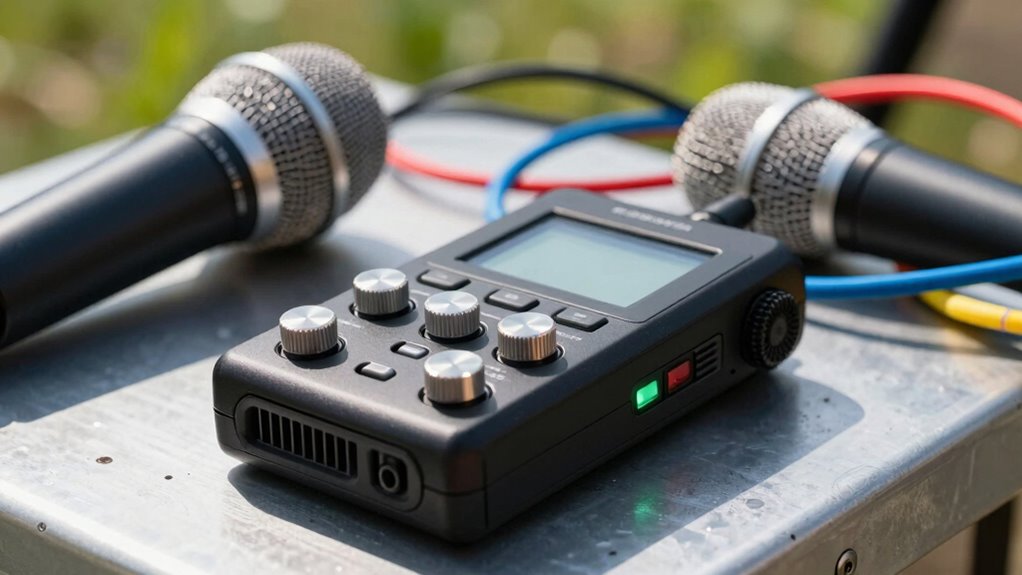
Finding the right field audio recorder for podcast recording involves balancing portability, sound quality, and ease of use. The Zoom PodTrak P4 stands out as the best overall pick for its versatile inputs and noise reduction features. For those on a budget, the Zoom H1 Essential offers solid performance in a compact form. Meanwhile, the Zoom H5 provides professional-grade sound with more inputs, suited for advanced podcasters. The main tradeoffs often involve choosing between affordability, portability, and feature set. Keep reading to see how these options compare and find the best fit for your recording needs.

Get business pricing on office and shipping supplies
- Business-only prices and quantity discounts
- Tax-exempt purchasing
- Multiple users, one account, clear invoices
Key Takeaways
- The best overall pick, the Zoom PodTrak P4, balances multiple inputs with user-friendly features, making it ideal for most podcasters.
- Portability and size are key factors; smaller recorders like the Zoom H1 Essential are perfect for on-the-go use but may lack advanced features.
- More inputs and professional features come with higher-priced units like the Zoom H5, which may be unnecessary for casual recording.
- Battery life and storage capacity significantly impact field recording, especially for extended sessions.
- Sound quality and noise reduction are critical, with some models offering AI or digital noise suppression to improve clarity.
| Zoom F3 Professional Field Recorder for Filmmakers & Musicians |  | Best Overall for Demanding Field Recording | Recording Format: 32-bit float | Inputs: Dual locking XLR | Preamps: Ultra-low-noise | VIEW ON AMAZON | See Our Full Breakdown |
| Zoom H1 XLR 2-Channel Recorder for Filmmakers, Musicians & Podcasters |  | Best Value for Versatile Portable Recording | Compatible Devices: Camera, Earphone, Laptop, Smartphone, Tablet | Microphone Form Factor: Shotgun | Recording Format: WAV | VIEW ON AMAZON | See Our Full Breakdown |
| Zoom PodTrak P4next Podcast Recorder with 4 Inputs and AI Noise Reduction |  | Best for Multi-Mic and Remote Podcasting with Noise Control | Inputs: 4 XLR | Multitrack Recording: Yes, up to 4 tracks | AI Noise Reduction: Yes | VIEW ON AMAZON | See Our Full Breakdown |
| Zoom H5 4-Track Handheld Recorder for Filmmakers & Musicians |  | Best for Interchangeable Inputs and Professional Versatility | Input Capsules: Interchangeable, includes X/Y | Number of Tracks: 4 | Inputs: 2 XLR/TRS with phantom power | VIEW ON AMAZON | See Our Full Breakdown |
| Zoom PodTrak P4 Podcast Recorder with 4 XLR Mic Inputs and Sound Pads |  | Best for Multi-Guest Podcasting with Sound Effects | Microphone Inputs: 4 XLR with phantom power | Headphone Outputs: 4 with individual volume control | Sound Pads: 4 programmable | VIEW ON AMAZON | See Our Full Breakdown |
| Tonfarb 136GB Digital Voice Recorder with Playback, 9775 Hours Audio Recording |  | Best Overall for Extended Field Recordings | Memory Storage Capacity: 136 GB | Battery Life: 68 hours | Recording Time: 68 hours | VIEW ON AMAZON | See Our Full Breakdown |
| Zoom H1 Essential Recorder for Musicians, Podcasters & Content Creators |  | Best for Versatile Stereo Recording in the Field | Connectivity: USB-C | Use Cases: Music, podcasts, ambient sound, streaming, calls | Sound Quality: Stereo audio | VIEW ON AMAZON | See Our Full Breakdown |
| Zoom H5 4-Track Handy Recorder Bundle with APH5 Remote Accessory Pack |  | Best for Multi-Track Field Recording with Versatile Inputs | Recording Tracks: 4 | Microphone Capsule: XYH-5 X/Y | Input Types: XLR/TRS combo | VIEW ON AMAZON | See Our Full Breakdown |
| Zoom H4 Essential Handheld Recorder for Musicians, Podcasters & Filmmakers |  | Best for High-Quality 4-Track Recording with External Input Options | Recording technology: 32-bit float | Maximum sample rate: 96 kHz | Inputs: 2 XLR/TRS | VIEW ON AMAZON | See Our Full Breakdown |
| Tonfarb 64GB Digital Voice Recorder with Playback |  | Best Budget-Friendly Recorder for Basic Field Needs | Memory Storage Capacity: 64 GB | Battery Life: 32 hours | Digital Recording Time: 48 hours | VIEW ON AMAZON | See Our Full Breakdown |
| Zoom H2 Essential Handheld Recorder for Musicians, Podcasters & Filmmakers |  | Best for Versatile Field Recording with User-Friendly Features | Microphones: 3 built-in microphones | Recording Patterns: 9 selectable patterns | Maximum Sample Rate: 96kHz | VIEW ON AMAZON | See Our Full Breakdown |
| field audio recorder for podcast recording | Connectivity |
|---|---|
| Zoom F3 Professional Field Rec | — |
| Zoom H1 XLR 2-Channel Recorder | — |
| Zoom PodTrak P4next Podcast Re | Phone compatible |
| Zoom H5 4-Track Handheld Recor | — |
| Zoom PodTrak P4 Podcast Record | Phone & USB |
| Tonfarb 136GB Digital Voice Re | USB-C |
| Zoom H1 Essential Recorder for | USB-C |
| Zoom H5 4-Track Handy Recorder | — |
| Zoom H4 Essential Handheld Rec | USB-C |
| Tonfarb 64GB Digital Voice Rec | — |
| Zoom H2 Essential Handheld Rec | USB, Bluetooth, SD card |
More Details on Our Top Picks
Zoom F3 Professional Field Recorder for Filmmakers & Musicians
The Zoom F3 stands out for its 32-bit float recording, which allows capturing a wide dynamic range without needing gain adjustments—ideal for unpredictable environments. Compared with the Zoom H5, it offers more professional-grade preamps and secure dual locking XLR inputs, making it better suited for high-stakes on-location work. The tradeoff is that it lacks a built-in screen or extensive onboard controls, so it relies on external workflow options. This makes it perfect for filmmakers or recordists who prioritize reliable, high-quality audio over immediate monitoring convenience.
Pros:- High-quality 32-bit float recording for a wide dynamic range
- Secure dual locking XLR inputs for reliable connections
- Ultra-low-noise preamps ensure clean audio
- Flexible power and workflow options
Cons:- No price information available, making budget planning difficult
- No customer ratings, so performance feedback is limited
Best for: Professionals who need robust, high-quality recordings in challenging environments, such as location sound recordists or filmmakers.
Not ideal for: Beginners or podcasters seeking a simple, portable device with a built-in microphone and easy interface.
- Recording Format:32-bit float
- Inputs:Dual locking XLR
- Preamps:Ultra-low-noise
- Power Options:Flexible
- Workflow:Standalone or USB
- Battery Life:Not specified
Our verdict“This recorder is best for experienced professionals needing dependable, high-fidelity field audio in demanding conditions.”
Zoom H1 XLR 2-Channel Recorder for Filmmakers, Musicians & Podcasters
The Zoom H1 XLR offers a compact, lightweight design with 32-bit/96kHz recording quality, making it suitable for a wide range of portable recording needs. Unlike the Zoom PodTrak P4, which emphasizes multi-mic and remote call-in features, the H1 XLR excels at capturing high-quality audio on the go with external XLR/TRS inputs. Its main tradeoff is the reliance on 2 AA batteries, which may require frequent replacement, and its small screen limits monitoring ease. Still, this pick makes the most sense for users who need a portable, high-resolution recorder without the complexity of multiple inputs or extensive onboard controls.
Pros:- High-quality 32-bit/96kHz recording
- Two XLR/TRS combo inputs for versatile connections
- Supports SDXC cards up to 1TB for long sessions
- Lightweight and compact for easy transport
Cons:- Requires 2 AA batteries, which may be inconvenient for extended use
- Limited screen size hampers monitoring and adjustments
- No built-in microphone, relies solely on external inputs
Best for: Musicians, filmmakers, or podcasters seeking a portable recorder for on-the-fly high-quality audio capture.
Not ideal for: Users who need extensive onboard controls, internal storage, or built-in microphones for simple recording tasks.
- Compatible Devices:Camera, Earphone, Laptop, Smartphone, Tablet
- Microphone Form Factor:Shotgun
- Recording Format:WAV
- Memory Storage Capacity:Up to 1TB SDXC
- Battery Life:10 hours
- Dimensions:4.21″D x 2.44″W x 1.55″H
Our verdict“This recorder fits best for mobile users who prioritize high-resolution audio and portability over onboard controls and built-in mics.”
Zoom PodTrak P4next Podcast Recorder with 4 Inputs and AI Noise Reduction
The Zoom PodTrak P4next offers four XLR inputs with multitrack support, making it a standout for multi-mic recordings involving in-person or remote guests. Its AI noise reduction and tone enhancement features help produce cleaner audio, outperforming many basic recorders like the Zoom H1. However, it lacks detailed info on battery life and onboard storage, which could be limiting for longer recording sessions. Its complexity might challenge beginners, but for seasoned podcasters or broadcasters, this device offers excellent control and flexibility for studio-quality sound.
Pros:- Supports up to 4 microphones and remote call-ins
- Built-in AI noise reduction for clearer audio
- Multiple headphone outputs for group monitoring
- Direct phone connection for high-quality capture
Cons:- Lack of detailed info on battery life and storage capacity
- Potentially complex setup for new users
Best for: Podcasters and content creators who need to record multiple guests or remote participants with professional noise reduction.
Not ideal for: Beginners or those seeking a simple, plug-and-play recorder without advanced features or multi-track capabilities.
- Inputs:4 XLR
- Multitrack Recording:Yes, up to 4 tracks
- AI Noise Reduction:Yes
- Headphone Outputs:4
- Gain:+70dB
- Connectivity:Phone compatible
Our verdict“This device is ideal for experienced podcasters needing multi-mic, noise-reduced recordings with flexible guest options.”
Zoom H5 4-Track Handheld Recorder for Filmmakers & Musicians
The Zoom H5 provides a flexible solution with its interchangeable input capsules, including the popular X/Y stereo capsule, making it suitable for diverse recording scenarios. Its support for four tracks simultaneously and phantom-powered XLR/TRS inputs make it comparable to the Zoom F3 in professional environments, but with the added benefit of onboard recording. Its main tradeoff is its limited storage capacity—up to 32GB—and the need for AA batteries, which may restrict long sessions. The H5’s versatility makes it a strong choice for those who need a multi-purpose device that functions both as a handheld recorder and a USB interface.
Pros:- Interchangeable input capsules for versatile recording
- Supports four-track simultaneous recording
- High-quality shock-mounted microphones reduce handling noise
- Functions as a USB audio interface
Cons:- Limited to SD/SDHC cards up to 32GB
- Requires AA batteries (not rechargeable)
- No built-in Wi-Fi or Bluetooth
Best for: Filmmakers and musicians who want a portable recorder with interchangeable capsules and multi-track recording capabilities.
Not ideal for: Beginners or casual podcasters who do not need interchangeable microphones or multi-channel recording features.
- Input Capsules:Interchangeable, includes X/Y
- Number of Tracks:4
- Inputs:2 XLR/TRS with phantom power
- Recording Media:SD/SDHC up to 32GB
- Power:2 AA batteries
- Compatibility:USB audio interface
Our verdict“This recorder is suitable for professionals needing a portable, adaptable device that doubles as a USB interface for studio use.”
Zoom PodTrak P4 Podcast Recorder with 4 XLR Mic Inputs and Sound Pads
The Zoom PodTrak P4 is designed with podcasters in mind, offering four XLR inputs with phantom power and four headphone outputs, making it ideal for group recordings. Its programmable sound pads add a creative layer for inserting effects or jingles on the fly. While it supports multi-track recording and remote calls via phone or USB, its battery life of just 3.5 hours on 2 AA batteries can limit longer sessions, and it lacks a built-in rechargeable battery. For users who want a portable, feature-rich podcasting solution with the ability to incorporate sound effects easily, this device hits the mark.
Pros:- Multiple XLR inputs with phantom power
- Four headphone outputs for group monitoring
- Programmable sound pads for effects and cues
- Supports remote via phone and USB
Cons:- Limited battery life of 3.5 hours on 2 AA batteries
- No built-in rechargeable battery
- Potential complexity for new users
Best for: Podcasters and content creators producing multi-guest episodes with added sound effects and remote interviews.
Not ideal for: Beginners or casual users who prefer simpler devices without multiple mic inputs or sound pads.
- Microphone Inputs:4 XLR with phantom power
- Headphone Outputs:4 with individual volume control
- Sound Pads:4 programmable
- Recording Mode:Multi-track
- Connectivity:Phone & USB
- Battery Life:Up to 3.5 hours
Our verdict“Ideal for experienced podcasters seeking a portable device with multiple inputs, sound effects, and remote call support.”
Tonfarb 136GB Digital Voice Recorder with Playback, 9775 Hours Audio Recording
This recorder stands out for its massive 136GB storage, supporting up to 9775 hours of recordings, making it ideal for long-form interviews, lectures, or journalism. Compared with the Tonfarb 64GB Recorder, it offers more capacity and longer sessions but at a slightly larger size and weight. Its noise reduction and voice-activation features help maintain clarity in noisy environments, while the long battery life supports extended use without frequent recharge. A limitation is the absence of external microphone support, which could hinder advanced setups. The straightforward interface with one-touch recording ensures ease of use for professionals who need reliable, high-capacity field audio capture.
Pros:- Exceptional storage capacity for long recordings
- Excellent noise reduction with voice activation
- Long-lasting battery supports all-day field work
- User-friendly interface for quick operation
Cons:- No support for external microphones, limiting flexibility
- Limited format options—only MP3 and WAV supported
- Playback features are not detailed, possibly limiting review convenience
Best for: Professionals like journalists, researchers, or field recordists needing extensive recording time without changing media.
Not ideal for: Casual users or hobbyists who prefer smaller, more portable devices or require external mic options.
- Memory Storage Capacity:136 GB
- Battery Life:68 hours
- Recording Time:68 hours
- Microphone:Dual noise reduction microphones
- Audio Format:MP3, WAV
- Built-in Storage:8 GB
- Included Storage:128 GB TF card
- Connectivity:USB-C
- Dimensions:0.47″D x 1.45″W x 4″H
Our verdict“This pick makes the most sense for field professionals who prioritize extensive recording capacity and reliable performance in demanding environments.”
Zoom H1 Essential Recorder for Musicians, Podcasters & Content Creators
The Zoom H1 excels at capturing high-quality stereo sound in portable form, making it a solid choice for musicians, podcasters, and outdoor sound recordists. Its simplicity and stereo focus make it more straightforward than the Zoom H4, which offers four tracks but with more complexity and bulk. The H1’s compact size and USB-C connectivity facilitate quick setups in diverse environments, but its stereo-only recording limits multi-track projects or complex editing workflows. It requires some familiarity with audio devices to maximize its potential, especially when adjusting settings for optimal stereo capture. For those needing quick, high-quality stereo recordings without fuss, the H1 hits the sweet spot.
Pros:- High-quality stereo sound capture
- Compact and portable for on-the-go use
- USB-C connectivity for quick file transfer and streaming
- Ideal for capturing ambient sounds, interviews, and music
Cons:- Limited to stereo recording, not multi-track
- Requires some experience to optimize settings
- No built-in microphones, external mics needed for best results
Best for: Content creators and field recordists who primarily need clear stereo sound in a small, easy-to-operate device.
Not ideal for: Users needing multi-track recording or advanced editing capabilities on the go.
- Connectivity:USB-C
- Use Cases:Music, podcasts, ambient sound, streaming, calls
- Sound Quality:Stereo audio
Our verdict“This device makes the most sense for users who need reliable stereo recordings without the complexity of multi-track options.”
Zoom H5 4-Track Handy Recorder Bundle with APH5 Remote Accessory Pack
The Zoom H5 stands out for its four-track recording capabilities and interchangeable X/Y microphone capsule, making it perfect for more complex sessions like multi-mic interviews or live recordings. The bundle’s included remote control and accessories extend its versatility for outdoor or remote use, unlike simpler recorders like the Tonfarb 64GB Voice Recorder. Its support for SD/SDHC cards up to 32GB can be limiting for very long sessions, but the flexible inputs, including XLR/TRS combo jacks, enable connection of professional microphones and instruments. However, its size and learning curve may challenge beginners. This recorder suits those seeking a portable yet comprehensive solution for multi-input, multi-track recordings.
Pros:- Supports four simultaneous recording tracks
- Interchangeable X/Y microphone capsule
- Includes remote control and outdoor accessories
- Flexible input options with XLR/TRS jacks
Cons:- Limited storage capacity with 32GB SD cards
- Bulky compared to simpler recorders
- Interface complexity can challenge beginners
Best for: Field sound engineers or podcasters who need multi-mic setups and versatile input options in a portable format.
Not ideal for: Casual users or those with limited experience in multi-track recording setups.
- Recording Tracks:4
- Microphone Capsule:XYH-5 X/Y
- Input Types:XLR/TRS combo
- Supported Storage:SD/SDHC up to 32GB
- Formats:WAV, MP3
- Accessories Included:RCH-5 remote, windscreen, USB cable
Our verdict“This makes the most sense for users requiring multi-track, multi-mic capabilities in a portable, professional-grade device.”
Zoom H4 Essential Handheld Recorder for Musicians, Podcasters & Filmmakers
The Zoom H4 offers a versatile 4-track recording experience with built-in microphones and external input options, making it suitable for creators needing detailed sound capture in the field. Its 96 kHz recording and 32-bit float technology provide higher fidelity compared to the simpler stereo-only devices like the Zoom H1. The H4’s external XLR/TRS inputs allow direct connection of microphones and instruments, expanding its capabilities for complex projects. Its bulkier design and more detailed interface require some familiarity, but it delivers professional-grade audio in a portable format. For those who need more than stereo, this model offers a balanced mix of features and usability.
Pros:- High-quality 96 kHz recording with 32-bit float
- External XLR/TRS inputs for microphones and instruments
- Built-in stereo mics plus external mic inputs
- Supports detailed, multi-track recording
Cons:- Larger and heavier than simpler recorders
- Requires some technical knowledge to operate effectively
- Limited storage capacity unless upgraded with larger SD cards
Best for: Filmmakers, musicians, or podcasters who need external mic inputs and multi-track recording in the field.
Not ideal for: Beginners or users who prefer ultra-compact recorders for quick, simple recordings.
- Recording technology:32-bit float
- Maximum sample rate:96 kHz
- Inputs:2 XLR/TRS
- Built-in microphones:Stereo microphones
- Connectivity:USB-C
- Storage:SD card
- Display:Color LCD
Our verdict“This model makes sense for professionals or advanced users seeking flexible, high-quality multi-track recordings in the field.”
Tonfarb 64GB Digital Voice Recorder with Playback
This recorder offers a reliable 64GB of storage, supporting up to 48 hours of continuous recording, making it a solid choice for casual interviews, lectures, or field notes. Its one-click recording simplifies operation compared to more complex devices like the Zoom H5, though it lacks external microphone support and has no rechargeable battery, relying instead on AAA batteries. Its stereo microphones and noise reduction features support clear recordings, but limited format options and basic playback controls mean it’s less suited for advanced editing or lengthy professional projects. This makes it ideal for users who need straightforward recording without extra bells and whistles.
Pros:- Large 64GB storage capacity for extensive recordings
- Simple one-click recording
- Supports high-quality WAV and MP3 formats
- Ergonomic controls and large screen
Cons:- Requires AAA batteries, adding ongoing cost
- Limited to stereo operation, no external mic support
- No rechargeable battery for convenience
Best for: Students or hobbyists looking for an easy-to-use device for short-term recordings and basic playback.
Not ideal for: Advanced content creators or professionals needing multi-mic or multi-format recording options.
- Memory Storage Capacity:64 GB
- Battery Life:32 hours
- Digital Recording Time:48 hours
- Format:MP3, WAV
- Microphone Operation Mode:Stereo
- Headphones Jack:3.5 mm
- Interface:USB 2.0
- Batteries:1 AAA (included)
Our verdict“This device makes the most sense for casual users who prioritize ease of use and basic recording features over advanced capabilities.”
Zoom H2 Essential Handheld Recorder for Musicians, Podcasters & Filmmakers
The Zoom H2 Essential stands out for its flexible microphone array, offering nine recording patterns that adapt well to different environments, making it a solid choice for podcasters who need to capture interviews, music, or ambient sound. Compared to the Zoom H1 Essential, which is simpler and more affordable, the H2 Essential provides a broader range of microphone configurations, though its advanced features might feel overwhelming for absolute beginners. Its ability to function as a USB microphone adds convenience for remote recording sessions, and Bluetooth control enables multi-unit synchronization, ideal for larger setups. However, its array of features introduces a learning curve, and the absence of explicit internal storage details could be a concern for those needing standalone operation without SD cards. This pick makes the most sense for podcasters and content creators who want a versatile, high-quality recorder that can grow with their skills, despite the steeper initial learning curve.
Pros:- High-quality 32-bit float/96kHz recording for professional-grade audio clarity
- Multiple microphones and nine recording patterns for maximum adaptability
- Functions as a USB microphone, streamlining remote recording workflows
- Bluetooth control allows wireless synchronization of multiple units
Cons:- Complex feature set may require time to master, especially for newcomers
- Unclear internal storage capacity could limit standalone use without SD cards
Best for: Podcasters and content creators seeking a versatile, high-quality handheld recorder with multiple microphone options and wireless control.
Not ideal for: Absolute beginners who prefer a simple, plug-and-play device without complex menus or multiple recording patterns.
- Microphones:3 built-in microphones
- Recording Patterns:9 selectable patterns
- Maximum Sample Rate:96kHz
- Bit Depth:32-bit float
- Connectivity:USB, Bluetooth, SD card
- Languages:7
Our verdict“This recorder suits experienced podcasters and field recordists who need flexible recording options and are comfortable navigating more advanced features.”

How We Picked
I evaluated these products based on performance, usability, build quality, value, and versatility. Each recorder was assessed for its audio quality, input options, ease of operation, durability, and battery life. The rankings favor models that offer a strong balance of features for podcasting specifically, rather than general voice or music recording. I also considered user feedback and the overall reputation of the brands. The goal was to identify options suitable for a range of podcasters—from beginners to more advanced users—while highlighting the tradeoffs involved with each choice.| field audio recorder for podcast recording | Connectivity |
|---|---|
| Zoom F3 Professional Field Rec | — |
| Zoom H1 XLR 2-Channel Recorder | — |
| Zoom PodTrak P4next Podcast Re | Phone compatible |
| Zoom H5 4-Track Handheld Recor | — |
| Zoom PodTrak P4 Podcast Record | Phone & USB |
| Tonfarb 136GB Digital Voice Re | USB-C |
| Zoom H1 Essential Recorder for | USB-C |
| Zoom H5 4-Track Handy Recorder | — |
| Zoom H4 Essential Handheld Rec | USB-C |
| Tonfarb 64GB Digital Voice Rec | — |
| Zoom H2 Essential Handheld Rec | USB, Bluetooth, SD card |
Factors to Consider When Choosing Field Audio Recorder For Podcast Recording
Selecting the right field audio recorder for podcasting requires understanding key factors that influence your recording quality and convenience. Beyond just price, consider how many microphones or sources you’ll need to connect, how portable the device is, and whether features like noise reduction are essential. Properly matching these factors to your typical recording environment ensures clearer sound and a smoother workflow. Here are the main considerations to keep in mind when choosing a recorder for your podcasting needs.Number of Inputs and Compatibility
Think about how many microphones or external sources you’ll connect simultaneously. If you often record interviews or panel discussions, models with multiple XLR or 3.5mm inputs are essential. For solo creators, a single or dual input may suffice. Compatibility with your existing microphones and accessories is also crucial—ensure the recorder supports the connectors and power requirements you have. Overestimating your needs can lead to unnecessary expense, while underestimating can limit your flexibility on the go.
Size, Portability, and Battery Life
Portability matters when recording in various field environments. Smaller, lightweight devices are easier to carry and less obtrusive, but might sacrifice features or battery capacity. Consider how long you’ll need to record without access to power—longer battery life reduces interruptions, especially during extended outdoor sessions. Some recorders also include rechargeable batteries or USB charging options, adding convenience. Balance size with endurance to match your typical recording scenarios.
Sound Quality and Noise Reduction
High-quality microphones can deliver excellent sound, but the recorder’s preamps and digital processing also influence clarity. Features like AI noise reduction or digital filters can significantly improve audio by minimizing ambient sounds, wind, or hums. For outdoor or noisy environments, prioritize models that offer effective noise suppression. Keep in mind that some advanced noise features may introduce latency or artifacts, so test if possible before purchase.
Ease of Use and Interface
A straightforward interface helps focus on recording rather than technical troubleshooting. Look for models with intuitive controls, clear displays, and simple menu navigation. Features like dedicated record buttons, level controls, and easily accessible ports save time in fast-paced field situations. If you plan to use the recorder frequently, investing in a device with a familiar, user-friendly layout reduces setup time and errors during recordings.
Storage Options and Data Management
Field recorders rely on internal storage or removable media like SD cards. Consider how much storage you need for your typical sessions—longer recordings require higher capacity cards. Check if the device supports fast transfer speeds and easy file management, which streamline post-production. Some models also include digital backups or direct connections to computers, reducing the risk of data loss. Always have spare cards and a plan for quick data offloading during or after your sessions.
Frequently Asked Questions
Can I use a field recorder for live podcast streaming?
While many field recorders are optimized for recording and later editing, some models can be connected to a computer or streaming setup for live use. Devices with USB output or direct computer connectivity can serve in live scenarios, but they might lack features like real-time monitoring or mixing. If live streaming is your goal, it’s essential to select a recorder with compatible outputs and consider additional equipment such as mixers or interfaces for seamless operation. Testing before critical sessions ensures your setup works as intended.
What’s the benefit of having multiple XLR inputs in a field recorder?
Multiple XLR inputs allow you to connect several microphones directly to your recorder, making it easier to capture interviews, panels, or multi-source recordings in the field. This flexibility reduces the need for external mixers or additional gear, streamlining your setup. However, more inputs often mean a larger, heavier device and higher cost. If your podcasting style involves solo recordings or one-on-one interviews, a single or dual-input recorder may be more practical and cost-effective.
How important is battery life for field recording, and what should I look for?
Battery life is critical when recording outdoors or for extended periods without access to power. A recorder with several hours of uptime ensures you won’t lose valuable content due to power loss. Look for models that support rechargeable batteries with fast charging, or ones that can be powered via USB or external power banks. Keep in mind that higher-quality microphones and noise reduction features can drain batteries faster, so balance your power needs with your device’s endurance.
Should I prioritize built-in storage or SD card support?
Both options have advantages: built-in storage offers simplicity, but SD card support provides flexible, expandable capacity. For longer recording sessions or higher-quality audio files, SD cards are preferable since they can be swapped out easily. Internal storage is convenient for quick setup and fewer components, but it often limits recording time. Consider your typical session length and whether you prefer hassle-free operations or maximum capacity and flexibility.
Is digital noise reduction necessary for outdoor podcast recordings?
Digital noise reduction can significantly improve audio clarity when recording outside, where wind, traffic, or ambient noise are common. Features like AI noise suppression or digital filters help isolate voices and eliminate background interference. However, overuse of noise reduction may introduce artifacts or unnatural sound, so it’s best to choose a model with adjustable settings or test its effectiveness beforehand. For outdoor environments, investing in a recorder with strong noise reduction capabilities can make a noticeable difference in final audio quality.
Conclusion
For most podcasters seeking a reliable, all-around device, the Zoom PodTrak P4 offers an excellent balance of inputs, ease of use, and sound quality—making it the best overall choice. Beginners or casual creators will find the Zoom H1 Essential a straightforward, budget-friendly option. Those needing professional-grade features and multiple inputs should consider the Zoom H5. If portability is your priority, smaller models like the H1 and H2 are ideal, but make sure to weigh their limitations in input options and features. Ultimately, your specific recording environment and technical needs should guide your choice, but this list provides a solid foundation for a successful podcasting setup in 2026.
Fall Picks
fall essentials
As an affiliate, we earn on qualifying purchases.