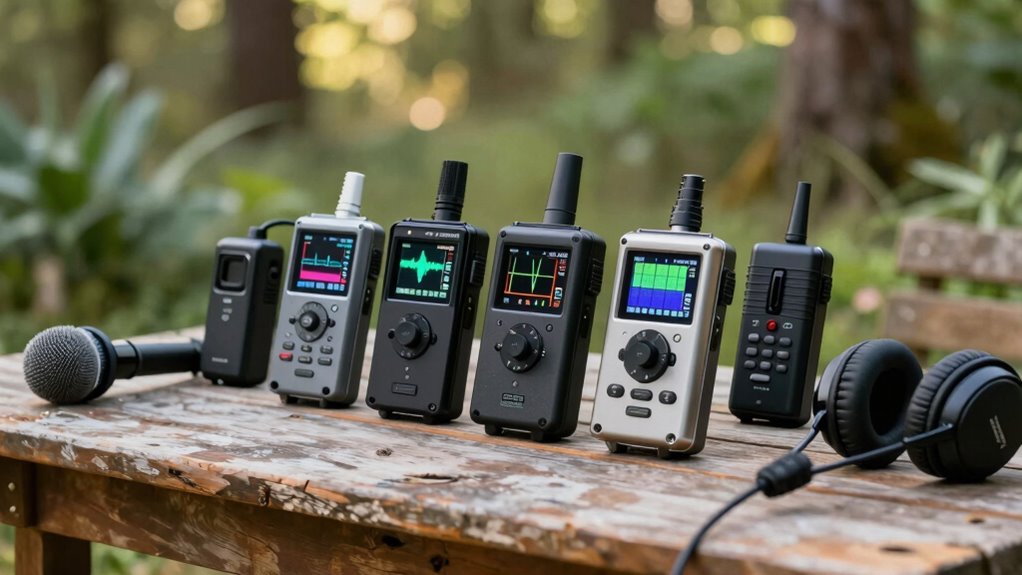

Finding the right high end field audio recorder for on location interviews involves balancing exceptional sound quality, portability, and versatile features. The Zoom F6 stands out as the overall best for its professional-grade 6-input capacity and robust build, ideal for demanding environments. The TASCAM DR-10L Pro is a compact choice that excels in discreet recording, while the Zoom F8n offers extensive inputs for complex setups. The main tradeoffs involve choosing between ultra-portability and multi-input flexibility, as well as balancing advanced features with ease of use. Continue reading for a detailed breakdown to match your specific interview needs.

Get business pricing on office and shipping supplies
- Business-only prices and quantity discounts
- Tax-exempt purchasing
- Multiple users, one account, clear invoices
Complete the kit


Key Takeaways
- The top picks combine high-quality preamps with reliable recording formats to ensure professional audio capture.
- Multi-input models like the Zoom F8n are suited for complex interviews requiring multiple microphones, but they tend to be larger and more expensive.
- Compact recorders such as the TASCAM DR-10L Pro prioritize portability and discreetness, ideal for on-the-go interviews but with fewer input options.
- Bit-depth and sample rate capabilities, especially 32-bit float recording, provide greater flexibility and safety in unpredictable environments.
- Build quality, battery life, and ease of access to controls are critical factors that distinguish premium models from mid-tier options.
| TASCAM DR-10L Pro Field Recorder with Lavalier Microphone and 32-bit Float Recording |  | Best Overall for On-Location Interviews with Worry-Free Recording | Recording Format: 32-bit float | Storage: microSDXC up to 512GB | Included Microphone: TM-10L clip-on lavalier | VIEW ON AMAZON | See Our Full Breakdown |
| Zoom F3 32-Bit Float Field Recorder + ZDM-1 Podcast Mic Pack Bundle |  | Best Value for Professional-Grade Field Recording with Bundled Accessories | Recording Technology: 32-bit float with dual A/D converters | Channels: 2-input, 2-track | Inputs: 2 locking XLR with +48V phantom | VIEW ON AMAZON | See Our Full Breakdown |
| TASCAM DR-40XP 4-Channel 32-Bit Float Portable Handheld Field Recorder and USB-C Audio Interface |  | Best for Creators Needing Versatile Multi-Channel Recording and Connectivity | Channels: 4 | Bit Depth: 32-bit float | Microphone Types: Adjustable A-B or X-Y | VIEW ON AMAZON | See Our Full Breakdown |
| Zoom F3 Professional Field Recorder for Filmmakers & Musicians |  | Best for High-Quality, Low-Noise Recording in Demanding Environments | Recording Format: 32-bit float | Inputs: Dual locking XLR | Noise Level: Ultra-low-noise preamps | VIEW ON AMAZON | See Our Full Breakdown |
| Zoom F6 Professional Field Recorder for Filmmakers & Musicians |  | Best for Multi-Input, High-Track-Count Filmmaking & Music Production | Recording Format: 32-bit float | Inputs: 6 XLR | Tracks: Up to 14 | VIEW ON AMAZON | See Our Full Breakdown |
| Zoom F3 2-Input Field Recorder Bundle with Sony MDR-7506 Headphones and Accessories |  | Best Overall for Versatile Professional Field Recording | Inputs: 2x XLR mic/line with switchable +48V phantom power | Recording Format: 32-bit float, uncompressed BWF | Sample Rates: 44.1 kHz to 192 kHz | VIEW ON AMAZON | See Our Full Breakdown |
| Zoom H5studio Handy Recorder Bundle with Accessory Pack, 32-Bit Float Recording, Detachable XY Microphone, 64GB microSDHC Card |  | Best for Portable Flexibility and Versatile Field Use | Recording Format: 32-bit float | Microphone: Detachable XY capsule | Storage Included: 64GB microSDHC card | VIEW ON AMAZON | See Our Full Breakdown |
| Zoom F8n Pro Field Recorder for Filmmakers with 8 Inputs & 10 Tracks |  | Best for Multi-Source, Professional Filmmaker Workflows | Inputs: 8 | Tracks: 10 | Bit Depth: 32-bit float | VIEW ON AMAZON | See Our Full Breakdown |
| Zoom H2 Essential Handheld Recorder for Musicians, Podcasters & Filmmakers |  | Best for Entry-Level, Multi-Pattern Field Recording | Microphones: Three built-in microphones | Recording Patterns: Nine selectable patterns | Audio Resolution: Up to 32-bit float/96kHz | VIEW ON AMAZON | See Our Full Breakdown |
| high end field audio recorder for on location interview | Inputs | Recording Format |
|---|---|---|
| TASCAM DR-10L Pro Field Record | — | 32-bit float |
| Zoom F3 32-Bit Float Field Rec | 2 locking XLR with +48V phantom | — |
| TASCAM DR-40XP 4-Channel 32-Bi | 2 XLR/TRS | — |
| Zoom F3 Professional Field Rec | Dual locking XLR | 32-bit float |
| Zoom F6 Professional Field Rec | 6 XLR | 32-bit float |
| Zoom F3 2-Input Field Recorder | 2x XLR mic/line with switchable +48V phantom power | 32-bit float, uncompressed BWF |
| Zoom H5studio Handy Recorder B | — | 32-bit float |
| Zoom F8n Pro Field Recorder fo | 8 | — |
| Zoom H2 Essential Handheld Rec | — | — |
More Details on Our Top Picks
TASCAM DR-10L Pro Field Recorder with Lavalier Microphone and 32-bit Float Recording
The TASCAM DR-10L Pro stands out for its ultra-compact design combined with 32-bit float recording, making it ideal for on-the-move interview scenarios where consistency and reliability are crucial. Unlike the Zoom F3, which offers dual XLR inputs for professional microphones, the DR-10L’s built-in lavalier mic simplifies setup but limits flexibility for mic choice. The inclusion of LTC Jam Sync and wireless timecode support via firmware makes multi-device sync more straightforward, yet the need for the separate AK-BT1 Bluetooth adapter adds an extra step and cost. The device’s support for microSDXC up to 512GB offers extensive recording capacity, essential for long sessions. Compared to bulkier options like the Zoom F6, the DR-10L’s portability is unmatched, though it sacrifices some advanced input options. This pick makes the most sense for field journalists or documentarians needing a lightweight, reliable recorder that handles unpredictable environments effortlessly.
Pros:- 32-bit float recording eliminates clipping concerns in unpredictable environments
- LTC Jam Sync ensures seamless multi-device timecode sync
- Supports microSDXC cards up to 512GB for long recording sessions
- Includes a matched lavalier microphone for quick setup
Cons:- Wireless timecode via Bluetooth requires a separate, additional purchase (AK-BT1)
- Not compatible with newer AK-BT2 Bluetooth adapters
Best for: Field journalists and documentary filmmakers who need a tiny, dependable recorder with worry-free levels.
Not ideal for: Studio-based producers or those requiring multiple microphone inputs and extensive control features.
- Recording Format:32-bit float
- Storage:microSDXC up to 512GB
- Included Microphone:TM-10L clip-on lavalier
- Timecode:LTC Jam Sync
- Bluetooth Adapter:AK-BT1 (sold separately)
- Multi-Unit Control:Up to 5 simultaneous recordings
Our verdict“This recorder is perfect for on-location interviewers who prioritize portability and reliable, clip-free audio capture.”
Zoom F3 32-Bit Float Field Recorder + ZDM-1 Podcast Mic Pack Bundle
The Zoom F3 offers a compelling combination of 32-bit float recording and dual inputs, making it a versatile choice for professionals who need high-quality audio in the field. Unlike the TASCAM DR-10L Pro, which is highly portable but limited to a single mic input, the F3’s dual XLR inputs with phantom power provide more flexibility for connecting multiple mics or line-level sources. Its long eight-hour battery life and comprehensive bundle—including a microphone, memory card, and accessories—add value for those starting out or needing a ready-to-go setup. However, the lack of built-in microphones means external mics are necessary, which can complicate quick setups. Compared to the Zoom H5, which offers more microphone options and onboard controls, the F3’s simplicity and professional focus make it ideal for field recordists who prioritize clean, clipping-free recordings without fussing with gain adjustments. This makes it well-suited for documentary work or multi-mic interviews where sound quality is critical.
Pros:- 32-bit float recording eliminates the need for gain adjustments and prevents clipping
- Dual locking XLR inputs with phantom power support professional microphones
- Long 8-hour battery life with multiple power options
- Includes a complete bundle with mic, memory card, and accessories
Cons:- Requires external microphones, adding to setup complexity
- No built-in microphones or onboard controls for quick operation
Best for: Professional field recordists and podcasters who need reliable, high-quality multi-mic recording with a full bundle of accessories.
Not ideal for: Beginners or those seeking a compact, single-mic recorder for quick setup or casual use.
- Recording Technology:32-bit float with dual A/D converters
- Channels:2-input, 2-track
- Inputs:2 locking XLR with +48V phantom
- Max Sample Rate:192 kHz
- File Format:Uncompressed BWF
- Power:AA batteries, USB Type-C
Our verdict“A solid choice for professionals who need flexible, multi-mic recording with minimal fuss and a complete kit.”
TASCAM DR-40XP 4-Channel 32-Bit Float Portable Handheld Field Recorder and USB-C Audio Interface
The TASCAM DR-40XP balances multiple input channels with 32-bit float recording, making it suitable for creators who need detailed control over their audio. It’s notably more versatile than the Zoom F3, offering four channels with adjustable stereo mics and XLR/TRS inputs, which makes it better suited to complex interview setups or multi-mic environments. Its USB-C interface facilitates seamless connection to computers or mobile devices, ideal for hybrid recording workflows. However, while its four channels provide greater flexibility, this introduces additional complexity that may overwhelm beginners. Compared to the Zoom H5, which is more portable and has built-in microphones, the DR-40XP’s expanded inputs make it a better fit for multi-mic scenarios, though at the cost of increased size and complexity. It’s a good pick for field operators who need a combination of portability and extensive input options.
Pros:- 4-channel recording with adjustable stereo mics and XLR inputs
- 32-bit float recording for clip-free, detailed audio capture
- USB-C port for easy connectivity and mobile workflows
- Supports large microSD cards for extended sessions
Cons:- More complex interface may challenge beginners
- Bulkier than smaller recorders like the DR-10L
Best for: Content creators and field engineers who require multi-mic setups with flexible connectivity for on-the-fly editing or post-production.
Not ideal for: Solo interviewers or beginners who prefer simple, all-in-one solutions with minimal setup.
- Channels:4
- Bit Depth:32-bit float
- Microphone Types:Adjustable A-B or X-Y
- Inputs:2 XLR/TRS
- Max Sample Rate:192 kHz
- Battery:Not included
Our verdict“Ideal for experienced field operators needing multi-mic capacity and flexible device connectivity in a portable form.”
Zoom F3 Professional Field Recorder for Filmmakers & Musicians
The Zoom F3 emphasizes ultra-low-noise preamps and dual XLR inputs, making it a strong contender for filmmakers and musicians working in challenging environments. Compared to the TASCAM DR-10L Pro, which prioritizes portability and simplicity, the F3 provides more professional features and cleaner sound quality thanks to its low-noise circuitry. Its dual locking XLR inputs ensure reliable connections, and the flexibility for standalone operation or integration into a larger workflow offers adaptability. However, its larger size and more complex controls might deter users seeking a quick, lightweight recording device. While the Zoom F6 offers even more inputs and tracks, the F3’s balance of portability and high-end audio performance makes it ideal for those needing dependable recordings without excessive bulk. It’s especially suited for field recordists who demand pristine sound quality in unpredictable settings.
Pros:- Ultra-low-noise preamps for pristine audio capture
- Dual locking XLR inputs support professional microphones
- Reliable 32-bit float recording prevents clipping
- Flexible standalone or workflow integration
Cons:- More complex operation than simpler recorders
- Bulkier design may be less portable for quick, casual use
Best for: Filmmakers and professional musicians requiring ultra-clean audio with robust XLR connections in rugged environments.
Not ideal for: Beginners or casual users who need simple, all-in-one handheld recorders with minimal setup.
- Recording Format:32-bit float
- Inputs:Dual locking XLR
- Noise Level:Ultra-low-noise preamps
- Power Options:Flexible, standalone or USB
Our verdict“A perfect choice for professional filmmakers and sound recordists who need dependable, high-quality low-noise audio capture in tough conditions.”
Zoom F6 Professional Field Recorder for Filmmakers & Musicians
The Zoom F6 offers a substantial upgrade in input count with six XLR inputs and up to 14 tracks, making it a highly capable device for complex filmmaking or music projects. Its 32-bit float recording ensures high dynamic range without clipping, similar to the Zoom F3 but with more inputs and tracks. The inclusion of timecode I/O enhances synchronization with other gear, a feature absent in less advanced models. Despite its impressive capabilities, the F6’s complexity and size make it less suited for quick, solo interviews or casual recording. Compared to the Zoom F3, which emphasizes portability and simplicity, the F6 is a more robust option for multi-mic setups in the field, but its bulk may hinder quick deployment. This recorder is best for teams or professionals who need extensive inputs and flexible workflows in demanding environments.
Pros:- Six XLR inputs with flexible configurations
- Up to 14 tracks for detailed multi-mic recordings
- 32-bit float recording prevents clipping across all inputs
- Timecode I/O for precise synchronization
Cons:- More complex to operate and set up
- Larger and heavier, less portable for quick on-the-go use
Best for: Professional filmmakers or multi-mic recordists working in challenging outdoor or studio locations requiring multiple synchronized inputs.
Not ideal for: Solo operators or hobbyists who do not need more than a few inputs and prefer lightweight, straightforward gear.
- Recording Format:32-bit float
- Inputs:6 XLR
- Tracks:Up to 14
- Timecode I/O:Yes
- Construction:Rugged and portable
- Power Options:Multiple
Our verdict“A top-tier recorder for professionals needing extensive inputs, multiple tracks, and tight synchronization in demanding environments.”
Zoom F3 2-Input Field Recorder Bundle with Sony MDR-7506 Headphones and Accessories
The Zoom F3 stands out for its 32-bit float recording, which effectively eliminates clipping and gain adjustment worries—an advantage over the Zoom H5studio, which still relies on manual gain. Its dual XLR inputs with phantom power support professional mics, making it ideal for on-location interviews that demand high audio fidelity. The long 8-hour battery life and multiple power options enhance its usability in the field. Compared to the Zoom F8n Pro, the F3 is more compact and easier to carry but lacks multiple inputs and advanced timecode features. Its main tradeoff is the absence of built-in microphones, requiring external mics, which adds to the setup. This pick is perfect for interviewers who need reliable, high-quality audio with minimal fuss about levels or clipping, but those seeking multi-channel multitrack recording might prefer the F8n.
Pros:- 32-bit float recording prevents clipping and simplifies gain management
- Versatile dual XLR inputs with phantom power support professional mics
- Long 8-hour battery life with multiple power options
Cons:- No built-in microphones, requiring external mics and setup time
- Bluetooth control and timecode features are optional accessories, adding cost
Best for: Audio professionals and field interviewers needing reliable 2-input recording with high fidelity and ease of use
Not ideal for: Producers requiring multi-channel recording or integrated microphones, as the F3 does not include onboard mics or extensive routing options
- Inputs:2x XLR mic/line with switchable +48V phantom power
- Recording Format:32-bit float, uncompressed BWF
- Sample Rates:44.1 kHz to 192 kHz
- Storage:microSDHC/microSDXC cards up to 1TB
- Battery Life:Up to 8 hours (AA batteries)
- Power Options:AA batteries, USB-C power bank, AC adapter
Our verdict“This recorder suits those who prioritize high-quality, straightforward field audio with minimal gain adjustments and professional mic support.”
Zoom H5studio Handy Recorder Bundle with Accessory Pack, 32-Bit Float Recording, Detachable XY Microphone, 64GB microSDHC Card
The Zoom H5studio excels in flexibility thanks to its detachable XY microphone capsule, which offers adaptable configurations compared to the fixed mics of the Zoom H2 Essential. Its 32-bit float recording ensures clear audio without distortion, making it suitable for unpredictable environments. The included accessory pack, 64GB microSDHC card, and batteries make it ready for immediate use, and its rugged design lends itself well to on-location interviews. However, the reliance on AA batteries might lead to frequent replacements during extended shoots, unlike the F3’s rechargeable options. Also, the optional microphone modules mean additional purchases for specialized recording, unlike the all-in-one nature of the H2. This is a strong choice for those who need a compact, adaptable recorder for various environments but are okay with potential accessory upgrades.
Pros:- Detachable XY microphone offers flexible placement and recording angles
- 32-bit float recording reduces distortion and clipping risk
- Includes comprehensive accessories for immediate use
Cons:- Uses AA batteries, which may need frequent replacement in the field
- Additional microphone modules can increase overall cost and complexity
Best for: Field interviewers and journalists needing a portable, flexible recorder with high audio quality
Not ideal for: Users requiring extensive multi-channel options or built-in microphones for quick setup, as the H5 relies on external capsules
- Recording Format:32-bit float
- Microphone:Detachable XY capsule
- Storage Included:64GB microSDHC card
- Power Included:Four AA batteries
- Connectivity:Direct SD recording, live monitoring
- Design:Compact and rugged
Our verdict“Ideal for mobile professionals who need adaptable, high-quality audio recording in a compact package, accepting some additional accessory investment.”
Zoom F8n Pro Field Recorder for Filmmakers with 8 Inputs & 10 Tracks
The Zoom F8n Pro is tailored for complex production environments, offering 8 channels and 10 tracks with 32-bit float recording for pristine, clip-free audio, unlike the simpler 2-input options like the Zoom F3. Its dual SD card slots provide redundancy, critical for high-stakes on-location shoots, while industry-leading timecode accuracy ensures perfect synchronization across multiple sources—an essential feature absent in most compact recorders. The main tradeoff is its size and complexity, which can hinder portability and straightforward operation for casual users. Its high price point also makes it less suitable for hobbyists or those with minimal recording needs. This model is best for professionals managing multi-mic setups and demanding production standards, rather than solo interviewers or documentary crews with limited gear.
Pros:- High-quality 32-bit float recording across 8 channels for dynamic range
- Dual SD card slots for reliable data backup during critical shoots
- Industry-leading timecode accuracy for multi-source synchronization
Cons:- More complex setup and operation compared to smaller recorders
- Bulkier size limits portability for casual field use
- Higher cost may be prohibitive for non-professionals
Best for: Filmmakers and sound recordists requiring multiple channels, redundancy, and precise synchronization in complex shoots
Not ideal for: Solo interviewers or those seeking lightweight, simple recorders, as the F8n Pro’s setup is more intricate and bulky
- Inputs:8
- Tracks:10
- Bit Depth:32-bit float
- Max SD Card Size:1TB
- Timecode Accuracy:0.2ppm
- Preamp Gain:75dB
Our verdict“Designed for professional projects demanding multi-channel, redundant, and synchronized audio, not for simple or solo applications.”
Zoom H2 Essential Handheld Recorder for Musicians, Podcasters & Filmmakers
The Zoom H2 Essential offers a straightforward approach for those new to high-end field audio, with nine selectable recording patterns and nine built-in microphones—more versatile than the Zoom F3 in capturing different environments. Its 32-bit float/96kHz recording protects against clipping, making it suitable for casual interviews and music recordings. However, compared with the other models, it lacks professional XLR inputs and the ability to connect external microphones easily, limiting its use for high-end field interviews requiring professional mics. Its reliance on internal mics and simple controls make it more accessible, but less flexible for complex setups. This device makes sense for beginners or hobbyists who seek decent quality without extensive gear, but not for seasoned professionals needing full control over inputs and outputs.
Pros:- Nine selectable recording patterns for versatile environment capture
- 32-bit float recording prevents clipping in unpredictable situations
- Works as a USB microphone for easy computer recording
Cons:- Limited to built-in microphones, restricting professional input options
- Dependence on batteries may be inconvenient during long shoots
- Lacks advanced features like multi-channel mixing or external mic support
Best for: Entry-level interviewers, podcasters, and musicians seeking an easy-to-use handheld recorder with good clip-free recording
Not ideal for: Experienced field recordists or professionals requiring external microphone support and multi-channel recording, as the H2 Essential’s built-in mics are limiting
- Microphones:Three built-in microphones
- Recording Patterns:Nine selectable patterns
- Audio Resolution:Up to 32-bit float/96kHz
- Gain Control:Clip-free automatic
- USB Function:USB microphone
- Wireless Sync:Bluetooth timecode
Our verdict“Best suited for newcomers or casual users who prioritize simplicity and decent audio quality over professional connectivity and multi-channel capabilities.”
How We Picked
These products were evaluated based on their audio performance, durability, and usability in on-location interview scenarios. Priority was given to models with high-quality preamps, flexible input options, and reliable recording formats like 32-bit float. Battery life and portability were also key, as interviews often happen in unpredictable environments. The ranking reflects a balance between professional-grade features and user-friendly design, ensuring each option caters to different needs within the high-end segment.Factors to Consider When Choosing High End Field Audio Recorder For On Location Interviews
Choosing a high end field recorder for on location interviews requires careful consideration of several factors. Beyond core audio quality, aspects like input flexibility, durability, and ease of operation significantly impact your overall experience and success during recordings. Understanding these broader considerations can help you avoid common pitfalls and select a device that truly matches your professional demands.Number of Inputs and Flexibility
Consider how many microphones you’ll need to connect simultaneously. Models like the Zoom F8n offer multiple inputs, ideal for multi-mic setups, whereas compact options like the TASCAM DR-10L focus on a single lavalier microphone. Think about future needs—if you plan to expand your setup, investing in a recorder with more inputs can save money and hassle later. However, more inputs often mean larger and more complex devices, so balance your needs with portability and ease of use.
Audio Quality and Recording Formats
High-end recorders should support advanced recording formats, especially 32-bit float, which provides greater dynamic range and reduces clipping risks in unpredictable environments. Look for models with high-quality preamps and low-noise circuitry, as these directly impact clarity and fidelity. Remember, the most expensive device won’t necessarily be the best if it doesn’t match your specific recording conditions or workflow, so focus on features that enhance real-world performance.
Build Durability and Weather Resistance
On-location recording often involves rugged conditions, so durability is key. Choose a model with robust construction, weather sealing, and shock resistance if you’ll be outdoors or in volatile environments. Lightweight, fragile devices may be tempting for portability but can compromise reliability. Investing in a sturdy recorder ensures your equipment withstands the demands of fieldwork, saving you from costly repairs or missed recordings.
Battery Life and Power Options
Long battery life is essential when recording in the field, especially in remote locations where charging options are limited. Some models offer multiple power sources, including removable batteries, AC adapters, or USB charging. Assess your typical recording sessions to determine whether extra batteries or external power solutions are necessary. Devices with quick access to power controls also help prevent interruptions during critical interviews.
Usability and Interface
Ease of operation can make or break your recording experience. Look for intuitive controls, clear displays, and accessible input/output ports. Touchscreen interfaces or dedicated physical buttons often streamline workflow, especially under pressure. Avoid overly complex menus if you need quick adjustments, as this can lead to errors or missed recordings. Prioritize models that balance advanced features with straightforward usability.
Frequently Asked Questions
How important is 32-bit float recording for on-location interviews?
32-bit float recording is highly valuable in unpredictable environments because it offers an extensive dynamic range, allowing you to recover audio that might otherwise be distorted or clipped. This format provides a safety net for situations where microphone levels can’t be perfectly calibrated beforehand. For high-end field recorders, supporting 32-bit float can mean fewer retakes and cleaner audio, especially in noisy or challenging conditions.
Should I prioritize portability over input options?
Balancing portability and input flexibility depends on your typical recording scenarios. If you conduct many solo interviews with a lavalier mic, a compact recorder like the TASCAM DR-10L Pro might suit you best. However, if your work involves multiple mics, interviews with a crew, or complex setups, investing in a larger model with more inputs, like the Zoom F8n, is worth it. The key is matching device size and features to your actual workflow to avoid compromises that hinder your performance.
What are the most critical durability features to consider?
For on-location interviews, a recorder’s build quality and weather resistance are vital. Look for devices with ruggedized housings, shock absorption, and, if possible, water or dust sealing. These features protect against the rigors of outdoor environments, accidental drops, and adverse weather, reducing the risk of equipment failure. A durable device ensures continuous recording without emergency repairs, which can be costly and disruptive.
How does battery life impact field recording, and what should I look for?
Extended battery life is essential to cover long interview sessions without interruption. Many high-end recorders support removable batteries, external power options, or quick recharge features. Check the device’s estimated recording time under typical use and whether it supports hot-swappable batteries or external power sources. Adequate power management prevents recording gaps and ensures your focus remains on capturing the interview, not managing power.
Is ease of use more important than advanced features?
While advanced features can enhance recording quality and flexibility, ease of use often determines whether those features are effectively utilized. A complex interface may slow you down or lead to mistakes during critical moments. Ideally, select a recorder that offers a clear, intuitive layout with essential controls accessible without navigating through numerous menus. This balance allows you to leverage advanced capabilities while maintaining quick, reliable operation in the field.
Conclusion
For those seeking the best overall performance, the Zoom F6 provides a comprehensive set of features suitable for professional on-location interviews. If budget-conscious professionals need reliable high-quality audio without excess complexity, the TASCAM DR-10L Pro is a smart choice. For users who require extensive input flexibility and advanced controls, the Zoom F8n stands out as a premium option. Beginners or solo interviewers should consider more straightforward, portable models like the TASCAM DR-10L, while seasoned professionals demanding maximum flexibility may prefer the Zoom F6 or F8n. Your specific needs and environment will ultimately determine the best fit among these high-end options.
Halloween Picks
halloween
As an affiliate, we earn on qualifying purchases.