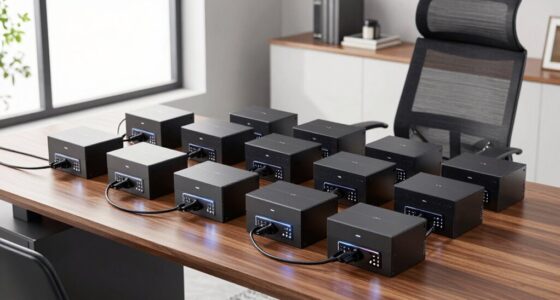
Finding a reliable, high-performance router for a small office requires balancing speed, security, and management features. The Ubiquiti UniFi Dream Machine Pro Max stands out for its enterprise-grade features in a compact form, making it ideal for growing businesses. ASUS ExpertWiFi EBG15 offers robust VPN and security features suited for sensitive environments, while the TP-Link ER7206 provides versatile multi-WAN management at a competitive price. The main tradeoffs involve balancing advanced security and management capabilities against ease of setup and cost. Continue reading for a detailed breakdown of each option and what makes them suitable for different small office needs.
Key Takeaways
- The top picks combine enterprise-grade security with multi-WAN flexibility for reliable connectivity.
- Performance and security features tend to come with higher complexity and cost, making ease of management a key factor.
- Most products excel in security, but some favor scalability or user-friendliness more than others.
- Choosing a router with multi-WAN and VPN capabilities is essential for small offices with multiple internet sources or remote access needs.
- Price and complexity vary widely; premium options are best for businesses with dedicated IT resources or higher security requirements.
| Ubiquiti UniFi Dream Machine Pro Max |  | Best Overall for Small Offices Needing High-Performance Management | Processing Power: Enhanced | Device Capacity: 2x that of Dream Machine Pro/SE | Ports: 1x 10G SFP+, 8x GbE LAN, 1x 10G SFP+, 1x 2.5 GbE WAN | VIEW ON AMAZON | See Our Full Breakdown |
| ASUS ExpertWiFi EBG15 Gigabit VPN Wired Router | 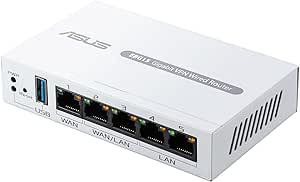 | Best for Small Business Beginners and Price-Conscious Buyers | WAN Ports: Up to 3 (Gigabit, 2 Gigabit WAN/LAN, USB WAN | Security Features: IPS, VPN, Layer 7 Firewall | Setup: App-based, Bluetooth | VIEW ON AMAZON | See Our Full Breakdown |
| TP-Link ER7206 Multi-WAN Gigabit VPN Router with SDN and Security |  | Best for Tech-Savvy Small Offices Needing Centralized Management | WAN Ports: 1x SFP, 1x Gigabit, 2x WAN/LAN, 1x Gigabit LAN | Maximum Client Devices: 150,000 | Maximum Clients: 700 | VIEW ON AMAZON | See Our Full Breakdown |
| TP-Link ER605 V2 Wired Gigabit VPN Router |  | Best for Small Offices Needing Reliable Load Balancing and Security | Number of Ports: 5 (1 WAN, 2 WAN/LAN, 2 LAN) | USB WAN Port: Yes | VPN Support: LAN-to-LAN IPsec, OpenVPN, L2TP, PPTP | VIEW ON AMAZON | See Our Full Breakdown |
| Cudy Gigabit Multi-WAN VPN Router R700 |  | Best for Compact, Multi-WAN VPN Connectivity in Small Businesses | Number of Ports: 5 | Compatible Devices: Laptop, Router | Voltage: 12V DC | VIEW ON AMAZON | See Our Full Breakdown |
| TP-Link AX1800 WiFi 6 Router (Archer AX21 V5) |  | Best Value for Small Offices Needing Fast, Reliable Wi-Fi | Technology: Wi-Fi 6 (802.11ax) | Bandwidth: 1.8 Gbps total (1200 Mbps on 5 GHz, 574 Mbps on 2.4 GHz) | Antennas: 4 high-gain antennas | VIEW ON AMAZON | See Our Full Breakdown |
| TP-Link Omada ER7412-M2 Multi-Gigabit VPN Router with Quad-core Processor and USB 3.0 Port |  | Best for Secure, High-Performance Business Network Management | WAN/LAN ports: 2× 2.5G RJ45, 8× Gigabit (including 2× SFP) | USB ports: 1× USB 3.0 | Load balancing: Yes, on up to 11 WAN ports | VIEW ON AMAZON | See Our Full Breakdown |
| premium business grade router for small office | Security Features |
|---|---|
| Ubiquiti UniFi Dream Machine P | IDS/IPS, WPA2-Enterprise |
| ASUS ExpertWiFi EBG15 Gigabit | IPS, VPN, Layer 7 Firewall |
| TP-Link ER7206 Multi-WAN Gigab | Firewall, DoS defense, filtering |
| TP-Link ER605 V2 Wired Gigabit | SPI Firewall, DoS Defense |
| Cudy Gigabit Multi-WAN VPN Rou | — |
| TP-Link AX1800 WiFi 6 Router | — |
| TP-Link Omada ER7412-M2 Multi- | SSL, IPSec, GRE, WireGuard, VPN, DoS/DDoS protection |
More Details on Our Top Picks
Ubiquiti UniFi Dream Machine Pro Max
The Ubiquiti UniFi Dream Machine Pro Max stands out for its powerful processing capabilities, dual 10G SFP+ ports, and integrated storage, making it ideal for small offices that require a centralized, scalable network with advanced security. Compared to the ASUS ExpertWiFi EBG15, it offers more robust network management and storage options, but its complexity can be daunting for less experienced users. This model’s full UniFi application suite simplifies device oversight, while the 1.3-inch touchscreen adds a layer of intuitive control. However, its higher price and infrastructure demands mean it’s better suited to offices with existing network expertise and infrastructure. Best for tech-savvy small business owners who want enterprise-grade performance in a compact form.
Pros:- High-speed 10G connectivity with multiple ports
- Built-in RAID storage for NVR recordings
- User-friendly touchscreen interface
- Comprehensive device management via UniFi OS
Cons:- Setup may be complex for beginners
- Higher price point compared to basic routers
- Requires compatible network infrastructure for optimal performance
Best for: Small offices needing high-speed, manageable, and scalable network infrastructure with integrated security and storage.
Not ideal for: Small businesses without dedicated IT staff or those seeking plug-and-play simplicity, as setup and management can be complex.
- Processing Power:Enhanced
- Device Capacity:2x that of Dream Machine Pro/SE
- Ports:1x 10G SFP+, 8x GbE LAN, 1x 10G SFP+, 1x 2.5 GbE WAN
- Storage:2x 3.5″ NVR HDD bays with RAID, 128 GB SSD
- Wireless Compatibility:Dual-Band 802.11a
- Security Features:IDS/IPS, WPA2-Enterprise
Our verdict“This is best suited for small offices that require a high-performance, manageable network with advanced security features and are prepared for a more involved setup process.”
ASUS ExpertWiFi EBG15 Gigabit VPN Wired Router
The ASUS ExpertWiFi EBG15 offers a straightforward setup with mobile app management, making it a strong choice for small offices that prioritize ease of use and security. Unlike the more complex Ubiquiti Dream Machine Pro Max, it emphasizes simplicity, with features like VLAN for added security and multiple WAN options including load balancing. Its limited hardware—single internal antenna and basic ports—means it’s not suited for very large or highly demanding networks, but it provides reliable security features, including IPS and VPN, at an accessible price point. The lack of Wi-Fi capabilities and advanced management tools makes it less ideal for expanding networks but ideal for those seeking a secure, manageable wired setup. Best for small offices that need a secure, easy-to-manage wired router with basic multi-WAN support.
Pros:- Easy setup via mobile app or web browser
- VLAN support enhances security
- Multiple WAN ports with load balancing
- Built-in intrusion prevention (IPS) and VPN
Cons:- Limited Wi-Fi capabilities
- Basic hardware features may not support very large networks
- Higher-tier advanced management features are absent
Best for: Small business owners seeking a simple, secure wired router with remote management and flexible WAN options.
Not ideal for: Larger or wireless-dependent offices, as it lacks Wi-Fi and advanced network scalability features.
- WAN Ports:Up to 3 (Gigabit, 2 Gigabit WAN/LAN, USB WAN
- Security Features:IPS, VPN, Layer 7 Firewall
- Setup:App-based, Bluetooth
- Management:Remote via ASUS ExpertWiFi app
- Wireless Compatibility:Not wireless
- Maximum Data Rate:Gigabit
Our verdict“This router is ideal for small offices that want a secure, straightforward wired network solution with flexible multi-WAN options and simple management.”
TP-Link ER7206 Multi-WAN Gigabit VPN Router with SDN and Security
The TP-Link ER7206 excels in supporting large, high-capacity networks with its multiple WAN ports and SDN compatibility, making it suitable for small offices that anticipate growth or require centralized control. Compared to the ASUS EBG15, it offers greater scalability with SDN integration, ideal for offices with existing network management systems or technical expertise. Its robust security—firewall, DoS defense, and filtering—protects against threats, but the setup process can be complex for those unfamiliar with SDN and enterprise features. This router’s high device capacity supports up to 150,000 clients, making it more suitable for growing or multi-branch offices rather than small, simple setups. Best for technically skilled teams looking for scalable, centrally managed security and high capacity.
Pros:- Supports up to 150,000 devices
- Multiple WAN ports for optimized bandwidth
- SDN compatibility for centralized management
- Advanced security including firewall and DoS defense
Cons:- Setup complexity requires technical expertise
- SDN features demand compatible controllers
- No consumer-friendly interface for non-technical users
Best for: Small offices with in-house or contracted IT staff needing a scalable, highly secure, and manageable network infrastructure.
Not ideal for: Small or less technically proficient offices seeking plug-and-play solutions or basic internet sharing.
- WAN Ports:1x SFP, 1x Gigabit, 2x WAN/LAN, 1x Gigabit LAN
- Maximum Client Devices:150,000
- Maximum Clients:700
- SDN Compatibility:Yes
- VPN Support:IPsec, OpenVPN, L2TP, PPTP
- Security Features:Firewall, DoS defense, filtering
Our verdict“This router is best suited for small offices with dedicated IT resources needing scalable, secure, and centrally managed network solutions.”
TP-Link ER605 V2 Wired Gigabit VPN Router
The TP-Link ER605 V2 offers a balanced mix of security, multiple WAN ports, and load balancing, making it an excellent choice for small offices that need dependable internet uptime. While it lacks Wi-Fi, its four Ethernet ports support multiple broadband sources or backup lines, similar to the Cudy R700 but with a more straightforward setup. Compared to the TP-Link ER7206, it’s less complex and more affordable, yet still provides essential VPN and security features such as IPsec and firewall. Its focus on SMB security and load balancing makes it ideal for offices that depend on continuous connectivity but don’t require the advanced SDN or ultra-high capacity of larger enterprise routers. Best for small to medium offices prioritizing reliable internet and security without enterprise complexity.
Pros:- Multiple WAN ports for load balancing and backup
- Supports VPN protocols including IPsec and OpenVPN
- Simple setup for SMBs
- Reliable security features
Cons:- No Wi-Fi included
- Limited advanced management features
- Less scalable for large networks
Best for: Small offices needing stable, secure internet with load balancing and backup options but without extensive scalability demands.
Not ideal for: Large, high-traffic offices or those needing SDN management or Wi-Fi support.
- Number of Ports:5 (1 WAN, 2 WAN/LAN, 2 LAN)
- USB WAN Port:Yes
- VPN Support:LAN-to-LAN IPsec, OpenVPN, L2TP, PPTP
- Security Features:SPI Firewall, DoS Defense
- Standards and Protocols:IEEE 802.3, 802.3u, 802.3ab
- Coverage:Wired only
Our verdict“This router fits small offices looking for a dependable, secure internet connection with load balancing and backup, without enterprise-level complexity.”
Cudy Gigabit Multi-WAN VPN Router R700
The Cudy R700 excels in providing a compact, durable solution for small businesses that need four WAN ports with load balancing and advanced VPN protocols including WireGuard and IPsec. Unlike the TP-Link ER605 V2, it offers a more rugged design and supports multiple VPN protocols for remote access, making it ideal for small offices with remote workers or multiple internet sources. Its small size and simple interface make it easier to deploy in tight spaces, but it lacks Wi-Fi and more advanced network management features. This device is perfect for those who want secure, multi-line internet access without extensive configuration complexity, but it requires familiarity with VPN setup. Best for small offices that need reliable, multi-WAN VPN connectivity in a compact form factor.
Pros:- Supports VPN protocols including WireGuard and OpenVPN
- Load balancing across four WAN ports
- Compact, durable design
- Reliable internet access control
Cons:- No Wi-Fi capabilities
- Requires VPN setup knowledge
- Limited advanced features beyond basic VPN and load balancing
Best for: Small businesses needing secure, multi-WAN internet with VPN support and a small footprint.
Not ideal for: Offices requiring Wi-Fi support or advanced network management features.
- Number of Ports:5
- Compatible Devices:Laptop, Router
- Voltage:12V DC
- Data Transfer Rate:1 Gbps
- Switch Type:Ethernet
- Color:Gray
- Item Weight:455 grams
Our verdict“This router suits small offices that need secure, multi-WAN VPN connectivity with a small, rugged design and straightforward setup for remote or multi-line internet access.”
TP-Link AX1800 WiFi 6 Router (Archer AX21 V5)
The TP-Link AX1800 WiFi 6 Router stands out for delivering solid dual-band Wi-Fi 6 performance at a competitive price, making it ideal for small offices that prioritize high-speed wireless connectivity. Compared with enterprise-focused options like the TP-Link Omada ER7412-M2, this model offers simpler setup and more cost-effective coverage, but it lacks support for the 6 GHz band, which could limit future-proofing as Wi-Fi 6E devices become more common. Its four high-gain antennas and beamforming ensure extensive coverage, while OFDMA technology manages multiple devices efficiently, preventing congestion during peak usage. However, environments with many physical obstacles or interference might see performance dips, and it doesn’t support Wi-Fi 6E’s 6 GHz band, which could be a drawback for tech-savvy users seeking maximum speed and capacity.
Pros:- Fast dual-band Wi-Fi 6 speeds support streaming, gaming, and file transfers simultaneously
- Supports multiple devices efficiently with OFDMA technology
- Extensive coverage thanks to beamforming and high-gain antennas
- Includes advanced security features and VPN support
Cons:- Lacks support for Wi-Fi 6E’s 6 GHz band, limiting future expansion
- Performance can vary depending on environmental obstacles
Best for: Small office teams needing reliable, high-speed Wi-Fi with simple setup and good coverage.
Not ideal for: Businesses requiring advanced security features and multi-gigabit wired connections, as this router is primarily focused on wireless performance.
- Technology:Wi-Fi 6 (802.11ax)
- Bandwidth:1.8 Gbps total (1200 Mbps on 5 GHz, 574 Mbps on 2.4 GHz)
- Antennas:4 high-gain antennas
- Security:Advanced security with VPN support
- Compatibility:Works with all major ISPs
Our verdict“This router makes the most sense for small offices that need strong wireless performance without enterprise-level complexity or the latest Wi-Fi 6E features.”
TP-Link Omada ER7412-M2 Multi-Gigabit VPN Router with Quad-core Processor and USB 3.0 Port
The TP-Link Omada ER7412-M2 is tailored for businesses that need robust, reliable wired connections combined with advanced security. Its dual 2.5G WAN ports and multiple Gigabit ports make it a clear choice over the TP-Link AX1800 when high-speed wired connectivity and load balancing are priorities. The quad-core processor handles demanding tasks efficiently, while support for a broad range of VPN protocols ensures secure remote access. Compared to the less complex Wi-Fi-focused AX1800, this router offers extensive security controls and network management features, but its setup is more involved and may require technical know-how. It’s best suited for small offices with a dedicated IT team or those with high security and performance needs, rather than casual or very small setups.
Pros:- High-speed dual 2.5G WAN ports for rapid internet access
- Advanced security features including multiple VPN protocols
- Load balancing optimizes bandwidth across multiple connections
- Powerful quad-core processor handles complex tasks smoothly
Cons:- Setup can be complex, requiring technical expertise
- Designed mainly for business or enterprise environments, not casual users
Best for: Small businesses that rely on secure, high-speed wired connections and need advanced network management features.
Not ideal for: Small offices primarily seeking simple wireless solutions without requiring extensive security or multi-gigabit wired ports.
- WAN/LAN ports:2× 2.5G RJ45, 8× Gigabit (including 2× SFP)
- USB ports:1× USB 3.0
- Load balancing:Yes, on up to 11 WAN ports
- Security features:SSL, IPSec, GRE, WireGuard, VPN, DoS/DDoS protection
- Processor:Quad-core
Our verdict“This router is ideal for small offices that prioritize security, high-speed wired connections, and sophisticated network management over simple wireless coverage.”
How We Picked
These products were evaluated based on their performance in handling multiple devices, security features, ease of management, scalability, and build quality. The selection process prioritized routers that are truly designed for small offices with demanding network needs, rather than consumer-grade equipment. We ranked the options by how well they balance enterprise features with usability and value, ensuring they meet the expectations of a business environment without unnecessary complexity. The top picks stand out for their reliability, security, and ability to handle multiple WAN connections or VPN setups, which are critical for small business operations.| premium business grade router for small office | Security Features |
|---|---|
| Ubiquiti UniFi Dream Machine P | IDS/IPS, WPA2-Enterprise |
| ASUS ExpertWiFi EBG15 Gigabit | IPS, VPN, Layer 7 Firewall |
| TP-Link ER7206 Multi-WAN Gigab | Firewall, DoS defense, filtering |
| TP-Link ER605 V2 Wired Gigabit | SPI Firewall, DoS Defense |
| Cudy Gigabit Multi-WAN VPN Rou | — |
| TP-Link AX1800 WiFi 6 Router | — |
| TP-Link Omada ER7412-M2 Multi- | SSL, IPSec, GRE, WireGuard, VPN, DoS/DDoS protection |
Factors to Consider When Choosing Premium Business Grade Router For Small Offices
When choosing a premium business-grade router for a small office, several key factors can influence your decision. It’s important to look beyond basic speed and consider security, management, and scalability to ensure your network can grow and adapt as your business evolves. Many buyers overlook the importance of multi-WAN support for redundancy or the ability to handle multiple VPNs securely. Balancing price against features is also critical, as some high-end routers include capabilities you may never need, while others may lack essential features. The right choice depends on your specific network environment, security needs, and future growth plans.Security and Firewall Capabilities
For small offices, security features like intrusion prevention, VPN support, and advanced firewalls are vital. Opting for a router with enterprise-grade security prevents potential breaches and ensures compliance with data protection standards. However, higher security often comes with increased complexity in setup and management, so consider your team’s technical expertise. Choosing a device with user-friendly management tools can reduce operational overhead while maintaining robust defenses.
Multi-WAN Support and Redundancy
Multiple WAN ports provide failover capabilities, ensuring continuous connectivity if one internet source drops. For small businesses relying on internet uptime, routers with multi-WAN are essential. However, this feature adds complexity and cost. Evaluate whether your office needs true redundancy or if a single high-speed connection suffices, and match that with a router that offers the appropriate level of support without unnecessary expense.
Performance and Throughput
Speed capacity is fundamental, especially if your office handles large data transfers or runs cloud-based applications. Look for routers that support Wi-Fi 6 or multi-gigabit Ethernet to future-proof your network. Keep in mind that real-world throughput depends on your ISP speed, device density, and internal network setup. Overestimating your needs can lead to paying for performance you won’t utilize, so assess your typical network load carefully.
Ease of Management and Scalability
Management tools like remote access, cloud management, and user-friendly interfaces simplify ongoing maintenance. Scalable models support adding more devices or expanding features without replacing hardware. Consider whether your team has dedicated IT support or prefers a plug-and-play solution. Investing in routers with centralized management can save time and reduce errors as your network grows.
Price and Total Cost of Ownership
Premium routers come with a higher initial cost but often reduce operational expenses through better security and management features. Beware of models with hidden costs, such as subscription fees for management software or firmware updates. Balance your budget against the need for advanced features, and prioritize those that deliver tangible benefits for your small office environment.
Frequently Asked Questions
Do I really need a multi-WAN router for my small office?
If your business depends heavily on internet uptime, a multi-WAN router offers redundancy by connecting to multiple internet sources. This setup minimizes downtime caused by ISP issues or network failures, ensuring continuous operation. For small offices with critical online services or remote work, investing in multi-WAN support can be a safeguard against productivity loss. However, for less critical environments, a single high-quality connection might suffice, simplifying setup and reducing costs.
How important are enterprise security features in a small office router?
Security features like advanced firewalls, intrusion detection, and VPN support are vital for protecting sensitive business data. Even small offices are targets for cyberattacks, making enterprise-grade security a wise investment. These features help prevent breaches, malware, and unauthorized access, which could otherwise cause significant business disruption. While they may add complexity, many routers now offer management interfaces that simplify security configuration, making enterprise features accessible even for smaller teams.
Is Wi-Fi 6 necessary for small offices?
Wi-Fi 6 offers faster speeds, better network efficiency, and improved performance in crowded environments, which can benefit small offices with many connected devices. While not strictly necessary if your current devices only support Wi-Fi 5, adopting Wi-Fi 6 prepares your network for future device upgrades. It also reduces latency and improves coverage, which can enhance overall productivity. If your budget allows, choosing a Wi-Fi 6-compatible router provides a degree of future-proofing that makes sense for growing businesses.
Should I prioritize ease of management over advanced features?
For small offices without dedicated IT staff, ease of management is often more valuable than complex features. Routers with cloud-based management tools or straightforward user interfaces save time and reduce configuration errors. Conversely, if your team has technical expertise, you might prefer more advanced options for customization and security. Balancing these needs depends on your team’s skills and the importance of advanced security or scalability features.
How much should I expect to pay for a business-grade router?
Prices for premium small office routers generally range from around $200 to over $600, depending on features. Budget models may lack critical security or multi-WAN support, while higher-end options include comprehensive security, multiple WAN ports, and management features. Consider investing in a model that matches your current needs but also allows room for future expansion. Spending more upfront can reduce the need for costly upgrades or troubleshooting down the line.
Conclusion
For most small offices, the Ubiquiti UniFi Dream Machine Pro Max offers an excellent balance of performance, security, and manageability, making it the best overall choice—especially for growing businesses with technical resources. If security and remote management are top priorities, the ASUS ExpertWiFi EBG15 is a strong candidate. The TP-Link ER7206 stands out for those needing flexible multi-WAN support at a competitive price. For offices prioritizing Wi-Fi 6 and ease of use, the TP-Link AX1800 provides solid performance with simpler setup. Ultimately, your choice should align with your specific needs: choose the top overall pick for balanced features, the best value for budget-conscious buyers, and premium options for advanced security and scalability. Beginners should focus on models with intuitive interfaces, while larger or security-sensitive offices should prioritize enterprise-grade features.