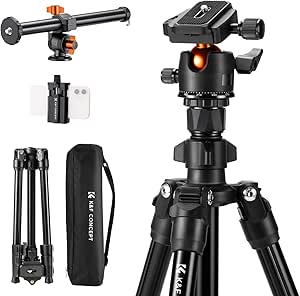
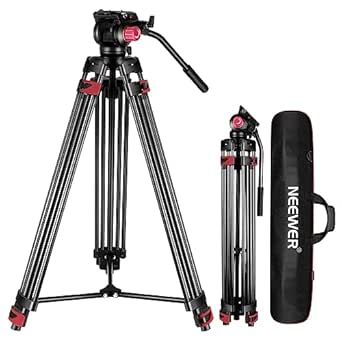
Choosing the right professional camera tripod for product photography requires balancing stability with reach. The K&F Concept 90” Ultra High Horizontal Overhead Tripod stands out as the best overall pick for its dedicated overhead arm, which solves the most common framing challenge in flat-lay work. For those needing smooth video integration or heavy-load capacity, the NEEWER 79-inch Video Tripod with Fluid Head offers superior pan-and-tilt control compared to standard ball heads. While lightweight aluminum models like the Amazon Basics 50-inch are tempting for portability, they often lack the rigidity needed for macro lens extensions. This guide breaks down which stands deliver the necessary stability for high-resolution product shots and which are better suited for casual use.

Get business pricing on office and shipping supplies
- Business-only prices and quantity discounts
- Tax-exempt purchasing
- Multiple users, one account, clear invoices
Key Takeaways
- Overhead capability is the primary differentiator; dedicated horizontal arms (like the K&F Concept 90”) provide consistent flat-lay angles that standard tripods cannot match without awkward counterweighting.
- Fluid heads are unnecessary for static product stills but essential if you shoot video walk-arounds; ball heads offer faster repositioning for multiple angles but can slip under heavy macro lenses.
- Height matters more than weight capacity for close-up product work; reaching 90+ inches allows you to shoot tall items or complex setups from above without needing a ladder.
- Carbon fiber is rarely needed for studio product photography; aluminum provides sufficient rigidity for stationary setups at a fraction of the cost, provided the leg locks are secure.
- Quick-release plates are a workflow bottleneck; Arca-Swiss compatible plates allow for faster mounting and unmounting compared to proprietary screw-in systems found on budget models.





| professional camera tripod for product photography | Material | Weight | Maximum height |
|---|---|---|---|
| K&F Concept 64 inch/163cm Ligh | Aluminum | 1.15 kg | 163 cm |
| K&F CONCEPT 90”/230cm Ultra H | — | 2 kg | 230 cm |
| CamboFOTO 74-Inch Camera Tripo | Aluminum | 2.8 lb | — |
| CAMBOFOTO 80" DSLR Camera Trip | Aluminum alloy | 3.35 lb | 80 inches |
| 71-inch Aluminum Camera Tripod | Aluminum-magnesium alloy and engineering plastic | 1.4 lb | 71 inches |
| K&F CONCEPT 75" Aluminum Camer | Aluminum | 2.6 lb / 1.18 kg | — |
| ULANZI MT-89 Extendable Tripod | Aluminum alloy | 1.31 lb | 82 in |
| UBeesize 74" Camera Tripod wit | Not specified | — | — |
| K&F Concept 76-inch Overhead C | Aluminum | 1,650 g | 195 cm |
| Amazon Basics 50-inch Lightwei | Aluminum | 1.23 lb | 50 in / 127 cm |
| NEEWER 79-inch / 200cm Heavy D | Aluminum alloy | 5.58 kg | 200 cm |
| NEWEER 90 Inch Tall Overhead H | Metal alloy | Not specified | — |
| K&F CONCEPT 80" Video Tripod w | Aluminum alloy | — | — |
| CAMBOFOTO 73" Camera Tripod an | Aluminum alloy | 3.3 lb | — |
More Details on Our Top Picks
K&F Concept 64 inch/163cm Lightweight Aluminum Travel Camera Tripod
For tabletop product work on the road, I’d choose this K&F Concept over the taller K&F CONCEPT 90”/230cm Ultra High Horizontal Overhead Camera Tripod when packability matters more than overhead reach. Its 1.15 kg weight and 39.5 cm folded size make it easier to carry between shoots, while the ball head allows quick reframing of small objects. The stated 8 kg load capacity gives it more headroom than the lightweight phone-focused options here, though stability still depends on the camera and lens combination. Four-section legs and flip locks support fast setup, but the maximum height of 163 cm is less useful for standing-height setups, and this model lacks the overhead arm that makes the 90-inch option better for flat lays. I’d favor it for compact kits, not large studio rigs.
Pros:- Light 1.15 kg build and compact 39.5 cm folded size suit travel shoots.
- Ball head supports quick framing changes for varied product angles.
- Stated 8 kg load capacity accommodates a broad range of camera setups.
- Quick flip leg locks help speed up setup and repositioning.
Cons:- 163 cm maximum height is limiting for some standing-height compositions.
- No horizontal overhead column is listed for direct top-down product photography.
- Four leg sections require more adjustments than a simpler leg design.
Best for: Product photographers traveling with a compact camera kit who need a portable tripod for eye-level and tabletop framing.
Not ideal for: Photographers who regularly shoot overhead flat lays or need a tall stand for standing-height studio work.
- Maximum height:163 cm
- Minimum height:52 cm
- Folded size:39.5 cm
- Weight:1.15 kg
- Load capacity:8 kg
- Head type:Ball head
- Material:Aluminum
- Leg sections:4
Our verdict“Choose this when a portable, capable ball-head tripod matters more than extra height or dedicated overhead framing.”
K&F CONCEPT 90”/230cm Ultra High Horizontal Overhead Camera Tripod
When the brief calls for repeatable top-down views, this is the most purpose-built choice in this group. Its horizontal overhead capability and 230 cm maximum height give me more options for arranging lights and shooting larger layouts than the compact K&F Concept 64-inch travel tripod. The 10 kg load capacity also offers more stated support than the CamboFOTO 74-inch model, which is better framed as a lighter general-purpose stand. Flexible leg angles and the detachable monopod add ways to work around a set, but they also make setup more involved; I’d allow time to learn the configurations before a tight product shoot. At 2 kg, it is portable for an overhead design, yet less convenient than a compact travel tripod for frequent carry. Its role is controlled studio composition, not the simplest grab-and-go kit.
Pros:- Overhead shooting design supports top-down product compositions.
- 230 cm maximum height gives flexibility for elevated framing.
- 10 kg load capacity provides more stated headroom than lighter options in this batch.
- Detachable monopod and adjustable leg angles expand setup choices.
Cons:- More complex configuration can slow setup until the adjustments are familiar.
- At 2 kg, it is heavier than the compact travel-oriented models here.
- Its tall, extended configurations call for careful positioning around a product set.
Best for: Product photographers building overhead flat lays or photographing larger arrangements who need extra height and flexible leg positioning.
Not ideal for: Travel-first shooters who want the lightest, quickest tripod or photographers who prefer a simple setup with few adjustments.
- Maximum height:230 cm
- Collapsed size:54 cm
- Weight:2 kg
- Load capacity:10 kg
- Center column diameter:28 mm
- Leg sections:4
- Included configuration:Detachable monopod and overhead shooting capability
Our verdict“Pick this for overhead product work and flexible studio positioning, but choose a simpler travel tripod if portability and speed lead.”
CamboFOTO 74-Inch Camera Tripod with Phone Mount
This CamboFOTO makes sense for creators who switch between a camera and a phone while photographing products, rather than for heavy studio rigs. Its included phone mount and quick-release plate reduce the friction of changing devices, and the 360° pan-and-tilt head offers flexible framing for stills, streams, or process clips. Compared with the CAMBOFOTO 80″ DSLR Camera Tripod & Monopod, it is lighter at 2.8 lb but gives up load capacity and the listed macro-friendly inverted center column. The 8.8 lb maximum load is adequate for many modest camera setups, yet leaves less room for heavier bodies and lenses than the 15 lb 80-inch model. Its 20–74-inch range covers many working heights, though the product data does not list weather protection or an overhead arm. I’d choose it for mixed-device content, not demanding top-down studio work.
Pros:- Includes both a phone mount and quick-release plate for switching devices.
- 2.8 lb weight is manageable for portable shoots.
- 20–74-inch height range supports varied camera positions.
- Pan-and-tilt head accommodates flexible framing.
Cons:- 8.8 lb maximum load is below the 15 lb capacity listed for the CAMBOFOTO 80-inch model.
- No horizontal overhead column is listed for direct top-down compositions.
- Weather resistance is not specified in the supplied product details.
Best for: Solo sellers and small content teams who alternate between a lightweight camera and smartphone for product photos and live content.
Not ideal for: Photographers using heavier camera-and-lens combinations or needing an overhead arm for flat-lay work.
- Height range:20–74 inches
- Weight:2.8 lb
- Maximum load:8.8 lb
- Material:Aluminum
- Head type:360° pan and tilt
- Included accessories:Carry bag, quick-release plate, phone mount
Our verdict“Choose this for light camera-and-phone product content, but move to the CAMBOFOTO 80-inch model for more load capacity and macro positioning.”
CAMBOFOTO 80″ DSLR Camera Tripod & Monopod with 360° Ball Head
The standout product-photography detail here is the inverting center column, which can help bring a camera closer to small subjects without requiring the dedicated overhead structure of the K&F CONCEPT 90-inch tripod. I’d favor this CAMBOFOTO for close tabletop angles and changing between tripod and monopod setups; its 15 lb load capacity also exceeds the listed limits of the CamboFOTO 74-inch and 71-inch models. At 3.35 lb, it remains reasonably portable, and the 17.3-inch folded length is useful for packing. That versatility comes with a more involved setup, and the product data advises careful handling to avoid over-tightening. Its 80-inch reach is useful, but it does not replace a purpose-built horizontal overhead tripod for broad flat lays. This is the more adaptable camera-support choice, not the simplest one.
Pros:- Inverting center column supports low and close macro-style framing.
- 15 lb load capacity exceeds the listed limits of several lighter models in this batch.
- Converts to a monopod or hiking pole for alternate support needs.
- Folds to 17.3 inches and weighs 3.35 lb for a capable, portable setup.
Cons:- More adjustments and assembly can make setup less straightforward.
- Care is needed when tightening components, according to the supplied product details.
- No horizontal overhead arm is listed for full top-down flat lays.
Best for: Product photographers who work with heavier camera setups, close-up tabletop angles, and occasional monopod shooting.
Not ideal for: Photographers whose main requirement is a dedicated horizontal boom for large top-down scenes or who want the simplest setup.
- Model:TM265A
- Maximum height:80 inches
- Folded length:17.3 inches
- Weight:3.35 lb
- Load capacity:15 lb
- Material:Aluminum alloy
- Center column:Inverts for macro photography
- Leg construction:4 extendable sections with quick-release locks
Our verdict“Pick this for adaptable macro and camera support, while choosing the K&F 90-inch model for dedicated overhead compositions.”
71-inch Aluminum Camera Tripod with Remote, Phone Holder, and Carrying Bag
At just 1.4 lb, this tripod is the easiest option here to carry for quick product clips and phone-based storefront content. Its phone holder, Bluetooth remote, and detachable center-column extension make it convenient for solo framing, while the CamboFOTO 74-inch tripod is the stronger alternative for buyers who want a more camera-oriented kit with a quick-release plate and higher stated load capacity. This model’s 6.6 lb limit is the main boundary: it suits phones and lighter camera setups better than a body paired with a substantial lens. The 71-inch maximum height is useful, but extended height can reduce stability if the setup is not balanced. I’d treat it as a portable content stand rather than a professional support for demanding product-camera rigs or overhead work.
Pros:- 1.4 lb weight makes it the lightest listed option in this batch.
- Bluetooth remote supports solo shooting without touching the phone or camera.
- Includes a phone holder and carrying bag.
- Detachable center column extends up to 25 inches for additional framing options.
Cons:- 6.6 lb maximum load limits heavier camera setups.
- Tall extension can reduce stability if the rig is not balanced.
- No horizontal overhead arm is listed for top-down product photography.
Best for: Phone-first sellers and solo creators who need a very light stand, remote shutter control, and quick setup for product clips.
Not ideal for: Photographers using heavier camera-and-lens combinations or needing a dedicated overhead column for flat-lay images.
- Maximum height:71 inches
- Minimum height:15 inches
- Weight:1.4 lb
- Maximum load:6.6 lb
- Material:Aluminum-magnesium alloy and engineering plastic
- Center column extension:Detachable; extends up to 25 inches
- Included accessories:Phone holder, Bluetooth remote, carrying bag, user manual
Our verdict“Choose this for portable, phone-led product content, but select a higher-capacity tripod for heavier cameras and lenses.”
K&F CONCEPT 75″ Aluminum Camera Tripod, Lightweight and Compact for Travel
For small tabletop products and mobile-camera setups, this K&F CONCEPT stands out for its 75-inch reach without much travel weight: it weighs 2.6 pounds and folds to 19.6 inches. The 360° pan head helps frame repeatable angles, while phone and tablet compatibility plus a Bluetooth remote can make overhead or hands-free capture easier. Compared with the Amazon Basics 50-inch tripod, it gives you more working height and mobile-device flexibility; the Amazon Basics option, however, specifies a 4.4-pound load limit and includes a camera quick-release plate. This K&F’s product data does not provide a load capacity, so I would not assume it can safely support a heavier camera-and-lens setup. Its compact portability suits location work, but buyers seeking a clearly rated studio support should choose a model with a stated capacity.
Pros:- Light 2.6-pound build and 19.6-inch folded length suit travel and storage.
- Extends to 75 inches for more flexible camera placement.
- 360° pan head supports controlled framing adjustments.
- Phone and tablet compatibility and Bluetooth remote add hands-free shooting options.
Cons:- No load capacity is specified, making heavier camera setups difficult to judge.
- Setup may take more effort than a simpler travel tripod.
- Bluetooth remote performance can vary with surroundings.
Best for: Product photographers who travel between locations and mainly use a smartphone, tablet, or lightweight camera for small-item shoots.
Not ideal for: Photographers using heavier camera-and-lens combinations who need a published load capacity for stable, repeatable studio framing.
- Material:Aluminum
- Weight:2.6 lb / 1.18 kg
- Folded size:19.6 in / 50 cm
- Extended height:Up to 75 in / 190 cm
- Minimum height:18.9 in / 48 cm
- Compatibility:Smartphones and tablets
- Remote range:Up to 472 in
Our verdict“Choose this K&F CONCEPT for portable product shoots with a phone or lightweight camera, but skip it if you need a clearly rated support for heavier gear.”
ULANZI MT-89 Extendable Tripod Aluminum 82″ Portable Adjustable Light Stand with 1/4″ Screw Quick Release for Camera and Smartphone
The ULANZI MT-89 is the most compact carry option in this group, weighing 1.31 pounds and folding to just 15.16 inches. That makes it appealing for photographers who need to position a phone or small camera above a product without carrying a full-size studio stand. Its 82-inch maximum height exceeds the K&F CONCEPT 75-inch tripod’s reach, but the MT-89’s 2.2-pound load limit narrows its usefulness: a heavier camera can exceed that rating, particularly at full extension. The stated 180° ball-head rotation also offers less movement than the 360° head on the K&F option. I see this as a portable support for light cameras, phones, or lighting—not a primary stand for a substantial product-photography rig. At full height, some light setups may also limit head adjustment.
Pros:- Very light at 1.31 pounds and folds to 15.16 inches.
- 82-inch maximum height gives more reach than the K&F CONCEPT 75-inch model.
- Works with cameras, smartphones, and lighting equipment.
- Adjustable height and angle suit varied small-product framing.
Cons:- 2.2-pound load capacity excludes many heavier camera setups.
- Ball-head rotation is limited to 180°.
- Head adjustment can be restricted with some lights when fully extended.
Best for: Mobile product creators and photographers carrying a phone or camera-and-accessory setup that stays within the 2.2-pound load limit.
Not ideal for: Studio photographers using heavier cameras or lighting gear, especially when they need a freely adjustable head at full extension.
- Material:Aluminum alloy
- Maximum height:82 in
- Folded height:15.16 in
- Weight:1.31 lb
- Load capacity:Up to 2.2 lb
- Leg locking:Red locking ring
- Ball-head rotation:180°
Our verdict“Pick the MT-89 for a very light phone or camera setup that benefits from extra height, not for heavier studio equipment.”
UBeesize 74″ Camera Tripod with Phone Holder and Remote, Heavy Duty Stand with Portable Bag for Phone and Camera
The UBeesize is a straightforward starter choice for product photography built around a phone or a mix of phone and camera use. Its 74-inch height, phone holder, remote, and carrying bag put useful shooting accessories together, while the dual-handle design is intended to help with controlled positioning and panoramic movement. Compared with the K&F CONCEPT 75-inch tripod, it offers a specified phone-holder size range and a shorter stated remote range; the K&F provides aluminum construction and a 360° pan head in its product data. UBeesize does not specify material or load capacity, which makes it harder to judge stability with a heavier camera, macro lens, or overhead arrangement. I would favor it for simple, light-duty setups and phone-led catalog images, not for a rig where support capacity and build details need to be known.
Pros:- Includes a universal phone holder and wireless remote.
- 74-inch height offers flexible positioning for product and general photography.
- Dual-handle design supports controlled adjustments.
- Portable bag is included for storage and transport.
Cons:- Material and load capacity are not specified.
- Build-quality details are limited, making heavier-use suitability uncertain.
- Remote range is specified at up to 30 feet, shorter than the K&F CONCEPT 75-inch model’s stated range.
Best for: New product sellers who shoot small items on a smartphone and want a phone holder, remote, and carry bag in one setup.
Not ideal for: Photographers mounting a heavier camera or building overhead compositions who need a stated load limit and detailed construction information.
- Height:74 in
- Material:Not specified
- Compatibility:DSLR cameras, smartphones, projectors, webcams, binoculars, and spotting scopes
- Phone holder size:2.8–5.7 in
- Remote range:Up to 30 ft
- Warranty:1 year
- Included accessories:Phone holder, remote, and portable bag
Our verdict“Choose UBeesize for an accessory-rich, phone-first starter setup, but select a tripod with a stated load capacity for heavier product-photography gear.”
K&F Concept 76-inch Overhead Camera Tripod
For product photography, the removable extension boom is the defining advantage here: it can position a camera over a work surface for flat lays, packaging shots, or detailed tabletop arrangements without moving the legs into the frame. The 360° rotating boom and 28mm metal ball head offer more compositional control than the simpler support of the Amazon Basics 50-inch tripod, which is lighter but lacks an overhead arm in its listed features. This K&F also gives buyers a stated 8 kg load capacity, useful when comparing support options, though that rating does not make it suitable for every heavy professional rig. At 1,650 g it remains portable, but its 44 cm minimum height and 76-inch maximum do not replace a low tabletop support or a taller stand when those positions are needed. It is best for deliberate overhead work in dry conditions.
Pros:- Removable 360° extension boom enables overhead product framing.
- 28mm metal ball head supports precise positioning and panning.
- Published 8 kg load capacity makes equipment matching clearer.
- Folds to 15.3 inches and weighs 1,650 g for transport.
Cons:- Not water resistant, limiting use in wet conditions.
- Minimum height of 44 cm may be too high for low tabletop compositions.
- Maximum height may not suit very tall shooting positions.
Best for: Product photographers who regularly make overhead flat lays or need a boom arm to keep tripod legs clear of the shooting area.
Not ideal for: Photographers who need water-resistant support, an especially low tabletop position, or equipment support beyond the stated 8 kg capacity.
- Material:Aluminum
- Maximum height:195 cm
- Minimum height:44 cm
- Folded size:15.3 in
- Weight:1,650 g
- Load capacity:8 kg / 17.6 lb
- Head type:28mm metal ball head
- Leg sections:4
Our verdict“Choose this K&F Concept when overhead product angles are a regular need and your camera setup stays within its 8 kg capacity.”
Amazon Basics 50-inch Lightweight Portable Camera Tripod Stand with Quick-Release Plate, Adjustable Height, Aluminum, for Travel Photography
The Amazon Basics tripod is the least specialized option here, but its listed essentials make it easy to match to a modest product-photography kit: an aluminum frame, 3-way head, quick-release plate, carrying bag, and a stated 4.4-pound maximum load. At 1.23 pounds, it is lighter than the K&F CONCEPT 75-inch tripod, though it reaches only 50 inches and does not list phone or tablet compatibility. That shorter working height can be perfectly workable for tabletop images, especially when the camera is aimed at a dedicated product surface, but it gives less flexibility for standing-height compositions. The stated load limit is helpful, yet it still rules out heavier cameras and long lenses. I would choose it for basic travel and small-camera shooting; photographers who need overhead angles or more height should look to the K&F Concept overhead model instead.
Pros:- Lightweight 1.23-pound aluminum construction is easy to carry.
- Quick-release plate speeds camera mounting and removal.
- 3-way head supports tilt and swivel adjustments.
- Includes a zippered storage bag and specifies a 4.4-pound load limit.
Cons:- 50-inch maximum height is lower than the K&F CONCEPT 75-inch and overhead options.
- 4.4-pound load limit restricts heavier cameras and long lenses.
- Basic feature set lacks a listed phone holder or overhead arm.
Best for: Traveling beginners using a compact camera for tabletop products who want a simple tripod with a stated load limit and included bag.
Not ideal for: Photographers with heavier DSLR and lens combinations, or those who need a tall stand, phone holder, or overhead boom.
- Material:Aluminum
- Maximum height:50 in / 127 cm
- Weight:1.23 lb
- Maximum load:4.4 lb
- Head type:3-way head
- Included components:Tripod stand with bag
- Model number:WT3130T+WT3111H
- Color:Champagne
Our verdict“Choose this Amazon Basics tripod for lightweight tabletop work and travel, but move to a taller or boom-equipped model for broader studio framing.”
NEEWER 79-inch / 200cm Heavy Duty Aluminum Alloy Video Tripod with Fluid Head
For product setups that also need smooth camera moves or frequent reframing, this fluid-head tripod offers a useful alternative to the ball-head flexibility of the NEWEER TP63. Its head pans 360° and tilts from -70° to 90°, while the 200cm maximum height gives room for elevated views of larger products. The aluminum construction and 8kg load limit suit substantial camera kits, though that capacity is lower than the TP63’s stated 10kg. The tradeoff is portability: at 5.58kg and 91cm folded, it is a studio-leaning support rather than an easy everyday carry. For still-life work that only needs locked framing, a lighter tripod may be more convenient; this one makes more sense when fluid movement is part of the shot.
Pros:- Fluid head supports 360° panning and -70° to 90° tilt for controlled reframing.
- Extends to 200cm for elevated product views.
- Aluminum alloy construction and 8kg load capacity suit many DSLR and camcorder setups.
Cons:- At 5.58kg, it is heavy for frequent transport.
- Its 91cm folded length is bulky for travel and tight storage.
- The 8kg capacity is below the NEWEER TP63’s stated 10kg limit.
Best for: Studio product photographers and small video teams using a DSLR or camcorder who want controlled pans, tilt, and a tall working height.
Not ideal for: Traveling product photographers or users with larger rigs above 8kg who need a compact tripod to carry between locations.
- Material:Aluminum alloy
- Maximum height:200 cm
- Minimum height:88 cm
- Folded size:91 cm
- Weight:5.58 kg
- Load capacity:8 kg
- Head type:Fluid head
- Leg sections:3
Our verdict“Choose this NEEWER when smooth fluid-head movement and studio height matter more than a light, compact carry.”
NEWEER 90 Inch Tall Overhead Horizontal Camera Tripod Monopod, TP63
The TP63 is the most adaptable choice here for overhead product photography: its adjustable center column can help position a camera above a tabletop, while the tripod can also convert to a monopod. That flexibility sets it apart from the NEEWER 79-inch fluid-head model, which is better suited to smooth pans and tilt than to unusual camera placement. The TP63 reaches 90.6 inches and supports up to 10kg, giving it useful height and capacity for many still-camera kits. Its Arca-type quick release also suits photographers who already use compatible plates. The compromises are practical: product information does not specify its weight, and the center-column and conversion features may take more setup than a straightforward tripod. Choose it for adaptable positioning, not the simplest workflow.
Pros:- Adjustable center column supports flexible overhead shooting positions.
- Reaches 90.6 inches for elevated framing.
- Converts to a monopod for alternative camera support.
- 10kg stated load capacity and Arca-type quick-release plate support compatible camera setups.
Cons:- Product data does not specify the tripod’s weight.
- The adjustable column and monopod conversion can make setup less straightforward.
- The ball head is less suited to controlled video pans than the fluid head on the NEEWER 79-inch model.
Best for: Tabletop and small-product photographers who need an overhead camera position, tall reach, and the option to use a monopod.
Not ideal for: Photographers who want a quick, uncomplicated locked-off setup or need a known packed weight before planning frequent travel.
- Height range:25.2–90.6 inches
- Maximum load:10 kg (22 lb)
- Material:Metal alloy
- Head type:360° panoramic ball head
- Maximum monopod height:94.5 inches
- Quick-release plate:Arca type
- Leg angles:Adjustable
- Weight:Not specified
Our verdict“Pick the TP63 if overhead positioning and flexible support matter more than a simpler setup or fluid video movement.”
K&F CONCEPT 80″ Video Tripod with Fluid Head
The K&F CONCEPT pairs a fluid head with a stated 17.6lb load capacity, making it a strong fit for product photographers who also film demos or need smooth reframing. Compared with the NEEWER 79-inch video tripod, it offers substantially more stated load capacity and includes a carrying bag, yet its maximum height is slightly lower at 79.5 inches. The 34.6-inch minimum height gives it more scope for lower camera positions than a tripod whose minimum height starts at 88cm, though this is still not a dedicated overhead-column design like the NEWEER TP63. Its three-section aluminum legs support quick setup, but the 36.2-inch folded length and unspecified weight leave portability less clear than the compact CAMBOFOTO. This is a capable video-leaning support, not the lightest choice for location work.
Pros:- Fluid head provides 360° horizontal pan and -70° to +90° tilt.
- 17.6lb load capacity exceeds the stated capacity of the NEEWER 79-inch tripod.
- 34.6-inch minimum height allows lower framing positions.
- Includes a carrying bag, quick-release plate, and setup tools.
Cons:- 36.2-inch folded length is relatively long for travel.
- Tripod weight is not specified in the provided product data.
- Fluid-head design is less tailored to overhead camera placement than the NEWEER TP63.
Best for: Product photographers with DSLR or camcorder kits who need a fluid head for video and a higher stated load capacity.
Not ideal for: Traveling creators prioritizing a short folded length, or still photographers who need a dedicated overhead column for tabletop work.
- Material:Aluminum alloy
- Extended height:79.5 inches
- Minimum height:34.6 inches
- Folded length:36.2 inches
- Maximum load capacity:17.6 lb
- Leg sections:3
- Quick-release plate:1/4-inch and 3/8-inch screws
- Warranty:One year
Our verdict“Choose this K&F CONCEPT for fluid video movement and a higher stated payload, provided its folded length suits your storage and transport needs.”
CAMBOFOTO 73″ Camera Tripod and Monopod, Aluminum Stand
For a product photographer moving between a home tabletop and occasional location shoots, the CAMBOFOTO stands out for its compact folded length and tripod-to-monopod conversion. At 19.7 inches folded and 3.3lb, it is much easier to transport than either fluid-head video tripod here, though its 73.3-inch maximum height is lower than the NEWEER TP63’s 90.6 inches. The 11lb load limit is adequate for many camera bodies and modest lenses, but it falls short of the K&F CONCEPT’s 17.6lb capacity and is not intended for heavy telephoto setups. Its 360° horizontal rotation and 160° tilt offer framing flexibility, but careful locking matters for stable product shots. This is the portability pick, not the most rigid or load-capable support in this group.
Pros:- Folds to 19.7 inches and weighs 3.3lb for easier transport than the fluid-head tripods.
- Converts between tripod and monopod use.
- 360° horizontal rotation and 160° tilt provide flexible framing.
- Aluminum alloy build supports equipment up to 11lb.
Cons:- 11lb capacity is below the K&F CONCEPT fluid-head tripod’s stated 17.6lb limit.
- Maximum height of 73.3 inches is shorter than the NEWEER TP63.
- Locks need careful setup to keep a product composition stable.
Best for: Mobile product photographers with a lightweight camera kit who want a compact tripod that can also serve as a monopod.
Not ideal for: Photographers using heavy telephoto lenses or larger rigs, or those who need the taller reach of the NEWEER TP63.
- Model:SAB265B
- Material:Aluminum alloy
- Weight:3.3 lb
- Folded length:19.7 inches
- Extended height:73.3 inches
- Monopod height:41–58 inches
- Maximum load capacity:11 lb
- Head movement:160° tilt and 360° horizontal rotation
Our verdict“Choose the CAMBOFOTO for a light, compact, convertible support with a modest camera kit, not for heavy gear or maximum height.”

How We Picked
I evaluated these tripods based on their specific utility for product photography, prioritizing stability, height range, and head functionality over general travel convenience. Product photography demands a stationary platform that can support heavy macro lenses and lighting modifiers without micro-vibrations. I compared leg lock mechanisms (twist vs. flip) for reliability during long shoots and assessed the maximum working height to determine if overhead shots were feasible without external supports. I also looked at the ease of switching between horizontal and vertical orientations, a frequent requirement when shooting for both social media and print catalogs.
Ranking was determined by how well each model addressed the specific pain points of studio work: camera shake, limited overhead reach, and slow setup times. Products that offered dedicated overhead arms or robust fluid heads were prioritized over generic travel tripods, even if those travel tripods had higher weight ratings. I filtered out options that lacked a secure mounting system or had plastic components in critical stress points, as these fail under the repeated adjustment cycles common in product shoots.
| professional camera tripod for product photography | Material |
|---|---|
| K&F Concept 64 inch/163cm Ligh | Aluminum |
| K&F CONCEPT 90”/230cm Ultra H | — |
| CamboFOTO 74-Inch Camera Tripo | Aluminum |
| CAMBOFOTO 80" DSLR Camera Trip | Aluminum alloy |
| 71-inch Aluminum Camera Tripod | Aluminum-magnesium alloy and engineering plastic |
| K&F CONCEPT 75" Aluminum Camer | Aluminum |
| ULANZI MT-89 Extendable Tripod | Aluminum alloy |
| UBeesize 74" Camera Tripod wit | Not specified |
| K&F Concept 76-inch Overhead C | Aluminum |
| Amazon Basics 50-inch Lightwei | Aluminum |
| NEEWER 79-inch / 200cm Heavy D | Aluminum alloy |
| NEWEER 90 Inch Tall Overhead H | Metal alloy |
| K&F CONCEPT 80" Video Tripod w | Aluminum alloy |
| CAMBOFOTO 73" Camera Tripod an | Aluminum alloy |
Factors to Consider When Choosing Professional Camera Tripod For Product Photography
Selecting a tripod for product photography differs from landscape or travel work. The environment is controlled, but the precision requirements are extreme. Here are the factors that actually impact your final image quality.Overhead vs. Standard Orientation
Most product shots, especially for e-commerce and social media, require a direct top-down view. Standard tripods can only achieve this by hanging the camera upside down, which is unstable and dangerous for expensive gear. Dedicated overhead tripods feature a horizontal arm that extends from a central column, providing a rigid platform for flat-lay photography. If you shoot food, cosmetics, or apparel, this feature is non-negotiable. Models without this feature force you to rig counterweights or use separate C-stands, which adds bulk and complexity. I recommend prioritizing an integrated overhead arm if more than 50% of your work is flat-lay.
Head Type: Ball Head vs. Fluid Head
Ball heads offer 360-degree rotation and quick locking, making them ideal for static product stills where you need to adjust angles rapidly between shots. They are lighter and cheaper but lack fine-tuning capabilities for smooth movements. Fluid heads, typically found on video tripods, provide resistance in pan and tilt axes. While overkill for static images, they are superior if you shoot video product demonstrations or 360-degree spins. A fluid head prevents the ‘jerky’ look when moving the camera during a video clip. For pure photography, a high-quality ball head with a separate panoramic base is more efficient.
Stability and Load Capacity for Macro Lenses
Product photography often involves macro lenses, which have a longer physical length and shift the center of gravity forward. A tripod rated for 5kg might fail to hold a 2kg camera and macro lens combination steady if the legs aren’t spread wide. Weight capacity ratings often refer to static vertical loads, not levered loads. Look for tripods with a center column that can be inverted or removed, allowing the camera to hang closer to the ground for lower angles. Rigidity is more important than maximum load; a heavier aluminum tripod with thick leg segments will resist wind and vibration better than a lightweight carbon fiber model with thin legs.
Leg Locks and Adjustment Speed
In a studio environment, you will adjust height dozens of times per session. Twist locks are generally more reliable and less prone to snagging than flip locks, but they can be slower to adjust if they get dirty. Flip locks offer speed but can loosen over time due to vibration. For product photography, where precision is key, I recommend twist locks for their consistent tension. Ensure the locks are smooth and do not require excessive force to engage. If a leg section slips after being locked, it will ruin your focus stacking sequences, which rely on identical framing across multiple shots.
Portability vs. Studio Footprint
Travel tripods are designed to be small, often sacrificing maximum height and stability for compactness. Product photography usually happens in a fixed location, so portability is a secondary concern. A tripod that folds down to 20 inches might be too short for shooting large items or for ergonomic comfort. Look for a tripod with a minimum working height of 70 inches to allow you to stand or sit comfortably while adjusting lights. If you do travel to client locations, consider a hybrid model that breaks down into a monopod, but prioritize studio stability over travel weight.
Frequently Asked Questions
Do I really need a fluid head for product photography?
You only need a fluid head if you plan to shoot video content, such as unboxing videos, product spins, or tutorial walkthroughs. For static product images, a fluid head adds unnecessary weight and complexity. A quality ball head with a panoramic scale allows for faster repositioning between different angles and is generally more stable for long exposures. If you split your work between photo and video, consider buying a separate video head or a hybrid tripod that allows head swapping, rather than compromising on a fluid head for all photography.
Is carbon fiber worth the extra cost for studio product shots?
Generally, no. Carbon fiber’s main advantages are weight reduction and vibration dampening in outdoor, windy conditions. In a controlled studio environment, a well-built aluminum tripod provides sufficient rigidity for macro lenses and heavy lighting setups. Aluminum models are also more durable against accidental bumps and typically offer better value for money. Save the carbon fiber budget for a higher-quality head or additional lighting equipment, which will have a more noticeable impact on your product images.
How do I prevent camera shake when using a standard tripod for overhead shots?
Standard tripods are not designed for overhead work, and hanging the camera upside down can cause instability. If you must use a standard tripod, use a remote shutter release or the camera’s self-timer to eliminate touch-induced shake. Extend the center column only if necessary, as this raises the center of gravity and increases wobble. For frequent overhead work, investing in a dedicated overhead arm or a C-stand is safer and produces sharper results than attempting to rig a standard tripod.
What height should my tripod be for product photography?
Aim for a maximum working height of at least 70 to 80 inches. This allows you to shoot flat-lay images from directly above without the camera hitting the table surface. It also lets you shoot tall objects, like bottles or boxes, from a slightly elevated angle without needing to bend over or use a ladder. If your tripod maxes out at 50 inches, you will likely struggle to get proper overhead angles for larger products, limiting your creative options.
Can I use a travel tripod for professional product work?
You can, but it comes with limitations. Travel tripods are optimized for weight and packed size, often resulting in thinner legs and shorter maximum heights. For small products like jewelry or watches, a travel tripod might suffice if it has a stable ball head. However, for larger items or when using heavy macro lenses, travel tripods may lack the necessary rigidity. If you only have a travel tripod, ensure you use sandbags or weights on the center column hook to add stability.
Conclusion
For most professional product photographers, the K&F Concept 90” Ultra High Horizontal Overhead Camera Tripod is the best overall choice because it directly addresses the overhead shooting requirement with a dedicated arm, saving time and improving stability. If you primarily shoot video or need smooth panning for 360-degree spins, the NEEWER 79-inch Video Tripod with Fluid Head is the superior option due to its controlled movement capabilities. Beginners on a tight budget should consider the Amazon Basics 50-inch Lightweight Portable Camera Tripod for small item photography, though it lacks overhead capability. For those needing a versatile hybrid that works for both studio and field work, the K&F Concept 75″ Aluminum Camera Tripod offers a good balance of height and portability. Choose based on whether your primary need is static overhead control, video fluidity, or general versatility.