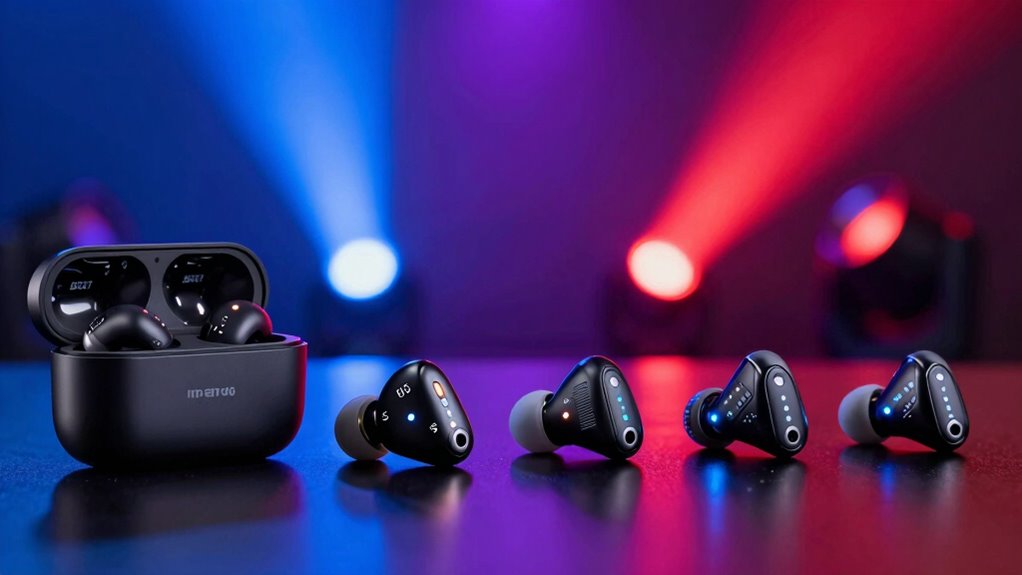

When choosing a top rated wireless in ear monitor system for stage audio, performers need reliable, clear sound with minimal latency and robust build quality. The Best Overall pick is the AOKEO AK-680, known for its professional-grade performance and stability. The Xvive U45 stands out for its affordability and ease of use, making it ideal for smaller gigs or beginners. A key challenge in this category is balancing sound quality, transmission range, and affordability, as some systems excel in range but compromise on clarity or vice versa. Keep reading for a detailed comparison to find the best fit for your stage needs.

Get business pricing on office and shipping supplies
- Business-only prices and quantity discounts
- Tax-exempt purchasing
- Multiple users, one account, clear invoices
Key Takeaways
- Top picks balance sound quality, transmission range, and ease of setup, with the best systems avoiding dropouts during performances.
- UHF systems generally offer less interference but can be more expensive, while 2.4GHz options provide ease of use and affordability but may encounter congestion.
- Battery life and charging convenience are critical for all-day gigs; systems with charging cases or long-lasting batteries stand out.
- Build quality and durability matter more than ever for stage use, especially for mobile performers or touring acts.
- Price varies widely; investing more often yields better performance and reliability, but some budget models provide surprisingly good value.


| top rated wireless in ear monitor system for stage audio | Battery Life | Channels | Range |
|---|---|---|---|
| AOKEO AK-680 Wireless In-Ear M | 12 hours | — | — |
| JOYO JW-07 2.4G Wireless In-Ea | Over 8 hours | 12 (divided into 4 groups) | — |
| D Debra Audio PRO ER-202 UHF D | — | Dual Channel (Mono) | — |
| Coda AirSync IEM Wireless In-E | 6 hours | Up to 13 | 150 feet |
| POGOLAB Wireless In-Ear Monito | 5 hours | 7 | 164ft |
| UHF Wireless In-Ear Monitor Sy | 5-8 hours | 50 | 300 ft |
| Xvive U45 Wireless In-Ear Moni | Up to 5 hours | — | 100 ft / 30.5 m |
| LEKATO MS-20 Wireless In-Ear M | 30 hours with charging case | — | — |
| Phenyx Pro PTM-10 UHF Stereo W | — | — | — |
| Phenyx Pro 4-Channel UHF Mono | — | 4 | 140-164 ft |
| Donner CV-3 Wireless In-Ear Mo | Up to 10 hours | — | — |
| 5.8GHz Wireless In-Ear Monitor | Over 5 hours | — | 100 feet |
More Details on Our Top Picks
AOKEO AK-680 Wireless In-Ear Monitor System, 5.8G Professional Stereo IEM Monitoring with Transmitter & Bodypack Receiver
The AOKEO AK-680 stands out as the best overall choice for professionals seeking reliable wireless monitoring, thanks to its 5.8GHz ultra-low latency transmission that rivals the performance of more expensive systems like the Coda AirSync. Its long 12-hour battery life and universal connectivity make it ideal for long performances and studio sessions, but the setup can be less intuitive for newcomers. Compared to the JOYO JW-07, it offers a more stable, interference-free signal, though at a higher cost. This system is perfect for seasoned performers who need dependable, high-quality sound without compromise, but less suitable for users who prefer plug-and-play simplicity or have budget constraints.
Pros:- Ultra-low latency ensures real-time monitoring without lag
- Long 12-hour battery life supports extended performances
- Lightweight design with volume control enhances comfort and usability
- Universal compatibility allows use with various audio devices
Cons:- Requires familiarity with wireless setup procedures
- Limited sound customization options may restrict fine-tuning
Best for: Stage professionals and sound engineers who prioritize stability and long-lasting performance
Not ideal for: Beginners or casual performers who need a straightforward, budget-friendly solution
- Frequency:5.8GHz
- Battery Life:12 hours
- Connectivity:USB-C, 3.5mm audio, 6.35mm adapter
- Design:Lightweight, clip-on
- Compatibility:Universal with standard headphone output
Our verdict“This system is best suited for experienced users demanding reliable, interference-free performance in demanding stage environments.”
JOYO JW-07 2.4G Wireless In-Ear Monitor System with Transmitter and Clip-On Receiver
The JOYO JW-07 excels in providing low latency (<5ms) feedback crucial for live performers needing real-time audio cues, especially when compared to the Pogolab system which has slightly higher latency. Its frequency-hopping technology ensures a stable connection over 40-60ft, but the limited range can be a drawback for larger venues. While it supports 12 channels for multi-user setups, it doesn’t support multiple receivers connected to a single transmitter, unlike the Coda AirSync. This pick makes sense for solo performers or small bands who prioritize quick, responsive monitoring, but may fall short for larger stage setups requiring longer range or more complex configurations.
Pros:- Exceptional latency under 5ms for tight stage performance
- Frequency-hopping technology reduces interference
- Over 8 hours of battery life supports long gigs
- Supports multiple channels for group practice
Cons:- Limited operating range may restrict larger venues
- Cannot connect one transmitter to multiple receivers
Best for: Solo artists or small bands needing low-latency, stable wireless monitoring
Not ideal for: Large-stage acts requiring longer-range or multi-receiver setups
- Model:JW-07
- Frequency:2.4GHz
- Audio Resolution:48kHz/16bit
- Latency:<5ms
- Operating Range:40-60ft
- Battery Life:Over 8 hours
- Channels:12 (divided into 4 groups)
Our verdict“This system is ideal for performers who need quick, reliable feedback in smaller or medium-sized venues with minimal setup complexity.”
D Debra Audio PRO ER-202 UHF Dual Channel Wireless In-Ear Monitor System (2 Bodypacks with Transmitter)
The D Debra Audio PRO ER-202 offers a robust UHF dual-channel setup with a range up to 800 feet, making it suitable for large stage environments and broadcast settings, unlike the Coda AirSync which is more compact. Its 100 preset switchable frequencies help avoid interference, but the mono audio format limits stereo experience, which could be a drawback for performers needing full stereo sound. The LCD displays and limiter circuitry provide added control and distortion prevention, making it a solid choice for high-stakes performances. However, users should be aware that the included earphones are basic, likely requiring an upgrade for professional use.
Pros:- Up to 800-foot effective range for large venues
- 100 preset frequencies help avoid interference
- Built-in limiter circuitry prevents distortion
- LCD displays with battery monitoring
Cons:- Mono audio limits stereo imaging
- Basic included earphones may require upgrading
Best for: Large-stage performers, broadcasters, and multi-performer groups needing extensive range and signal stability
Not ideal for: Solo performers or those seeking stereo sound or plug-and-play simplicity
- Frequency Range:510-580 MHz
- Preset Frequencies:100
- Effective Distance:Up to 800 ft
- Channels:Dual Channel (Mono)
- Inputs:6.35mm mixed, two independent channels
- Display:LCD
Our verdict“This system is well-suited for large venues and multi-performer setups where signal stability and range are critical, but stereo sound is not a priority.”
Coda AirSync IEM Wireless In-Ear Monitors – UHF Stage Monitor System
The Coda AirSync system offers a reliable UHF frequency with a 150-foot range and a simple plug-and-play setup, making it ideal for quick deployment on stage, especially when paired with the LEKATO MS-20. Its support for multiple channels and 6-hour rechargeable battery make it suitable for bands or multi-performer groups. However, its limited frequency range (657-663 MHz) may face restrictions in some regions, and it requires compatible earphones for optimal use. Compared with the POGOLAB system, its ease of use and quick setup shine, though slightly less range than some ultra-long-range options.
Pros:- Reliable UHF frequency with minimal dropouts
- 150-foot operating range supports larger stage distances
- Easy plug-and-play setup with visual level meters
- Supports multiple channels for group use
Cons:- Requires compatible 3.5mm earphones
- Limited to professional users familiar with setup
Best for: Stage crews and performers who need quick, reliable wireless setup with minimal fuss
Not ideal for: Event organizers needing long-range coverage beyond 150 feet
- Frequency:657-663 MHz
- Range:150 feet
- Battery Life:6 hours
- Channels:Up to 13
- Latency:Under 3ms
- Warranty:1 year
Our verdict“Ideal for performers and stage teams seeking straightforward, dependable wireless monitoring in medium to large venues, with quick setup time.”
POGOLAB Wireless In-Ear Monitor System – UHF 7-Channel IEM with XLR & AUX/LINE Input
The POGOLAB system combines 7 UHF channels with 1ms ultra-low latency and high-fidelity 48kHz/24-bit audio, making it a versatile choice for stage and studio alike. Its XLR input provides professional-level connection options, and the 164ft range offers flexibility for larger venues. While the 7 channels might limit multi-performer setups compared to systems with more, the low latency and solid audio quality make it appealing for demanding live performances. Users should note the 2-hour charging time and the limited battery life of 5 hours, which may require planning for longer events. It’s a good fit for users who want a balance of professional features and portability, but not for those needing extensive multi-channel setups or longer battery durations.
Pros:- Ultra-low 1ms latency suitable for real-time monitoring
- Professional XLR input with AUX/LINE switch for flexible source connection
- 7 selectable UHF channels reduce interference
- USB-C rechargeable with LED battery indicators
Cons:- Battery life limited to 5 hours for longer events
- Only 7 channels may be insufficient for very large setups
Best for: Professional musicians and stage technicians needing reliable, high-quality audio with versatile input options
Not ideal for: Large ensembles or multi-performer groups requiring more than 7 channels or longer battery life
- Channels:7
- Latency:1ms
- Audio Quality:48kHz/24-bit
- Range:164ft
- Battery Life:5 hours
- Inputs:XLR, AUX/LINE
Our verdict“This system offers a balanced mix of professional-grade audio and portability, ideal for users prioritizing sound quality and versatile inputs in mid-sized performances.”
UHF Wireless In-Ear Monitor System for Stage, 902-927MHz, 300ft Range
This UHF system excels in delivering a stable, interference-free signal, which makes it ideal for live performances where reliability is paramount. Compared to the Phenyx Pro PTM-10, it offers a longer range of 300 ft and durable metal construction, perfect for touring musicians facing unpredictable environments. However, it only supports mono audio, limiting stereo monitoring options for performers who rely on stereo sound for better stage awareness. Its easy auto-scan setup and long battery life of up to 8 hours make it a strong choice for professionals on the move. The main tradeoff is the mono design, which isn’t suited for those needing stereo clarity during complex performances.
Pros:- Stable UHF signal with minimal interference
- Long battery life suitable for extended use
- Durable metal construction for touring durability
- Easy setup with auto-scan and one-touch sync
Cons:- Limited to mono audio, not stereo
- Range may vary in complex environments
- Requires charging for continuous operation
Best for: Touring musicians and stage professionals requiring a rugged, reliable system with extended range.
Not ideal for: Studio users or performers needing stereo monitoring, as this system only supports mono audio.
- Frequency Range:902-927MHz
- Range:300 ft
- Channels:50
- Battery Capacity:1200mAh
- Battery Life:5-8 hours
- Design:Mono
- Materials:Metal
- Included Accessories:XLR adapter, silicone covers, hard case
Our verdict“This system is best suited for professionals who prioritize reliability and durability over stereo sound, especially on the road.”
Xvive U45 Wireless In-Ear Monitor System 5.8GHz Transmitter and Bodypack Receiver
The Xvive U45 stands out for its solid 5.8 GHz connection, which offers a reliable, interference-resistant alternative to UHF systems like the Phenyx Pro PTM-10. Its compact bodypack receiver and quick channel scan make it user-friendly for quick setups, especially in studio environments. While the 100 ft range is sufficient for stage use, it falls short compared to the 300 ft of the UHF system, making it less ideal for large touring setups. The system’s high-quality 24-bit/48kHz audio resolution ensures clear sound, but the battery life of up to 5 hours might be limiting for longer performances. Its quick USB-C charging offers convenience, yet manual channel matching after scanning can be an extra step for users.
Pros:- Reliable wireless connection with minimal interference
- Easy channel scanning for quick setup
- High-quality, broad frequency response
- Quick USB-C charging for fast power-ups
Cons:- Battery life limited to about 5 hours
- Range of 100 ft may be insufficient for large stages
- Manual channel matching required after scan
Best for: Studio musicians and stage performers needing a compact, interference-free system with high audio fidelity.
Not ideal for: Large touring acts requiring extended range or all-day battery life, as it caps at 5 hours and 100 ft range.
- Frequency:5.8 GHz
- Range:100 ft / 30.5 m
- Frequency Response:20Hz – 20kHz
- Audio Resolution:24-bit/48kHz
- Signal-to-Noise Ratio:110 dB
- Battery Life:Up to 5 hours
- Charging:USB-C
Our verdict“This system is best for those prioritizing high audio quality and convenience in smaller stage or studio environments.”
LEKATO MS-20 Wireless In-Ear Monitor System with Charging Case (1 Transmitter, 2 Receivers)
The LEKATO MS-20 offers a versatile 2.4 GHz system supporting up to 10 receiver pairs, making it perfect for bands or multiple performers needing individual mixes. Its impressive 30-hour total battery life and 150 ft transmission range surpass many competitors like the Phenyx Pro PTM-10, which is limited to 160 ft and shorter battery life. The inclusion of a robust charging case simplifies power management for long gigs. However, it doesn’t include earphones, meaning users must supply their own, and the 150 ft range is only reliable in open areas. Its low latency and HD audio make it a strong choice for live stage use, but the need for compatible earphones adds an extra step for users.
Pros:- 30 hours of total battery life with charging case
- Supports up to 10 receiver pairs from one transmitter
- Low latency HD audio ensures real-time monitoring
- OTG support for smartphones and easy setup
Cons:- Earphones not included, requiring additional purchase
- Range limited to 150 ft in open areas
- Requires compatible earphones for full usability
Best for: Bands and groups seeking a flexible, long-lasting wireless monitoring solution with multiple channels.
Not ideal for: Solo performers or studio users who don’t need multi-user capability and require stereo sound.
- Model:MS-20
- Battery Life:30 hours with charging case
- Battery Capacity:2000mAh
- Wireless Frequency:2.4GHz
- Transmission Range:150 ft (open area)
- Audio Quality:24bit/48KHz
- Frequency Response:20Hz-20kHz
- SNR:100 dB
Our verdict“This system is ideal for multi-performer setups where extended battery life and multiple channels are priorities.”
Phenyx Pro PTM-10 UHF Stereo Wireless In-Ear Monitor System
The Phenyx Pro PTM-10 leverages the less congested 900MHz UHF band, offering reliable stereo or mono monitoring up to 160 ft. It provides flexible controls like EQ, limiter, and lock functions, making it well-suited for stage environments where interference can be a concern. Its rack-mountable transmitter and included earbuds make it a solid choice for fixed installations or touring, but the basic earbuds may not satisfy audiophiles seeking premium sound. Compared with the LEKATO MS-20, it supports fewer simultaneous systems—up to 5—and might face legal restrictions outside the US on the 900MHz band. Its durable metal transmitter and versatile controls make it appealing for professional stage use, but the mono-only option limits stereo performance for some users.
Pros:- Less congestion on 900MHz band with no 2.4GHz latency
- Up to 5 simultaneous systems with 89 tunable frequencies
- Versatile controls including EQ, limiter, and lock
- Rack-mountable with durable construction
Cons:- Limited to mono audio, not stereo
- Legal restrictions may apply outside US
- Included earbuds are basic and may need upgrading
Best for: Stage crews and performers needing a dependable, interference-resistant UHF system with multiple frequency options.
Not ideal for: Solo artists or studio engineers who need stereo sound and higher channel counts, as it supports only 5 simultaneous systems.
- Frequency Band:900MHz UHF
- Selectable Frequencies:89
- Operation Range:160 ft / 50 m
- Monitoring Modes:Stereo / Mono
- Inputs:XLR and 6.3mm hybrid
- Display:LCD panel
- Rack Mountable:Yes
- Includes:Transmitter, bodypack, earbuds, accessories
Our verdict“This system offers dependable UHF performance for professionals needing multiple channels within a controlled environment.”
Phenyx Pro 4-Channel UHF Mono Wireless In-Ear Monitor System PTM-33-4B
The Phenyx Pro PTM-33-4B stands out with its four independent UHF channels, making it an excellent choice for groups or stage setups requiring multiple mixes. Unlike the single-channel LEKATO MS-20, it provides multiple channels for individual performers, making it ideal for complex stage environments. Its interference-free UHF band with up to 164 ft range supports larger venues, and its rack-mountability simplifies integration into professional setups. The mono-only configuration limits stereo monitoring, but the system’s reliability and multiple independent channels justify its high versatility. The inclusion of antennas and rackmount kit enhances its usability, though it relies on AA batteries or external power, which might require replacements or additional setup.
Pros:- Four independent channels for multiple performers
- Interference-free UHF with extensive range
- Rack-mountable and durable design
- Supports up to 5 simultaneous systems with multiple frequencies
Cons:- Mono only, no stereo support
- Requires line of sight for maximum range
- Uses AA batteries, which may need replacement
Best for: Stage productions and bands needing multiple, independent IEM mixes with high reliability.
Not ideal for: Solo performers or those wanting stereo monitoring, as this is strictly mono and multi-channel only.
- Channels:4
- Frequency Range:UHF 25 channels
- Range:140-164 ft
- Connectivity:1/4″ TS jack
- Includes:transmitter, 4 receivers, accessories
Our verdict“This system is best suited for stage environments where multiple performers need reliable, interference-free mono monitoring with multiple channels.”
Donner CV-3 Wireless In-Ear Monitor System with Transmitter and Beltpack Receiver
The Donner CV-3 stands out for its impressive 192kHz/24-bit audio quality combined with a lightweight zinc alloy beltpack that offers real-time audio visualization via an interactive color screen. Compared with the Xvive U45, it provides higher sampling resolution and a more feature-rich display, though the 100-foot range may be limiting for very large venues and the 2.4 GHz band can face interference from Wi-Fi networks. Its low <6ms latency ensures minimal delay, suitable for live performers who need accurate sound monitoring. With up to 10 hours of rechargeable battery life, it supports extended performances without concern for power. While the wireless range isn’t expansive, for standard stages this system delivers excellent clarity and durability at a competitive price. It’s ideal for musicians who prioritize audio fidelity and real-time visuals within mid-sized venues.Pros:- High-resolution 192kHz/24-bit audio with low <6ms latency
- Lightweight zinc alloy beltpack with interactive color screen
- Up to 10 hours of rechargeable battery life
Cons:- Limited to 100-foot wireless range for larger venues
- Potential interference issues on the 2.4 GHz band in Wi-Fi-heavy environments
Best for: Musicians and stage performers seeking high-resolution sound with visual feedback and a lightweight setup.
Not ideal for: Performers in large outdoor venues where a longer wireless range is essential or environments with heavy Wi-Fi interference.
- Model:CV-3
- Frequency Band:2.4 GHz
- Audio Sampling Rate:192kHz
- Sampling Depth:24-bit
- Signal-to-Noise Ratio:110dB
- Latency:<6ms
- Wireless Range:100 feet
- Receiver Weight:0.14 lb
- Battery Life:Up to 10 hours
Our verdict“This system is best suited for performers who value high-quality audio and real-time visual feedback in medium-sized venues.”
5.8GHz Wireless In-Ear Monitor System, Stereo IEM for Stage
The 5.8GHz Wireless In-Ear Monitor System offers a reliable, interference-resistant connection, making it a strong choice compared to the Donner CV-3’s 2.4 GHz band. It provides high-resolution 48kHz/24-bit stereo audio with low <5ms latency, ensuring accurate and synchronized sound for live performance. Its support for multiple receivers with auto pairing simplifies complex setups, ideal for bands or ensembles needing multiple monitors. While its battery life exceeds 5 hours—slightly shorter than the Donner’s 10 hours—it’s still ample for most gigs, and the 100-foot range matches the CV-3’s. The slightly lower audio resolution might be a drawback for those demanding absolute fidelity, but the system’s stability and ease of use make it a practical choice for demanding environments. This pick is excellent for performers requiring a dependable, interference-free wireless experience without sacrificing sound quality.Pros:- Stable and interference-resistant 5.8GHz transmission
- High-resolution 48kHz/24-bit stereo audio
- Supports multiple receivers with auto pairing
Cons:- Battery life slightly shorter at over 5 hours
- Range may vary in complex environments with obstacles
Best for: Performers and sound engineers needing a stable, interference-free wireless solution in dynamic or Wi-Fi-heavy environments.
Not ideal for: Musicians who prioritize maximum audio resolution above all else or need extended battery life for very long performances.
- Wireless Frequency:5.8GHz
- Audio Resolution:48kHz/24-bit
- Latency:<5ms
- Range:100 feet
- Battery Life:Over 5 hours
Our verdict“This system is tailored for performers who need a reliable, interference-free connection with good audio fidelity for live stage use.”
How We Picked
I evaluated these wireless in ear monitor systems based on several key criteria: audio clarity, transmission stability, range, battery life, build quality, and ease of use. Products were compared for their ability to deliver consistent sound without dropouts, especially in crowded or interference-prone environments. I prioritized systems with user-friendly features such as quick setup, clear controls, and reliable connectivity. The ranking also reflects value for money, considering both high-end features and affordability for different budgets. The goal was to identify options suitable for both professional stage performers and those new to in-ear monitoring, highlighting the best overall performance while noting tradeoffs in cost and complexity.Factors to Consider When Choosing Top Rated Wireless In Ear Monitor System For Stage Audio
Selecting the right wireless in ear monitor system involves understanding several critical factors beyond just price. The ideal system should match your performance environment, usage style, and technical needs. Carefully weighing these considerations will help ensure you choose a system that offers reliable sound, ease of operation, and durability for stage use.Frequency Band and Interference
Choosing between UHF and 2.4GHz systems depends on your typical stage environment. UHF systems tend to offer more stable signals and less interference, making them suitable for larger venues or crowded bands. Conversely, 2.4GHz systems are more budget-friendly and easier to set up, but they can be susceptible to congestion from Wi-Fi networks or other devices. Understanding your typical interference levels can help you select a system that remains consistent during performances.
Range and Signal Stability
While many systems advertise long ranges, real-world performance depends on environmental factors. For stage use, a system with at least 300 feet of range and solid signal stability is desirable, especially if you move around a large stage or perform outdoors. Systems with dual antennas or diversity receivers often offer more reliable signals, reducing dropouts during critical moments. Test the system in your typical venue to gauge real-world performance before committing.
Sound Quality and Latency
Clear sound with minimal latency is essential for tight stage performances. Systems that use high-quality codecs and well-implemented digital transmission generally provide better audio fidelity. Beware of systems with noticeable latency, which can cause lip-sync issues or disorientation on stage. Listening to how each system handles complex audio signals, such as fast transients or vocal clarity, can make a big difference in overall performance quality.
Battery Life and Charging Solutions
Long-lasting batteries are vital for gigs or rehearsal sessions. Look for systems with at least 4-6 hours of continuous operation, or those that offer quick recharge options. Charging cases or dual batteries can extend usage without interruption. Poor battery performance could lead to mid-set failures, so consider systems with reliable power management features tailored for stage demands.
Ease of Use and Setup
Intuitive controls, quick pairing, and straightforward setup save valuable time before shows. Systems with clear displays, multiple channels, and simple syncing procedures are especially helpful for performers who need to focus on their performance rather than technical fiddling. Features like automatic frequency scanning and channel selection can reduce setup errors and improve reliability during live performances.
Frequently Asked Questions
How do I choose between UHF and 2.4GHz systems?
UHF systems tend to offer more stable signals and less interference, making them ideal for large venues or complex stage setups. They are often more expensive but provide consistent performance in environments with many wireless devices. 2.4GHz systems are generally more affordable, easier to set up, and suitable for smaller gigs or practice sessions, but they might face congestion if many wireless networks are active in the area. Your choice should depend on your typical stage environment and performance needs.
Is range the most important factor for stage use?
Range is certainly important, especially if you move around a large stage or perform outdoors. However, signal stability and transmission reliability matter more in practice—dropouts or interference can ruin a performance regardless of advertised range. Choosing a system with proven stability and suitable range for your stage size usually leads to better results than focusing solely on maximum distance.
Can I use a dual-channel system for multiple performers?
Yes, many wireless in ear monitor systems are designed for multiple performers, with some offering two, four, or even more channels. However, it’s vital to check if your system supports simultaneous multiple channels without interference. Proper frequency management and ensuring each performer has a dedicated channel will prevent audio crossover or dropouts, especially in busy wireless environments.
What should I consider about battery life for stage use?
Battery life determines how long you can perform without interruption. For most gigs, 4-6 hours of continuous use is sufficient, but longer events may require additional batteries or quick-charging solutions. Systems with charging cases or hot-swappable batteries offer greater flexibility. Always verify real-world battery performance, as some models may deliver less than advertised under heavy use.
Are more expensive systems worth the investment?
Higher-priced systems often provide better sound fidelity, more stable transmission, longer range, and durable build quality. They are typically designed for professional use, where reliability is critical. If you perform regularly or in challenging environments, investing in a premium system can reduce issues and deliver a more consistent experience. However, for occasional or beginner use, more affordable models can still meet basic needs effectively.
Conclusion
The best overall choice for most performers is the AOKEO AK-680 for its professional-grade reliability and sound quality. Budget-conscious users or smaller gigs will find the Xvive U45 offers excellent value without sacrificing too much performance. For those seeking premium features and maximum stability, the Coda AirSync stands out. Beginners should prioritize systems with easy setup and clear controls, like the LEKATO MS-20. Finally, touring professionals or large ensembles should consider systems with multiple channels and long-range stability for seamless stage experience.
Halloween Picks
halloween
As an affiliate, we earn on qualifying purchases.