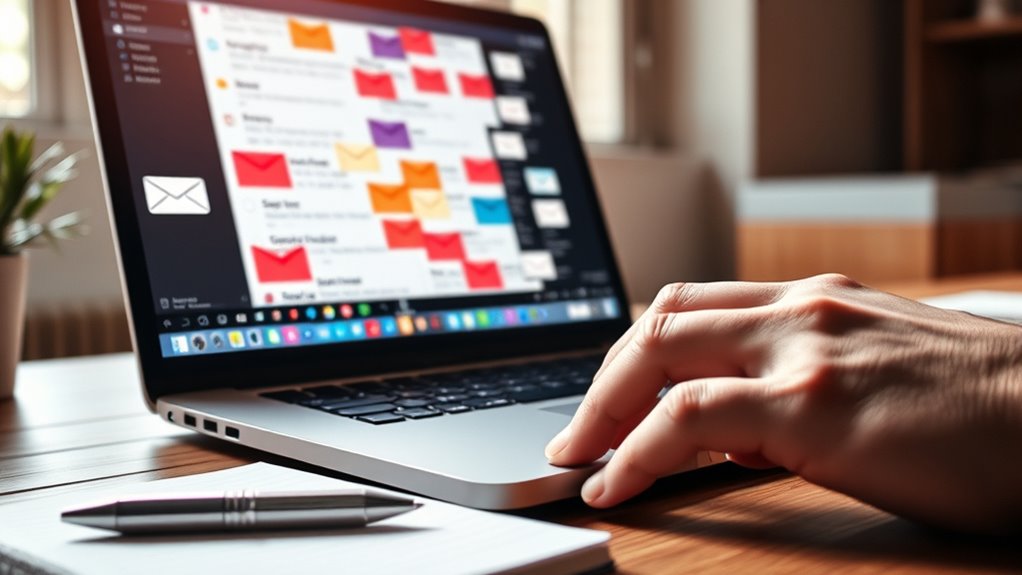

To avoid the spam folder, make certain your emails are properly authenticated with SPF, DKIM, and DMARC, which verify your identity to inbox providers. Keep your subscriber list clean by removing inactive addresses and using double opt-in to confirm interest. Personalize your content to boost engagement, avoid overly promotional language, and include clear unsubscribe options. Monitoring your metrics and fixing issues early also helps improve deliverability. Continue exploring these practices to increase your chances of inbox placement.

Get business pricing on office and shipping supplies
- Business-only prices and quantity discounts
- Tax-exempt purchasing
- Multiple users, one account, clear invoices
Key Takeaways
- Implement and regularly monitor email authentication protocols like SPF, DKIM, and DMARC to build trust with email providers.
- Maintain a clean, engaged subscriber list by removing inactive addresses and using double opt-in processes.
- Personalize content and segment your audience to increase engagement and reduce spam complaints.
- Use clear, relevant subject lines and provide easy unsubscribe options to foster transparency and trust.
- Consistently review engagement metrics and authentication reports to identify and resolve deliverability issues promptly.
Getting your emails into your recipients’ inboxes instead of the spam folder can be challenging, but with the right strategies, you can improve your deliverability. One of the most important steps is ensuring proper email authentication. Email authentication involves setting up protocols like SPF (Sender Policy Framework), DKIM (DomainKeys Identified Mail), and DMARC (Domain-based Message Authentication, Reporting & Conformance). These tools verify that your emails are genuinely from you and haven’t been tampered with, which helps email providers trust your messages. Without proper authentication, your emails are more likely to be flagged as spam, regardless of their content. Take the time to configure these protocols correctly, and regularly monitor your authentication reports to catch any issues early. This not only boosts your credibility but also reduces the chances of your messages ending up in junk folders. Proper email authentication is a key factor in improving your email deliverability and avoiding spam filters.
Beyond technical measures, subscriber engagement plays a *vital* role in avoiding spam filters. When your recipients open your emails, click links, and reply, it signals to email providers that your content is valuable and wanted. High engagement levels improve your sender reputation, which is a key factor in inbox placement. To foster engagement, focus on crafting relevant, personalized content that resonates with your audience. Use segmentation to send targeted messages based on subscriber interests and behaviors. Avoid sending generic bulk emails that might bore or annoy your list. Additionally, encourage your subscribers to whitelist your email address or add you to their contacts, which can help your emails bypass spam filters altogether.
Consistently maintaining a clean email list is equally important. Remove inactive subscribers and bounce-backs promptly to prevent your sender reputation from declining. When you send emails to invalid addresses, it appears as spam-like behavior to ISPs, lowering your deliverability. A good practice is to implement double opt-in processes, confirming that subscribers genuinely want to hear from you. This not only improves engagement but also reduces the risk of spam complaints. Make sure your emails are well-designed, with clear subject lines and a straightforward unsubscribe option. This transparency builds trust and encourages subscribers to stay engaged rather than mark your messages as spam.
As an affiliate, we earn on qualifying purchases.
Frequently Asked Questions
Can Using Images in Emails Increase Spam Risk?
Using images in emails can increase your spam risk if you don’t optimize them properly. Large or unoptimized images might trigger spam filters, but if you focus on image optimization, you can reduce this risk. Incorporate visuals that support your message and enhance your visual branding without overwhelming your email. Keep images relevant, compressed, and balanced with text to improve deliverability and maintain a professional appearance.
How Does Email Frequency Affect Spam Filtering?
Your email frequency affects spam filtering because inconsistent sending can trigger spam filters, while maintaining sending consistency helps build trust. When you send emails regularly, it boosts your email engagement, signaling to spam filters that you’re a legitimate sender. However, sending too many emails at once may seem spammy. Find a balanced, consistent schedule to improve deliverability and stay out of the spam folder.
Do Personalized Emails Have a Lower Chance of Being Marked as Spam?
Absolutely, personalized emails have a near-magical ability to dodge spam filters! Thanks to personalization benefits and email customization, your messages feel tailored and genuine, making them less likely to be flagged. When you customize content based on recipient interests, you’re telling spam filters, “Hey, this is legit!” This small effort dramatically improves your chances of landing in inboxes, not junk folders, boosting your email success rate.
What Role Do Email Subject Lines Play in Spam Detection?
Your email subject line plays a vital role in spam detection. If you optimize your subject line well, you reduce the chance of triggering spam filters. Avoid using spam trigger words like “free,” “urgent,” or “act now,” which can flag your email as junk. Focus on clear, honest subject line optimization to improve your email’s deliverability and guarantee it reaches your recipient’s inbox instead of the spam folder.
Are There Specific Email Client Settings to Reduce Spam Filtering?
You can reduce spam filtering by customizing your email client settings. Adjust spam filter levels and add trusted contacts to your spam filter exceptions list, ensuring important messages don’t get flagged. Many email clients allow you to modify these settings easily, helping you stay organized and safe. Regularly review your spam folder to prevent missing vital emails and fine-tune your email client customization for maximum results.
Conclusion
Staying out of the spam folder isn’t just about avoiding inconvenience—it’s about protecting your reputation. Did you know that over 45% of emails worldwide are spam? By following simple tips like avoiding suspicious links and maintaining a clean mailing list, you can guarantee your emails land where they belong. Keep these tricks in mind, and you’ll stay in your recipients’ inboxes, not their spam folders. Your emails will get seen—and that’s what really counts.
Halloween Picks
halloween
As an affiliate, we earn on qualifying purchases.