
The queue. Why the grid, not the chip, is the binding constraint on AI.

📊 Full opportunity report: The queue. Why the grid, not the chip, is the binding constraint on AI. on ThorstenMeyerAI.com — validation score, market gap, and execution plan.

TL;DR

The primary constraint on AI infrastructure expansion has shifted from chip availability to grid interconnection delays. This bottleneck causes developers to bypass the shared grid, externalizing costs and reshaping the industry landscape.

US interconnection queues now represent the main bottleneck for AI infrastructure development, with over 2,300 gigawatts of projects waiting for grid access and median wait times nearing five years, shifting the focus from chip supply to grid capacity.

For two years, the narrative around AI buildout centered on the availability of GPUs and semiconductor manufacturing. That story has shifted; the current bottleneck is the US power grid’s interconnection process. Data shows approximately 2,300 to 2,600 gigawatts of generation and storage capacity are stuck in US interconnection queues, with some projects facing wait times up to twelve years. This has caused a surge in private, behind-the-meter power projects, such as gas plants colocated with data centers, which bypass the grid entirely, albeit at a cost borne by ratepayers.

Industry experts, including Thorsten Meyer, note that the queue’s slow pace has led to a bifurcation: the self-powered, who build behind the meter or near reactors, and the grid-dependent, who wait in long lines. This dynamic reprices geography, as the search for megawatts now prioritizes proximity to power sources over latency considerations. It also shifts costs, with queue position becoming a significant line item, and the costs of bypasses often transferred to ratepayers, fueling political debates and policy interventions.

The Queue — Thorsten Meyer AI
QUEUE
● DISPATCH / MAY 2026
THORSTEN MEYER AI · AI ENERGY & INFRASTRUCTURE · § 02
AI ENERGY · 02
INTERCONNECTION / QUEUE
Essay · Energy-Infrastructure Structural Reading · 2026-05-23

The queue.Why the grid, not the chip,
is the binding constraint on AI.

2,300 gigawatts are stuck in line — more than the country’s entire installed power capacity. So capital builds around the line.
For two years the AI buildout was a chip story. That story is over. The binding constraint is the grid — and the line you wait in to connect to it. Roughly 2,300-2,600 GW of capacity is stuck in US interconnection queues, more than the entire installed fleet; the median wait approaches five years, some data centers face twelve, and ~80% of projects withdraw. The demand hitting that queue: US data-center power ~76 GW by 2026, CenterPoint’s large-load requests up 700% in a year. So capital routes around it — a behind-the-meter gas plant builds in ~18 months vs grid access maybe 2035; Microsoft restarted Three Mile Island for 835 MW of baseload, bypassing transmission. But the bypass has a cost it does not bear: $1.98B of transmission cost landed on Virginia ratepayers; PJM’s capacity auction ran $2.2B → $14.7B. The structural argument: the grid is the bottleneck, and the response is a parallel private grid that solves time-to-power for whoever has the capital — and externalizes the cost of the shared grid onto everyone else.
2,300 GW
Stuck in US interconnection queues
more than total installed capacity
~5 yr
Median wait to commercial operation
up to 12 years for data centers
~18 mo
Behind-the-meter gas build time
vs grid access maybe 2035
$1.98B
Transmission cost on Virginia
ratepayers · the cost-shift, concrete
THE QUEUE· THE GRID IS THE BINDING CONSTRAINT· 2,300-2,600 GW STUCK· MORE THAN TOTAL INSTALLED CAPACITY· ~5-YEAR MEDIAN WAIT · UP TO 12· ~80% OF PROJECTS WITHDRAW· US DATA-CENTER ~76 GW BY 2026· CENTERPOINT +700% IN A YEAR· BTM GAS ~18 MONTHS· THREE MILE ISLAND RESTART · 835 MW· POWER-CERTAIN SITES +15-25% LEASE· PJM AUCTION $2.2B → $14.7B· VIRGINIA RATEPAYERS $1.98B· RATEPAYER PROTECTION PLEDGE· MICROSOFT 40 GW CONTRACTED· CHINA +430 GW/YEAR· THE SEARCH FOR MEGAWATTS· A BIFURCATED BUILDOUT· THE QUEUE· THE GRID IS THE BINDING CONSTRAINT· 2,300-2,600 GW STUCK· MORE THAN TOTAL INSTALLED CAPACITY· ~5-YEAR MEDIAN WAIT · UP TO 12· ~80% OF PROJECTS WITHDRAW· US DATA-CENTER ~76 GW BY 2026· CENTERPOINT +700% IN A YEAR· BTM GAS ~18 MONTHS· THREE MILE ISLAND RESTART · 835 MW· POWER-CERTAIN SITES +15-25% LEASE· PJM AUCTION $2.2B → $14.7B· VIRGINIA RATEPAYERS $1.98B· RATEPAYER PROTECTION PLEDGE· MICROSOFT 40 GW CONTRACTED· CHINA +430 GW/YEAR· THE SEARCH FOR MEGAWATTS· A BIFURCATED BUILDOUT·
FIG. 01 — THE BINDING CONSTRAINT MOVED
From the chip you manufacture to the grid you wait in line for
When site selection is driven by where you can get power, the binding constraint has moved
2021-2024 · The chip era
Compute
GPU allocation, fab capacity, export controls. Partnerships around cloud, hardware supply, software. The assumption: chips + capital = data center.
2025-2026 · The grid era
Power
Megawatts, queue position, transmission, time-to-power. Partnerships around energy. The search for megawatts now beats latency and fiber in site selection.
Chips can be manufactured faster than grids can be expanded, which is why the constraint moved to the grid the moment chip supply loosened. The data center can be designed, financed, and built in 18-24 months. The grid connection it needs can take five to twelve years. That maturity gap — between the rapid innovation cycle of data-center technology and the slow, linear deployment of grid infrastructure — is the single greatest constraint on the buildout.
FIG. 02 — ANATOMY OF THE QUEUE · WHY IT TAKES FIVE YEARS
Four compounding bottlenecks on a process built for a slower era
FERC Order 2023 fixes the easiest one — the study backlog — while the harder ones increasingly dominate
01
Utility study backlogs
Request volume far outpaces what utilities have ever processed; studies are sequential and under-resourced.
02
Transmission upgrades
New substations, lines, reconductoring — years to build, and the cost is contested.
03
Permitting complexity
Multiple jurisdictions, each with its own timeline and veto points; increasingly the binding step.
04
Equipment lead times
High-voltage transformers now carry multi-year lead times. Even an approved project waits for hardware.
Nearly 80% of projects in the queue eventually withdraw — speculative projects occupying study slots and slowing the viable ones behind them. LBNL: interconnection wait times have more than doubled in 15 years. FERC Order 2023’s “first-ready, first-served” cluster model addresses the study backlog — but the harder bottlenecks (transmission, permitting, transformers) are the ones increasingly dominating. The queue is not congestion that clears; it is a structural mismatch between the speed of demand and the speed of connection.
FIG. 03 — THE DEMAND WALL · WHAT IS HITTING THE QUEUE
A step-change in scale, density, and utilization the grid was not designed for
A single data-center campus can now request more power than a utility’s historical peak demand
2024 · US data-center demand
~50 GW
2026 · US data-center demand
~76 GW
by 2030 · added capacity needed
>150 GW
Global data-center consumption could exceed 1,000 TWh annually by the early 2030s (up from 460 TWh in 2022). Hyperscale (100+ MW) is ~41% of worldwide capacity; single campuses of 1 GW+ — a large nuclear unit’s output — are now explored by single developers. The utility shock: CenterPoint’s large-load requests grew 700% in a year (1→8 GW), and ComEd, PPL, and Oncor report more GWs of data-center applications than their historical maximum peak demand. Data centers run near 100% utilization — constant baseload, not peaky load served from reserve margin.
FIG. 04 — ROUTING AROUND THE QUEUE · THE BYPASS
Every form of the bypass is a way to get power without waiting in line
Available to whoever has the capital to self-generate — which is the seam
BYPASS
HOW IT WORKS
TIME-TO-POWER
Behind-the-meter gas
On-site generation behind the utility meter · midstream gas pivots to on-site power provider · Foley 2026: 56% of developers exploring
~18 movs grid ~2035
Nuclear co-location
Tie directly to operating/restarting reactor, bypass transmission · Three Mile Island Unit 1 restart, 835 MW baseload
+15-25%lease premium
Flexible / interruptible
Draw from grid only when spare capacity exists · Nvidia-backed Emerald AI, 96 MW Manassas VA
Connectswhere firm can’t
Stranded-power hunt
Hunt unallocated capacity; diversify to under-utilized grids · Idaho, Louisiana, Oklahoma over Northern Virginia
Geographyrepriced
The common thread is time-to-power: an 18-month private plant or a nuclear co-location beats a decade-long queue, and the best-capitalized players are choosing to build their own power. Microsoft has surpassed Amazon as the world’s largest clean-power buyer — ~40 GW contracted — and the big four accounted for roughly half of all global clean-energy PPAs in 2025. The bypass is rational, fast, and available only to those with the capital to self-generate.
FIG. 05 — WHO PAYS FOR THE BYPASS · THE COST-SHIFT
The bypass solves the developer’s problem and relocates the grid’s cost onto ratepayers
The benefit accrues to the data center; the cost of the grid it depends on is socialized
$2.2→14.7B
PJM capacity auction
in a single year
$1.98B
Transmission cost on
Virginia ratepayers (2024)
~$7B
More in higher rates
across PJM consumers
Virginia’s residents are paying nearly $2 billion to connect data centers they do not own and whose power they do not consume.
When a data center self-generates behind the meter but still relies on the grid for backup, it avoids much of the cost while retaining the benefit — the bypass at its most extractive. The early-March 2026 White House Ratepayer Protection Pledge is nonbinding, and covers generation, not the larger transmission-and-capacity burden. The politics of AI energy is not about whether to build — it is about who pays for the grid the buildout requires. The default, absent regulation, is “everyone, whether or not they benefit.”
The grid is the bottleneck. The private grid is the response. And the seam between them — who pays for the public infrastructure the private builders still lean on — is where the economics and politics of the AI buildout are now decided.
Thorsten Meyer · The Queue · AI Energy & Infrastructure 02

Implications of the Grid Constraint on AI Infrastructure Expansion

This shift has profound implications for the AI industry and energy policy. The grid constraint drives a privatization of power generation, with capital-rich firms building private power sources to avoid delays. This creates a two-tier system: fast, self-powered sites versus slow, grid-dependent projects. The externalization of costs onto ratepayers raises political tensions, exemplified by increased transmission costs and legislative responses. Ultimately, the bottleneck reshapes where and how AI infrastructure is built, favoring capital mobility over shared infrastructure, and raising questions about equitable cost distribution and grid modernization.
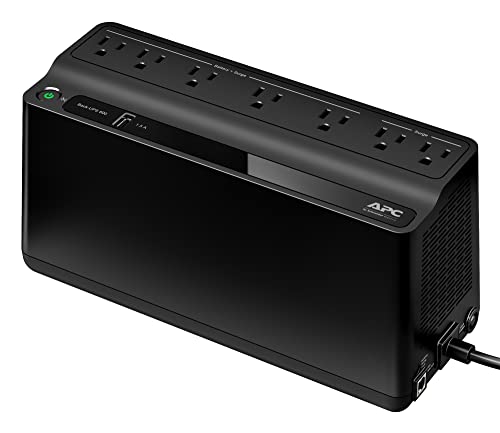
APC UPS Battery Backup for Power Outages, 600VA/330W Surge Protector, 7 Outlets, USB Charging, BE600M1 Uninterruptible Power Supply for Computers, Wi-Fi Routers, and Home Office Electronics

APC UPS Battery Backup for Power Outages, 600VA/330W Surge Protector, 7 Outlets, USB Charging, BE600M1 Uninterruptible Power Supply for Computers, Wi-Fi Routers, and Home Office Electronics

KEEP YOUR COMPUTER, WI-FI AND ROUTER RUNNING THROUGH POWER OUTAGES: Supplies short‑term battery power during outages to maintain…

As an affiliate, we earn on qualifying purchases.

As an affiliate, we earn on qualifying purchases.

From Chip Shortages to Grid Bottlenecks: The Shift in AI Build Constraints

Initially, the focus was on semiconductor supply chains and GPU availability, which limited AI development. Over the past two years, as chip shortages eased, attention turned to the power infrastructure needed to support AI expansion. The US faces a unique challenge: despite abundant generation capacity, the interconnection process is slow and bureaucratic, creating a significant delay for new projects. This has led to a surge in private power solutions that bypass the grid, with some projects facing years-long waits for connection approval. China, by contrast, continues to add capacity rapidly, highlighting the US’s interconnection bottleneck as the critical constraint now shaping AI infrastructure growth.

“The grid is the bottleneck; the response is a private grid; and the seam between them — who pays for the transmission and capacity the private builders still lean on — is where the politics of the AI buildout now lives.”

— Thorsten Meyer

YAMRON 4-in-1 Soil Moisture Meter, Digital Plant Temperature/Soil Moisture Test & PH Meter/Sunlight Intensity, Backlight LCD Display for Gardening, Farming and Outdoor Plants

YAMRON 4-in-1 Soil Moisture Meter, Digital Plant Temperature/Soil Moisture Test & PH Meter/Sunlight Intensity, Backlight LCD Display for Gardening, Farming and Outdoor Plants

【4 in 1 function】This is a 4-in-1 multifunctional soil tester.Our soil tester fastly to measure soil moisture, pH,…

As an affiliate, we earn on qualifying purchases.

As an affiliate, we earn on qualifying purchases.

Unclear Long-Term Impact of Private Power Bypass

It remains uncertain how widespread and permanent the shift toward private, behind-the-meter generation will become, and how policymakers will regulate or mitigate the externalized costs on ratepayers. The political response to rising transmission costs and the potential for grid modernization initiatives are still developing.

Amazon

grid interconnection delay mitigation equipment

As an affiliate, we earn on qualifying purchases.

As an affiliate, we earn on qualifying purchases.

Next Steps in Addressing the Grid Bottleneck and Industry Response

Expect continued investment in private power solutions by large AI and data-center operators, alongside policy debates over cost allocation and grid modernization. Regulatory efforts may focus on streamlining interconnection processes and addressing political tensions over cost sharing. Monitoring infrastructure investments and legislative actions over the coming year will clarify how the industry adapts to this fundamental shift.

The BESS Book: A Cell to Grid Guide to Utility-Scale Battery Energy Storage Systems

The BESS Book: A Cell to Grid Guide to Utility-Scale Battery Energy Storage Systems

As an affiliate, we earn on qualifying purchases.

As an affiliate, we earn on qualifying purchases.

Key Questions

Why has the focus shifted from chips to the grid?

The US interconnection queue now represents the primary bottleneck, with delays of up to twelve years, making grid access the critical constraint for AI infrastructure expansion.

How are companies bypassing the grid constraints?

Many are building private power sources, such as colocated gas plants or nuclear reactors, to generate power on-site or near-site, avoiding the long interconnection delays.

Who bears the costs of bypassing the shared grid?

While developers benefit from faster power availability, the costs of transmission and capacity are often passed onto ratepayers, creating political and economic tensions.

What are the political implications of this shift?

Rising transmission costs and the externalization of infrastructure expenses are fueling debates over cost sharing, regulation, and the future of grid modernization efforts.

Will this trend continue, or can policy changes alter it?

Policy interventions aimed at streamlining interconnection processes and regulating cost allocation could slow or reshape this bifurcation, but the current momentum favors private solutions.

Source: ThorstenMeyerAI.com
This content is for general information only and is not financial, tax or legal advice. Consult a qualified professional for decisions about your money.

You May Also Like

Change-order risk detector for landscaping contractors

A new workflow tool for landscaping contractors to identify change-order risks during quoting is set for initial testing, aiming to improve margin control amid project uncertainties.

Phone-based injury-risk movement screening for hiring

A new phone-based movement screening tool for industrial hiring is being tested, promising quicker, cheaper injury risk assessment for physical labor candidates.

How to Reduce Heat and Noise in a High-Power AI Workstation

Learn effective strategies to lower heat and noise in high-power AI workstations, including undervolting, airflow improvements, and component optimization.

Trade and supply-chain operations signal monitor: Chicago, Illinois weather forecast: Tornado Watch issued for parts of area | Radar

Tornado Watch issued for parts of Chicago, Illinois, affecting trade and supply-chain operations. Monitoring signals highlight potential disruptions.