
📊 Full opportunity report: Acoustic Dampening, Placement, and the “Rig in the Closet” Setup on ThorstenMeyerAI.com — validation score, market gap, and execution plan.

Get business pricing on office and shipping supplies
- Business-only prices and quantity discounts
- Tax-exempt purchasing
- Multiple users, one account, clear invoices
TL;DR
This article explains how to minimize noise from high-power AI workstations through placement and acoustic strategies. The most effective method is relocating the rig to another room, with the ‘rig in the closet’ setup as a practical option if properly ventilated.
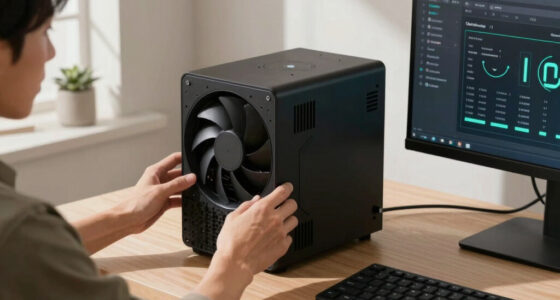
Moving high-power AI workstations out of the workspace into another room or closet is the most effective way to reduce noise, according to recent expert guidance. You can learn more about Acoustic Dampening, Placement, and the “Rig in the Closet” Setup. This approach leverages distance and isolation, making acoustic treatments less necessary and improving overall workspace comfort.
Experts emphasize that the most effective noise reduction strategy is to increase the physical distance between the workstation and the user. Relocating the rig to another room or closet, and operating it headless over a network, significantly diminishes perceived noise levels. This method relies on the fact that sound diminishes with distance, and network-based workflows make the physical location less critical.
However, placing a high-heat, high-power machine in a sealed space like a closet introduces thermal challenges. Without proper ventilation, heat buildup can cause the hardware to throttle, increasing noise and risking damage. The solution involves active ventilation—passive vents or exhaust fans—to ensure heat dissipates effectively. Purpose-built soundproof cabinets combine acoustic insulation with temperature control, providing both noise suppression and cooling, though they are costly.
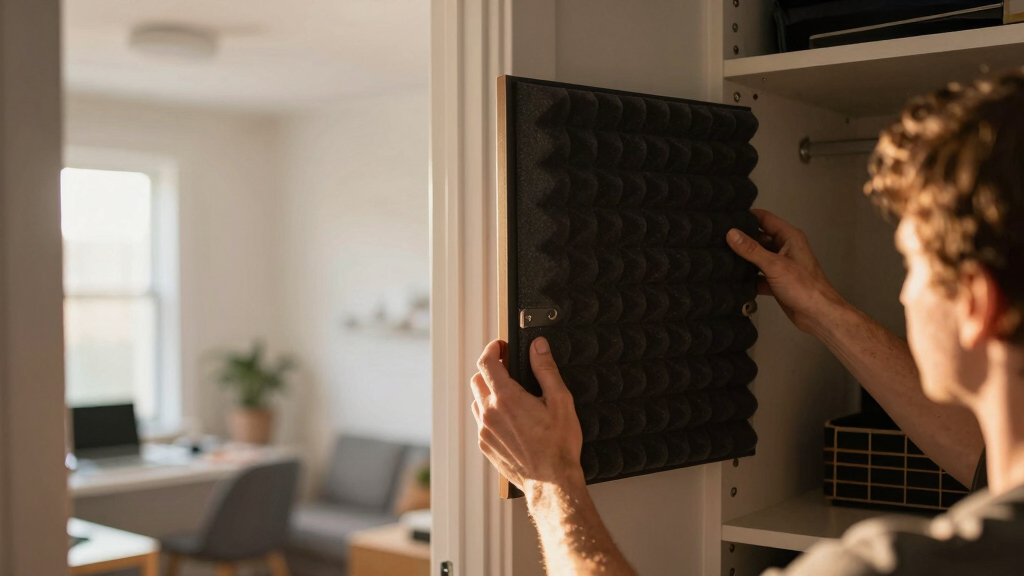
Acoustic foam and barriers are less effective for airborne noise but can help with reflections within a room. Mechanical decoupling, such as rubber feet or anti-vibration mounts, can reduce structure-borne hums. Combining placement strategies with these treatments yields the best noise reduction results.
Acoustic dampening
& the rig in the closet.
The most powerful noise fix isn’t a material — it’s a floor plan. A rig you can’t hear because it’s in another room beats any amount of foam. Tap the approaches in Part 1 to see what actually works.
(another room)
(levers 1–4)
(door / barrier)
(acoustic foam)
Contain the noise, not the heat
Why Placement and Ventilation Are Critical for Quiet AI Workstations
Effective noise management enhances workspace comfort and productivity, especially for those working with high-power AI hardware. Moving the rig to another room or closet reduces noise significantly, often eliminating the need for extensive acoustic treatment. Proper ventilation is essential when placing hardware in enclosed spaces to prevent overheating, which can cause hardware throttling and increased noise. For detailed strategies, see Acoustic Dampening, Placement, and the "Rig in the Closet" Setup. These strategies are cost-effective and scalable, making them vital for professional and home setups alike.
As an affiliate, we earn on qualifying purchases.
The Evolution of Noise Management in High-Power AI Hardware
Historically, noise reduction focused on internal acoustic treatments like foam and barriers. Recent insights highlight that physical placement offers the greatest impact. The concept of the 'rig in the closet' has gained traction as a practical solution, especially with network-based workflows that do not require physical proximity to the hardware. Proper ventilation remains a key concern, with specialized soundproof cabinets and ducted airflow systems emerging as engineered solutions to combine noise suppression with heat dissipation.
"Relocating the rig to another room or closet is often the most effective way to reduce noise, especially when combined with proper ventilation."
— Thorsten Meyer, AI hardware expert
Uncertainties in Long-Term Thermal Management and Cost
It remains unclear how effective various ventilation solutions are over extended periods in different environments, especially in non-professional setups. The cost and complexity of purpose-built soundproof cabinets may also limit widespread adoption, and long-term durability of some DIY solutions is yet to be thoroughly evaluated.
Next Steps for Implementing Effective Noise and Heat Control
Further research and case studies are expected to refine best practices for ventilated, soundproofed enclosures. Manufacturers may develop more affordable, integrated solutions for noise and heat management, making the 'rig in the closet' setup more accessible. Users should focus on ensuring proper ventilation when placing hardware in enclosed spaces and consider network-based workflows to maximize noise reduction benefits.
Key Questions
Is moving my AI rig to another room always the best solution?
While it is often the most effective method for noise reduction, practical considerations such as network setup and ventilation must be addressed to ensure hardware safety and performance.
Can I use acoustic foam alone to quiet my AI workstation?
No. Acoustic foam primarily reduces reflections within a room but does not block airborne or structure-borne noise. Proper placement and barriers are more effective for overall noise reduction.
What are the risks of placing a high-power GPU in a sealed closet?
The main risk is heat buildup, which can cause hardware throttling, reduced lifespan, or failure if not properly ventilated. Active airflow or specialized soundproof cabinets are recommended.
How does network-based workflow help with noise reduction?
It allows the physical hardware to be located away from the workspace, such as in a closet or another room, so the noise does not impact the user directly.
Are purpose-built soundproof cabinets worth the investment?
They can be effective for reducing noise and managing heat simultaneously but are costly. For many users, a ventilated closet or room may suffice depending on their needs and budget.
Source: ThorstenMeyerAI.com
Fall Picks
fall essentials
As an affiliate, we earn on qualifying purchases.