
📊 Full opportunity report: The Impact Of Vision-Model Kitchen Walk-Throughs On Food Safety Standards on IdeaNavigator AI — validation score, market gap, and execution plan.

Get office and shipping supplies delivered free — and shop member deals
- Fast, free delivery on millions of items
- Access to Prime Big Deal Days deals on October 6–7
- Prime Video, Amazon Music and more included
TL;DR
A new approach using AI-powered vision models to analyze photos from kitchen walk-throughs is being tested by restaurant groups. Early results suggest it can reliably flag food safety violations, potentially transforming routine inspections.
Restaurant groups are piloting a new AI-driven system that uses vision models to analyze photos taken during kitchen walk-throughs, aiming to improve food safety verification. This development could address longstanding issues with manual checklists, which often record only that a task was looked at, not whether safety standards were actually met.
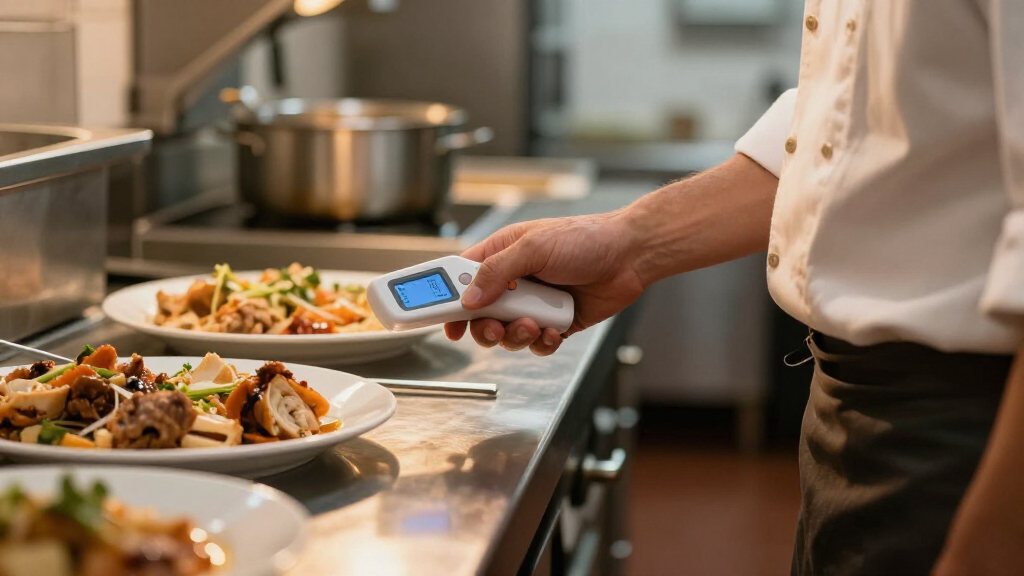
The initiative involves managers photographing key areas such as prep stations, storage, and sinks during morning inspections. The AI vision model then analyzes these images to identify violations like uncovered containers, propped cooler doors, or missing labels, and assigns severity ratings. The system produces timestamped reports and tracks trends across multiple locations.
This approach is being tested over a two-week period at five restaurant locations, with results compared against findings from a hired health-inspection consultant. The goal is to validate whether the AI can reliably detect violations and improve the accuracy of routine inspections, which currently rely heavily on manual checklists that often lack verifiable data.
Potential to Transform Food Safety Verification
This development could significantly enhance food safety standards by providing verifiable, data-driven inspection records. It addresses the common issue where checklists are completed without confirming actual compliance, which can lead to overlooked violations and inconsistent safety practices. If successful, the technology could reduce food safety risks and improve accountability across restaurant chains.
As an affiliate, we earn on qualifying purchases.
Current Challenges in Restaurant Food Safety Checks
Manual morning checklists are standard practice in restaurant operations but are often criticized for their lack of reliability. Inspectors frequently find violations that were not recorded, such as improperly stored items or unclean surfaces, indicating that current methods may not fully capture safety issues. The rise of AI and vision models offers a new opportunity to make these inspections more accurate and verifiable.
This testing aligns with broader trends toward digital transformation in food safety management, where AI tools are increasingly used for real-time monitoring and compliance tracking. The approach is still in early validation stages, with results expected in the coming weeks to determine its effectiveness.
“Using AI to analyze photos from kitchen walk-throughs could greatly improve the accuracy of food safety inspections.”
— an anonymous researcher
Uncertain Effectiveness and Adoption Timeline
It is not yet clear how accurately the vision model will perform across diverse restaurant environments or whether it will be widely adopted after initial testing. The validation results are still pending, and questions remain about integration costs and staff training requirements.
Next Steps for Validation and Implementation
The ongoing testing will conclude in the coming weeks, with results guiding decisions on broader deployment. If successful, the system could be rolled out to more locations and integrated into existing food safety management platforms. Further studies may also explore long-term impacts on compliance and operational efficiency.
Key Questions
How does the AI system identify food safety violations?
The system analyzes photos taken during walk-throughs to detect issues such as uncovered food, improper storage, or missing labels, and assigns severity ratings based on the findings.
Will this replace human inspectors entirely?
Currently, it is designed as a tool to supplement human inspections, providing verifiable data to support and improve manual checks.
What are the main benefits of using vision models for inspections?
They can increase accuracy, provide timestamped records, reduce human error, and enable trend analysis across multiple locations.
When will the technology be available for widespread use?
Widespread adoption depends on the validation results from ongoing testing. If positive, a broader rollout could occur within the next few months.
Are there any privacy or data security concerns?
The system uses photos taken during routine inspections; data security measures are expected to be part of deployment discussions, but specific details are not yet confirmed.
Source: IdeaNavigator AI
Halloween Picks
halloween
As an affiliate, we earn on qualifying purchases.