

Marketing automation tools can manage lead capture, email sequences, content production, reporting, and customer follow-up, but the right learning resource depends on the system a buyer wants to build. My best overall pick is HubSpot User Guide 2026 because its platform-specific approach connects CRM data, campaigns, sales activity, and reports more directly than the broader books in this lineup. Marketing Automation For Dummies is the friendlier starting point for newcomers, while 1000 AI Tools Directory 2026 suits buyers who want a wide discovery reference. The main tradeoff is focus versus breadth: practical platform guidance can speed up implementation, while larger AI directories offer more options but place more filtering work on the reader. Buyers must also choose between evergreen strategy and fast-aging tool recommendations. Continue reading for my full breakdown of which resource fits each buyer type.

Get business pricing on office and shipping supplies
- Business-only prices and quantity discounts
- Tax-exempt purchasing
- Multiple users, one account, clear invoices
Key Takeaways
- I rank HubSpot User Guide 2026 first because it links automation to CRM records, sales workflows, and reporting, giving it a clearer implementation path than the broad AI directories.
- I see Marketing Automation For Dummies as the strongest beginner choice, while The AI Marketing Canvas is better for marketers who understand the basics and need a structured AI planning method.
- The comparison shows that larger directories are better for discovery than execution: 1000 AI Tools Directory 2026 offers the widest scope, but 25 AI Tools for Digital Marketing presents a more manageable shortlist.
- Audience-specific resources separate themselves from general guides: AI Powered Digital Marketing Agencies targets client acquisition and agency growth, whereas AI Content and Campaign Automation for Solo Entrepreneurs prioritizes systems one person can maintain.
- I found a clear divide between current tool selection and durable marketing strategy; 2026 directories may date quickly, while funnel, content, and planning books can remain useful even when individual platforms change.
| 25 AI Tools for Digital Marketing |  | Best Tool Discovery Guide | Product type: Digital marketing reference book | Named tool count: 25 AI tools | Content coverage: Content creation and automation | VIEW LATEST PRICE | See Our Full Breakdown |
| Digital Marketing Made Simple |  | Best for Marketing Beginners | Product type: Step-by-step digital marketing guide | Primary objective: Drive targeted website traffic | Brand objective: Build an online presence | VIEW LATEST PRICE | See Our Full Breakdown |
| AI Powered Digital Marketing Agencies |  | Best for Agency Growth | Product type: Agency growth and marketing systems guide | Primary technology: Artificial intelligence | Operations coverage: Marketing automation | VIEW LATEST PRICE | See Our Full Breakdown |
| HubSpot User Guide 2026 |  | Best Platform-Specific Guide | Product type: Platform-specific user guide | Platform: HubSpot | Edition year: 2026 | VIEW LATEST PRICE | See Our Full Breakdown |
| AI-Powered Digital & Social Media Marketing and Business Automation |  | Best for Social Media Automation | Product type: AI marketing and business automation guide | Experience level: Beginner | Content focus: AI content creation | VIEW LATEST PRICE | See Our Full Breakdown |
| AI for Entrepreneurs: Automation, Marketing, and Productivity Tools to Start and Scale Smarter | 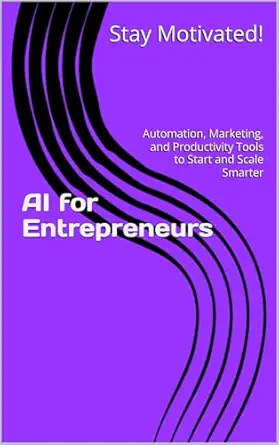 | Best for Entrepreneurial AI Strategy | Content type: Business guide | Primary topic: Entrepreneurial AI adoption | Marketing focus: AI-assisted marketing and automation | VIEW LATEST PRICE | See Our Full Breakdown |
| 1000 AI Tools Directory 2026: The Ultimate Guide to AI Tools for Business, Productivity, Content Creation, Marketing, Coding, Design, Research and Automation |  | Best Tool Discovery Directory | Content type: AI tool directory | Directory size: 1,000 tools | Edition year: 2026 | VIEW LATEST PRICE | See Our Full Breakdown |
| The AI Marketing Canvas, Second Edition: A Five-Step AI Plan for Marketers |  | Best Structured Planning Framework | Content type: Marketing strategy guide | Edition: Second edition | Framework: Five-step AI plan | VIEW LATEST PRICE | See Our Full Breakdown |
| Mastering Online Marketing: Create Business Success Through Content Marketing, Lead Generation, and Marketing Automation |  | Best for Full-Funnel Fundamentals | Content type: Online-marketing guide | Primary focus: Business growth through digital marketing | Automation coverage: Marketing and email automation | VIEW LATEST PRICE | See Our Full Breakdown |
| Marketing Automation For Dummies |  | Best for Absolute Beginners | Content type: Introductory marketing guide | Primary topic: Marketing automation | Coverage: Concepts, strategies, tools, and practical tips | VIEW LATEST PRICE | See Our Full Breakdown |
| AI Content and Campaign Automation for Solo Entrepreneurs: Save Time, Repurpose Faster, and Run Smarter Marketing Systems Without a Team |  | Best for Solo Entrepreneurs | Product type: Marketing automation strategy book | Primary audience: Solo entrepreneurs | Primary focus: AI-assisted content and campaign automation | VIEW LATEST PRICE | See Our Full Breakdown |
| MarTech, AI, & Automation: The Future of Marketing |  | Best for Marketing Leaders | Product type: Marketing technology strategy book | Primary audience: Marketing professionals and leaders | Core subjects: MarTech, artificial intelligence, and automation | VIEW LATEST PRICE | See Our Full Breakdown |
| marketing automation tool | Product type | Intended audience |
|---|---|---|
| 25 AI Tools for Digital Market | Digital marketing reference book | — |
| Digital Marketing Made Simple | Step-by-step digital marketing guide | Beginners and experienced marketers |
| AI Powered Digital Marketing A | Agency growth and marketing systems guide | Digital marketing agency professionals |
| HubSpot User Guide 2026 | Platform-specific user guide | — |
| AI-Powered Digital & Social Me | AI marketing and business automation guide | — |
| AI for Entrepreneurs: Automati | — | Entrepreneurs, startups, and small businesses |
| 1000 AI Tools Directory 2026: | — | — |
| The AI Marketing Canvas | — | Marketers and marketing leaders |
| Mastering Online Marketing: Cr | — | Entrepreneurs and marketers |
| Marketing Automation For Dummi | — | Beginners and marketers new to automation |
| AI Content and Campaign Automa | Marketing automation strategy book | — |
| MarTech | Marketing technology strategy book | — |
More Details on Our Top Picks
25 AI Tools for Digital Marketing
I rank 25 AI Tools for Digital Marketing highest for readers who need a structured introduction to automation choices across several channels. Its 25-tool scope connects content, SEO, advertising, social media, and lead generation, making it broader than Digital Marketing Made Simple, which focuses more on building a marketing strategy. That breadth can help a marketer identify where automation could save time before selecting software. The tradeoff is depth: this is a discovery aid rather than an implementation-it-yourself manual, so readers still need product documentation to configure workflows or integrations. Its value may also decline as AI services change. I would choose it for comparing possible automation categories, but not for mastering one platform or building advanced systems.
Pros:- Introduces 25 AI tools within a marketing-focused framework
- Spans five major digital marketing functions
- Helps readers identify tasks that may benefit from automation
- Offers broader tool discovery than a single-platform guide
Cons:- Does not provide detailed configuration instructions
- Assumes some prior understanding of digital marketing
- Tool coverage may age quickly as AI products change
Best for: Marketers who want a cross-channel map of AI tools before choosing software for content, SEO, ads, social media, or lead generation
Not ideal for: Implementation teams that need detailed setup instructions, integration guidance, or durable platform documentation
- Product type:Digital marketing reference book
- Named tool count:25 AI tools
- Content coverage:Content creation and automation
- Search coverage:SEO
- Campaign coverage:Advertising
- Channel coverage:Social media
- Funnel coverage:Lead generation
- Instruction depth:Overview rather than detailed setup guidance
Our verdict“This is the strongest pick for surveying AI marketing automation options, provided the reader does not expect an implementation manual.”
Digital Marketing Made Simple
I place Digital Marketing Made Simple ahead of the broader directories for readers who need a sequence they can follow. Its step-by-step approach ties website traffic, online presence, and AI-assisted customer acquisition into a practical starting framework. Compared with 25 AI Tools for Digital Marketing, this book puts less weight on surveying individual tools and more on explaining what a marketer should do next. That makes it friendlier for beginners, but experienced automation specialists may find the material too basic. It also lacks the platform-level detail found in HubSpot User Guide 2026, so it will not teach readers how to configure a specific CRM workflow. I see it as a strategy-first entry point for small operators, not a substitute for software documentation or advanced campaign architecture.
Pros:- Breaks digital marketing into approachable steps
- Connects traffic generation with customer acquisition
- Introduces AI tools within a broader marketing plan
- Offers a clearer learning path than a tool directory
Cons:- May be too basic for experienced marketers
- Provides limited detail about individual products
- Does not cover platform configuration or advanced automation architecture
Best for: New small-business marketers who need an ordered plan for traffic generation, online presence, and AI-assisted customer acquisition
Not ideal for: Advanced marketing operations teams seeking detailed workflow logic, integrations, or platform-specific configuration
- Product type:Step-by-step digital marketing guide
- Primary objective:Drive targeted website traffic
- Brand objective:Build an online presence
- Automation coverage:AI marketing tools
- Acquisition focus:Accelerating customer acquisition
- Intended audience:Beginners and experienced marketers
- Instruction style:Straightforward sequential strategies
Our verdict“This pick makes the most sense for beginners who need a marketing plan before they choose and configure automation software.”
AI Powered Digital Marketing Agencies
I assign AI Powered Digital Marketing Agencies the agency-specific slot because it frames automation around client acquisition and scalable service delivery. Unlike AI-Powered Digital & Social Media Marketing and Business Automation, which concentrates on content and social platforms, this title addresses agency systems and growth. That narrower viewpoint can help owners connect AI adoption with sales capacity, repeatable processes, and client work rather than treating each tool as an isolated shortcut. The limitation is that the material offers insights rather than detailed product specifications or configuration steps. Solo creators may also find its professional-services focus less relevant than the channel guidance in the social media title. I would select it for business-model guidance, while pairing it with platform documentation when the agency is ready to build actual workflows.
Pros:- Connects AI automation directly to agency growth
- Covers client acquisition alongside operational systems
- Addresses the needs of professional marketing teams
- Provides a more focused agency perspective than general AI guides
Cons:- Offers little platform-specific setup guidance
- Has limited relevance for readers outside the agency model
- Does not provide detailed product features or integration requirements
Best for: Digital agency owners and operations leads planning AI-assisted client acquisition and repeatable marketing systems
Not ideal for: Casual marketers and solo creators who want channel-specific tactics or instructions for configuring individual tools
- Product type:Agency growth and marketing systems guide
- Primary technology:Artificial intelligence
- Operations coverage:Marketing automation
- Growth focus:Agency growth
- Sales focus:Client acquisition
- System focus:Modern marketing systems
- Intended audience:Digital marketing agency professionals
- Instruction depth:Strategic insights rather than detailed product setup
Our verdict“Agency leaders should choose this for strategic growth framing, then use separate resources for hands-on automation setup.”
HubSpot User Guide 2026
I rank HubSpot User Guide 2026 as the strongest implementation-oriented choice in this group because it centers on one connected platform. Its coverage of CRM, sales, marketing automation, and reports gives HubSpot users a clearer route from stored contacts to campaigns and measurement. Compared with 25 AI Tools for Digital Marketing, it sacrifices broad product discovery for more actionable, step-based guidance. That focus is also its main restriction: readers evaluating several automation ecosystems will learn little about competing platforms, and the guide may lose relevance when HubSpot changes its interface or features. The supplied product data does not establish how deeply it treats advanced workflows. I would choose this for teams already committed to HubSpot, while buyers still comparing software should start with a broader market guide.
Pros:- Covers HubSpot CRM, sales, marketing, automation, and reporting
- Uses straightforward step-based instructions
- Links campaign activity with customer data and measurement
- Provides more platform-specific direction than the general AI guides
Cons:- Applies only to the HubSpot ecosystem
- May date quickly when HubSpot changes its interface or features
- Advanced workflow and integration depth is not established
Best for: Small marketing and sales teams already using HubSpot that need one guide spanning CRM, automation, and reporting
Not ideal for: Software buyers comparing multiple automation platforms or advanced administrators needing verified coverage of complex integrations
- Product type:Platform-specific user guide
- Platform:HubSpot
- Edition year:2026
- Customer data coverage:CRM
- Revenue coverage:Sales
- Campaign coverage:Marketing automation
- Analytics coverage:Reports
- Instruction style:Simple step-by-step guidance
Our verdict“Choose this when HubSpot is already the platform decision and the team needs practical guidance across its core marketing functions.”
AI-Powered Digital & Social Media Marketing and Business Automation
I give AI-Powered Digital & Social Media Marketing and Business Automation the social-first role because it connects AI content creation with YouTube, Instagram, Facebook, X, and TikTok. That five-platform coverage is more useful to creators managing several feeds than the agency-centered systems in AI Powered Digital Marketing Agencies. Beginners gain a channel map for applying automation across video and social publishing, but the book does not name specific software or provide detailed setup instructions. This makes its advice easier to approach yet harder to turn into a repeatable tool stack without added research. It also appears less suited to CRM, email, reporting, or lead-routing needs than HubSpot User Guide 2026. I would pick it for multichannel content planning, not for building a fully connected marketing operations system.
Pros:- Covers five major video and social platforms
- Frames AI content creation for beginner marketers
- Connects social media work with business automation
- Offers a more channel-focused approach than agency growth guides
Cons:- Does not identify specific tools or software
- Lacks detailed workflow configuration instructions
- Provides limited support for CRM, email, and reporting automation
Best for: Beginner creators and small social teams publishing across YouTube, Instagram, Facebook, X, and TikTok
Not ideal for: CRM-led marketing teams that need named software, detailed setup steps, lead routing, email automation, or reporting workflows
- Product type:AI marketing and business automation guide
- Experience level:Beginner
- Content focus:AI content creation
- Video platform:YouTube
- Social platforms:Instagram, Facebook, X, and TikTok
- Marketing scope:Digital and social media marketing
- Automation scope:Business automation
- Named software:No specific tools identified in the product data
Our verdict“This is the right starting guide for beginners automating social content across several platforms, but not for teams building a connected CRM stack.”
AI for Entrepreneurs: Automation, Marketing, and Productivity Tools to Start and Scale Smarter
I rank this as the best entrepreneurial AI strategy guide because it connects automation, marketing, and productivity to the practical challenge of scaling a small company. Compared with The AI Marketing Canvas, Second Edition, it takes a broader business view rather than concentrating on a formal marketing plan. That wider scope makes it more useful for founders deciding where AI can reduce repetitive work across several functions. The tradeoff is depth: readers looking for configuration instructions, workflow diagrams, or platform-level analysis may find the guidance too general. It is also a book about choosing and applying tools, not a marketing automation platform. I place it above the 1000 AI Tools Directory 2026 for focused decision support, but below specialist resources when hands-on implementation is the main goal.
Pros:- Connects AI marketing decisions with broader business operations
- Keeps its guidance relevant to startup and small-business growth
- Explains how automation can reduce repetitive work
- More focused than a large general-purpose tool directory
Cons:- Does not provide detailed technical implementation instructions
- Broad coverage may feel shallow to advanced practitioners
- Does not function as an automation platform or tool
Best for: Startup founders and small-business owners who need a practical framework for applying AI across marketing, operations, and productivity
Not ideal for: Experienced automation specialists who need detailed integrations, technical walkthroughs, or platform-specific workflow instructions
- Content type:Business guide
- Primary topic:Entrepreneurial AI adoption
- Marketing focus:AI-assisted marketing and automation
- Additional coverage:Productivity and business operations
- Intended audience:Entrepreneurs, startups, and small businesses
- Technical depth:Strategic and introductory
Our verdict“I recommend this to founders who need strategic direction before selecting AI marketing and automation software.”
1000 AI Tools Directory 2026: The Ultimate Guide to AI Tools for Business, Productivity, Content Creation, Marketing, Coding, Design, Research and Automation
I give this the best tool discovery directory role because its defining advantage is breadth: it gathers AI options spanning marketing, content, research, design, coding, productivity, and automation. That makes it a stronger starting point for market scanning than AI for Entrepreneurs, which offers more focused business guidance but exposes readers to fewer categories. The directory format also creates its main weakness. A list of 1,000 tools can generate possibilities without helping a buyer compare pricing, integrations, learning curves, or automation limits. The supplied description indicates no detailed reviews or direct feature comparisons, so readers must conduct their own screening. I see this as a discovery resource rather than a selection framework, particularly for teams building a longlist. Buyers wanting a guided implementation plan will get more direction from The AI Marketing Canvas.
Pros:- Covers a very large selection of AI tools
- Spans marketing, content, research, design, coding, and productivity
- Useful for discovering tools outside familiar marketing categories
- 2026 positioning targets recent AI product trends
Cons:- Large selection may overwhelm readers without firm selection criteria
- Lacks detailed reviews and implementation guidance
- Does not provide direct feature comparisons between tools
Best for: Marketing operations teams and consultants building a broad longlist of AI products across several business functions
Not ideal for: Buyers who want scored comparisons, detailed product reviews, or a short list of recommended marketing automation platforms
- Content type:AI tool directory
- Directory size:1,000 tools
- Edition year:2026
- Marketing coverage:Marketing, content creation, and automation
- Additional categories:Business, productivity, coding, design, and research
- Comparison format:Directory listings without detailed feature comparisons
Our verdict“I would choose this for broad AI product discovery, but not as the sole resource for selecting a marketing automation system.”
The AI Marketing Canvas, Second Edition: A Five-Step AI Plan for Marketers
I rank this as the best structured planning framework because its five-step format gives marketing teams a defined path for integrating AI into strategy. Compared with Marketing Automation For Dummies, it is more focused on planning an AI-led marketing program and less concerned with explaining automation from the ground up. That distinction suits marketers who already understand campaign fundamentals but need a repeatable way to organize decisions, priorities, and adoption. The second edition also signals updated AI strategy coverage, making it more targeted than the broader Mastering Online Marketing. Its limits are equally clear: beginners may find the material technical, while readers seeking detailed case evidence may want more examples than the supplied description promises. I view it as a framework for directing tool choices, not a directory or step-by-step software configuration manual.
Pros:- Organizes AI marketing adoption into a clear five-step plan
- Keeps its focus tightly on marketers
- Second edition includes more recent AI strategy coverage
- Provides stronger planning structure than broad online-marketing guides
Cons:- May be too technical for readers new to marketing automation
- Offers limited detailed case-study material
- Does not provide platform-specific implementation instructions
Best for: Marketing managers and strategy leads who understand campaign basics and need a staged plan for adopting AI tools
Not ideal for: Complete beginners who need plain-language automation definitions or operators seeking platform-specific setup instructions
- Content type:Marketing strategy guide
- Edition:Second edition
- Framework:Five-step AI plan
- Primary topic:AI integration in marketing
- Intended audience:Marketers and marketing leaders
- Technical level:Intermediate
Our verdict“I recommend this to marketing leaders who need a structured AI adoption plan rather than a basic automation primer or tool directory.”
Mastering Online Marketing: Create Business Success Through Content Marketing, Lead Generation, and Marketing Automation
I assign this the best full-funnel fundamentals role because it links content creation and lead generation with marketing automation instead of treating automation as a separate technical exercise. Compared with The AI Marketing Canvas, Second Edition, its scope is broader and more grounded in established online-marketing disciplines such as email and search optimization. That makes it useful for entrepreneurs who need to understand how automated campaigns receive traffic and convert prospects, not merely how workflows operate. The compromise is specificity. It lacks detailed case studies, and the product information does not identify a recent edition, leaving uncertainty around how well its tool references reflect newer AI-led practices. I rank it as a foundation-building resource rather than the strongest choice for current platform selection. Readers focused only on beginner automation concepts may find Marketing Automation For Dummies more direct.
Pros:- Connects automation with content marketing and lead generation
- Covers email marketing and search optimization
- Explains the wider funnel that automated campaigns support
- Offers practical business-growth techniques for generalists
Cons:- Provides limited detailed case studies
- No updated edition information is supplied
- Broad online-marketing coverage reduces platform-level depth
Best for: Entrepreneurs and generalist marketers building a connected system for content, traffic generation, lead capture, email, and automation
Not ideal for: Marketing technologists who need current platform comparisons, advanced workflow architecture, or detailed modern AI automation guidance
- Content type:Online-marketing guide
- Primary focus:Business growth through digital marketing
- Automation coverage:Marketing and email automation
- Acquisition coverage:Content marketing, lead generation, and SEO
- Intended audience:Entrepreneurs and marketers
- Edition status:No updated edition identified in the supplied data
Our verdict“I would pick this for learning how automation fits into a wider digital funnel, especially when content and lead generation are equal priorities.”
Marketing Automation For Dummies
I rank this as the best choice for absolute beginners because it concentrates on explaining marketing automation concepts, strategies, and tools in accessible language. Compared with The AI Marketing Canvas, Second Edition, it offers an easier entry point but less sophisticated guidance for building an AI marketing plan. It is also more tightly focused on automation than Mastering Online Marketing, which spends more time connecting content, search, and lead generation. That narrow focus helps a new marketer learn the vocabulary and recognize where automated campaigns can save time or improve consistency. The cost of that simplicity is limited technical depth: advanced users will find little help with integrations, data architecture, or complex workflow implementation. I see it as a conceptual starting point, not a current platform-buying guide, and readers should pair it with recent vendor documentation before configuring software.
Pros:- Explains core marketing automation concepts clearly
- Gives beginners practical strategies and tips
- Maintains a tighter automation focus than broad digital-marketing guides
- Helps readers develop vocabulary before evaluating software
Cons:- Offers limited technical implementation guidance
- Too basic for advanced marketing operations professionals
- Does not provide a current comparison of automation platforms
Best for: Junior marketers, small-business owners, and career changers who need a plain-language introduction to marketing automation
Not ideal for: Experienced marketing operations teams that need advanced integrations, data governance, or detailed workflow configuration
- Content type:Introductory marketing guide
- Primary topic:Marketing automation
- Coverage:Concepts, strategies, tools, and practical tips
- Intended audience:Beginners and marketers new to automation
- Learning level:Foundational
- Implementation depth:Limited technical detail
Our verdict“I recommend this as a first marketing automation primer, provided the reader uses newer platform documentation for implementation decisions.”
AI Content and Campaign Automation for Solo Entrepreneurs: Save Time, Repurpose Faster, and Run Smarter Marketing Systems Without a Team
I rank AI Content and Campaign Automation for Solo Entrepreneurs as the best fit for one-person businesses because its advice centers on reducing repetitive content and campaign work without hiring a marketing team. Compared with MarTech, AI, & Automation, it has a narrower scope but connects more directly to the daily workload of a founder who must create, repurpose, and distribute content alone. It also offers more focus than 1000 AI Tools Directory 2026, which covers many business categories rather than building a marketing routine. The drawback is its limited implementation detail: I would treat it as a workflow strategy guide, not a click-by-click automation manual. Readers unfamiliar with AI platforms may still need tutorials, while experienced marketers may want deeper coverage of integrations, data flows, and campaign measurement.
Pros:- Tailors automation advice to the time and staffing limits of solo businesses
- Connects content repurposing with faster campaign execution
- Emphasizes cost-conscious systems that do not depend on a marketing team
- Keeps its scope focused on practical founder-led marketing workflows
Cons:- Does not provide detailed technical setup instructions
- Readers may need prior familiarity with AI tools to apply the strategies
- Offers less depth for complex multichannel operations than a dedicated MarTech guide
Best for: Solo consultants, creators, and microbusiness owners who want repeatable AI-assisted content and campaign workflows without adding staff
Not ideal for: Marketing operations specialists who need detailed platform configuration, integrations, or step-by-step workflow builds
- Product type:Marketing automation strategy book
- Primary audience:Solo entrepreneurs
- Primary focus:AI-assisted content and campaign automation
- Workflow emphasis:Content creation and repurposing
- Business model:Team-free marketing operations
- Efficiency goal:Reduce time spent on recurring marketing work
- Implementation depth:Strategic rather than step-by-step technical guidance
Our verdict“I recommend this to solo operators who need a manageable marketing system, provided they can source technical setup guidance elsewhere.”
MarTech, AI, & Automation: The Future of Marketing
I place MarTech, AI, & Automation higher for marketing leaders who need to connect automation decisions with a wider technology strategy. Where AI Content and Campaign Automation for Solo Entrepreneurs concentrates on saving an individual operator time, this book examines understanding, applying, and scaling MarTech across broader marketing operations. That makes it more useful for managers planning capabilities, processes, and long-term adoption than for creators seeking a quick content workflow. Its forward-looking scope also separates it from HubSpot User Guide 2026, which is tied to one platform and its controls. The tradeoff is abstraction: I would not choose this as a first automation workbook or configuration reference. Beginners may find the discussion too high-level, and technical teams will still need platform-specific implementation resources before turning its ideas into functioning automations.
Pros:- Connects AI and automation with wider marketing technology planning
- Addresses adoption and scaling rather than a single campaign tactic
- Offers a vendor-neutral perspective compared with platform-specific guides
- Helps marketing leaders frame longer-term technology decisions
Cons:- Provides limited detail on configuring specific tools or integrations
- May feel too conceptual for readers new to marketing automation
- Requires separate technical resources to put many ideas into practice
Best for: Marketing directors, transformation leads, and MarTech managers planning how AI and automation should scale across an organization
Not ideal for: Beginners and hands-on campaign builders who need platform-specific instructions, templates, or immediate configuration steps
- Product type:Marketing technology strategy book
- Primary audience:Marketing professionals and leaders
- Core subjects:MarTech, artificial intelligence, and automation
- Strategic scope:Understanding, applying, and scaling marketing technology
- Platform coverage:Vendor-neutral
- Planning horizon:Future-focused marketing operations
- Implementation depth:High-level strategy with limited technical instruction
Our verdict“I recommend this for marketing leaders shaping an automation roadmap, not practitioners seeking a ready-to-build campaign recipe.”

How We Picked
I evaluated these selections as resources for choosing and applying marketing automation tools, since the lineup consists of books and directories rather than SaaS products. My primary criteria were implementation value, audience fit, workflow depth, and decision support. I gave more weight to resources that connect automation with a measurable business process, such as lead routing, campaign execution, CRM management, content reuse, or client acquisition. I also weighed readability, scope, likely learning burden, and how easily a reader could turn the material into a working system.
The ranking favors focused, actionable guidance over sheer tool count. That is why the HubSpot guide sits above broad directories, while Marketing Automation For Dummies earns the beginner role instead of competing as the most advanced choice. I treated breadth as an advantage only when paired with usable filtering; a thousand options can create more selection work than a tightly edited list of 25. I also assigned extra value to resources with a clearly defined reader, which helps the agency, solo-business, and entrepreneur-focused books stand apart from general marketing titles. Resources centered on future trends rank lower for immediate implementation, but they retain a distinct role for leadership and long-range planning.
| marketing automation tool | Intended audience |
|---|---|
| 25 AI Tools for Digital Market | — |
| Digital Marketing Made Simple | Beginners and experienced marketers |
| AI Powered Digital Marketing A | Digital marketing agency professionals |
| HubSpot User Guide 2026 | — |
| AI-Powered Digital & Social Me | — |
| AI for Entrepreneurs: Automati | Entrepreneurs, startups, and small businesses |
| 1000 AI Tools Directory 2026: | — |
| The AI Marketing Canvas | Marketers and marketing leaders |
| Mastering Online Marketing: Cr | Entrepreneurs and marketers |
| Marketing Automation For Dummi | Beginners and marketers new to automation |
| AI Content and Campaign Automa | — |
| MarTech | — |
Factors to Consider When Choosing Marketing Automation Tools
I would choose among these resources by starting with the automation problem that needs solving, not the number of tools named on the cover. A buyer planning CRM workflows needs different guidance from a solo creator repurposing content or an agency standardizing client acquisition. The most useful choice will match the reader’s team size, technical comfort, existing software, and implementation window.
Choose a Resource Type Before Choosing a Tool
I separate platform manuals, strategic frameworks, and tool directories because each supports a different stage of the buying process. A platform manual makes sense when the software decision is already made and the next goal is configuration. A framework is more useful when a buyer needs to define audiences, triggers, content flows, and success metrics before selecting software. Directories help during discovery, but they rarely provide enough depth to build a reliable workflow on their own. A common mistake is buying the broadest reference and expecting it to act like an implementation guide. I would match the format to the immediate decision: select, plan, or build.
Match Automation Scope to Operational Maturity
I would not start with advanced multichannel orchestration if basic lead capture and follow-up are still inconsistent. Early-stage buyers gain more from one dependable workflow than from dozens of disconnected automations. Growing teams can look for guidance on segmentation, branching logic, handoffs, attribution, and campaign governance. Agencies need another layer because workflows must be repeatable across clients without mixing data, permissions, or reporting. Mature organizations should prioritize documentation, testing rules, and ownership when automations fail. The right resource should meet the reader slightly above the current capability level, creating room to grow without excess complexity.
Check Compatibility With the Existing Marketing Stack
I would map the current stack before committing to any recommended platform or workflow. The key connections usually include CRM, email, website forms, advertising data, analytics, and content systems. A low-cost automation product can become expensive if it needs custom connectors or constant spreadsheet transfers. Buyers should also check whether integrations sync in both directions, how frequently data updates, and which system owns the master customer record. Books that focus on one ecosystem can offer clearer setup guidance, but vendor-neutral resources leave more freedom to combine products. I would favor clean data flow over a longer feature list, because unreliable records weaken every automated campaign built on them.
Calculate the Cost of Running the System
I look beyond subscription price and count setup time, contact-based fees, training, integrations, content production, and ongoing maintenance. Some platforms appear affordable until the contact database grows or advanced reporting requires a higher tier. AI tools may reduce drafting time, yet they can add review work when brand voice, factual accuracy, or regulatory language matters. A buyer should estimate who will monitor failed triggers, duplicate records, expired offers, and outdated sequences. Paying more makes sense when stronger governance, permissions, support, or native integrations replace recurring manual work. The better value is the system with the lowest sustainable operating burden, not automatically the lowest monthly fee.
Set Rules for AI Output and Human Approval
I treat AI campaign automation as a production assistant rather than an unsupervised marketing department. Buyers should define which tasks can run automatically and which require human review, brand approval, or legal checks. Low-risk jobs may include tagging content, summarizing performance, or drafting internal variations, while pricing claims and customer-facing promises deserve closer control. Tool directories can expose useful possibilities, but they may encourage stacking several overlapping products without a clear owner. I would create a small approval matrix covering data access, publishing rights, error handling, and escalation paths before expanding usage. This makes speed and accountability part of the same system.
Frequently Asked Questions
Are the selections in this roundup software platforms or books about marketing automation tools?
These selections are books, guides, and directories that help readers choose, plan, or operate marketing automation tools; they are not twelve SaaS platforms. I would use the lineup as a decision and implementation library rather than a direct software pricing comparison. The HubSpot title is the most platform-specific option, while the AI directories cover a much wider set of products. Buyers seeking subscription prices, live integration lists, or current plan limits should verify those details with each software vendor. This distinction matters because learning resources and automation platforms solve different parts of the purchase.
Should I start with a vendor-specific guide or a vendor-neutral marketing automation book?
I would choose a vendor-specific guide when the platform has already been selected and configuration is the immediate goal. It can shorten the path from theory to live forms, sequences, pipelines, and reports. A vendor-neutral book is the better starting point when the buyer is still defining workflows or comparing several ecosystems. It also reduces the risk of shaping every process around one product before business requirements are clear. For many readers, the strongest sequence is strategy first, platform instruction next.
Is a 1,000-tool AI directory more useful than a focused list of 25 tools?
I see the larger directory as a research database and the shorter list as a more practical shortlist. The 1,000-tool option suits consultants, researchers, or teams scanning many categories, but it demands more time to filter duplicates and weak fits. A focused list is easier for a small team that wants to compare a few tools and act quickly. Neither format replaces workflow design, integration checks, or security review. I would choose based on whether the immediate need is broad discovery or faster selection.
What should a solo entrepreneur prioritize differently from an agency?
I would tell a solo entrepreneur to prioritize low-maintenance workflows, content reuse, and simple approval paths. A system that saves two hours but needs three hours of weekly upkeep is a poor fit for one person. Agencies need reusable templates, client separation, permissions, reporting consistency, and processes that staff can repeat across accounts. They may benefit from more advanced tooling because the cost can be spread across several clients. The solo-focused campaign automation book and the agency growth title address these different operating models more directly than general directories.
How much should publication date influence my choice?
I give publication date more weight for tool directories, interface guides, pricing references, and AI feature coverage. Those details can age quickly as products change names, plans, integrations, or capabilities. Strategic material about customer journeys, segmentation, measurement, and workflow design usually has a longer shelf life. A 2026 label is useful, but it does not guarantee that every named product remains active or suitable. I would pair current references with durable marketing principles and vendor verification before making a software commitment.
Conclusion
For most readers, my best overall choice is HubSpot User Guide 2026 because it offers the clearest route from CRM data to practical sales and marketing automation. I would choose 25 AI Tools for Digital Marketing as the best value for a focused discovery list, while Marketing Automation For Dummies is the best beginner entry point. Buyers wanting the widest research library should pick 1000 AI Tools Directory 2026 as the best premium reference, accepting that its breadth requires more filtering. The AI Marketing Canvas is my strategy pick, AI Powered Digital Marketing Agencies fits agency owners, and AI Content and Campaign Automation for Solo Entrepreneurs best serves one-person operations. Digital Marketing Made Simple suits customer-acquisition planning, AI for Entrepreneurs covers broader founder productivity, and MarTech, AI, & Automation fits leaders studying future direction. I would make the final choice by matching the book to the next decision at hand: learning the basics, selecting tools, designing a system, or implementing a chosen platform.
Halloween Picks
halloween
As an affiliate, we earn on qualifying purchases.