
TL;DR

Get business pricing on office and shipping supplies
- Business-only prices and quantity discounts
- Tax-exempt purchasing
- Multiple users, one account, clear invoices
ECB President Christine Lagarde told European Parliament lawmakers that the central bank raised its three key interest rates by 25 basis points earlier in September as energy costs lifted the inflation outlook. She said the ECB sees no evidence yet that the energy shock is feeding into higher wages, while warning that artificial intelligence could reshape investment, jobs and inflation. The speech does not detail the full AI analysis referenced in its opening.
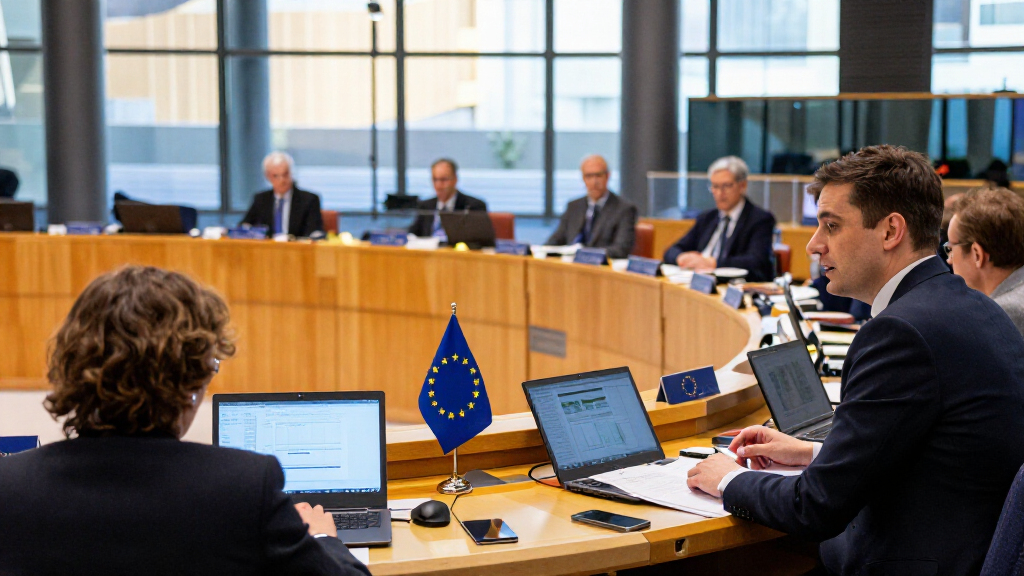
European Central Bank President Christine Lagarde told the European Parliament’s Economic and Monetary Affairs Committee on Sept. 28 that the ECB raised its three key interest rates by 25 basis points earlier this month to keep inflation on track toward its 2% medium-term target. She cited higher energy prices and a higher inflation outlook, while saying the bank had not yet seen evidence that the shock was pushing up wages.
Lagarde described the euro area economy as resilient despite an energy shock. Real GDP grew solidly in the second quarter of 2026, with growth spread across most countries and sectors; the ECB expected that pattern to continue in the third quarter. Manufacturing was supported by public spending on defence and infrastructure, while consumer confidence had recovered from low spring levels and services had improved. The speech also pointed to AI-related activity in digital services, business investment and exports.
The September ECB staff projections put euro area growth at 0.9% in 2026, 1.4% in 2027 and 1.5% in 2028. Unemployment was 6.4% in July, although employment and labour-force growth were slowing. Headline inflation rose to 3.2% in August from 2.9% in July, with energy inflation rising to 14.3% from 10.3%. Inflation excluding energy and food edged down to 2.4%, while compensation per employee grew 3.3% in the second quarter, down from 3.6% in the first.
The ECB’s baseline forecast sees headline inflation averaging 3.0% in 2026, 2.5% in 2027 and 2.1% in 2028. Lagarde said the bank assesses energy shocks through the inflation outlook, underlying inflation dynamics and how monetary policy affects borrowing costs and growth. She said the outlook points to higher inflation in 2027 and 2028 than previously expected, largely because of energy, but that wage data did not yet show the shock becoming embedded.
Energy Costs Shape ECB Policy
The rate increase signals that the ECB considers the energy shock too large to ignore, even though officials have not identified a wage-price spillover so far. Higher borrowing costs can restrain demand and inflation, but they can also weigh on investment and economic growth. Lagarde said long-term interest rates had risen notably since the previous policy meeting, a development she said would slow growth and reduce the policy pass-through more than expected in the September projections.
The discussion of AI brings another uncertain force into the outlook. Lagarde said firms were expected to devote around 10% of total investment to AI in 2026, and AI-related borrowing already represented roughly a quarter of credit growth to firms. Those figures suggest AI investment is becoming economically relevant, though they do not establish how quickly productivity gains will arrive or how the effects will be distributed across workers and businesses.
The ECB’s Three-Part Assessment
The hearing formed part of the ECB’s regular dialogue with the European Parliament’s Committee on Economic and Monetary Affairs. Lagarde presented the latest economic outlook and explained the bank’s monetary policy decision, then turned to the possible effects of artificial intelligence on the broader economy and inflation.
Lagarde said the ECB does not respond mechanically to energy prices. It acts when it sees a risk that higher prices will become embedded in inflation. Its assessment covers the inflation forecast and risks around it, underlying inflation—including whether energy costs pass through to prices and wages—and the effects of policy on borrowing costs and growth. The speech characterized the current approach as a measured response to a shock that the ECB views as too large to look through.
“We do not react to energy prices, we react if we see risks of higher energy prices becoming embedded in inflation.”
— Christine Lagarde, ECB president
Inflation and AI Effects Remain Uncertain
Lagarde said the economic outlook remained subject to high uncertainty, with risks tilted toward higher inflation and weaker growth. The speech reported no material wage response to the energy shock so far, but it did not establish whether that will remain the case as energy costs feed through the economy. Shorter-term inflation expectations remained elevated, while most longer-term measures were around 2%.
The speech’s opening says AI’s effects could reach investment, labour markets, productivity and inflation, but the supplied report text ends as Lagarde begins outlining those channels. It therefore does not provide her full assessment of AI’s macroeconomic effects, nor specify how quickly productivity improvements might emerge or what they could mean for employment. The investment and credit figures are presented without further detail on their underlying measurement or comparison periods.
Policy Decisions Depend on Incoming Data
The ECB’s next steps will depend on how energy prices, wages, underlying inflation and economic activity develop. Lagarde’s account indicates that the Governing Council will continue applying its three-part assessment rather than committing to a fixed path based on the current shock. The September staff projections provide the near-term reference point, but the outlook could shift if energy costs persist or pass through more broadly.
Further clarity on AI’s potential effects would depend on evidence about investment, productivity, prices and labour-market changes. The hearing itself established that the ECB sees AI as relevant to its economic and monetary policy analysis; the available speech text does not give a timetable for additional ECB work or a specific policy response to AI.
Key Questions
What did Lagarde tell the European Parliament?
She explained the euro area outlook, the ECB’s 25-basis-point rate increase earlier in September, and the bank’s view that AI could affect investment, work and inflation.
Why did the ECB raise interest rates?
Lagarde said the ECB responded to an energy shock that was lifting the inflation outlook. The bank aims to prevent higher energy prices from becoming embedded in wider inflation.
Has the energy shock raised wages?
Lagarde said there was no evidence at that stage of energy prices feeding into higher wages. Compensation per employee grew 3.3% in the second quarter, down from 3.6% in the first.
What did the ECB project for euro area growth?
The September ECB staff baseline forecast growth of 0.9% in 2026, 1.4% in 2027 and 1.5% in 2028.
What did the speech say about AI?
Lagarde said AI could reshape production and business models, and cited estimates that firms would devote around 10% of total investment to AI in 2026. The supplied report text does not include the full analysis of AI’s economic effects.
Source: primary
Fall Picks
fall essentials
As an affiliate, we earn on qualifying purchases.