
TL;DR

Get office and shipping supplies delivered free — and shop member deals
- Fast, free delivery on millions of items
- Access to Prime Big Deal Days deals on October 6–7
- Prime Video, Amazon Music and more included
Federal Reserve Governor Christopher J. Waller used a speech at Sibos 2026 to discuss how AI could affect cross-border payments and agentic commerce. He described possible efficiency and security benefits while stressing that autonomous purchasing needs stronger trust mechanisms and guardrails.
Federal Reserve Governor Christopher J. Waller said artificial intelligence could help improve cross-border payment screening and routing, while the rise of agents able to shop and pay autonomously will require stronger safeguards. In a speech delivered at Sibos 2026 in Miami on September 29, Waller described agentic commerce as an early-stage development with potential to reshape payments if adoption grows.
Waller said financial firms have used machine learning to identify payment fraud and adopted large language models for tasks such as reconciliation. He said AI could also assist with sanctions screening and anti-money-laundering work. Research, as he summarized it, has found that LLMs can reduce false-positive alerts, freeing staff to review more complex cases and allowing legitimate payments to face less friction. He expects these models to complement, not replace, faster traditional anomaly-detection systems.
For cross-border transfers, Waller pointed to the challenge of selecting routes that balance cost, speed and reliability, alongside decisions about foreign-exchange conversion and liquidity. He said AI agents could potentially help solve those optimization problems when given suitable data and criteria. He also warned that AI may make cyberattacks more capable, while supporting defensive work such as threat detection and finding software vulnerabilities.
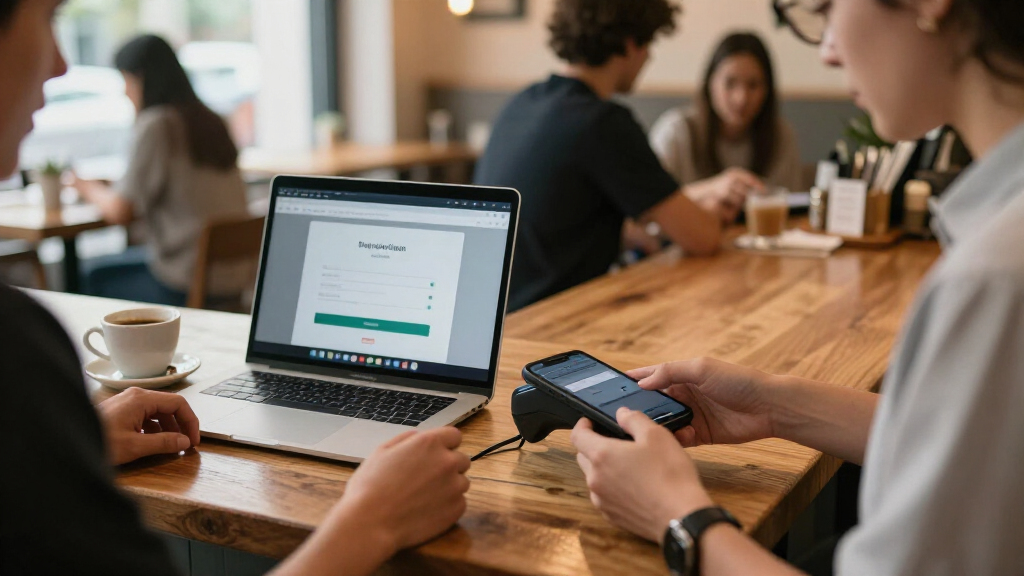
Waller defined agentic commerce as using AI agents to make online purchases. In an assisted model, an agent helps a shopper find products but the person decides and pays. In a delegated model, the consumer authorizes an agent to shop and transact within set constraints—for example, using a pre-funded virtual card to buy groceries based on past purchases. Waller said consumer-to-business shopping is expected to be an early use case, with assisted activity preceding more autonomous delegation.
Autonomous Shopping Tests Payment Controls
The distinction between agents that recommend and agents that pay changes who initiates a transaction and how a consumer’s authority is applied. In delegated shopping, payment providers and merchants may need to determine whether an agent has permission to make a particular purchase, and whether the transaction stayed within the consumer’s instructions. Waller said this model carries greater risk of unintended purchases and calls for more extensive trust mechanisms and guardrails.
AI could also affect payment reliability beyond online retail. Better screening may reduce unnecessary holds on legitimate cross-border transactions, while automated routing could help providers weigh competing costs and settlement needs. Those are potential benefits outlined in the speech, not evidence that systems already deliver them at scale. The same interconnected infrastructure that supports international commerce can also face significant disruption if attackers exploit a vulnerability.
For consumers, the practical stakes include control over spending, the handling of payment credentials and the ability to review or challenge an agent’s actions. For payment firms, the issue is how to support automated transactions without weakening fraud prevention, cybersecurity or accountability. Waller’s remarks frame those questions as part of the infrastructure work still needed for wider agent use.
AI-powered cross-border payment security tools
As an affiliate, we earn on qualifying purchases.
As an affiliate, we earn on qualifying purchases.
From Payment AI to Agentic Commerce
Waller’s speech continued a discussion he began at the previous year’s Sibos, where he addressed emerging technologies and global payments. This year, he focused on AI, including its role in existing financial-sector operations and the possibility of agents transacting on users’ behalf. He also referred to an industry roundtable on agentic commerce that he hosted at the Federal Reserve earlier in the summer.
According to Waller, market participants broadly regard agentic commerce as being in an early phase. Consumers may use general-purpose agents from AI companies or agents offered by individual merchants; personal AI assistants could also become a route to shopping. Waller said useful agents will need broad, real-time knowledge, but the supplied speech excerpt ends while he is discussing that requirement and does not provide further detail on its implications.
Adoption and Safeguards Remain Open
Waller did not provide adoption figures, a timeline for widespread agent-delegated shopping, or evidence that the proposed payment and screening benefits have been achieved across the industry. He described the area as early-stage and the gains as potential. The speech excerpt also does not set out specific standards for authorizing agents, limiting their spending, handling mistakes or resolving disputed purchases.
It is also unclear how responsibility would be divided among consumers, AI providers, merchants and payment companies if an agent exceeds its instructions or a transaction is fraudulent. Waller identified cybersecurity risks but did not quantify them or describe a particular incident involving payment infrastructure. The claims about research reducing false positives were not accompanied in the supplied material by study names, methods or numerical results.
Controls Will Shape Agent Payments
The next stage will depend on whether companies can establish reliable ways for consumers to authorize, constrain and monitor agents that transact for them. Waller’s speech points to trust mechanisms and guardrails as prerequisites for more autonomous commerce, but does not announce a regulatory action, industry standard or implementation schedule.
Payment providers and merchants are likely to continue testing assisted shopping before broader delegated use, as Waller described. For cross-border payments, firms may explore AI support for screening, routing and liquidity decisions. The speech leaves open how those systems will be evaluated, secured and integrated with existing payment networks.
Key Questions
What did Christopher Waller say about AI and payments?
Waller said AI could support cross-border payment screening, cybersecurity and routing, and discussed the emerging use of AI agents to make online purchases. He presented these as potential applications and highlighted risks that still need attention.
What is agentic commerce?
It is the use of AI agents to help with or carry out e-commerce purchases. In an assisted model, the shopper makes the decisions and handles payment; in a delegated model, the agent can shop and pay within instructions set by the buyer.
Why does delegated shopping need safeguards?
A delegated agent can act without the consumer approving each step. Waller said that raises the risk of unintended purchases and requires stronger trust mechanisms and guardrails.
Did Waller say AI will replace existing fraud detection?
No. He said large language models could augment faster, traditional anomaly-detection methods, rather than replace them.
When will AI agents become common in payments?
The speech gives no adoption timetable. Waller described agentic commerce as being in an early phase and said assisted shopping is expected to precede more autonomous delegated purchases.
Source: primary
Halloween Picks
halloween
As an affiliate, we earn on qualifying purchases.