
🔍 Read the full analysis: 10 Best Studio Monitor Headphones For Making Informed Mix Decisions In 2027 on ThorstenMeyerAI.com

Get business pricing on office and shipping supplies
- Business-only prices and quantity discounts
- Tax-exempt purchasing
- Multiple users, one account, clear invoices
TL;DR
ThorstenMeyerAI.com’s buyer’s guide compares 10 studio-monitor headphones, naming the Audio-Technica ATH-M50x its overall pick and the Sony MDR7506 a tracking option. The guide also discusses isolation, comfort, sound coloration and cable durability; these rankings and performance descriptions are the guide’s editorial judgments, not independently verified test results.
ThorstenMeyerAI.com’s 2027 buyer’s guide compares 10 studio-monitor headphones for recording and mix work, naming the Audio-Technica ATH-M50x its overall pick and the Sony MDR7506 a tracking choice. These are recommendations made by the guide: the supplied material includes no measured test results, prices, or publication date.
ThorstenMeyerAI.com says the guide ranks headphones around three priorities: mixing accuracy, isolation for tracking, and value, topics also covered in this studio-monitor headphone buyer’s guide. It describes the ATH-M50x as a familiar reference choice and the MDR7506 as useful in recording situations where isolation and detailed high frequencies matter. These are the source’s assessments, not guarantees that either model will suit every listener or mix.
The guide also names the Audio-Technica ATH-M20x, Sennheiser HD 280 Pro, TASCAM TH-02, and OneOdio Pro-10. Although the source promises a 10-product roundup, the supplied text identifies only these six models; the remaining four cannot be reconstructed from it.
In its discussion of design tradeoffs, the guide contrasts closed-back isolation, which can reduce headphone bleed into microphones, with open-back designs, which let more sound escape and may provide a more spacious listening presentation. It also flags comfort, replaceable parts, cable type, and how a headphone’s tonal character may affect mix decisions.
The 10 picks
- 1
 Audio-Technica ATH-M50x Professional Studio Monitor HeadphonesView on Amazon →
- 2
 Sony MDR7506 Professional Large Diaphragm HeadphonesView on Amazon →
- 3
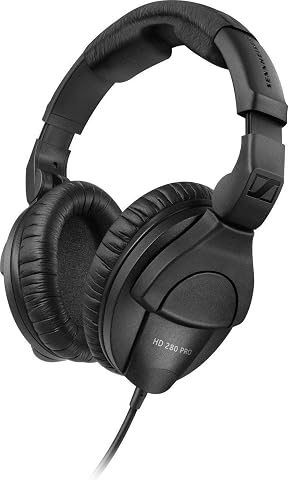 Sennheiser HD 280 Pro Headphones, BlackView on Amazon →
- 4
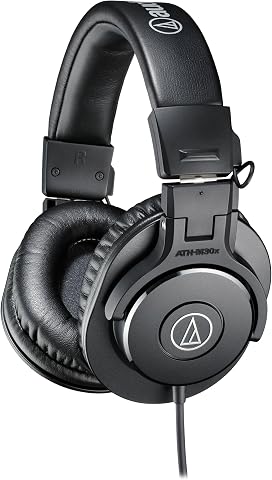 Audio-Technica ATH-M30x Professional Studio Monitor HeadphonesView on Amazon →
- 5
 Audio-Technica ATH-M20x Professional Studio Monitor HeadphonesView on Amazon →
- 6
 Audio-Technica ATH-M20x Professional Studio Monitor Headphones, WhiteView on Amazon →
- 7
 FIFINE H8 Wired Studio Monitor HeadphonesView on Amazon →
- 8
 OneOdio Pro-10 Wired Over-Ear Headphones with 50mm Drivers and Dual Jack – BlackView on Amazon →
- 9
 JOYO JMH-02 Over-Ear Studio Monitor HeadphonesView on Amazon →
- 10
 TASCAM TH-02 Professional Studio Monitor Headphones, Wired, Over EarView on Amazon →
Choosing Between Tracking and Mixing
The guide argues that headphone choice matters because headphones can shape what a producer hears while recording or editing. It says isolation can help prevent a backing track from entering a vocal microphone, while tonal emphasis may make some frequencies seem more prominent than they are. The guide recommends checking a headphone mix on other playback systems as well.
ThorstenMeyerAI.com also treats comfort and repairability as practical studio concerns. Its guide notes that tight clamping force may become uncomfortable during longer sessions and that a replaceable cable can be easier to repair than a fixed one. These are selection criteria, but the source provides no standardized measurements or direct comparisons to substantiate the models’ relative performance.
Popular right now

Vitamix Propel Series 750 Professional-Grade Blender, 4 Programs, Black

Vitamix 5200 Professional-Grade Blender, 64 oz. Container, Black

Sony BRAVIA 5 85-Inch Mini LED 4K HDR Smart TV (K-85XR50)
As an affiliate, we earn on qualifying purchases.
How the Guide Frames Its Picks
ThorstenMeyerAI.com says its selection drew on user feedback threads and professional audio reviews, considering tonal balance, construction, isolation, and value. The supplied source does not name those reviews, describe a controlled listening protocol, or explain how it weighted individual criteria beyond its stated priority order.
The guide cautions that no headphone delivers a literally flat response for every listener, pointing to differences in ear anatomy and driver placement. Its advice is to learn a model’s sound character rather than rely on a marketing claim of neutrality. It also says closed-back designs may sound boxier to some listeners, while open-back headphones are less suitable when sound leakage could interfere with recording.
Missing Models and Test Details
The supplied ThorstenMeyerAI.com guide names only six of its promised 10 models. It does not identify the remaining four or provide product prices, specifications, test dates, or links to the reviews and user-feedback threads behind its selection. The rankings and descriptions therefore cannot be independently checked from this material alone.
The source also expresses a preference for detachable cables on premium models but provides no complete model-by-model cable breakdown. It is unclear whether the recommendations refer to current 2027 versions, earlier product generations, or availability in a particular market.
Verify the Full Product List
Readers considering a purchase should consult the original ThorstenMeyerAI.com article for the four unlisted products, then confirm each model’s current specifications, price, included cables, and replacement-part availability. Those details can vary by product version and seller.
For mix decisions, the guide advises comparing headphones with familiar reference recordings and checking important work on other playback systems where possible. ThorstenMeyerAI.com presents selection guidance, not a new product test, and does not establish that any one pair will translate mixes reliably for every user.
Key Questions
Which headphones does the guide name as its overall pick?
ThorstenMeyerAI.com’s guide names the Audio-Technica ATH-M50x as its overall choice. This is the source’s editorial recommendation, not an independently verified test finding.
Which model does the guide recommend for tracking?
The guide identifies the Sony MDR7506 as a tracking option, citing isolation and high-frequency detail. The supplied source does not provide measured isolation data.
What is the difference between closed-back and open-back headphones?
In the guide’s description, closed-back headphones generally limit sound leakage and external noise, which can help during recording. Open-back models let sound pass through their ear cups, but that leakage may be unsuitable near a live microphone.
Does the supplied material list all 10 picks?
No. The supplied guide text names six models: the ATH-M50x, MDR7506, ATH-M20x, HD 280 Pro, TASCAM TH-02, and OneOdio Pro-10. It does not identify the other four.
Does a studio-monitor headphone guarantee accurate mixes?
No. The guide says headphone sound can be colored and advises learning a model’s tonal character. Checking a mix on other playback systems can help reveal differences that may be harder to hear on one pair.
Source: ThorstenMeyerAI.com