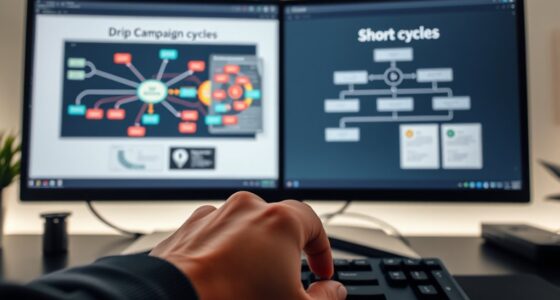
To turn subscribers into advocates with your referral emails, focus on personalizing your messages to make each recipient feel valued and understood. Offer clear incentives like discounts or freebies that motivate sharing, and craft genuine, warm content emphasizing mutual benefits. Timing is key – send emails when subscribers are most engaged, such as after a purchase. By tracking your results and refining your approach, you can uncover more loyal advocates. Keep going to discover more proven tips to boost your strategy.
Key Takeaways
- Personalize referral emails by addressing recipients by name and referencing their previous interactions.
- Offer clear incentives like discounts or freebies to motivate subscribers to refer others.
- Use a warm, genuine tone and highlight mutual benefits to build trust and enthusiasm.
- Send referral messages during peak engagement times, such as post-purchase or promotional events.
- Track performance metrics and continuously optimize incentives, messaging, and timing based on data insights.

A well-crafted referral email strategy can substantially boost your customer acquisition efforts by harnessing the power of trusted recommendations. When you focus on creating personalized emails, you make your subscribers feel valued and understood, increasing the likelihood they’ll share your brand with friends and family. Email personalization involves tailoring content to match the recipient’s preferences, past behaviors, and interests. This approach not only grabs their attention but also encourages them to act. When your referral emails speak directly to the recipient, they see the message as relevant, making them more receptive to participating. Incorporating customer incentives into your referral emails further enhances their effectiveness. Offering rewards—whether discounts, freebies, or exclusive access—motivates subscribers to take action. Incentives serve as tangible recognition for their effort, making them more willing to recommend your products or services. Be clear about what they’ll receive and how easy it is to refer others; simplicity is key. When your incentives are appealing, they turn passive subscribers into active advocates. Additionally, understanding content spoilage signs can help you maintain trust and credibility with your audience by ensuring your communications and offers are reliable and transparent. To maximize engagement, guarantee your referral emails are personal and compelling. Use the recipient’s name and reference their previous interactions with your brand to create a sense of familiarity. Highlight the benefits they’ll enjoy for sharing—such as savings or special privileges—and make the process straightforward. Use clear calls-to-action that are easy to find and understand, guiding recipients step-by-step through how to refer friends and claim rewards. Remember, the tone should be warm and genuine, fostering trust and enthusiasm. When you emphasize the mutual benefit—both for the referrer and their friends—you increase the chances of participation. Timing also plays an essential role. Send referral emails at moments when your subscribers are most engaged—after a purchase, during a promotional event, or when they’ve expressed satisfaction with your brand. This ensures your message lands when they’re most likely to act. Additionally, track and analyze how your referral emails perform so you can refine your approach. Pay attention to open rates, click-throughs, and conversion metrics to identify what works best. Adjust your incentives, personalization tactics, and messaging based on this data to continually improve your strategy.
The SaaS Email Marketing Playbook: Convert Leads, Increase Customer Retention, and Close More Recurring Revenue With Email
As an affiliate, we earn on qualifying purchases.
As an affiliate, we earn on qualifying purchases.
Frequently Asked Questions
How Do I Measure the Success of My Referral Email Campaigns?
You measure your referral email campaign’s success by tracking key metrics like referral conversions, click-through rates, and the growth of your social media integration. Keep an eye on engagement within your referral program tiers to see how active your advocates are. Analyzing these data points helps you understand what’s working, refine your strategy, and ultimately turn more subscribers into loyal advocates who spread the word and boost your brand.
What Incentives Motivate Subscribers to Refer Others Effectively?
Did you know that 83% of customers trust recommendations from friends more than any other form of advertising? To motivate your subscribers to refer others, offer incentives that boost customer loyalty, like discounts or exclusive access. Highlight social proof in your emails, showing how others have benefited. When you reward referrals, your subscribers feel appreciated and more likely to advocate for your brand, strengthening both loyalty and trust.
How Often Should I Send Referral Emails Without Overwhelming Subscribers?
You should send referral emails about once every 4 to 6 weeks to maintain a good email frequency without overwhelming your subscribers. This pace helps prevent subscriber fatigue, which can lead to unsubscribes or ignored messages. Monitor engagement metrics closely; if you notice decreased open rates or clicks, consider spacing out your emails further. Consistent, balanced email frequency encourages ongoing participation and keeps your subscribers motivated to refer others.
What Are Common Mistakes to Avoid in Referral Email Strategies?
Think of your referral strategy as a garden; avoid overwatering by not flooding your subscribers with emails. Common mistakes include neglecting clear referral rewards, which can dampen enthusiasm, and ignoring social proof, missing chances to showcase success stories. Also, don’t make your emails too pushy or infrequent, risking disengagement. Focus on genuine value, transparent rewards, and social proof to cultivate loyal advocates, ensuring your strategy blossoms naturally.
How Can I Personalize Referral Emails for Better Engagement?
You can personalize referral emails by using segmentation strategies to target specific subscriber groups. Incorporate personalization tactics like addressing recipients by name and referencing their past interactions or preferences. Tailor your messaging to highlight relevant benefits, making the email feel unique to each subscriber. This approach boosts engagement because it shows you understand their needs, encouraging them to share your brand authentically and become advocates.

Email Marketing – Subject Lines that Sell
As an affiliate, we earn on qualifying purchases.
As an affiliate, we earn on qualifying purchases.
Conclusion
Remember, your referral email is the key to opening new doors. Like a carefully planted seed, it has the potential to grow into a flourishing garden of advocates. When you nurture trust and offer value, your subscribers become loyal roots, supporting your brand’s foundation. Embrace this strategy, and watch your network blossom—each referral a blossom, each advocate a essential branch, strengthening your ecosystem with vibrant, lasting connections.

320 Pieces Punch Cards Incentive Student Reward Card Awards Loyalty Cards for Classroom Kids Behavior Teachers Students Business Punch 3.5 x 2 Inch(4 Styles)
Mega Bundle: You'll get 320 pieces of reward cards across 4 unique, colorful styles. We ensure you get…
As an affiliate, we earn on qualifying purchases.
As an affiliate, we earn on qualifying purchases.

Digital Marketing Made Simple: Step-by-Step Strategies to Drive Targeted Website Traffic, Build Your Online Presence, and Deploy AI Tools to Accelerate Customer Acquisition
As an affiliate, we earn on qualifying purchases.
As an affiliate, we earn on qualifying purchases.