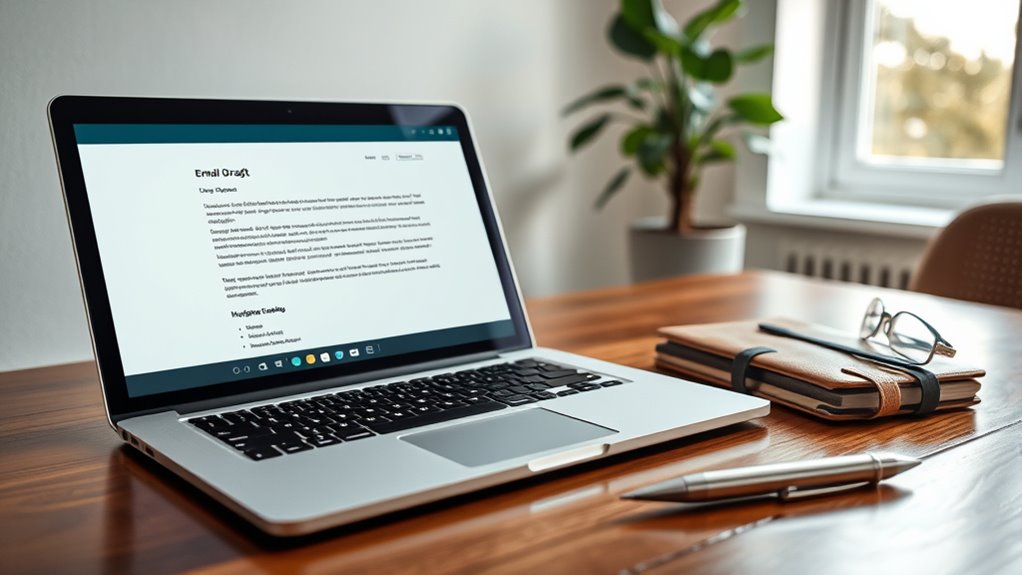

To craft an effective email to a VIP or executive, keep your message professional, brief, and personalized. Start with a clear purpose, highlighting how your proposal or request aligns with their interests, and avoid unnecessary details. Use polite language, short sentences, and a respectful tone that shows you value their busy schedule. Finish with a specific call to action and your contact info. Mastering these elements can considerably increase your chances of getting a response—learn more by continuing on.
Key Takeaways
- Begin with a clear, concise purpose statement to immediately convey your main intent.
- Use polite, professional language and a respectful tone to demonstrate seriousness and build trust.
- Personalize the message by referencing the recipient’s interests or needs, showing genuine research.
- Keep the email focused on one main idea or request, avoiding unnecessary details or multiple topics.
- End with a courteous call to action, offering your availability and expressing appreciation for their time.

When reaching out to a VIP or executive, crafting a clear and professional email is essential. Your goal is to grab their attention quickly and convey your message efficiently, respecting their busy schedule. To do this, you need to maintain a professional tone throughout your email. This means using polite language, avoiding slang, and ensuring your message sounds respectful and serious. Remember, executives receive countless emails daily, so standing out with a professional tone helps create a positive first impression and shows you’re serious about your request.
Craft a professional, respectful email to capture VIP attention quickly and make a positive impression.
Equally important is using concise language. Be direct and get to the point fast. Avoid lengthy introductions or unnecessary details that can dilute your message. Start with a clear purpose statement—let them know why you’re reaching out right from the beginning. For example, instead of writing, “I hope this email finds you well. I wanted to reach out regarding a potential collaboration,” get straight to the core: “I’m reaching out to explore a partnership opportunity that could benefit both of us.” This approach respects their time and demonstrates you value brevity.
Keep your email focused on one main idea or request. If you have multiple points, prioritize and present them clearly, but don’t overload the message. Use short, straightforward sentences, and avoid jargon or complex language that could cause confusion. Your goal is to make it as easy as possible for the recipient to understand and respond. Also, tailor your message specifically to the VIP or executive—show that you’ve done your homework and understand their interests or needs. Personalization increases the likelihood of engagement.
When closing your email, be courteous and specific about what you want next. For example, suggest a brief call or meeting, and provide your availability. Always thank them for their time and consideration. Keep your sign-off professional, such as “Best regards” or “Sincerely,” followed by your full name and contact information. Remember, a well-structured, professional tone combined with concise language demonstrates respect, confidence, and clarity—all qualities that make it more likely for your email to get a response. Additionally, understanding key traits of successful professionals can help you craft more compelling messages that resonate with their expectations.
Frequently Asked Questions
How Do I Find the Correct Contact Information for a VIP?
You find the correct contact information for a VIP through network research and professional directories. Start by exploring LinkedIn, company websites, or industry-specific directories to gather accurate details. Attend events or join professional groups where they’re active to make direct connections. Use social media platforms to verify contact info, but always respect their privacy. This approach helps you identify the right channels and increases your chances of reaching them effectively.
What Tone Should I Use When Emailing a High-Level Executive?
When emailing a high-level executive, you should use a professional language and maintain a respectful tone throughout. Keep your message clear, concise, and polite, avoiding slang or overly casual language. Show appreciation for their time, be direct about your purpose, and demonstrate respect for their position. This approach helps you establish credibility and increases the chances of receiving a response.
How Long Should My Email Be to Get a Response?
You should keep your email brief, ideally around 150 words, to make sure it’s easy to read and respects their time. Focus on email brevity and message clarity, so your main point stands out quickly. Avoid unnecessary details or lengthy explanations. A concise, well-structured message increases your chances of getting a response, showing you value their time while making your purpose clear from the start.
Should I Follow up if I Don’T Receive a Reply?
Yes, you should follow up if you don’t receive a reply, but consider timing considerations first. Wait about a week before sending a professional follow-up to give the VIP or executive enough time to respond. Keep your message polite, concise, and respectful of their busy schedule. This illustrates your persistence without seeming pushy, increasing your chances of getting a response while maintaining professionalism.
Is It Appropriate to Include Attachments in an Email to a VIP?
While it’s tempting to include attachments, exercise email etiquette and consider attachment best practices when reaching out to a VIP. If the attachment adds value and is essential, keep it concise, clearly referenced, and verify it’s relevant. Always confirm that your file size isn’t overwhelming and avoid unnecessary attachments. Respect their time by making your email straightforward, professional, and respectful of their inbox, increasing your chances of a positive response.
Conclusion
Crafting an effective email to a VIP or executive isn’t just about politeness; it’s about clarity, brevity, and respect for their time. When you focus on delivering a clear message, use a professional tone, and demonstrate genuine value or purpose, you increase your chances of getting a response. Remember, even the busiest leaders appreciate concise, well-thought-out communication. By respecting their time and providing actionable insights, you turn a simple email into a meaningful connection.